
Are you worried about how to make the first day of preschool smooth and fun for children? Unsure what activities can ease separation anxiety, encourage interaction, and build excitement? Wondering how to fill the day with purpose instead of chaos? What are the best first day of preschool activities to keep kids happy and engaged?
The first day of preschool activities can shape a child’s school experience. Thoughtful activities help children feel safe, foster social connections, and support early learning. When done well, these activities build confidence, create structure, and promote emotional security for young learners—setting them up for long-term success and a love of learning.
Below, I’ve put together 40 thoughtful and effective first day of preschool activities designed to support smooth transitions, ease emotions, and build a joyful start to school life.
What Do Teachers Need to Prepare for the First Day of Preschool?
Welcoming Children on the First Day of Preschool
A warm welcome is the foundation of a positive preschool experience. Teachers should prepare a structured yet friendly start to help children settle in.
- Create a welcoming classroom: Decorate the space with colorful posters, balloons, and a large “Welcome to Preschool!” sign.
- Greet each child individually: A simple “Good morning, [child’s name]!” can make a big difference.
- Offer an engaging entry activity: Set up first day of preschool activities, such as coloring name tags or decorating a classroom mural.
- Use a “Hello” song: Singing a cheerful greeting song during circle time first day of preschool activities helps ease nerves and build excitement.
A well-planned welcome makes children feel safe, valued, and excited about their new environment.
Provide Comfort for Separation Anxiety
Many young children struggle with separation anxiety on the first day of preschool. Teachers can help ease this transition with these strategies:
- Encourage a special goodbye ritual: Parents and children can create a handshake, hug, or song to make parting easier.
- Offer a comfort item: Allow children to bring a small stuffed animal or family photo to keep in their cubby.
- Engage children immediately: Fun first day of preschool activities, like sensory bins or puzzles, can redirect attention from missing their parents.
- Use a visual schedule: A simple picture-based preschool first day of preschool activities schedule reassures children about what happens next.
Teachers can help children feel secure and confident on their first day by creating a supportive and engaging atmosphere.
Have a Classroom Tour or Scavenger Hunt
A classroom tour is an essential first day of preschool activities for preschoolers to help them feel comfortable.
- Take a guided tour: Walk around the room, showing kids where to find supplies, cubbies, and the bathroom.
- Use a classroom map: Provide a simple, illustrated map to help children learn about their new environment.
By making the classroom feel familiar, children gain confidence and independence.
How Can Parents Prepare Their Child for Their First Day of Preschool?
Prepare Children Before the First Day
Preparation starts weeks before the first day of preschool. Parents should:
- Set up playdates: Meeting future classmates before school starts makes the first day less intimidating.
- Talk about preschool positively: Use enthusiastic language when discussing the first day of preschool activities they’ll enjoy.
- Practice independence skills: Encourage dressing, opening lunch boxes, and using the bathroom independently.
Introduce the Teacher (s) to the Children.
A child’s comfort level increases when they feel familiar with their Teacher. Parents can:
- Show photos of the teacher: Some schools provide welcome emails with staff pictures.
- Visit the preschool early: A short visit can help children feel more comfortable.
- Role-play meeting the teacher: Practicing greetings builds confidence.
Read a Book About the First Day of School with Your Child
Books can help children understand what to expect. Some great options include:
- The Kissing Hand (for separation anxiety)
- Maisy Goes to Preschool (for a fun introduction to school life)
- Llama Llama Misses Mama (to reassure nervous kids)
Creating a Warm and Welcoming Environment
A supportive home environment makes the transition smoother. Parents can:
- Pack a lunchbox note: A simple “I love you!” on a napkin provides comfort.
- Create a special first-day outfit: Letting kids pick their outfit excites them.
- Plan an after-school celebration: Ice cream, a park visit, or a small gift can make the day memorable.
With the proper preparation, parents can help their children start preschool excitedly and confidently.
[elementor-template id=”54318″]
What Are the Best First Day of Preschool Activities to Try?
1. Sticker Name Activity
Name recognition is an essential skill for preschoolers. This first day of preschool activities helps children learn their classmates’ names while having fun with stickers!
How to Play:
- Prepare name tags with each child’s name written in large, clear letters.
- Provide stickers in different shapes, colors, and characters.
- Encourage children to decorate their name tags with stickers representing their favorite things.
- Help children recognize and say their classmates’ names while comparing stickers.
- Use the name tags throughout the day during circle time activities for the Name recognition is an essential skill for preschoolers. This first day of preschool activities helps children learn their classmates’ names while having fun with stickers!
- to reinforce name learning.
Why It’s Effective:
- Encourages name recognition
- Helps children express their personality
- Promotes social interaction as children compare their stickers

2. Play “Our Favorite Things” Activity
This fun first day of preschool activities encourages conversation, bonding, and self-expression.
How to Play:
- Gather children in a circle.
- Ask each child to say their name and one of their favorite things (e.g., “My name is Lily, and I love dogs!”).
- The next child repeats the last person’s words before adding their favorite thing.
- Continue around the circle until everyone has shared.
Variations:
- If children are shy, allow them to draw their favorite thing instead of speaking.
- Use flashcards with pictures of different activities, foods, and animals to help children choose their answers.
Why It’s Effective:
- Helps children feel heard and valued
- Builds listening skills and memory retention
- Encourages socialization
[elementor-template id=”54318″]
3. Play a “Get to Know the Teacher” Game
It’s essential for children to feel comfortable with their teacher from the very first day. This first day of preschool activities helps build trust and lets children learn more about the person guiding them.
How to Play:
- The teacher writes 3-5 fun facts about themselves on a board (e.g., “I love chocolate,” “I have a pet cat,” “I can play the guitar”).
- Read the facts out loud one by one.
- Let the children guess whether the fact is true or false.
- If they guess correctly, they get a sticker!
- At the end, encourage children to ask the teacher questions so they feel more comfortable.
Why It’s Effective:
- Helps children see their teacher as friendly and approachable
- Encourages communication and participation
- Helps children feel more comfortable

4. Invite Children to Co-Create Classroom Rules and Procedures
Rather than simply announcing classroom rules, involving preschoolers in the process through first day of preschool activities helps them feel responsible for their learning environment.
How to Play:
- Teachers guide children in brainstorming simple, age-appropriate classroom rules.
- Use drawings or symbols to help illustrate the rules and create a rule chart.
Why It’s Beneficial:
- Encourages cooperation and a sense of responsibility.
- Helps children understand and take ownership of classroom expectations.
- Establishes a sense of community and teamwork from day one.
5. Pass the Ball
This activity is perfect for practicing listening skills, taking turns, and learning names.
How to Play:
- Children sit in a circle.
- One child starts by saying their name and rolling a ball to another child, who then says their name before rolling the ball to someone else.
Why It’s Beneficial:
- Reinforces name recognition.
- Encourages turn-taking and active listening.
- Helps children develop social and communication skills.

6. First-Day Self-Portrait
It is a creative activity that helps children express themselves while serving as a keepsake for parents.
How to Play:
- Provide children with paper and crayons or markers.
- Encourage them to draw themselves with prompts like “What do you look like?” or “What do you want to do in preschool?”
- The teacher can then write down the child’s responses.
Why It’s Beneficial:
- Develops fine motor skills and creativity.
- Helps children reflect on their identity and interests.
- Provides a keepsake for parents and an opportunity to discuss self-expression.
7. Interview Time
A great way to encourage socialization and help children get to know their classmates.
How to Play:
- Pair children up and give them simple interview questions such as “What’s your favorite food?” or “Do you have a pet?”
- Afterward, they introduce their partner to the class.
Why It’s Beneficial:
- Builds communication skills and confidence.
- Encourages children to interact with others in a structured, friendly environment.
- Helps children learn more about their classmates, creating bonds early on.
8. Friendship Chain
A collaborative art project that symbolizes unity and connection among preschoolers.
How to Play:
- Provide children with strips of colored paper and markers.
- Each child writes or draws something about themselves on a strip, which is then linked to form a paper chain.
Why It’s Beneficial:
- Promotes teamwork and creativity.
- Gives children a visual representation of their new classroom community.
- Fosters a sense of belonging and connection to the group.
[elementor-template id=”54318″]
9. Circle Time
Circle time is a classic Name recognition is an essential skill for preschoolers. This first day of preschool activities helps children learn their classmates’ names while having fun with stickers!
that helps establish routine and comfort.
How to Play:
- Teachers gather the children in a circle and introduce a fun morning song, a story, or a group discussion.
- Children take turns sharing something about themselves or answering questions.
Why It’s Beneficial:
- Provides structure and routine, which helps children feel secure.
- Encourages participation and listening skills.
- Reinforces the idea of community and cooperation in the classroom.

10. Hands-On Learning Activities
Hands-on learning is a key part of first day of preschool activities, engaging children in active exploration and helping them develop fine motor skills, problem-solving abilities, and creativity. These activities allow children to interact with different materials, textures, and concepts through play.
Builds confidence and social skills as children interact with their peers.
How to Play:
- Set up learning stations around the classroom with different interactive materials such as puzzles, building blocks, counting beads, and magnetic letters.
- Encourage children to rotate between stations and explore various hands-on activities at their own pace.
- Provide guidance and encouragement as they experiment with materials and discover new concepts.
Why It’s Beneficial:
- Enhances fine motor skills by encouraging manipulation of small objects.
- Promotes problem-solving and critical thinking by allowing children to explore different solutions.
- Encourages independent learning and curiosity while reducing anxiety in a new environment.
- Builds confidence and social skills as children interact with their peers.
11. Sensory Play
Sensory play is a fantastic first day of preschool activities that stimulates a child’s senses—touch, sight, sound, smell, and taste—helping them explore the world around them. It is a great way to engage children in meaningful learning experiences while improving focus and self-regulation.
How to Play:
- Set up a sensory bin filled with different textures, such as rice, sand, water beads, or shaving cream.
- Add small toys, scoops, cups, and other tools for exploration and manipulation.
- Provide themed sensory play experiences, such as “Under the Sea” with blue water beads and sea animal toys or “Autumn Fun” with dried leaves and acorns.
Why It’s Beneficial:
- Enhances fine motor development as children scoop, pour, and manipulate materials.
- Encourages language development as children describe textures, colors, and sensations.
- Helps children self-regulate emotions by providing a calming and engaging activity.
- Fosters scientific thinking and curiosity as they explore different materials and their properties.

12. Art Projects
Art activities allow children to express themselves creatively, develop motor skills, and gain confidence in their abilities. Engaging in first day of preschool activities helps children feel comfortable while having fun.
How to Play:
- Provide paper, crayons, markers, glue, and collage materials for free drawing or guided art projects.
- Encourage children to draw a self-portrait and write (or dictate) their name with assistance.
- Organize a collaborative classroom mural, where each child contributes a drawing or fingerprint to a shared artwork.
Why It’s Beneficial:
- Encourages self-expression and creativity, allowing children to communicate emotions and ideas.
- Develops hand-eye coordination and fine motor skills through drawing, cutting, and pasting.
- Boosts self-esteem by providing a sense of accomplishment.
- Contributing to a shared project helps children feel included in the classroom community.
13. Phonics Hopscotch
This activity combines physical movement with early literacy skills, making letter recognition and phonics fun and interactive. It’s an excellent first day of preschool activities to introduce the alphabet while engaging children in active learning.
How to Play:
- Draw a hopscotch grid on the floor using chalk or masking tape, but write letters of the alphabet instead of numbers.
- Call a letter sound, and have children hop to the corresponding letter.
- Extend the game by asking children to think of a word that starts with the letter they land on.
Why It’s Beneficial:
- Reinforces letter recognition and phonemic awareness playfully.
- Encourages gross motor development through jumping and balancing.
- Makes learning multi-sensory, engaging both body and mind.
- Keeps children active and focused, preventing restlessness.

14. Play Shop
Dramatic play is an essential part of early childhood development. It allows children to role-play real-life experiences, develop social skills, and practice basic math concepts. A pretend shop activity is a great first day of preschool activities that encourages creativity and teamwork while introducing children to counting and currency concepts.
How to Play:
- Set up a pretend grocery store, bakery, or toy shop with labeled toy food items, play money, and a cash register.
- Assign roles such as shopkeeper, customer, or cashier, and encourage children to take turns in different roles.
- Allow children to exchange play money for items and practice basic counting and problem-solving.
Why It’s Beneficial:
- Children develop social and communication skills as they interact with one another.
- Introduces basic math concepts, such as counting and recognizing numbers.
- Encourages imaginative and role-playing skills, helping children explore real-world experiences.
- Builds confidence and independence as children engage in decision-making.
15. Guess the Weight
This hands-on learning activity introduces children to the concepts of weight, balance, and comparison in a fun, interactive way. It’s an exciting first day of preschool activities that encourages critical thinking and early math skills by allowing children to predict and test the weight of different objects.
How to Play:
- Set up a simple balance scale in the classroom. If an accurate balance scale is unavailable, a homemade version using a coat hanger, string, and two small containers can work just as well.
- Gather various objects with different weights, such as toy blocks, stuffed animals, plastic cups, and small books.
- Ask children to guess which object is heavier before placing them on the balance scale. Let them compare their predictions with the actual results.
- Rotate different objects and let children take turns making predictions and testing them.
Why It’s Beneficial:
- Introduces early STEM concepts related to weight and measurement.
- Encourages critical thinking, observation, and problem-solving skills.
- Children develop fine motor skills as they manipulate objects and balance scales.
- Helps build confidence by allowing children to make predictions and test their ideas.
[elementor-template id=”54318″]
16. Bubble Pop Counting
This fun and interactive activity combines math skills with physical movement, helping preschoolers practice counting while having fun popping bubbles. It’s a perfect first day of preschool activities to engage children and introduce them to early numeracy in a playful way.
How to Play:
- Blow bubbles around the classroom or outdoor play area.
- As bubbles float, ask the children to count how many bubbles they can pop.
- Challenge children to pop bubbles in numerical order, such as “Can you pop the number 1, then number 2?”
- You can also introduce simple addition or subtraction by asking questions like, “If we have 5 bubbles and 2 pop, how many are left?”
Why It’s Beneficial:
- Reinforces counting skills and number recognition.
- Encourages gross motor skills as children move and reach to pop the bubbles.
- Makes learning interactive and fun, blending physical activity with numeracy.
- Helps children stay engaged and excited about learning while being physically active.
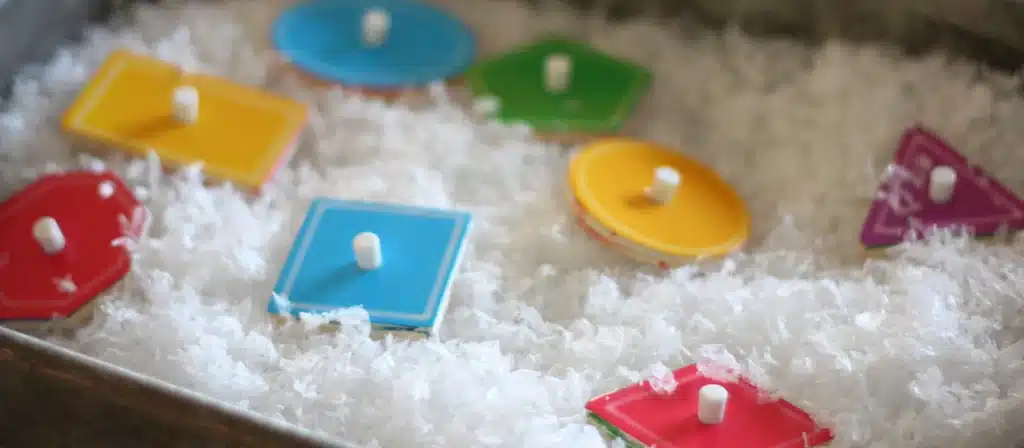
17. Hide and Seek with Shapes
This fun and interactive activity combines physical movement with shape recognition, making it a great first day of preschool activities to reinforce early geometry concepts while keeping preschoolers engaged.
How to Play:
- Cut out different geometric shapes (e.g., circles, squares, triangles, rectangles) from colorful construction paper or foam sheets.
- Hide these shapes around the classroom in places that are easy to access but still provide a bit of a challenge (under chairs, on bookshelves, behind the toy bin, etc.).
- Give each child a shape flashcard and ask them to find the matching shape hidden in the room.
- Once all the shapes are found, gather the children and discuss the names of the shapes, their characteristics (e.g., number of sides, angles), and where they were hidden.
Why It’s Beneficial:
- Reinforces shape recognition and classification skills.
- Encourages physical movement and exploration, keeping children actively engaged.
- Helps children develop problem-solving skills and observational abilities.
- Provides an interactive, hands-on learning experience that enhances memory retention.
18. Painting with Sponges
This creative art activity is a fantastic first day of preschool activities that allows preschoolers to explore colors, textures, and patterns while developing fine motor skills and self-expression.
How to Play:
- Prepare a variety of sponges cut into different shapes (e.g., circles, stars, hearts, squares).
- Pour washable, non-toxic paint onto trays or paper plates in different colors.
- Provide large sheets of paper and encourage children to dip the sponges into the paint and press them onto the paper to create unique designs.
- Allow children to mix colors, overlap shapes, and explore different textures and patterns.
- Once finished, hang the artwork around the classroom to create a welcoming environment.
Why It’s Beneficial:
- Develops fine motor control and hand-eye coordination.
- Encourages creativity and self-expression through open-ended art.
- Introduces basic color mixing concepts, helping children understand how colors blend to form new shades.
- Helps reduce anxiety by providing a sensory-friendly, calming activity.

[elementor-template id=”54318″]
19. Color Hunt
This activity combines movement, observation, and color recognition, making it an exciting first day of preschool activities that encourages children to explore their surroundings.
How to Play:
- Give each child a color swatch or paper (e.g., red, blue, yellow, green).
- Instruct them to find objects in the classroom that match their assigned color.
- Once they find an object, they can return it to the group and share what they found.
- Discuss the colors and let children group objects by shades or color families.
Why It’s Beneficial:
- Reinforces color recognition and categorization skills.
- Encourages movement and exploration, helping children feel comfortable in their new environment.
- Helps improve observation skills and attention to detail.
- Supports language development as children describe the objects they find.
20. Cooking
Cooking is a fantastic hands-on activity and a great first day of preschool activities that engages multiple senses while teaching children about following instructions, measurements, and teamwork. Even simple no-bake recipes can provide a fun and educational experience for preschoolers.
How to Play:
- Choose an easy, child-friendly recipe for making fruit salad, trail mix, or decorating cookies.
- Provide pre-measured ingredients in separate bowls so children can take turns pouring, stirring, and mixing.
- Let children observe textures, smell ingredients, and discuss flavors as they prepare their snacks.
- Once the food is ready, have a small group snack time where they can enjoy what they made together.
Why It’s Beneficial:
- Develops early math skills as children practice measuring, counting, and portioning ingredients.
- Encourages following directions in a step-by-step manner, building listening and sequencing skills.
- Provides sensory learning by engaging children’s senses of smell, touch, sight, and taste.
- Promotes teamwork and collaboration as children work together, sharing tasks and helping each other.
- Teaches healthy eating habits by introducing nutritious ingredients and encouraging mindful food choices.

21. Sidewalk Science
Outdoor learning is an excellent way to introduce scientific exploration while allowing children to engage with nature. This first day of preschool activities helps preschoolers develop an interest in science in a fun and interactive way.
How to Play:
- Set up a sidewalk or outdoor play area with chalk, water, and simple science experiments.
- Create a station for mixing baking soda and vinegar to demonstrate chemical reactions.
- Draw different objects on the ground and have children observe how shadows change position throughout the day.
- Introduce a magnifying glass station, allowing children to explore leaves, rocks, and bugs.
Why It’s Beneficial:
- Encourages scientific thinking and observation skills.
- Provides an interactive and engaging outdoor learning experience.
- Helps children become comfortable with hands-on exploration and problem-solving.
- Promotes teamwork and collaboration as children discuss their discoveries.
[elementor-template id=”54318″]
22. Color Wheel of Fortune
This first day of preschool activities introduces preschoolers to color recognition and mixing through a fun and interactive spinning game.
How to Play:
- Create a color wheel with different colors labeled around a spinning board or a handmade paper wheel.
- Have each child take turns spinning the wheel and naming the color they land on.
- Extend the game by having children find an object in the classroom that matches their color.
- Introduce color mixing by allowing children to combine paints based on their wheel spins.
Why It’s Beneficial:
- Helps reinforce color recognition and associative learning.
- Encourages fine motor skills and hand-eye coordination as children spin the wheel.
- Makes learning interactive and visually stimulating.
- Fosters team participation and observation skills.
23. Story Time with Puppets
Puppetry is a fantastic first day of preschool activities to capture children’s attention, enhance storytelling, and encourage imaginative play.
How to Play:
- Choose an engaging first-day-of-preschool book such as The Kissing Hand or Llama Llama Misses Mama.
- Use puppets to act out key scenes, making the story more interactive.
- Allow children to create their puppets using paper bags, socks, or craft materials and re-enact parts of the story.
- Encourage group storytelling, where each child adds a line to the puppet’s story.
Why It’s Beneficial:
- Enhances listening skills and engagement during storytime.
- Encourages self-expression, creativity, and language development.
- Provides a visual and hands-on approach to storytelling.
- Helps children connect emotionally with the story and classroom discussions.

24. Exploratory Play Stations
This first day of preschool activities engages children in various play-based learning experiences at different stations.
How to Play:
- Set up multiple stations around the classroom, including a block-building corner, an art table, a dress-up area, and a puzzle station.
- Allow children to rotate through the stations freely, exploring activities that interest them.
- Introduce a “mystery box” station, where children reach inside a box and describe the object they feel before pulling it out.
Why It’s Beneficial:
- Encourages independent play and decision-making.
- Allows teachers to observe children’s interests and social interactions.
- Fosters problem-solving and creative thinking.
- Helps children transition comfortably into the classroom environment.
25. Counting Critters
A hands-on first day of preschool activities that introduces basic math concepts such as counting and sorting in a fun and interactive way.
How to Play:
- Provide small plastic critters, such as frogs, bears, or farm animals, and counting mats.
- Ask children to group the animals by color, size, or type before counting them.
- Introduce simple addition and subtraction by asking questions like “What happens if one more joins the group?”
Why It’s Beneficial:
- Develops early math skills in a hands-on way.
- Reinforces sorting and classification abilities.
- Enhances problem-solving and logical reasoning.
- Makes counting fun, engaging, and accessible for all learners.
[elementor-template id=”54318″]
26. Singing and Songs
Music and songs are essential first day of preschool activities because they help children develop language, memory, and motor skills. Singing also creates a joyful atmosphere that encourages social interaction and group participation.
How to Play:
- Start the day with simple welcome songs to greet each child. You can sing songs like “If You’re Happy and You Know It” or “The Wheels on the Bus” with hand motions.
- Introduce songs related to classroom routines, such as songs about washing hands, cleaning up, or sitting in circle time.
- Let children participate by adding their verses or sounds to the song.
- Use props or instruments, such as maracas, tambourines, or a xylophone, to enhance musical experiences.
Why It’s Beneficial:
- Promotes language development and vocabulary expansion through repetition.
- Encourages gross motor skills as children follow actions to the songs.
- Builds listening and memory skills as children learn and repeat lyrics.
- Fosters a sense of community as children sing together and learn to cooperate.
27. Sight Word Bingo
Sight word recognition is a critical early literacy skill that helps children become fluent readers. Playing Sight Word Bingo is a fun and interactive first day of preschool activities to introduce and reinforce essential words children can recognize by sight.
How to Play:
- Create bingo cards with common sight words such as “the,” “is,” “and,” “cat,” “dog,” etc.
- Read the sight words aloud and have children mark the words on their cards when they hear them.
- The first child to fill a row or column can shout “Bingo!” and receive a small reward.
- To extend the activity, ask children to use the sight words in simple sentences.
Why It’s Beneficial:
- Helps improve sight word recognition and reinforces early literacy skills.
- Encourages attention and focus as children listen for specific words.
- Develops fine motor skills by marking cards with a marker or sticker.
- Increases confidence in reading as children learn to recognize high-frequency words.

28. Alphabet Scavenger Hunt
This first day of preschool activities is a fun, interactive way to reinforce letter recognition and allow children to explore their environment. It encourages children to look for letters realistically, making learning more tangible and enjoyable.
How to Play:
- Prepare a list of letters (either all of them or just a few to start) and write them on paper.
- Hide objects around the classroom or playground that correspond to each letter (e.g., a **”b” for ball, “c” for crayon, etc.).
- Ask children to find an object for each letter and place it in a basket. You can provide clues or hints to guide them along the way.
- Afterward, gather the children and discuss each object they found, reinforcing the letter-sound connection.
Why It’s Beneficial:
- Enhances letter recognition and phonemic awareness.
- Promotes exploration and movement, keeping children active and engaged.
- Encourages problem-solving as children figure out where to find the objects.
- Builds independence as children make choices and find letters on their own.

29. Sink or Float Experiment
This simple science experiment is a great first day of preschool activities that helps preschoolers understand basic scientific concepts such as density, buoyancy, and cause-and-effect relationships. It’s an excellent way to introduce scientific thinking in a hands-on manner.
How to Play:
- Gather a variety of objects (both heavy and light) and place them in a clear container of water.
- Ask children to predict which objects will sink and float before dropping them in.
- After making predictions, drop each object in and observe the results.
- Record which objects sank and which floated, and discuss why some float and others sink.
Why It’s Beneficial:
- Encourages critical thinking and hypothesis-making as children make predictions and test them.
- Reinforces cause and effect as children observe the results of their predictions.
- Fosters a love of science by providing a fun, hands-on exploration of physical properties.
- Language skills are developed as children describe their predictions and observations.
30. Finger Painting
Finger painting is a highly engaging and creative first day of preschool activities that allows children to explore textures, colors, and artistic expression in a sensory-rich way. It encourages fine motor skills and creativity while helping children feel accomplished in their artwork.
How to Play:
- Provide non-toxic finger paints and large sheets of paper.
- Encourage children to use their hands to create patterns, shapes, or pictures on the paper.
- Allow children to experiment with mixing colors and using their fingers in different ways to create unique designs.
- You can also make prints or impressions by pressing different textured materials, such as leaves or fabric, into the paint.
Why It’s Beneficial:
- Enhances fine motor skills by using fingers for detailed work.
- Develops creativity and self-expression as children create unique pieces of art.
- Encourages sensory exploration, allowing children to explore different textures and colors.
- Builds confidence as children proudly share their artwork with others.

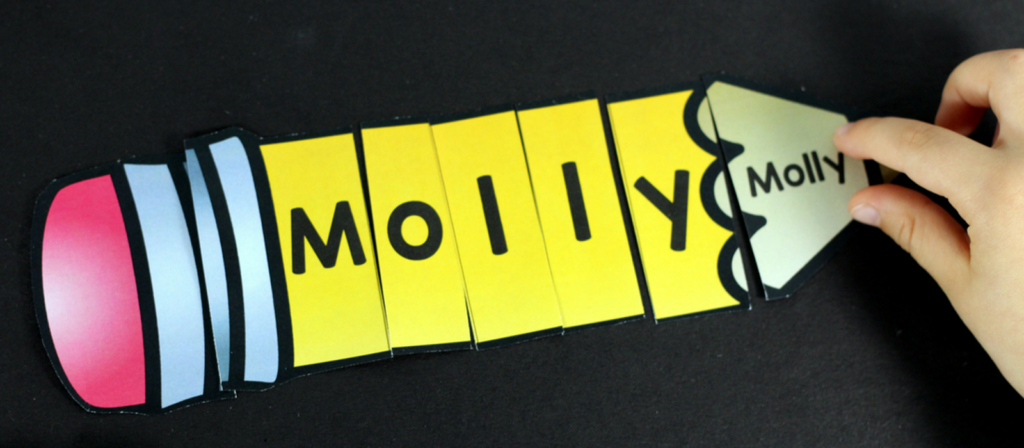
31. Name Puzzle Craft
This activity makes learning personal by helping children build and recognize their own names. It’s hands-on, creative, and ideal for introducing letter recognition in a meaningful way. Children feel proud of spelling their names and love seeing them displayed.
How to Play:
- Write each child’s name on a strip of paper and cut between each letter to create puzzle pieces.
- Mix the pieces up and let children reassemble their names with visual support.
- Allow time for decorating, then display their puzzles around the room.
Why It’s Beneficial:
- Strengthens letter recognition and name awareness.
- Builds fine motor control and sequencing skills.
- Promotes a sense of identity and ownership in the classroom.
32. My Feelings Chart
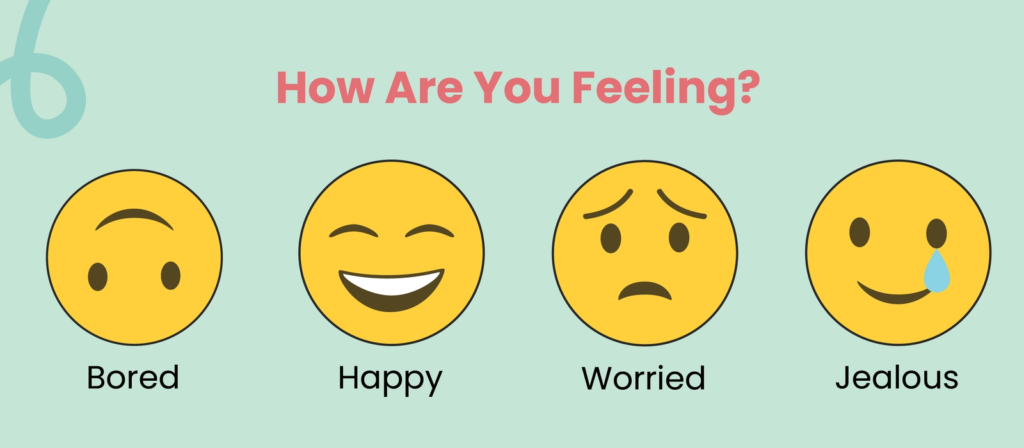
Perfect for helping children understand and talk about their emotions, this activity supports a positive start to classroom routines. It opens the door to emotional check-ins and helps teachers better connect with each child. Children learn it’s okay to feel many things on the first day.
How to Play:
- Display a chart with emotion faces (happy, sad, excited, nervous).
- Give each child a name tag or magnet to place on the emotion they feel.
- Invite a few to share their reason in a group discussion.
Why It’s Beneficial:
- Supports emotional literacy and self-awareness.
- Helps children process first-day feelings in a healthy way.
- Builds empathy and trust within the classroom.
33. Classroom Treasure Hunt
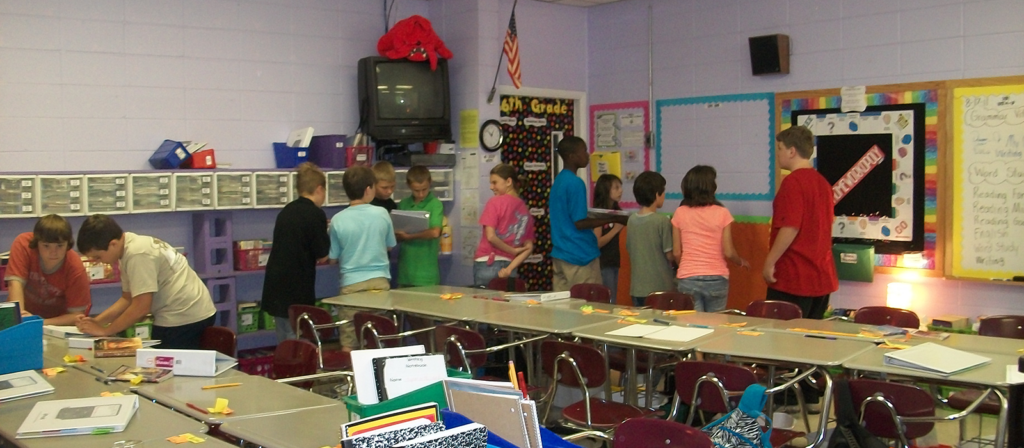
This guided exploration game transforms classroom orientation into a fun adventure. It encourages children to learn where things are independently. Familiarity with the space boosts confidence and makes future transitions smoother.
How to Play:
- Create a checklist of key classroom areas or objects (cubbies, art shelf, reading corner).
- Pair children or let them work individually to find each location.
- Celebrate when they complete the hunt with stickers or stamps.
Why It’s Beneficial:
- Builds independence and classroom navigation skills.
- Encourages movement and spatial awareness.
- Helps children feel confident and oriented in their new environment.
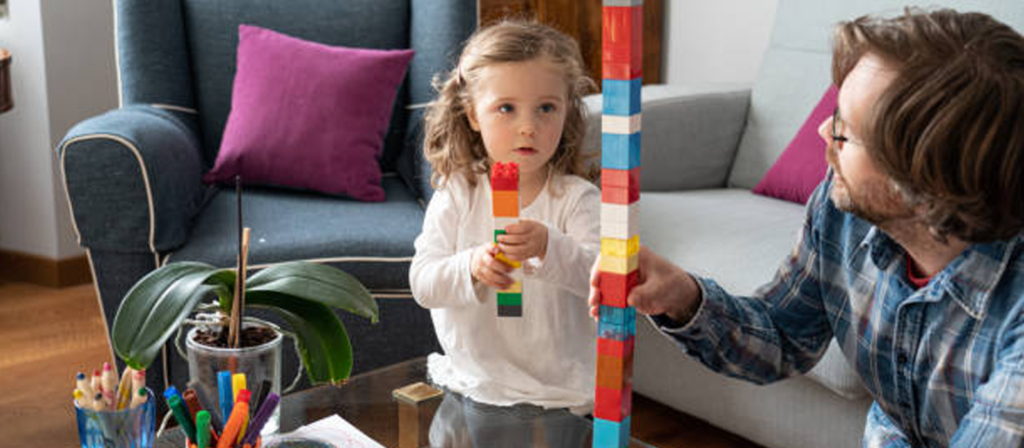
34. Build a Tower Together
This challenge-based group task introduces children to working with others while having fun. It fosters cooperation, creativity, and communication. Children learn the value of sharing ideas and working as a team.
How to Play:
- Provide groups with blocks, cups, or building materials.
- Ask them to build the tallest tower they can as a team.
- Reflect afterward on what helped the group work well.
Why It’s Beneficial:
- Promotes teamwork, listening, and compromise.
- Develops spatial reasoning and problem-solving.
- Fosters group pride and shared accomplishment.
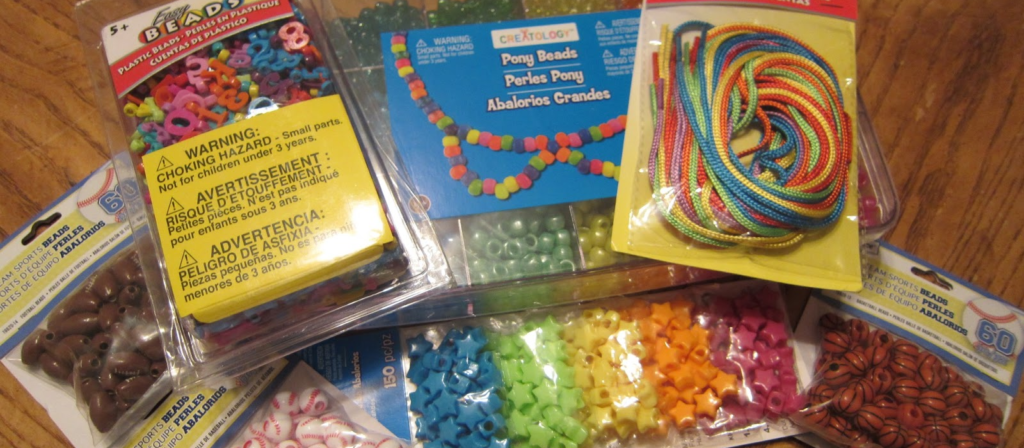
35. All About Me Necklaces
This craft-based activity lets children share personal interests through a wearable creation. It opens up conversations and helps children find things in common with their peers. It’s a gentle, engaging way to ease into social interaction.
How to Play:
- Offer large beads or paper symbols with prompts (likes dogs, has a sibling, loves red).
- Children choose those that represent them and string them on a yarn necklace.
- Each child shares one symbol with the group.
Why It’s Beneficial:
- Encourages sharing and personal storytelling.
- Strengthens fine motor coordination.
- Builds early connections and confidence.
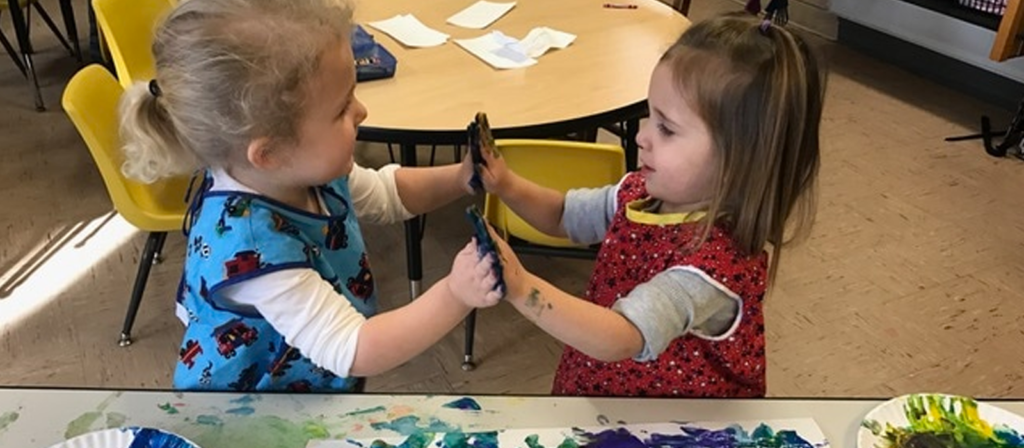
36. Partner Painting
Children learn to express themselves artistically while building early relationships through cooperative painting. It teaches patience, sharing materials, and celebrating joint effort. The finished artwork becomes a symbol of new friendships.
How to Play:
- Pair students and give each pair a large sheet of paper and a few paint colors.
- Let them decide how to paint together—side by side, alternating strokes, etc.
- Display their work with both names under each painting.
Why It’s Beneficial:
- Encourages collaboration and communication.
- Strengthens fine motor and creative skills.
- Nurtures new friendships through shared art.
37. Mystery Bag Sharing
This game builds anticipation and encourages verbal expression as children share something meaningful from home. It helps shy students open up and invites curiosity and empathy from peers. It’s perfect for building a warm, inclusive classroom culture.
How to Play:
- Each child brings one item from home in a brown paper bag.
- They give 2–3 clues while classmates guess what’s inside.
- The child reveals the object and tells why it’s special.
Why It’s Beneficial:
- Boosts speaking and listening skills.
- Helps children express themselves in a structured way.
- Encourages curiosity and classroom bonding.
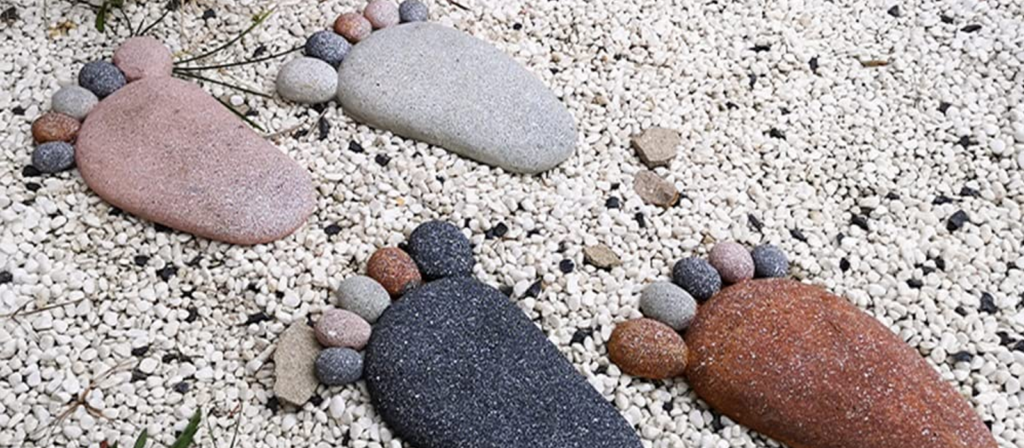
38. Footprint Welcome Path
This sensory art activity makes children feel seen and included from the start. Their footprints become part of the classroom decor, symbolizing their unique place in the community. It also sparks conversations and strengthens belonging.
How to Play:
- Have each child step into washable paint and make footprints on a roll of paper.
- Write their name next to their prints and hang the path around the room.
- Use the path as a daily walk-in routine or story circle spot.
Why It’s Beneficial:
- Fosters a visual sense of inclusion and identity.
- Encourages sensory exploration in a safe environment.
- Promotes class unity through shared creative space.
39. Storybook Voting
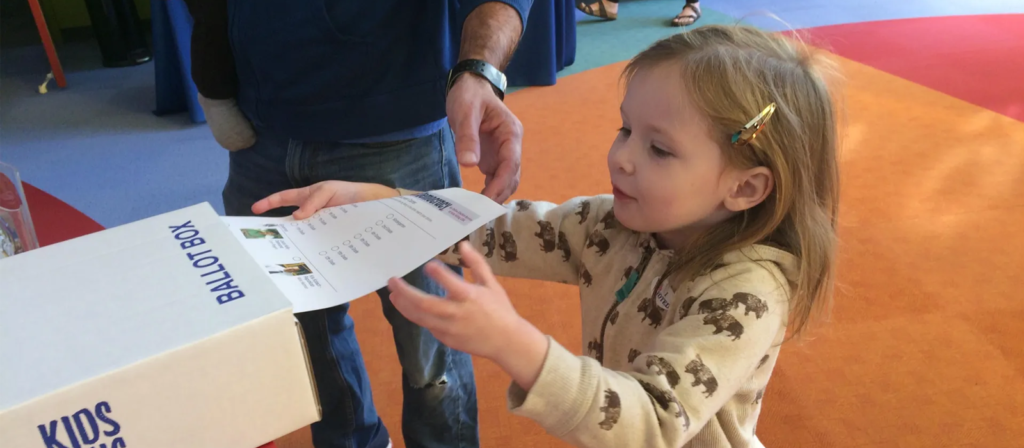
This interactive decision-making activity gives children a voice in classroom storytelling. It introduces democratic participation and promotes early math through counting. The class bonds over a shared choice, setting the tone for cooperation.
How to Play:
- Present 2–3 book options and share a quick summary of each.
- Have children vote using stickers or a show of hands.
- Read the winning story together and discuss what they liked about it.
Why It’s Beneficial:
- Promotes choice and decision-making skills.
- Reinforces early counting and group agreement.
- Encourages enthusiasm for group activities.
40. Mirror Talk
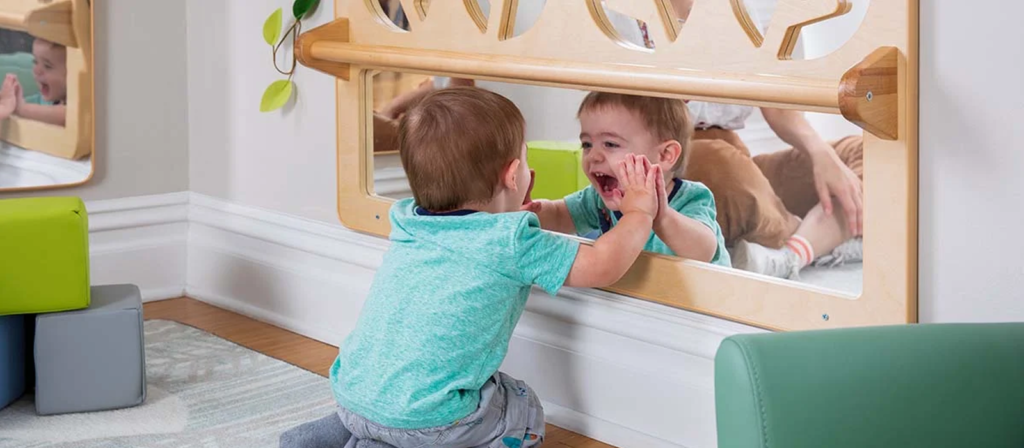
This reflective activity encourages self-awareness and emotional development in a playful way. Children see their own faces and learn to label emotions visually. It also boosts confidence by pairing observation with kind, empowering words.
How to Play:
- Give children handheld mirrors and prompt them to make faces (happy, surprised, silly).
- Ask them to describe what they see or how they feel.
- Invite them to say something kind about themselves.
Why It’s Beneficial:
- Builds emotional vocabulary and self-recognition.
- Encourages confidence and positive self-image.
- Introduces mindfulness and self-kindness at a young age.
FAQs
1. How to Help a Toddler with the First Day of School?
- Prepare them in advance by talking positively about school.
- Establish a consistent routine for getting ready in the morning.
- Create a goodbye ritual like a hug or high-five.
- Let them bring a comfort item from home.
2. What to Pack for the First Day of Preschool?
- Label all belongings (clothes, backpack, lunch).
- Pack comfortable clothes and extra clothes.
- Bring a healthy snack and water bottle.
- Include a comfort item if needed.
3. How to Make the First Day of Preschool Easier?
- Talk positively about preschool before the day.
- Visit the school beforehand if possible.
- Establish a consistent morning routine.
- Keep goodbyes short and reassuring.
4. How to Stop a Child from Crying at Preschool as a Teacher?
- Stay calm and reassuring.
- Stick to a routine to provide security.
- Redirect attention to a fun activity or toy.
- Encourage them to join group play when ready.
5. What to Say on the First Day of Preschool?
- Reassure them with positive words like, “You’ll have so much fun today!”
- Explain what to expect, “You’ll play, make friends, and learn.”
- Keep it short and exciting to help reduce anxiety.
Conclusion:
The first day of preschool lays the foundation for a child’s learning experience—and the right activities can make it meaningful and memorable. Through a diverse blend of creative, social, sensory, and academic-focused experiences, children are gently introduced to classroom life in a fun, familiar, and exciting way. Activities like Name Puzzle Craft, Classroom Treasure Hunt, Counting Critters, and Finger Painting aren’t just games—they’re powerful tools for building confidence, encouraging interaction, and fostering early development.
By incorporating engaging first day of preschool activities, teachers help children form positive associations with school, build connections with their peers, and practice key skills such as listening, sharing, and self-expression. These thoughtfully chosen experiences ensure every child feels seen, supported, and eager to return the next day.
With a structured, nurturing approach and playful learning at its heart, the first day of preschool becomes less about separation and more about discovery, laughter, and the joy of new beginnings.