A music-friendly daycare gives children regular ways to sing, move, listen, and make sound without turning the whole room into a noisy space. You need a clear activity zone, age-appropriate instruments, accessible storage, sound control, and routines that protect quieter play. This guide shows you how to plan those pieces together so staff can supervise the area, children can use it independently, and the setup stays practical to clean and maintain.
What Makes a Daycare Environment Music-Friendly?
A music-friendly environment makes active music easy to start, manage, and stop. Children can reach suitable instruments, move without colliding with furniture, and return materials to a clear place. Staff can see the entire area and adjust the activity when the sound, group size, or energy level no longer fits the room.
The setup should also protect children who want less sound. Music works best when it has a purpose and a defined place in the day. A speaker running for hours or an unrestricted bin of loud instruments creates background noise without giving children a better musical experience.
Before you buy equipment, decide:
- which age group will use the area;
- how many children will use it at one time;
- whether the area supports free choice, teacher-led groups, or both;
- where children can move safely;
- where quieter play can continue;
- how staff will store, clean, inspect, and rotate the materials.
These decisions determine the room layout and purchasing list. Starting with a catalog usually produces too many instruments and too little usable space.
Choose the Right Location and Movement Space
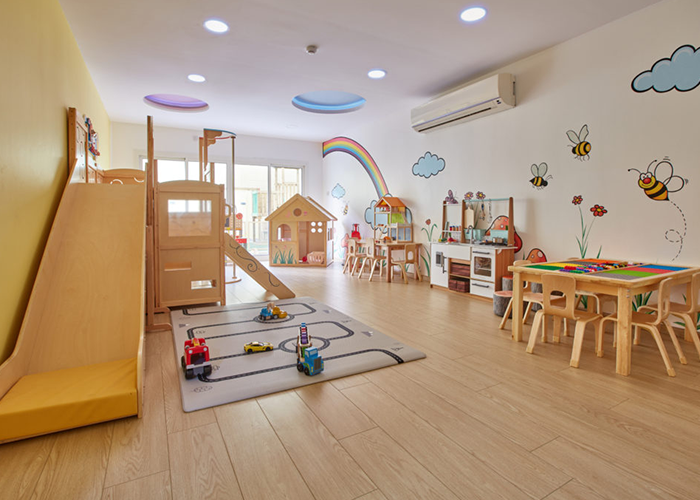
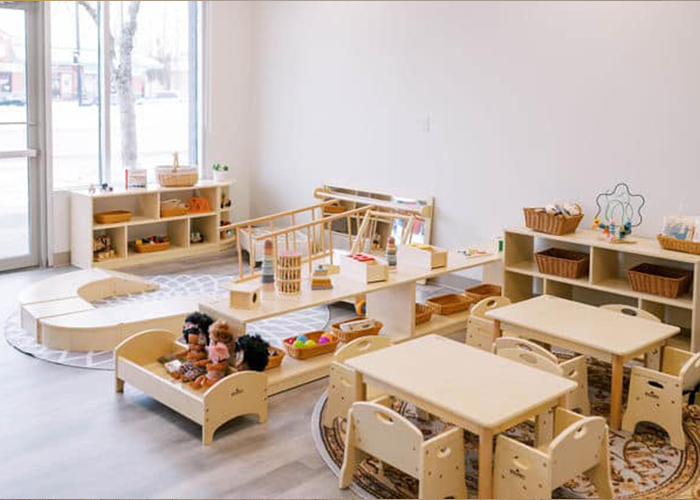
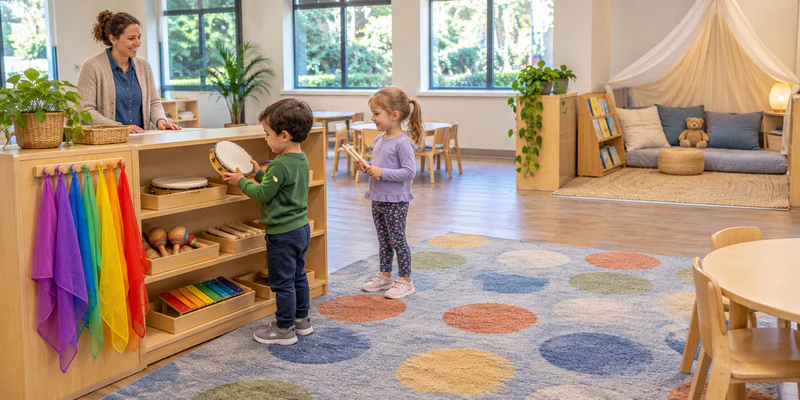
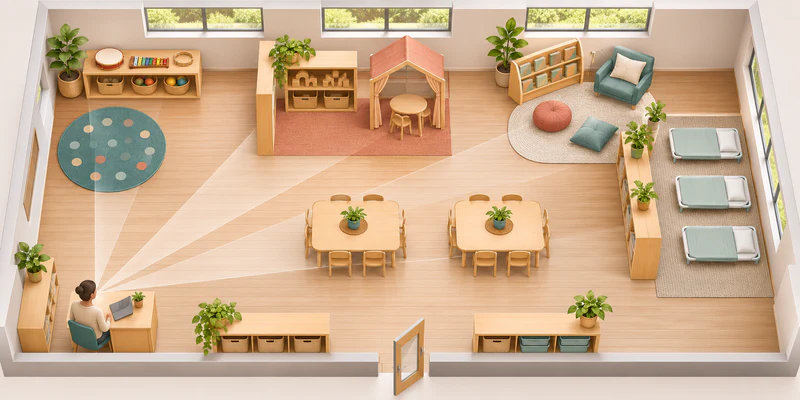
Place the music area near other active zones, such as blocks, dramatic play, or an outdoor doorway. Keep it away from nap, reading, and calm-down areas. Guidance on preschool classroom arrangement also supports separating quiet and active uses while keeping materials accessible and teacher sightlines open.
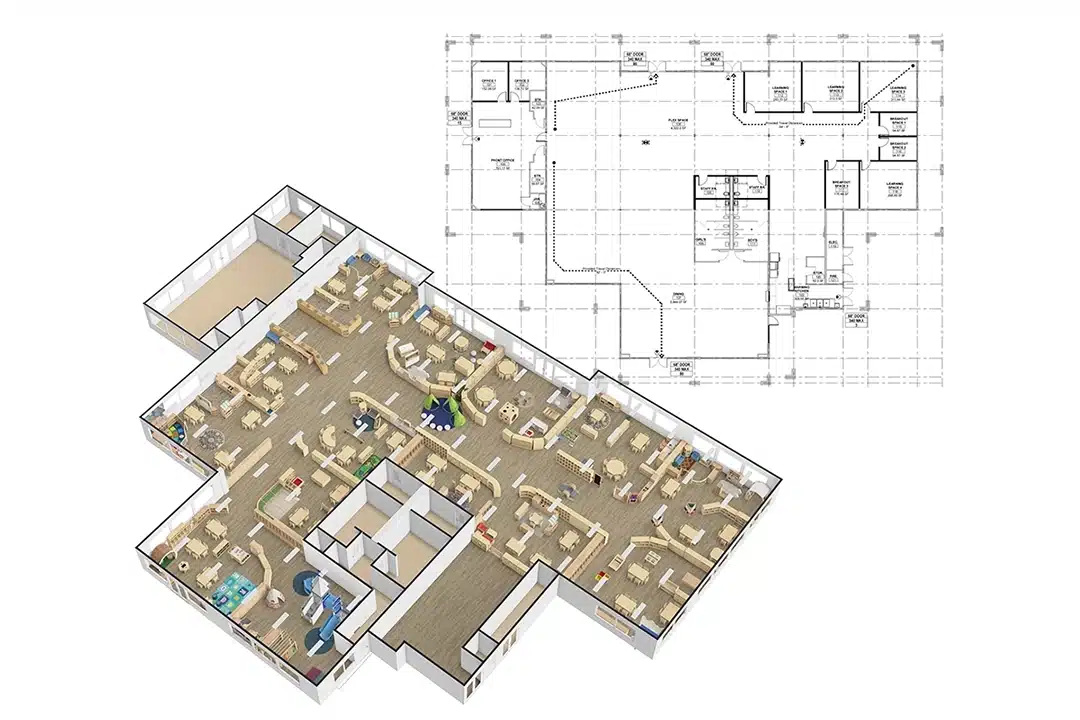
Use a low shelf, rug, or floor markings to define the area. The boundary should show children where instruments and movement belong without creating a blind corner. If you are planning a new room, include this relationship in the wider daycare classroom design from the start. A shelf added after every other zone has been placed rarely has enough movement space or sound separation.
There is no universal floor area for a daycare music center. Size it for the largest group you expect to use at one time. Mark the proposed boundary with painter’s tape, place the shelf footprint, and have staff test marching, turning, scarf movement, and instrument return. Keep door swings, exits, main walkways, and access to other centers clear. Local licensing, fire, and accessibility requirements still apply to the full room.
Sound-absorbing finishes can reduce harsh reflections. A washable rug or resilient mat, rated acoustic wall panels, and limited soft seating can help. Check cleanability, fire requirements, and installation details before using fabric, foam, or hanging materials in a childcare room.
Select Instruments for the Children and the Group Size
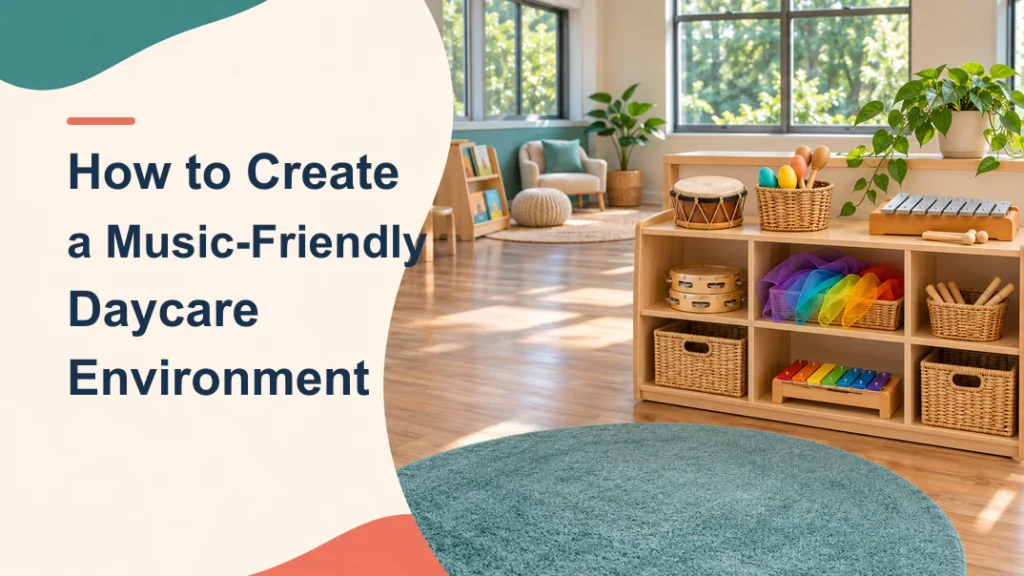
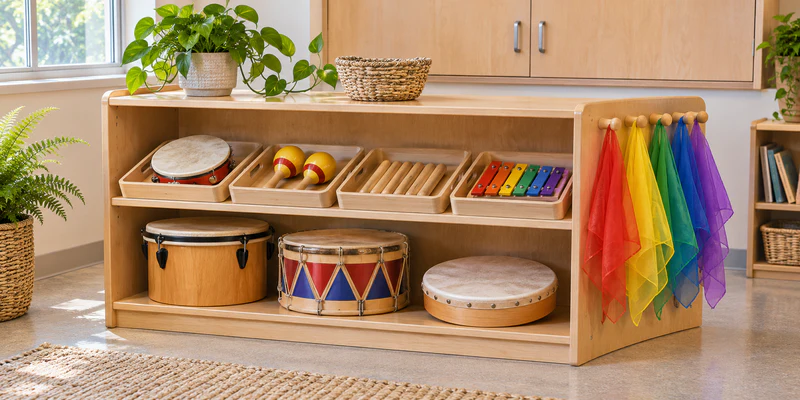
Choose instruments that children can control with a simple action and a predictable result. A balanced starter set can include something to tap, shake, drum, and play for pitch, plus movement props such as scarves. This gives children different sound and movement choices without filling the shelf with near-duplicate items.
| User Group | Practical Starting Point | What You Should Check |
|---|---|---|
| Infants and young toddlers | Adult-led singing, large graspable shakers, securely enclosed bells, and soft hand drums | Age grade, detachable parts, cleanability, sound level, and how the adult will present and store each item |
| Toddlers | Hand drums, shakers, simple rhythm instruments, and movement props | Handle size, loose fittings, sharp edges, throwing risk, and whether children can return the item safely |
| Preschoolers | Rhythm sets, drums, tone bars or a child-appropriate xylophone, scarves, and simple recording or listening tools | Mallet storage, stable construction, replacement parts, cleaning instructions, and teacher control of electronics |
| Mixed-age rooms | Separate trays or access rules for different materials | Whether the youngest child can reach an unsuitable item and whether staff can supervise each group consistently |
Use the manufacturer’s current age guidance and verify the product against your local childcare requirements. A familiar product name does not confirm that its size, attachments, finish, or sound output fits every age group.
Buy for the largest routine music group, not total enrollment. A full-class set requires more storage, cleaning, supervision, and noise control. Many classrooms work better with a small-group set and a rotation plan. You can compare instrument types on the music toys for early childhood page, then build the final list around your room and daily schedule.
Build Storage Children Can Use
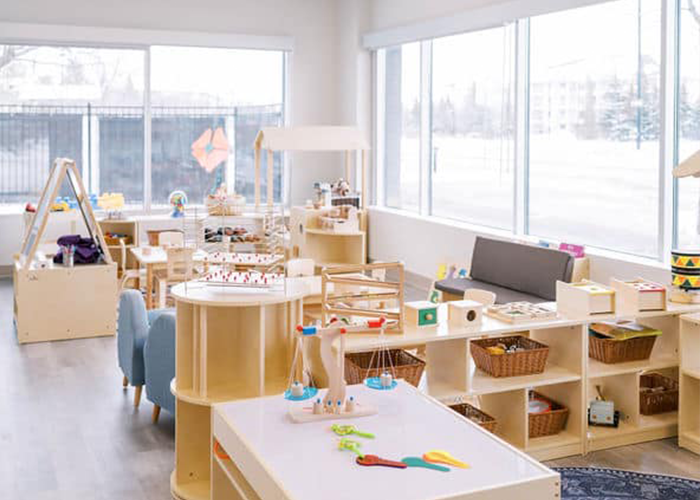
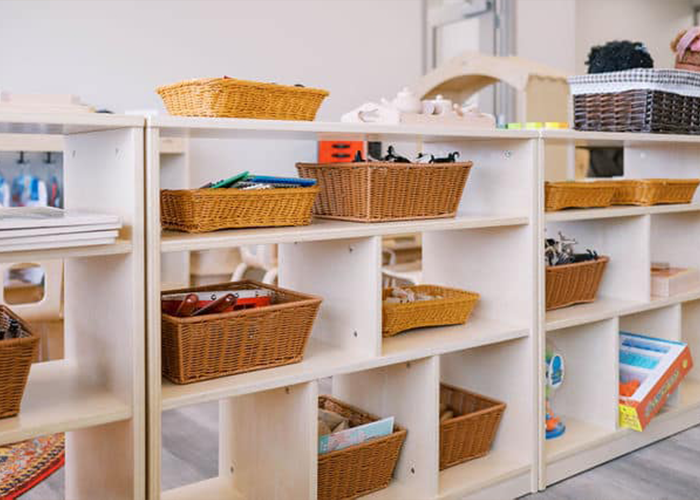
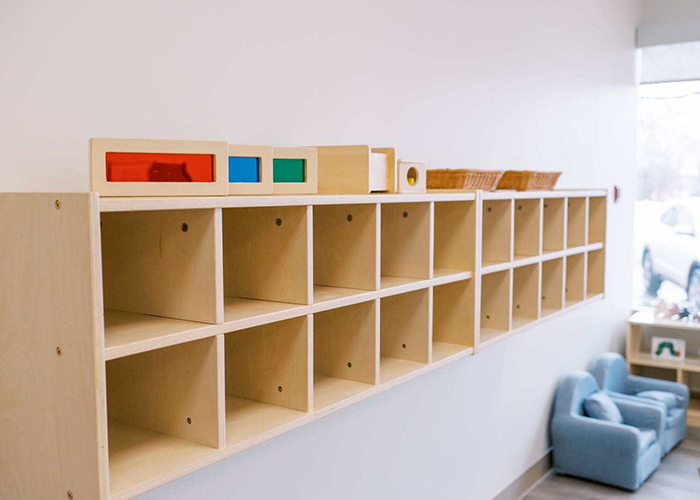
Give every instrument a clear home. Use a low shelf with shallow trays or open bins so children can see the choices without emptying a deep container. Photo labels help younger children match each item to its place. Put heavier drums on the lowest level, keep delicate tuned instruments stable, and store scarves where they can dry and remain untangled.
Teacher-controlled storage should hold electronics, chargers, spare batteries, advanced instruments, cleaning supplies, and items waiting for inspection. Create a separate repair bin outside children’s reach. Move a cracked shaker or loose jingle to that bin immediately and keep it there until a staff member inspects it.
Plan the shelf and instruments together. Check shelf width, tray depth, children’s reach, floor-cleaning access, and the direction children face when selecting materials. In our planning work, a music shelf often fails because the instruments fit on paper but the trays are difficult to carry, a large drum blocks the walkway, or several children gather in the same narrow access point.
Display a small, complete selection and rotate the rest. Rotation keeps the shelf readable and gives staff time to inspect, clean, and reintroduce materials with a clear demonstration.
Manage Sound Without Removing Musical Choice
Control sound at its source first. Limit the group size, introduce one instrument family at a time, use padded beaters where the product allows them, and keep the loudest items for planned sessions or outdoor use. A carpet can soften reflected sound, but it cannot correct an overcrowded group or continuous drumming beside the reading area.
Use recorded music for a defined reason and duration. Current early-childhood guidance recommends using music intentionally and keeping a quiet option available. Children react differently to volume, repetition, tempo, and unpredictable sounds, so observe who joins, who moves away, and who needs a calmer alternative.
Place speakers where staff can reach the controls and children cannot pull the device or cord. Keep the source away from a child’s head and test the volume from the children’s position, not from the doorway. For headphones or electronic instruments, follow the manufacturer’s age, fit, and volume instructions and your center’s device policy.
If the room remains difficult to manage, review the zone location, number of simultaneous users, instrument mix, activity duration, and hard room surfaces before considering major acoustic work. A dedicated music room may need professional acoustic design; a classroom music center usually improves first through better placement and operating rules.

Use Music at Clear Times During the Day
Build music into routines that already have a clear purpose. You might use a short greeting song, a consistent cleanup cue, a planned small-group instrument session, or a movement block before outdoor play. Keep participation flexible when the activity allows it, and preserve a quiet choice for children who need one.
Meals and naps do not automatically need background music. Watch the group and decide whether sound helps the routine or competes with conversation, rest, and staff directions. Short, repeatable cues are easier for children to understand than a playlist that stays on through several activities.
Give staff a simple operating plan:
- State the purpose of the music period.
- Set the group size and available materials.
- Show how to carry, play, stop, and return each item.
- Use one consistent stop signal.
- Offer a quieter place or alternate role.
- Reset and inspect the area before the next group.
Once the environment works, you can add music and movement activities for preschoolers without turning the setup article into an activity list.
Match Cleaning and Maintenance to the Materials
Write the cleaning routine before you place the order. Wood, painted surfaces, metal, plastic, fabric, and electronic components may require different products and drying methods. Ask the supplier for the material and finish, approved cleaning instructions, parts that should stay dry, and any relevant test information. A smooth surface alone does not prove that it will tolerate your center’s disinfectant or cleaning frequency.
Use a short inspection cycle tied to actual use:
- Separate mouthed, visibly soiled, or wet items immediately and clean them according to the product instructions and your health policy.
- Check loose bells, cracked bodies, splinters, exposed fasteners, stretched cords, damaged mallets, battery covers, and distorted sound before returning an item.
- Let cleaned materials dry fully before closing them in a bin.
- Record missing or damaged parts so the set does not quietly become incomplete.
For commercial purchasing, ask whether replacement mallets, batteries, fasteners, or individual instruments can be reordered. A slightly cheaper set can become expensive to maintain if one missing component makes the entire set unusable.
Check the Whole Setup Before You Order
Review the music area as one system. Your room schedule should show the zone capacity, shelf footprint, instrument set, movement props, power needs, cleaning method, rotation storage, and quiet alternative. Confirm who will use each item and when it will be available. This prevents a purchasing list from drifting away from the floor plan and daily staffing routine.
For a new center or renovation, Xiha Montessori can use your floor plan, age groups, room capacity, and preferred activities to help organize the layout and product list. Submit the room information after you have identified the intended group size and the quiet areas that must remain protected.
Common Music Area Setup Mistakes
- Placing the area beside nap mats, books, or a calm-down corner.
- Opening every instrument at once and creating a crowded shelf.
- Buying a full-class set when music will run in small groups.
- Choosing instruments by appearance without checking age grading, attachments, cleaning, and replacement parts.
- Leaving speakers, cords, batteries, or damaged instruments within children’s reach.
- Playing background music throughout the day without a defined purpose.
- Adding decorative acoustic materials without checking fire, hygiene, and installation requirements.
FAQ
How Much Space Does a Daycare Music Area Need?
Use enough space for the planned group to move and return instruments without entering a main walkway. Test the layout with the actual shelf footprint and typical movements. There is no single square-foot figure that fits every room, group size, or local code.
Should the Music Center Stay Open All Day?
It can stay open when staff can supervise it and the sound does not disrupt other activities. In a small or mixed-age room, scheduled access or a rotating instrument tray may work better than unrestricted access.
What Are the Best First Instruments for a Daycare?
Start with a small mix of drums, shakers, tapping instruments, a simple pitched instrument, and movement props. Choose the exact items by age grade, construction, cleanability, sound level, group size, and the way you plan to store them.
Can a Music Area Share Space With Dramatic Play?
Yes, these active uses can sit near each other when the combined traffic, sound, and storage remain manageable. Keep clear boundaries and make sure furniture does not block teacher sightlines.
Does a Daycare Music Center Need Soundproofing?
Most classroom centers need sensible placement, smaller groups, controlled instrument access, and sound-absorbing finishes before full sound isolation. A dedicated room or persistent building-wide noise problem may require an acoustic professional.
Conclusion
A useful music area fits the room, the children, and the daily schedule. Plan location, movement space, instruments, storage, sound control, cleaning, and staff routines as one system. If you are preparing a new daycare or revising an existing classroom, Xiha Montessori can help turn your floor plan and age-group needs into a practical room and product plan.