Why do some children suddenly fixate on stacking, lining up, or repeating words nonstop? Why does one child crave routine, while another becomes obsessed with movement? And what happens if we miss these signs completely? Montessori Sensitive Periods may hold the answer—but many caregivers don’t even know what they are, let alone how to respond to them.
Montessori Sensitive Periods are powerful, time-sensitive windows in early childhood when kids absorb specific skills—like language, movement, or social behavior—more easily than at any other time in life. Understanding these periods allows parents and educators to work with a child’s natural development instead of against it, making learning joyful, effective, and profoundly transformative.
When you align your teaching with a child’s sensitive period, the results are remarkable. Ordinary moments become golden opportunities. Let’s dive into the world of Montessori sensitive periods—and learn how to support children when it matters most truly.
What Are Sensitive Periods in Montessori?
In Montessori education, sensitive periods are short developmental windows when children are especially drawn to learning a specific skill. These are times when they show deep focus, repeat tasks, and absorb knowledge without effort.
Montessori Sensitive Periods reflect the natural stages of a child’s growth—when the brain is wired to take in certain kinds of information quickly, easily, and joyfully. These moments come and go. Miss them, and learning still happens—but it becomes harder and takes longer. Here are some of the most commonly observed Montessori stages of development and the key sensitive periods associated with them:
- Large Movement: birth to 2.5
- Language: birth to 6
- Toileting: 1 to 2.5
- Small Objects: 1 to 3
- Order: 1.5 to 4
- Refinement of Senses: 2 to 6
- Grace and Courtesy: 2 to 6
- Refinement of Movement: 2.5 to 4.5
- Social Skills: 2.5 to 5
- Learning to Write: 3.5 to 4.5
- Learning to Read: 4.5 to 5.5
- Math: 4 to 6
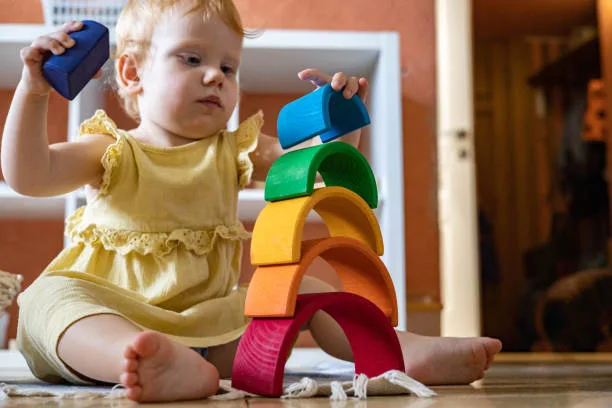
These Montessori sensitive periods don’t look the same in every child, but there are clear signs to watch for. If a child becomes intensely focused on one activity, repeats it often, and seems to light up while doing it, they’re likely in a sensitive period.
When we miss or interrupt these sensitive phases, children can become frustrated. They may lose interest, or struggle later with skills they could have learned easily during the right time. Think of how easy it is for toddlers to learn two languages—but how hard it is for adults to learn just one.
Large Movement: Birth to 2.5 years
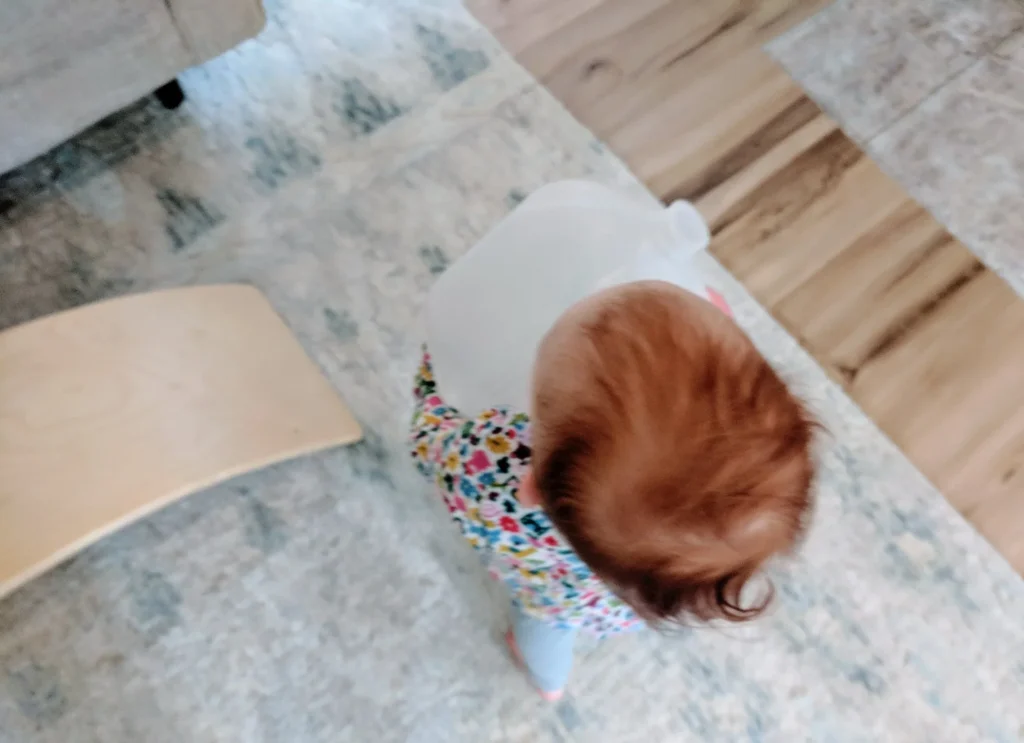
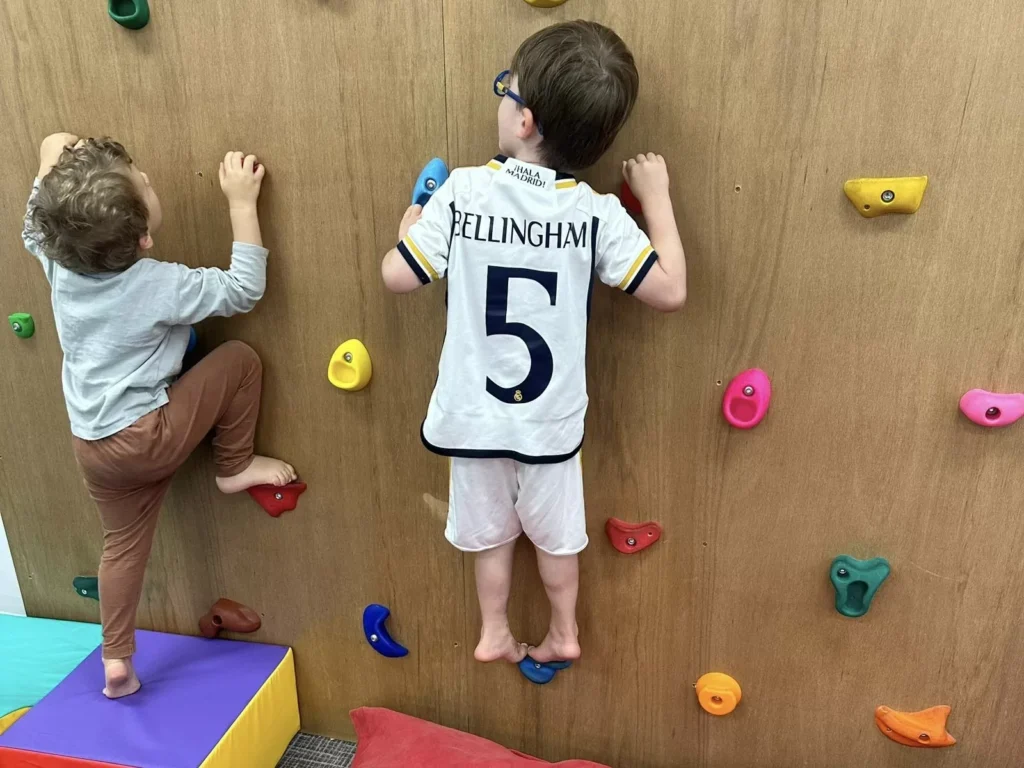
From birth to around two and a half years, children go through an intense sensitive period for large movement. During this time, their entire body becomes a tool for learning. Movement isn’t just physical—it’s developmental. Every roll, crawl, and step supports brain growth, balance, and coordination.
This sensitive period of development begins as early as infancy, when babies shift from lying flat to rolling over, then sitting, crawling, standing, and finally walking. Each milestone builds on the one before it. By the time toddlers are confidently on their feet, they often seem to have endless energy—climbing, running, and exploring with intensity and purpose.
What sets this sensitive period apart is its self-driven nature. Children don’t need to be “taught” to move. They are naturally compelled to do so. Their bodies seek out motion, and their minds grow through it. This is why it’s essential to allow freedom of movement. Confining a child for long periods—whether in strollers, high chairs, or structured settings—can interfere with this phase.
This period is also deeply tied to other areas of development. When children satisfy their need for large movement, they often eat better, sleep more soundly, and focus more effectively on fine motor tasks and cognitive challenges. In other words, supporting this sensitive period in development doesn’t just benefit the body—it also supports the mind.
Parents and educators can nurture this Montessori sensitive period by:
- Providing space for crawling, walking, and climbing
- Encouraging outdoor play and exploration
- Offering opportunities to carry, push, and pull real objects
- Letting children take the lead during walks or movement-based play
- Avoiding unnecessary restrictions that limit motion
Language: Birth to 6 years
The most powerful of all Montessori Sensitive Periods is the sensitive period for language. It begins at birth and lasts until around age six. During this phase, children are biologically wired to absorb language effortlessly—without formal teaching, textbooks, or drills.
This sensitive period in development unfolds gradually, starting even before birth. Studies show that babies begin hearing and recognizing sounds from the womb. After birth, they start to respond to voices, mimic sounds, and eventually form their first words. These early vocalizations may seem simple, but they are part of an intricate process of decoding tone, rhythm, and meaning.
From birth to age three, language development is exceptionally rapid. A child hears thousands of words daily, and their brain categorizes, connects, and stores it all at an astonishing pace. During this sensitive period, they pick up vocabulary, sentence structure, and pronunciation just by being surrounded by spoken language.
By age four or five, many children can express complex thoughts, tell stories, and ask insightful questions. They may begin recognizing written letters and connecting them to sounds—laying the groundwork for reading and writing. What’s impressive is that they’re not learning through direct instruction. They’re learning through immersion, repetition, and interaction—driven by a natural inner drive that defines the Montessori sensitive periods.
To support this period of development, adults can:
- Speak clearly and often, using rich vocabulary
- Read aloud daily, using expressive voices and storytelling
- Respond to babbling and early words with enthusiasm
- Sing songs, tell rhymes, and engage in simple back-and-forth conversation
- Avoid over-reliance on screens, and prioritize human interaction
- Ask open-ended questions to encourage longer replies
- Introduce books, picture cards, and real-world vocabulary through daily routines

One of the hallmarks of this sensitive period is repetition. Children may ask to hear the same story over and over, or repeat a new word endlessly. This isn’t just a preference—it’s a developmental need. Repetition helps solidify neural connections and gives children a sense of mastery and confidence.
This sensitive period Montessori identified also includes an incredible potential for bilingualism. If exposed to two (or more) languages during this window, children can absorb and separate them naturally, without confusion. It’s not only possible—it’s beneficial. Bilingual children often demonstrate enhanced cognitive flexibility, memory, and cultural awareness.
However, if children don’t receive sufficient language input during this phase, the effects can be lasting. Speech delays, frustration with communication, and difficulty in social connection may arise. While these can be addressed later, the process is far more challenging than it would be during the natural sensitive period.
Toileting: 1 to 2.5 years
Between the ages of 1 and 2.5 years, many children enter a sensitive period for toileting. This stage is about more than just potty training—it’s a powerful sensitive period in development where the child becomes aware of their bodily functions and begins striving for independence.
Toileting readiness is not just physical—it’s developmental and psychological. During this time, children start noticing wet or soiled diapers, express interest in what others are doing in the bathroom, and may even begin telling you before or after they eliminate. These are all signs that the Montessori sensitive periods are at work.
What makes this period different from simply “training” is that the motivation comes from the child. They are driven by a deep internal need for autonomy and mastery over their body. If we wait too long or miss this sensitive period, toilet learning may turn into a battle of wills rather than a natural, self-directed process.
Supporting the child during this sensitive period of development means:
- Watching for signs of readiness, like staying dry for more extended periods or showing curiosity
- Using consistent language around toileting (e.g., “You’re wet. Let’s change your pants.”)
- Offering opportunities to sit on the toilet or potty at regular times, without forcing
- Encouraging dressing and undressing independently to promote autonomy
- Being patient, calm, and accepting of accidents as part of the learning process

This sensitive period is not only about physical control—it’s about building dignity, self-confidence, and independence. When children are allowed to follow their own rhythm and take ownership of their toileting journey, they often transition smoothly and proudly.
Small Objects: 1 to 3 years
From around age 1 to 3, children enter a distinct sensitive period for small objects—one of the most focused yet often overlooked Montessori Sensitive Periods. During this phase, their attention shifts toward the tiniest details in their environment. What may seem unimportant to adults—a button on the floor, a crumb under the table, a small sticker—can completely capture a child’s interest.
This fascination is part of a powerful Montessori Sensitive Period. It’s not just about curiosity—it’s about developing concentration, coordination, fine motor skills, and visual discrimination. As part of this sensitive period in development, the child is fine-tuning their ability to notice, grasp, and manipulate small items with precision and purpose.
You may notice your toddler:
You may notice your toddler:
- Picking up lint or specks off the floor
- Pointing out bugs, screws, or stickers
- Playing with zippers, beads, buttons, or puzzle pieces
- Using fingers to pinch, poke, or sort tiny items

This intense focus is a clue that the child is working through one of their most important periods of development. They’re refining the small muscles of the hands, strengthening their pincer grip, and building the hand-eye coordination they’ll later use for writing, dressing, or tying shoes.
Montessori environments support this sensitive period by offering purposeful activities with small, self-contained materials. These might include sorting objects by size or color, transferring beads with tweezers, or assembling puzzles with tiny knobs. These aren’t just games—they are tools for developing the child’s neurological pathways and muscular control.


To support this sensitive period at home or in the classroom:
- Offer safe, small objects for sorting, transferring, and exploring
- Create treasure baskets with varied textures, shapes, and materials
- Allow your child time and space to focus without rushing or interrupting
- Avoid oversized or overly stimulating toys during this phase
- Watch how your child interacts with small details—then build on it
This period is also about concentration. Children working with small objects often tune out everything around them. Interrupting them mid-task can break their flow and pull them out of deep learning. Letting them repeat the task freely is what strengthens focus, patience, and inner discipline.
So when your toddler crouches down, captivated by an ant trail or poking at the tiniest crack in the sidewalk, don’t rush them along. They’re not wasting time—they’re following one of the most precise and essential sensitive periods Montessori education has taught us to respect.
Refinement of Senses: 2 to 6 years
Between the ages of 2 and 6, children pass through one of the most quietly powerful Montessori Sensitive Periods—the sensitive period for the refinement of the senses. During this time, their brains are tuned to notice and process sensory input more deeply. Sight, sound, touch, taste, and smell become the child’s tools for understanding the world.
This sensitive period in development is foundational in Montessori education. Dr. Maria Montessori observed that children during this stage are naturally drawn to textures, patterns, colors, smells, sounds, and shapes. They are not merely exploring their world—they’re learning to fine-tune how they perceive it. Their sensory systems are under construction, and they’re doing the work through hands-on, self-directed activity.
You may notice a child in this stage:
- Running their fingers over different fabrics or objects
- Becoming fascinated with matching colors, shades, or textures
- Responding strongly to loud noises or soft whispers
- Desiring to smell flowers, herbs, or even food before eating
- Repeating tasks that involve sorting by size, weight, or temperature
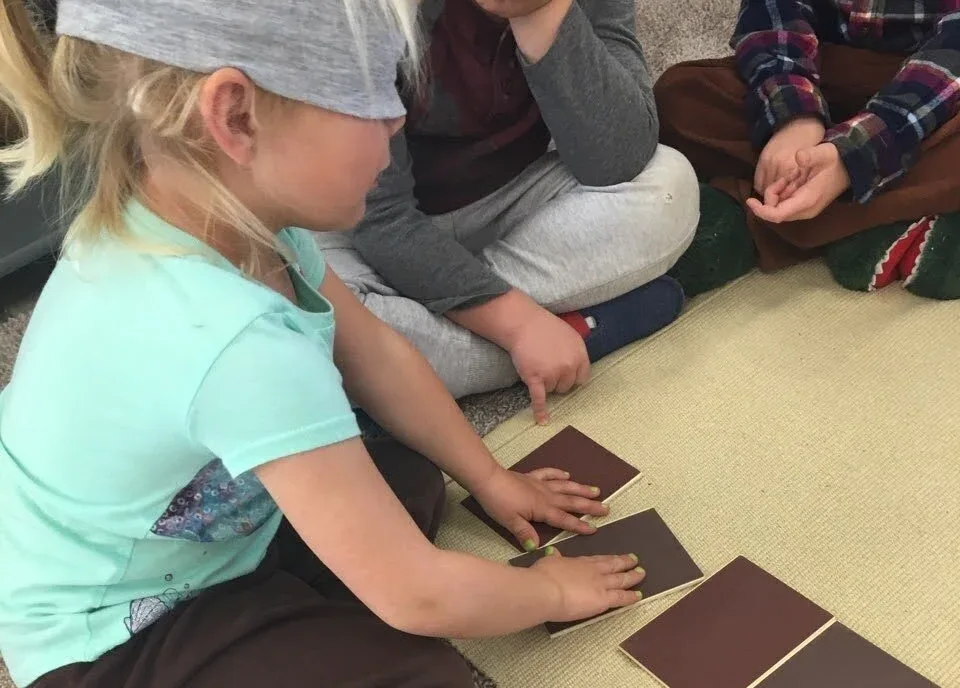
This sensitive period is crucial for cognitive development. The more refined a child’s senses become, the more precise their thinking becomes. Sensory exploration builds the brain’s ability to classify, compare, and analyze—skills that will later support reading, writing, math, and science.
In Montessori classrooms, the refinement of the senses is supported with a complete set of sensory materials—sound cylinders, texture boards, color tablets, and geometric solids. These materials isolate one sense at a time, allowing children to focus intensely and build discrimination gradually and joyfully.
To support this Montessori Sensitive Period at home or in any learning space:
- Provide real-world sensory experiences: cooking, nature walks, hands-on materials
- Allow repeated use of objects that involve sorting, matching, and comparing
- Use natural textures and materials whenever possible (wood, cotton, stone)
- Name sensory qualities: “This is smooth,” “That’s rough,” “This smells sweet”
- Avoid overstimulation: too much noise or visual clutter can disrupt this phase
The power of this sensitive period of development is in the detail. A child who learns to distinguish between fine differences in texture today is training their brain to recognize fine differences in letters, sounds, and ideas tomorrow.
Grace and Courtesy: 2 to 6 years
Between the ages of 2 and 6, children experience a sensitive period for social behavior, often referred to in Montessori as Grace and Courtesy. During this time, they become especially aware of how people interact. You might notice them mimicking greetings, expressing concern for others, or getting upset when someone “breaks the rules.” These moments reflect a deep desire to understand how to behave within a group.
This sensitive period in development is not about enforcing manners—it’s about forming habits of empathy, kindness, and respect. Children watch how we speak, wait our turn, and handle emotions. What they observe, they absorb. The learning is not conscious—it’s intuitive.

To support this period of development, adults can:
- Model calm, respectful communication—even in challenging moments
- Use gentle reminders rather than punishments
- Offer scripts children can use: “You can say, ‘May I have a turn?’”
- Give opportunities for the child to participate in group routines (setting the table, passing out snacks)
- Recognize and name emotions in real time: “It looks like you’re feeling left out.”
When children are supported in this Montessori sensitive period, they begin to internalize positive social behaviors. They don’t just “follow rules”—they grow into emotionally intelligent, confident individuals who know how to navigate relationships with grace and care.
Refinement of Movement: 2.5 to 4.5 years
Between the ages of 2.5 and 4.5, children enter a distinct sensitive period where their movements become more intentional, precise, and refined. This stage builds upon earlier gross motor development and focuses on control, coordination, and purposeful action—key elements of independence.
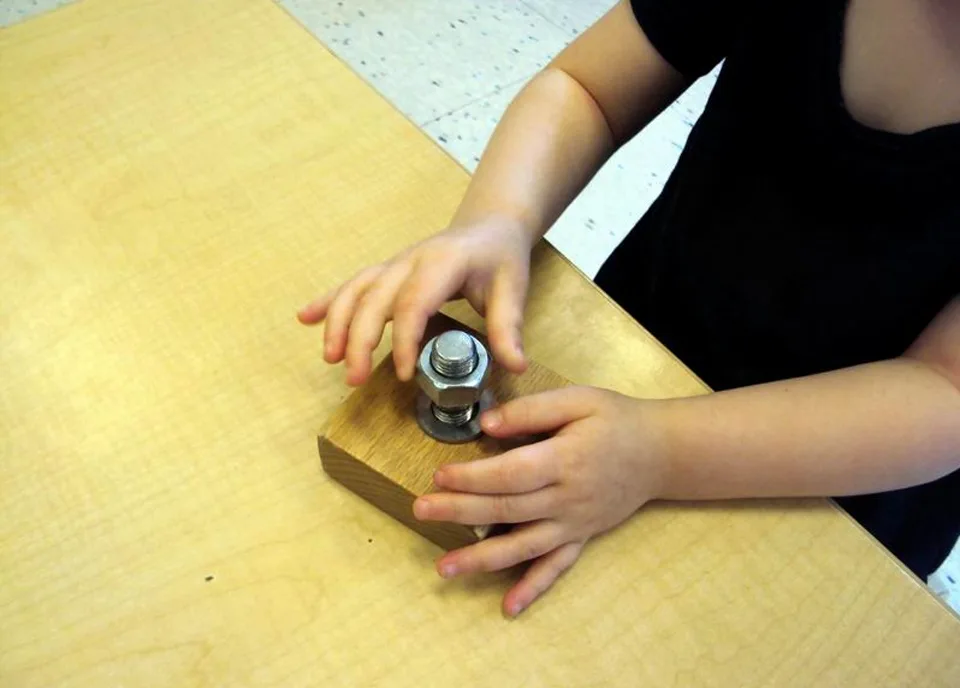
Unlike the earlier sensitive period for large movement, which is about mastering walking, climbing, and running, this sensitive period in development is all about doing things with care. Children want to pour without spilling, button their clothes, carry a tray steadily, or move objects from one place to another with exactness.
You might notice a child slowing down, repeating actions with deliberate control, or spending long periods practicing tasks that involve hand-eye coordination. These aren’t random activities—they’re signs that the child is working through one of the most focused Montessori Sensitive Periods.
This developmental window supports a wide range of skills:
- Fine motor development (which later supports writing and self-care)
- Balance and spatial awareness
- Concentration and inner discipline
- Independence in daily tasks
To support this period of development, adults can provide:
- Practical life activities like pouring, spooning, folding, or sweeping
- Child-sized tools and furniture that allow for precise movement
- Repetitive tasks that encourage refinement (like transferring small beads or threading)
- Time and space for uninterrupted practice without rushing or correction
One of the hallmarks of this sensitive period is repetition. A child may carry the same pitcher across the room ten times, or insist on zipping and unzipping the same jacket over and over. This repetition builds coordination, but it also reinforces a deep sense of mastery and focus.
Children who move through this sensitive period Montessori identified often develop stronger self-regulation, attention to detail, and pride in their work. When rushed or interrupted, however, they may become frustrated—not because they’re stubborn, but because their internal need to refine a skill has been left unmet.
This is one of those periods of development where slowing down is key. Letting children work at their own pace during this phase builds the foundation for independence, confidence, and precision in everything they’ll do later—academically and practically.
Social Skills: 2.5 to 5 years
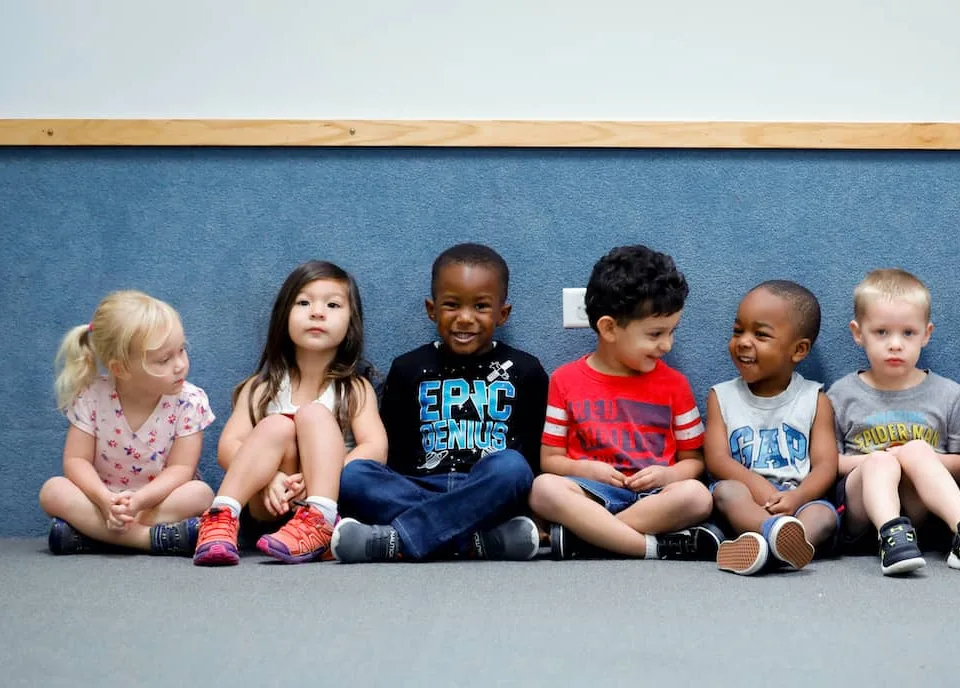
From around 2.5 to 5 years of age, children enter a meaningful, sensitive period for social development. During this time, they begin to form genuine relationships beyond the family unit, showing interest in group activities, shared tasks, and emotional connection with peers.
This sensitive period in development is marked by a shift from parallel play to cooperative play. Children want to interact, collaborate, and engage in simple conversations. They’re learning the unspoken rules of friendship—how to take turns, resolve conflicts, and communicate needs respectfully. These are not just surface behaviors; they reflect deep cognitive and emotional growth.
Within Montessori environments, this sensitive period is nurtured through mixed-age classrooms, where children naturally observe, model, and learn from one another. Activities like setting the table together, helping a younger classmate, or participating in group lessons offer real-life practice in navigating social life.
You may notice a child in this Montessori sensitive period trying to include others in their play, expressing strong feelings about fairness, or mimicking phrases they’ve heard in adult conversations. They may become more sensitive to social dynamics—sometimes joyful, sometimes unsure—and they may need guidance as they learn to handle these new situations.
To support this period of development, adults can:
- Encourage group-based activities that require sharing and collaboration
- Stay nearby to offer gentle guidance during conflicts
- Acknowledge emotions without judgment: “You felt left out when they didn’t share.”
- Offer social scripts: “You can say, ‘Can I play with you?’”
- Provide consistency in expectations and social boundaries
Like all Montessori Sensitive Periods, the child’s motivation during this time comes from within. They’re not learning social skills because they’ve been told to—they’re learning them because they need them. Social connection becomes as important as physical or cognitive development.
Children supported during this sensitive period grow into more empathetic, cooperative, and resilient individuals. They learn that relationships require effort, communication, and mutual respect—skills that will benefit them not just in school, but throughout life.
Learning to Write: 3.5 to 4.5 years
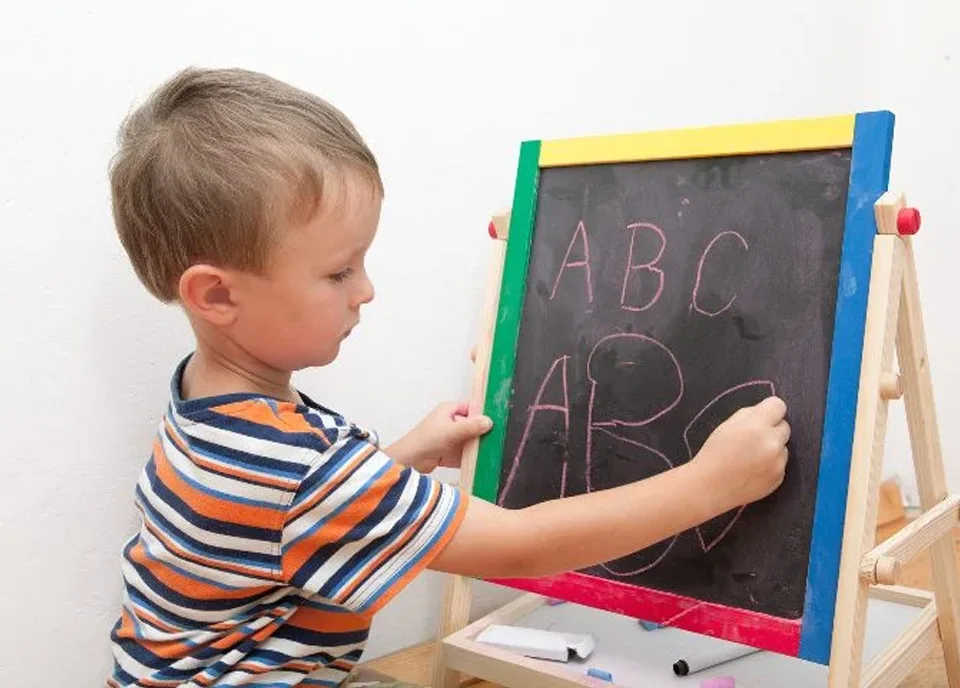
Around the age of 3.5 to 4.5 years, many children enter a distinct sensitive period for writing. This stage often comes as a surprise to adults because it can appear suddenly—children begin expressing a strong desire to form letters, trace shapes, and create symbols that resemble writing. What seems spontaneous is the result of layered development from earlier Montessori Sensitive Periods.
Before writing begins, children have already built the foundation. The sensitive period for movement, particularly the refinement of hand and finger control, lays the groundwork. So does the sensitive period for language, which gives them an ear for the structure of words and sounds. Writing is the natural next step—a union of physical control and expressive language.
In Montessori, writing is introduced before reading, because it allows the child to express what they already know through sound, speech, and hand coordination. During this sensitive period in development, children often take joy in tracing sandpaper letters, using metal insets, and forming words with moveable alphabets. These materials make writing tactile, visual, and active.
You may notice a child in this sensitive period:
- Drawing shapes that resemble letters
- Practicing the same letters over and over
- Showing interest in holding a pencil “the right way”
- Asking how to write their name or label their drawings
To support this period of development, it helps to:
- Offer writing materials that are accessible and inviting
- Let the child use their fingers to trace letters in sand, flour, or on textured cards
- Avoid correcting too quickly—let them explore with freedom
- Celebrate the process, not the product
- Encourage sound games that build phonetic awareness
This Montessori sensitive period is fueled by the child’s desire to communicate through a new medium. Writing empowers them—it’s no longer just about speaking or listening, but about putting thoughts into physical form. That shift is deeply meaningful to a young child.
Learning to Read: 4.5 to 5.5 years
Around 4.5 to 5.5 years old, many children enter a highly focused, sensitive period for reading. This is the stage where spoken language, writing skills, and symbolic understanding come together, creating a natural readiness for decoding written words. In Montessori education, this sensitive period in development is treated not as an academic milestone—but as a profoundly personal and joyful breakthrough.
Reading doesn’t begin when a child is handed a book. It starts much earlier—during the sensitive periods for language, order, and writing. Once a child begins to understand that sounds (phonemes) connect to letters (graphemes), a bridge forms in their mind: spoken words can be translated into written ones, and vice versa.
A new kind of attention marks this phase. Children might start asking what signs say, pointing to letters in books, or trying to read simple labels. Some may begin blending sounds with ease, even before being formally introduced to reading instruction.
Montessori classrooms support this Montessori sensitive period with a range of hands-on materials: sandpaper letters, the moveable alphabet, phonetic objects, and early readers that align with phonemic awareness. These tools allow children to explore reading through movement, sound, and repetition—always at their own pace.

To support this period of development, adults can:
- Read aloud often, choosing books with strong phonetic structures
- Play sound games and rhyming activities
- Let children handle books freely and follow their interests
- Answer their questions about letters, words, and symbols with enthusiasm
- Provide quiet, cozy spaces for early reading attempts
What’s remarkable about this sensitive period is how quickly reading can unfold once a child is developmentally ready. Some children go from decoding single words to reading full sentences within weeks. Others move more slowly but with steady confidence.
At its core, reading is an invitation into the world of stories, knowledge, and self-expression. When a child learns to read during this natural sensitive period, they’re not just learning a skill—they’re unlocking a lifetime of independent learning.
Math: 4 to 6 years
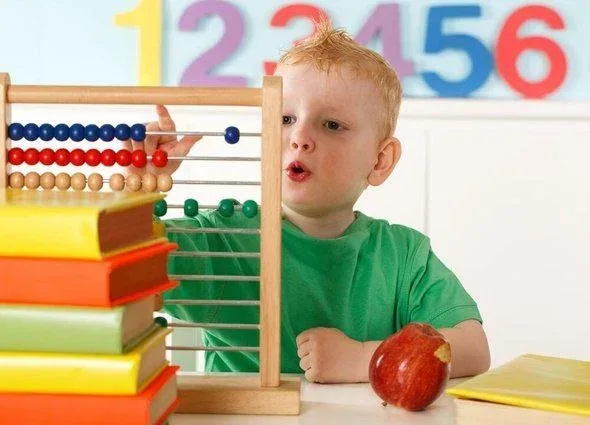
Between the ages of 4 and 6, children typically enter a powerful sensitive period for math. While many think of math as abstract and academic, Montessori views it as a deeply sensory and experiential journey—one that children are naturally drawn to when the timing is right.
This sensitive period in development is rooted in the child’s growing desire for order, logic, and pattern recognition. The same child who previously organized toys by color or insisted on a routine bedtime may now show fascination with counting steps, sorting objects, or asking “how many?”
During this stage, children are building mental structures to understand quantity, sequence, and relationships between numbers. Montessori supports this Montessori Sensitive Period with concrete, hands-on materials that make math visible and tangible. Beads, number rods, spindle boxes, and golden bead chains allow children to manipulate math concepts with their own hands—before ever seeing a written equation.
Signs that a child is in this sensitive period may include:
- Counting objects out loud during play
- Asking about numbers and quantities
- Becoming curious about time, measurement, or comparisons
- Wanting to help set the table or divide food fairly (“we each get two”)
To support this period of development, adults can:
- Integrate math into everyday routines—counting, measuring, comparing
- Provide tactile math tools like blocks, counters, or beads
- Use language that reflects quantity and sequence (“first,” “next,” “more than”)
- Avoid drilling facts—focus instead on experiences and problem-solving
- Encourage curiosity rather than correction
By aligning teaching with this natural sensitive period of development, we give children the chance to build a solid, intuitive relationship with numbers—one that can support them for years to come.
Where the Concept of Sensitive Periods Came From?
The idea of Montessori Sensitive Periods was inspired by Dutch biologist Hugo de Vries, who observed that animals—like caterpillars—go through brief, biologically timed phases of heightened sensitivity. For example, one species is drawn to light shortly after hatching, which leads it to tender leaves it needs to survive. Once that need passes, the light sensitivity fades.
Dr. Montessori saw a similar pattern in children. She noticed that during specific periods of development, children are naturally drawn to activities like movement, language, or order. These are not random phases—they are sensitive periods in development, guiding the child toward specific growth at precisely the right time.
Conclusion: Why the Sensitive Periods Are So Interesting
Montessori Sensitive Periods are more than educational milestones—they are powerful insights into the natural rhythm of childhood. Each sensitive period reveals when a child is most open, capable, and eager to develop a specific skill, whether it’s movement, language, social behavior, or sensory awareness. When we understand and respond to these natural windows of opportunity, we move beyond teaching—we begin to guide development in its most organic form.
What makes these sensitive periods so fascinating is their universality. Across all cultures and environments, children show similar patterns of intense focus and effortless mastery when they are supported at the right time. They don’t need to be pushed—they need to be observed, respected, and given the tools that match the stage they are naturally in. It is this delicate timing that defines the core of Montessori philosophy.
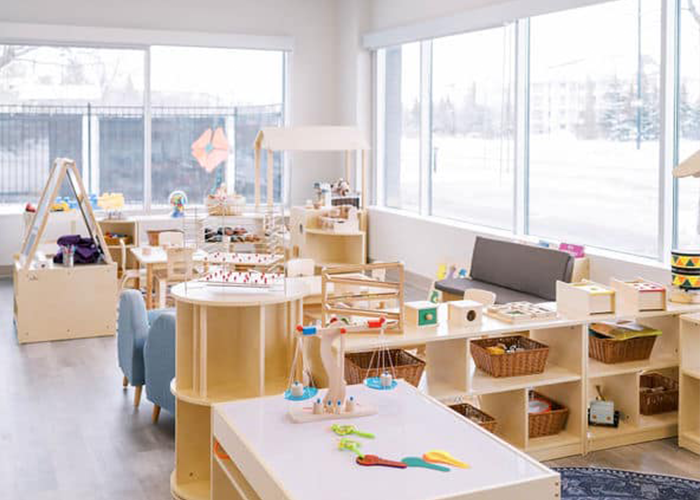
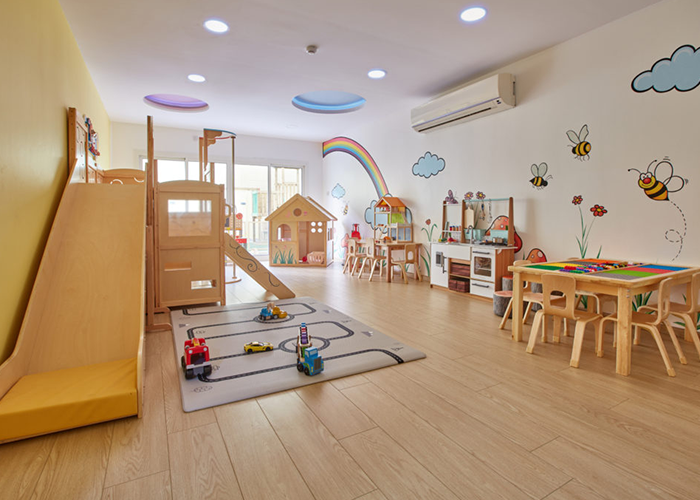
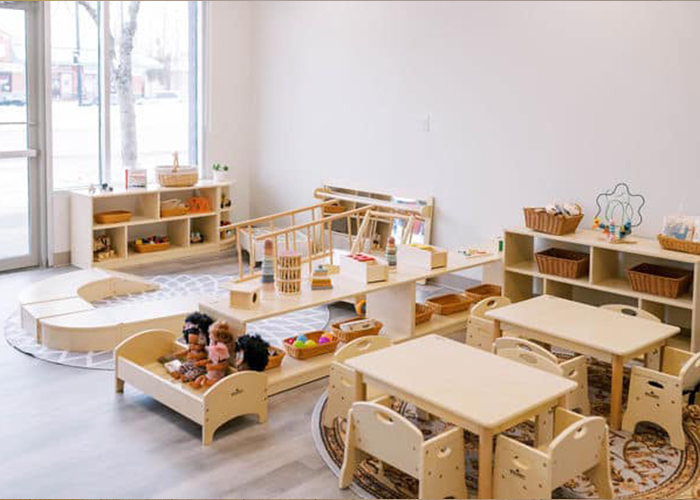
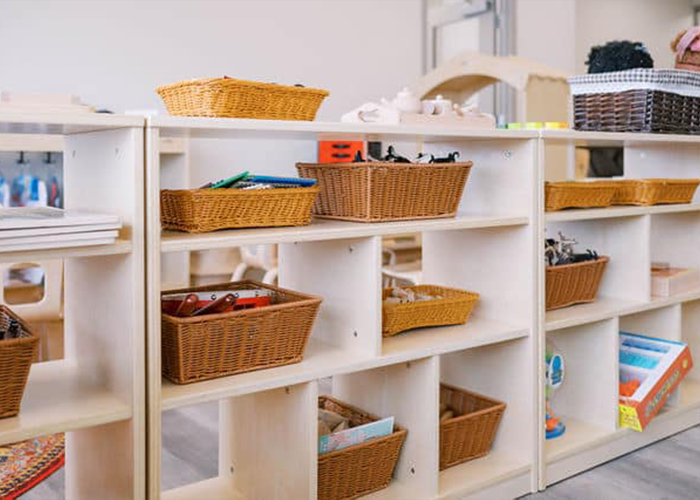
That’s where the environment matters deeply. The spaces we prepare—especially in early childhood settings—must be designed with Montessori stages of development in mind. Everything from shelf height to material selection influences how successfully a child can follow their natural drives. This is where manufacturers like Xiha Montessori make a meaningful difference. When furniture is designed intentionally to support the physical and developmental needs of young children, it silently supports every sensitive period—allowing children to move, focus, and grow in alignment with their natural developmental path.
FAQs
1. Are sensitive periods the same for every child?
The general sequence of Montessori Sensitive Periods is similar for most children, but the timing can vary.
Some children may show interest in certain skills earlier or later, depending on their individual development.
Observation is key to supporting each child’s unique sensitive period in development.
2. What happens if a sensitive period is missed?
Skills can still be learned later, but without the natural ease of learning seen during the sensitive period.
It often requires more effort, practice, and external motivation outside of the ideal developmental window.
That’s why timing and prepared environments matter so much in Montessori stages of development.
3. Are sensitive periods only relevant in Montessori schools?
No—sensitive periods in development are biologically universal and apply to all children, everywhere.
Montessori simply identifies and responds to them with more precision than most traditional systems.
Any educator or parent can support Montessori Sensitive Periods by observing and responding to a child’s needs at the right time.