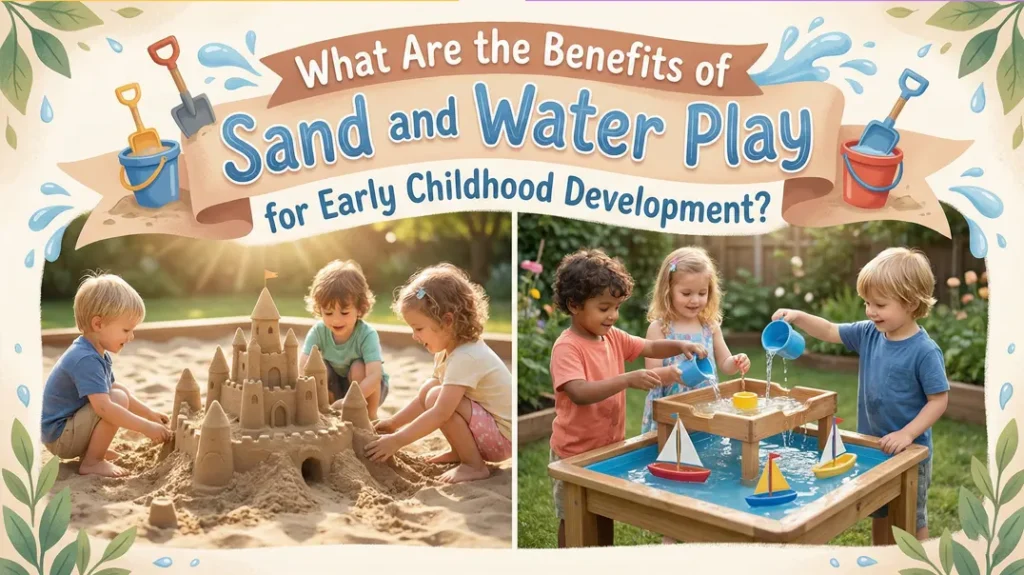
What Are the Benefits of Sand and Water Play for Early Childhood Development?
Steven Wang
Views: 436
Share this article:
Table of Content
Last updated on: 2026-02-05
This article highlights the key benefits of sand and water play in early childhood development. It offers practical tips for setting up engaging play areas, selecting essential tools, and encouraging children to explore, experiment, and learn through hands-on sensory activities in the classroom.
Sand and water play offer some of the richest sensory learning experiences available in early childhood settings. Through pouring, digging, squeezing, mixing, and experimenting, children are not only exploring materials but also developing the brain systems that support later academic and social skills.
Early childhood learning does not begin with worksheets or instructions. It begins with sensory experience. Young children understand the world first through touch, movement, temperature, weight, texture, and resistance. These early physical interactions build the foundation for thinking, language, and self control.
In well designed early learning environments around the world, sand and water areas are not optional extras. They are considered core learning spaces. Whether in Montessori classrooms, Reggio inspired settings, or play based programs, sensory play with natural materials is a consistent feature.
This article will explore the importance of sand and water play in early childhood development and why it remains a core component of age-appropriate developmental education practices.
1. What is Sand and Water Play?
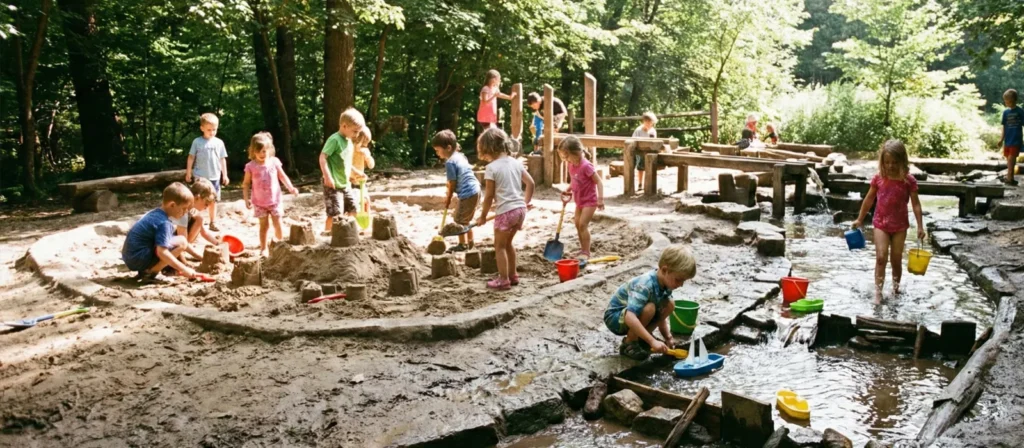
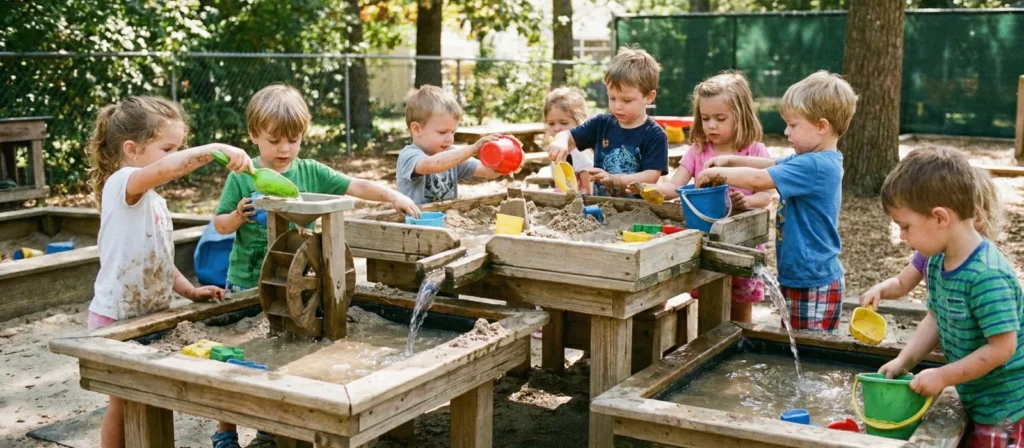
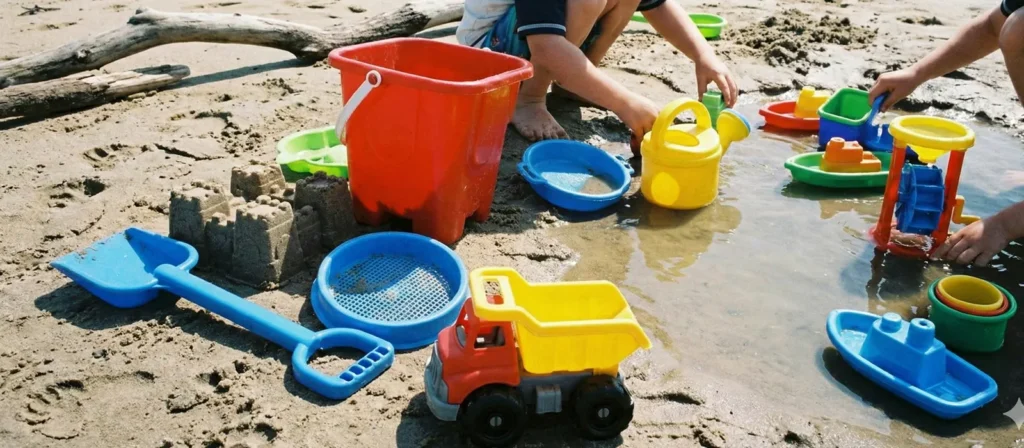
Sand and water play is any form of open-ended exploration using sand, water, or a combination of both. It can happen outdoors in a large sandpit with a water source, or indoors in a simple plastic tub on a mat. Children might be:
Scooping dry sand into buckets.
Adding water to sand to make it stick together.
Pouring water between cups, funnels and bottles.
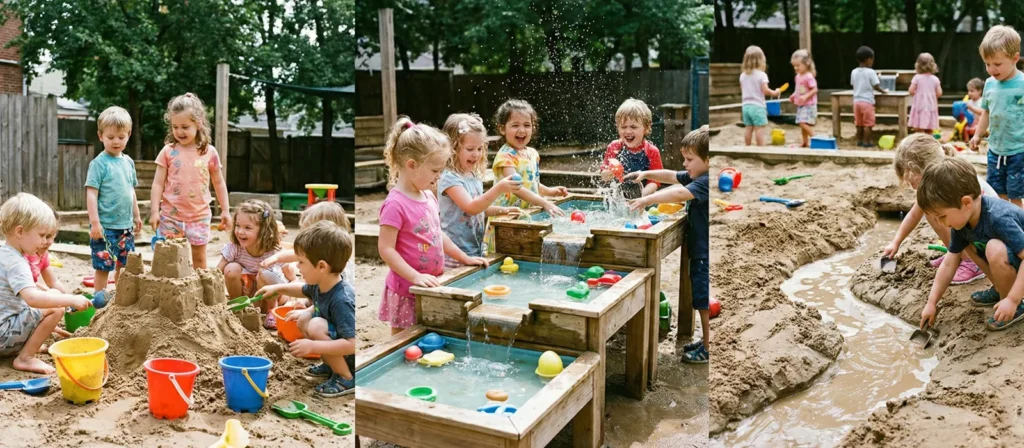
Mixing sand and water into “mud” for pretend cooking or construction.
Floating and sinking objects in a basin.
Digging channels in sand and pouring water to make rivers and lakes.
The key feature is that sand and water play is child-led and exploratory. There is no single “correct” outcome. Instead of being told exactly what to build or how to move, children test ideas, notice what happens, adjust their actions and gradually form concepts about the physical world.
Their play may look casual on the surface, but underneath they are constantly testing ideas:
“What happens if I add more water?”
“Why is this container full while the other is not?”
“Can I make a tunnel that doesn’t collapse?”
Benefits of Sand and Water Play in Early Childhood
Sand and water play impacts almost every area of early development. To make this clear and practical, we will look at eight core benefit areas. As you read, try to connect each benefit to situations you have actually seen in your classroom, centre or home.
1. Enhanced motor skills
One of the most obvious benefits of sand and water play is the development of motor skills. Children use both large muscle groups and small, precise movements as they interact with the materials.
At the fine motor level, children practice precise movements as they pick up small scoops of sand, pour water into narrow funnels, grasp tools, and manipulate small objects. These actions strengthen the muscles of the hands and fingers, which are essential for later tasks such as writing, cutting with scissors, and fastening clothing.
At the gross motor level, sand and water play often involve actions like carrying buckets, pushing wheelbarrows, digging deep holes, and lifting containers. These require coordination and muscle control in the arms, shoulders, back, and legs. As children master these movements, they become more confident in controlling their bodies and interacting with their environment.
An “insider tip” many educators use is the “tiny tool window”. For ten to fifteen minutes of a sand and water play session, we introduce very small tools – narrow spoons, pipettes, droppers, mini scoops. We do not force children to use them, but we make them available. This short window gently nudges children toward finer control, without turning play into a handwriting lesson.
2. Improved Hand‑Eye Coordination
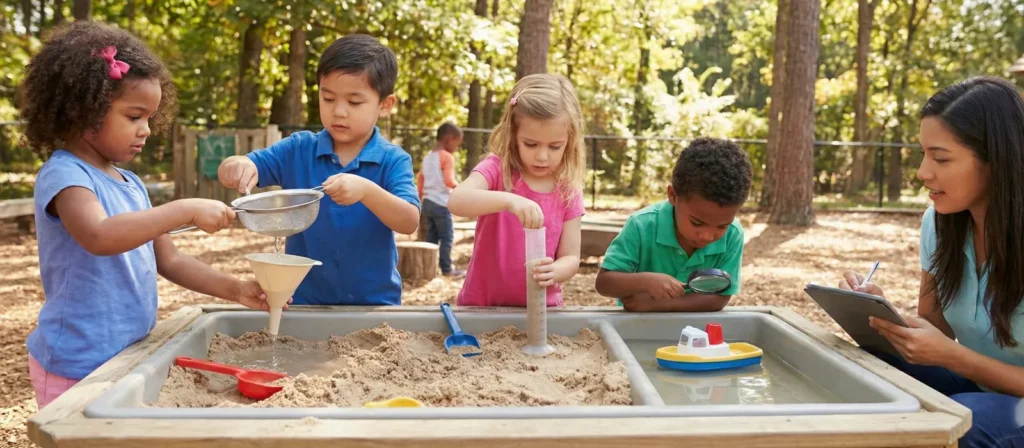
Sand and water play demand constant coordination between what the child sees and how they move their hands. Examples include:
Pouring water from one container to another without spilling
Filling a narrow tube with sand
Stacking wet sand into stable shapes
Each of these actions requires the eyes to guide the hands with precision. Over repeated interactions, children refine hand‑eye coordination.
3. Social and Emotional Development
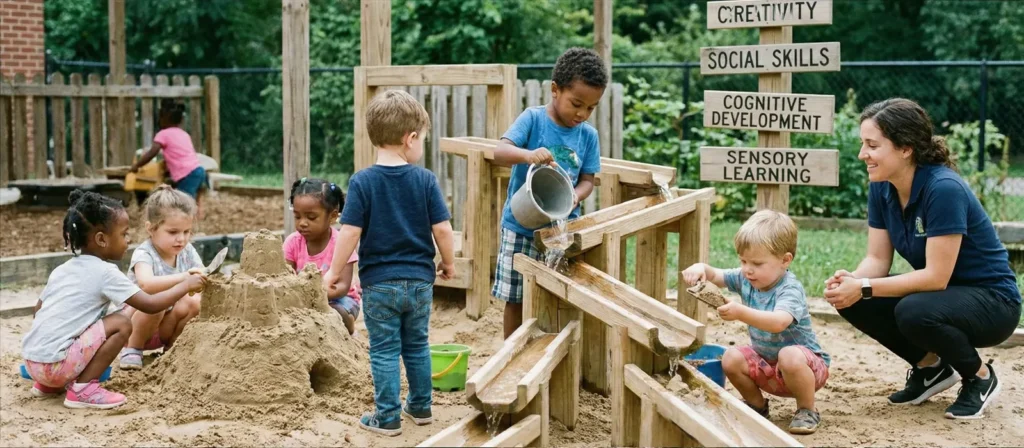
Sand and water play rarely happens in isolation. It naturally attracts groups of children, which makes it a powerful setting for social and emotional learning.
At a busy sandpit or water table, children must navigate:
Turn-taking: waiting for the popular bucket, shovel or mould.
Sharing: agreeing to use tools together or swap after a while.
Cooperation: working as a team to dig a tunnel or build a dam.
Communication: explaining ideas, making requests and negotiating conflicts.
Empathy: noticing when another child’s sand structure is destroyed and responding appropriately.
Emotionally, the sand and water area is where many children learn to handle frustration, disappointment and excitement. A carefully built sandcastle may collapse unexpectedly. A friend might accidentally knock over a dam. Water may run in a different direction than planned. These small “failures” are powerful lessons in resilience. Children experience a setback, feel the emotion, and then decide whether to try again, adjust their plan, or ask for help.
The adult’s role here is important. Instead of stepping in immediately to fix every problem, skilled educators and parents use questions and calm language:
“I can see you are upset that your tower fell. What do you think made it fall? How could we make it stronger next time?”
Over time, children learn not only practical strategies for success in sand and water play, but also internal strategies for managing big feelings and interacting respectfully with others.
4. Stimulated Creativity
Sand and water are some of the most flexible materials available to young children. They can be piled, flattened, sculpted, poured, coloured, scented, warmed, cooled, combined with natural objects and incorporated into imaginative storylines.
This process stimulates creativity in several ways:
Open-endedness: There is no single “right” way to use sand and water. Children are free to invent their own goals and change them at any time.
Problem-solving: Creative play often involves obstacles: the moat keeps filling with sand, the “cookie dough” is too dry, the river will not reach the lake. Children must think, experiment and adapt.
Symbolic thinking: When a handful of wet sand stands in for a cake, or a puddle becomes a lake for toy animals, children are practising the symbolic thinking that underlies reading and writing later on.
5. Sensory Development
Sand and water play is one of the richest sensory experiences you can offer young children. Through touch, sight, and sometimes sound, they explore:
textures: rough, smooth, grainy, sticky, slippery
temperatures: cool water, warm sand
weights: heavy wet sand, light dry sand
sounds: splashing, trickling, scraping
For some children, especially those with sensory processing differences, sand and water play can be both a challenge and a therapy. A child who is initially uncomfortable with sticky wet sand may gradually tolerate more textures through gentle exposure. Another child who is overwhelmed by noisy, visually busy environments may find the simple, repetitive sensations of pouring water very soothing.
For a sensory-sensitive child, that might mean starting with dry sand or letting them use tools instead of bare hands. For a child who seeks strong sensory input, it may involve providing heavier buckets, deeper basins or textured tools.
6. Cognitive Skill Development
Cognitive skills include thinking, reasoning, memory, problem-solving, and the ability to plan and focus. Sand and water play may look informal, but it constantly stretches these abilities.
Even when children are “just playing”, their brains are busy building mental models about how the world works. These informal models become the base for more formal learning in maths, science and problem-solving later on.
To gently enrich cognitive development, we often use the “three-step prompt”:
“What are you trying to do?”
“What have you already tried?”
“What could you try next?”
7. Introduction to STEM Concepts such as Science
Science, technology, engineering and mathematics (STEM) can feel abstract if introduced too early in formal ways. Sand and water play offers a very developmentally appropriate bridge into these areas.
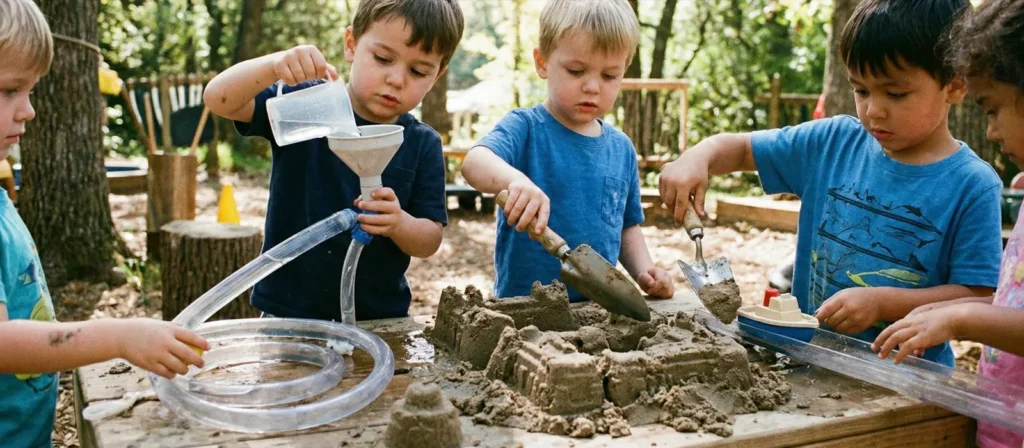
For early technology awareness, simple tools like funnels, wheels, sieves and pumps offer a starting point. Children see how these devices change the flow of water or the behaviour of sand, and they start to understand that humans design tools to make specific tasks easier.
Self-regulation is the ability to manage one’s emotions, impulses and attention. It is one of the most important skills children develop in the early years, and sand and water play can be a powerful support.
Consider how children handle:
Frustration: Structures may collapse. Water may spill. Learning to cope with these frustrations helps children build emotional resilience.
Patience: Sand and water play often involve slow, careful actions. Waiting, experimenting, and refining require calm focus.
Impulse control: Sharing tools, waiting turns, and responding thoughtfully to others’ suggestions build impulse control.
Attention and focus: Many children become deeply engrossed in sand and water play, demonstrating sustained attention.
Fun Sand and Water Play Activities
Understanding the theory is helpful, but most parents and educators also want concrete ideas. Below are practical, developmentally appropriate activities. You can adapt them for different ages and settings.
1. Simple Pouring and Filling Station
For toddlers and young preschoolers, set up a low table or large basin with:
Several containers of different sizes and shapes.
A few small jugs and cups.
Optional funnels or ladles.
Fill one container with water and invite children to explore pouring and filling. You can extend learning by:
Modelling language such as full, empty, heavy, light, more, less.
Asking gentle questions: “Which cup holds more water?” “What happens if you pour slowly?”
Introducing simple challenges: “Can you fill this container exactly to the line?”
2. Sandcastle Building Challenge
Provide buckets, molds, and tools for shaping sand. Invite children to build a sandcastle or a structure with a specific theme, such as “a playground” or “a zoo.” Let them plan and build it their way. During play, talk with them about:
How they decided on their design
What tools they used
What challenges they faced
This supports creativity, spatial reasoning, and communication.
Play plates and cups, or real but safe kitchenware.
Invite children to “bake” cakes, cookies or other food items using sand. You can add water to create different textures. For extra sensory interest, mix in dried herbs, coloured sand or small pebbles.
As children play, they will naturally move into pretend scenarios: running a bakery, serving customers, taking orders. Adults can join as customers or assistants, modelling polite language, counting “orders” and encouraging descriptive vocabulary.
4. Water Channels and Bridges
Using sand and sticks or small boards, children can create channels that guide water flow. Ask them to modify their channels to change the direction or speed of water flow. This activity nurtures early engineering thinking and problem solving.
How to Set Up a Sand and Water Play Area?
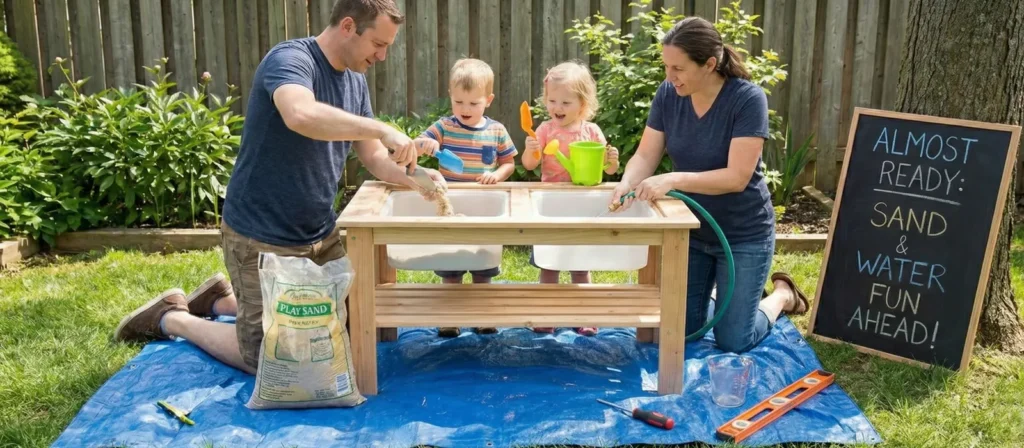
Setting up a sand and water play area does not need to be complicated. The key is to make it safe, easy to supervise, and inviting for children. Choose a spot that you can see clearly and clean easily, whether that is an outdoor corner or an indoor space near a sink. Then decide on a simple main container, such as a sand and water table, a sturdy tub on a low stand, or a small sandpit if you have more space.
At the beginning, keep the materials very basic: clean play sand, a shallow amount of water, and a few well-chosen tools like small buckets, scoops, and cups for pouring. Too many toys can actually distract children from real exploration. Set one or two simple rules, for example that sand and water stay in the play area and children walk, not run.
Finally, build a quick routine for starting and finishing: wash hands, play, then tidy tools together. With this simple structure in place, you already have a functional sand and water play area, and you can always refine the details in a more specialised setup guide.
Want a complete setup guide with layout plans, safety tips, and material lists? Don’t miss our full article on how to build a sand and water play zone.
Essential Sand and Water Toys for Children
The tools and toys we provide influence how deeply children engage during sand and water play. While it is easy to assume that any toy will do, choosing purposeful tools enhances learning potential.
Below is a guide to essential toys that balance simplicity with developmental value.
Basic Tools That Inspire Learning
Buckets and Containers: Buckets of different sizes make early math concepts tangible. Children compare volume, estimate amounts, and problem‑solve when transferring water or sand between containers.
Scoops and Shovels: These tools build strength, coordination, and precision. They help with lifting, pouring, and digging — movements that support fine and gross motor development.
Funnels and Tubes: Funnels help children explore flow and cause‑effect relationships. Tubes can become channels for water, tunnels for sand, or part of an imaginative setup.
Sieves and Strainers: These open‑ended tools invite experimentation with texture. Children learn how materials separate, how textures change, and what small objects can pass through holes of different sizes.
Tools That Support Creative Play
Molds and Shape Makers: Molds allow children to create forms and structures. When used with wet sand, they introduce early engineering challenges such as how to build stable shapes or stacked designs.
Natural Materials: Shells, smooth pebbles, small sticks, leaves, and pinecones bring natural variation into play. These materials invite language development, sorting, pattern making, and symbolic storytelling.
Measuring Tools: Measuring cups, spoons, and graduated containers introduce numeracy concepts. Children learn about comparison, estimation, and measurement through hands‑on experience.
Selecting Toys That Encourage Open‑Ended Exploration
The most valuable sand and water toys are open‑ended — they support a range of uses rather than a single “correct” way to play. Avoid toys that have predetermined shapes or functions that limit creativity.
Get the Ultimate Guide
Effortlessly Source Preschool Furniture Solutions
How to Encourage Children to Play with Sand and Water in the Classroom?
Set up visually inviting materials: Use transparent containers, natural objects, and colorful tools to draw interest.
Ask open-ended questions: Prompt curiosity with phrases like “Can you get the water to flow this way?” or “What happens if…?”
Rotate tools frequently: Keep play fresh by switching out scoops, funnels, or textures weekly.
Play briefly alongside them: Join in for a moment to model exploration, then step back to let them lead.
Create small-group zones: Limit how many children play at one time to reduce chaos and encourage interaction.
Connect with classroom themes: Tie sand and water play into topics like habitats, seasons, or transportation.
Acknowledge discoveries: Celebrate when children experiment, solve problems, or collaborate.
Purchase High-Quality Sand and Water Tables from Xiha Montessori
Once you understand how powerful sand and water play can be, it becomes obvious that the quality of your main equipment matters. A flimsy plastic tub that cracks under sun exposure, a table that wobbles when three children lean on it, or a surface that is difficult to clean will quickly discourage both adults and children.
Xiha Montessori specialises in furniture and equipment for early childhood environments, with a focus on sensory-rich, child-centred design.
Our sand-water tables have the following features
Child‑friendly design
Durable, washable materials
Safe, rounded edges and surfaces
Compartments that support organized play
Stable construction for long‑term use
Many of these products use durable, weather-resistant materials such as high-density polyethylene and treated wood, chosen specifically for outdoor use and intensive handling in early childhood settings.
Get the Ultimate Guide
Effortlessly Source Preschool Furniture Solutions
FAQs
What age is appropriate to start sand and water play? Most children can start simple sand and water play from around 12–18 months, as long as an adult is close by to supervise, keep materials out of their mouths, and keep water very shallow. From 3–6 years, children can handle deeper play, more tools and simple challenges.
How can I keep sand and water play from becoming too messy? Choose a practical location, use a washable mat or play outside, set clear rules like “sand stays low” and “water stays in the tub”, keep water shallow, and build a quick clean-up routine into the activity. Involving children in tidy-up makes a big difference.
Is sand and water play safe for toddlers? Yes, with clean materials, close supervision, and age-appropriate tools, it’s safe and developmentally beneficial even for toddlers.
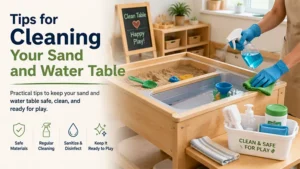
How often should I change the water and clean the sand and tools? Water should be emptied and replaced after each session. Tools should be rinsed and dried regularly, and disinfected on a routine schedule in group settings. Sand should be checked often for debris, raked and aired, and replaced entirely when it becomes dirty or contaminated.
How many toys should I put in the sand and water area at once? Less is usually more. A small, well-chosen selection of tools (a few scoops, containers, funnels and maybe a couple of figures or vehicles) encourages deeper, more creative play. Too many items can overwhelm children and make the area harder to manage and to clean.
Why is sand and water play important for early childhood development? Sand and water play promote motor skills, sensory exploration, creativity, social interaction, and early STEM thinking.
How long should children spend at the sand and water area each day? There is no fixed rule, but 15–30 minutes of uninterrupted play works well for most preschoolers. What matters more than the exact time is that they can settle, explore properly and are not rushed. In a classroom, offering the area as a daily choice is more effective than using it only occasionally.
What is a sand and water table? A sand and water table is a raised play station designed to hold sand, water, or both in shallow bins so children can stand and explore comfortably. It usually has one or two deep trays, a sturdy frame at child height, and sometimes a lid or lower shelf for storing tools. Compared with using loose tubs on the floor, a sand and water table is safer, easier to supervise, more ergonomic for children, and much simpler to keep clean and organised in homes, classrooms and early childhood centres.
Conclusion
If you are a parent, teacher or school leader, the next time you see children at a sand and water play area, look a little closer. Notice the experiments, the negotiations over tools, the soothing rhythm of pour-and-fill. Ask yourself how you might give this kind of play more time, space and thoughtful support in your setting.
Collect your own observations, share them with families and colleagues, and let the evidence from your own children guide your next steps.
When sand and water play is treated as a serious, joyful part of the curriculum rather than a rainy-day extra, it becomes one of the most efficient and child-friendly ways to build brains, skills and confidence. The real magic is that the children themselves will simply remember that it felt like play.
Share this article:
The Author >>
Roger Cai
Hey, I’m Roger, the founder of Xiha Montessori, a family-run business. We specialize in preschool furniture and educational solutions. Over the past 20 years, we have helped clients in 55 countries and 2000+ preschools, daycares, and early childcare centers create safe and inspiring learning environments. This article shares knowledge on making education more effective and enjoyable for children.
Over the past 20 years, we have helped 55 countries and 2000+ Clients, like Preschools, Daycare, and Early Childcare Centres, to create safe and inspiring learning environments. If you need a purchase or consultation, please contact us for a free product catalog and classroom layout design.