Are students in your classroom disengaged and passively listening instead of actively learning? Are you frustrated with traditional methods that emphasize memorization over understanding? Inquiry based learning might sound promising, but how does it actually work—and can it truly transform your teaching?
Inquiry Based Learning addresses these exact problems by shifting the classroom dynamic. Instead of feeding students information, it empowers them to ask questions, explore, and discover answers through critical thinking. This student-centered method reignites curiosity and turns learners into investigators. Inquiry-Based Learning creates space for authentic engagement, deeper comprehension, and long-term academic growth.
If you’re looking to reshape how your students learn, the solution lies in implementing Inquiry based learning effectively. With the right strategies, you can transform your classroom into a hub of exploration, creativity, and active learning. Students don’t just memorize; they understand.

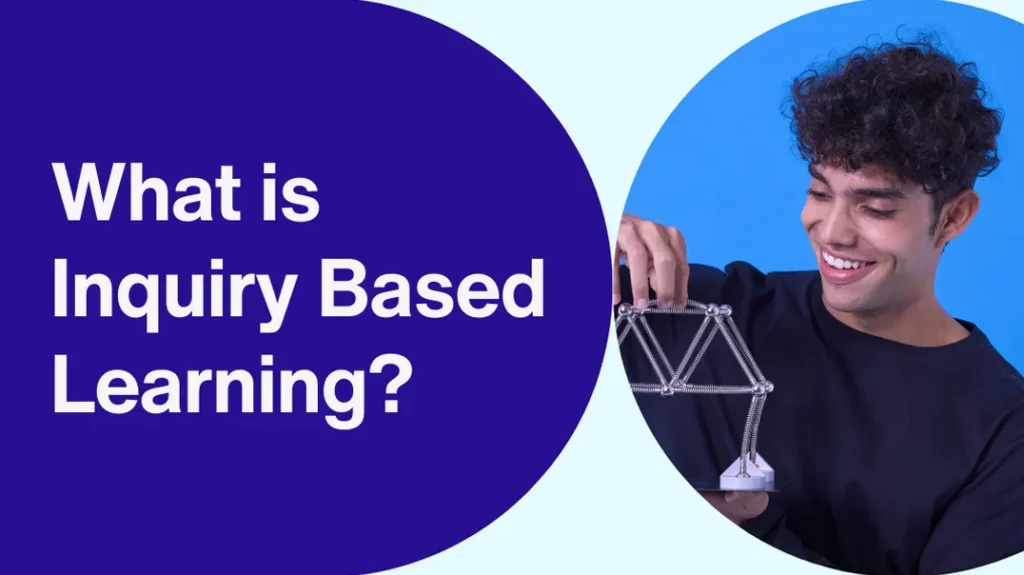
What is Inquiry Based Learning?
Inquiry Based Learning (IBL) is an instructional method that emphasizes the learner’s role in the learning process. Instead of being passive recipients of facts, students are encouraged to ask questions, explore topics, conduct research, and draw conclusions based on evidence. This process-driven pedagogy is rooted in constructivist theories, where knowledge is actively constructed rather than passively received.
At its core, IBL transforms traditional education by shifting the focus from what the teacher teaches to how the student learns. It emphasizes inquiry as the primary mode of acquiring knowledge—posing questions, conducting research, analyzing results, and drawing conclusions.
Inquiry based learning challenges the traditional paradigm by positioning students as researchers and investigators. The role of the teacher transitions from instructor to facilitator, helping students navigate through their learning journeys rather than providing direct answers.
From the Student’s Perspective
For students, inquiry based learning feels less like school and more like authentic exploration. They aren’t limited to absorbing information from a textbook or a lecture. Instead, they are encouraged to:
- Ask their own questions
- Pursue investigations aligned with their interests
- Evaluate sources critically
- Present findings in meaningful ways
This sense of ownership not only enhances motivation but also develops their capacity to think independently. The student becomes the researcher, the problem solver, and the creator of knowledge.
From the Teacher’s Perspective
Teachers in an IBL environment act as facilitators rather than information dispensers. Their role is to guide, support, and challenge students as they navigate the inquiry process. Key responsibilities include:
- Creating a learning environment that encourages questioning
- Providing access to diverse resources
- Modeling critical thinking and curiosity
- Offering scaffolding to students who need support
- Assessing process as well as product
This transition may feel unfamiliar at first but ultimately leads to deeper, more sustained learning outcomes.
Core Characteristics of Inquiry-Based Learning
Inquiry-based learning is built upon foundational principles that distinguish it from other pedagogies:
- Student-Centeredness: Students are active participants, not passive observers.
- Question-Driven: Learning is initiated and sustained through student-generated or teacher-guided questions.
- Process-Focused: Emphasis is placed on how learning occurs, not just the end result.
- Collaborative: Students learn in teams, sharing responsibilities and ideas.
- Reflective: Ongoing reflection is essential for evaluating understanding and refining approaches.
- Interdisciplinary: Inquiry often crosses subject boundaries, promoting integrated knowledge.
- Open-Ended Exploration: Outcomes are not predetermined; learning is shaped by students’ investigations.

Types of Inquiry Based Learning
While classrooms often blend approaches, it is useful to distinguish four common types of Inquiry Based Learning. The differences hinge on who frames the question, who decides the method, and how much guidance is provided.
1. Problem-Based Inquiry
Problem-Based Inquiry organizes learning around a complex, real-world problem with constraints and stakeholder perspectives. Students must define the problem precisely, identify what they need to learn, and generate, test, and justify solutions. Teachers supply the context, criteria for success, and facilitation tools but avoid prescribing the path.
Problems invite sustained inquiry because they contain competing values and incomplete information. Students practice strategic research, model impacts, anticipate objections, and communicate with non-expert audiences.
2. Structured Inquiry
In Structured Inquiry, the teacher provides the question and outlines the procedures, while students carry out investigations and draw conclusions. This approach builds foundational methods and confidence before students take on more autonomy.
Structured Inquiry ensures that novices practice essential techniques and reasoning without being overwhelmed by open choice. It is especially useful early in a course, when establishing lab safety, research ethics, or source evaluation routines.
3. Open-Ended Inquiry
Open-Ended Inquiry grants students full autonomy to choose the question, design the study, and decide how to present findings. The teacher supports with coaching, resources, and checkpoints but refrains from dictating direction.
Open-Ended Inquiry develops initiative, resilience, and authentic expertise. Students practice proposal writing, project management, and reflective revision—skills that mirror university research and workplace innovation.
4. Guided Inquiry
Guided Inquiry sits between structured and open-ended approaches. The teacher frames a broad question and curates a set of resources, while students design sub-questions, choose methods from a menu, and determine how to synthesize what they learn.
Guided Inquiry offers autonomy with guardrails. It scales well in larger classes and mixed-ability groups and is ideal for interdisciplinary units.

Benefits of Inquiry-Based Learning
The value of Inquiry-Based Learning extends far beyond improved test scores. It develops a wide range of cognitive, emotional, and social skills critical for success in and beyond the classroom.
1. Promotes critical thinking
Critical thinking is the capacity to evaluate claims, weigh evidence, and draw reasoned conclusions while remaining open to revision. Inquiry Based Learning cultivates this by asking students to justify not only what they believe but why they believe it. They test the strength of arguments by looking for counterexamples, identifying assumptions, checking for logical fallacies, and considering alternative interpretations.
2. Enhances problem-solving skills
Because inquiry-based learning is rooted in real-world problems, students repeatedly encounter ambiguous situations where they must define the problem, identify constraints, generate options, test prototypes, and iterate. By making the problem-solving process visible through think-alouds, solution journals, and retrospective “post-mortems,” learners understand that expert problem-solving is iterative and evidence-based, rather than linear.
3. Sparks creativity
Creativity is not spontaneous magic; it is the disciplined practice of producing original and useful ideas. Inquiry Based Learning sparks creativity by requiring students to think divergently during ideation and convergently during evaluation. Students can build multiple prototypes, explore counterfactuals, and integrate ideas from different disciplines. Guided by evidence and feedback, novelty can emerge by recombining existing elements in surprising ways.
4. Improves communication skills
In inquiry classrooms, communication is not an afterthought; it is integral. Students must persuade authentic audiences with clear, coherent, and well-supported messages. They practice oral presentations, structured debates, poster sessions, podcasts, op-eds, and technical reports. Teachers provide rubrics for audience awareness, structure, precision, visual design, and source attribution.

5. Builds student initiative
With Inquiry-Based Learning, students plan timelines, negotiate roles, monitor progress, and self‑assess with rubrics. They learn to anticipate bottlenecks, request resources proactively, and document decisions. Tools like personal kanban boards, weekly learning contracts, and milestone conferences shift responsibility from teacher to student.
6. Supports differentiated instruction
Inquiry is naturally differentiable. Because inquiry emphasizes processes and products rather than uniform worksheets, it naturally accommodates differences in readiness, interests, and learning profiles. For multilingual learners and students with disabilities, teachers provide explicit language objectives, visual supports, step-by-step exemplars, and extended time. The goal is equal cognitive demand with diverse paths to mastery.
7. Strengthens course content
Contrary to the misconception that inquiry sacrifices content, Inquiry Based Learning strengthens conceptual understanding and retention. Students apply disciplinary concepts to explain phenomena or solve problems, highlighting the meaning of these concepts and the context in which they apply. Repeated exposure to key concepts fosters schemata, making it easier to integrate new information. Because the inquiry cycle revisits core concepts from different perspectives, students’ mental models become more flexible and robust.
8. Deepens content understanding
Depth arises when students grapple with complexity, weigh competing interpretations, and articulate nuanced claims supported by evidence. Inquiry Based Learning provides that depth by asking learners to explain phenomena, resolve tensions, and generalize insights.
Practical Examples of Inquiry-Based Learning
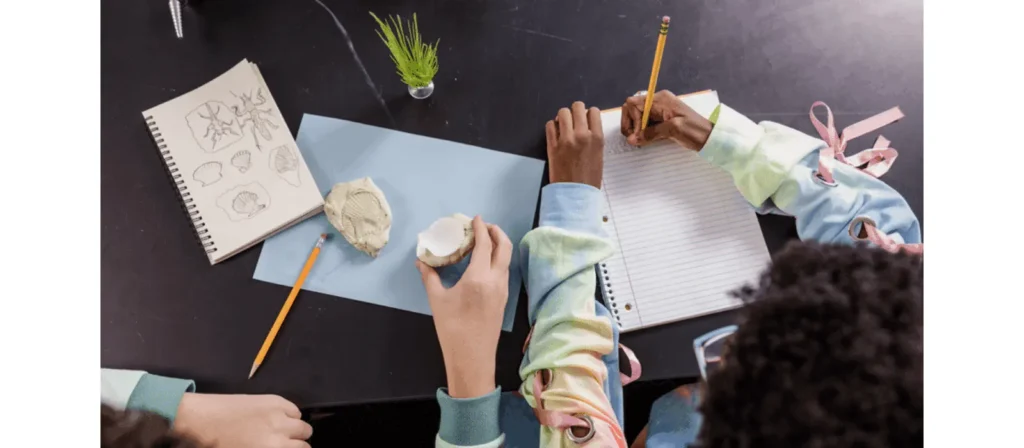
Implementing Inquiry-Based Learning in the classroom doesn’t require a complete overhaul. Small, well-planned activities can cultivate inquiry habits and spark deeper engagement. Below are several examples of how this approach works in practice across different age groups and subject areas.
Elementary School Science: Observing Life Cycles
Students investigate how butterflies develop through their life stages. Rather than being told the process, they:
- Observe live caterpillars over several weeks
- Record changes and behaviors daily
- Compare data with scientific resources
- Create timelines and draw illustrations
- Present findings in a student-led exhibition
This structured inquiry engages young learners in scientific thinking while building observation and reporting skills.
Middle School Social Studies: Understanding Local Government
Students pose questions like “How does our city government make decisions?” and design an investigation that may include:
- Interviewing local officials
- Attending a city council meeting
- Analyzing government budgets and news articles
- Creating infographics or mock proposals
This guided inquiry builds civic awareness and helps students connect classroom learning to their community.
High School Literature: Exploring Themes in a Novel
Students read a novel and identify their own thematic questions such as “How does isolation shape identity?” or “What is the role of justice in this story?” They then:
- Collect textual evidence
- Research historical or cultural contexts
- Compare interpretations with classmates
- Write essays or deliver multimedia presentations
Open-ended inquiry in literature promotes critical reading and supports students’ ability to formulate and defend arguments.
STEM Project: Designing a Sustainable Product
High school or college students are given a problem such as “How can we reduce plastic waste in our school?” In teams, they:
- Research the impact of plastic on the environment
- Brainstorm alternative materials or designs
- Create prototypes using recycled materials
- Test effectiveness and collect data
- Pitch their solution to school administrators
This problem-based inquiry integrates science, engineering, and communication in an authentic learning task.
Cross-Disciplinary Capstone Projects
In a year-end project, students choose an issue such as “How can our school become more inclusive?” They work in teams to:
- Survey peers and teachers
- Research policies and case studies
- Propose actionable solutions
- Present recommendations to school leadership
Such projects allow students to apply skills from multiple disciplines, writing, research, math, and the arts—while addressing real-world issues.

Tips for Implementing Inquiry-Based Learning in the Classroom
Implementing Inquiry-Based Learning requires thoughtful preparation, strategic planning, and a willingness to let students take the lead in their learning journey. While every classroom is different, the following principles offer a strong foundation for successful integration.
Create a Safe Learning Environment
Before inquiry can thrive, students must feel safe, academically, emotionally, and socially. They need to know that their ideas are valued, their questions matter, and that mistakes are part of learning. To foster this environment:
- Establish clear expectations for respectful dialogue
- Celebrate curiosity and risk-taking
- Provide consistent encouragement and constructive feedback
Demonstrate How to Participate
Many students are unfamiliar with the expectations of an inquiry-driven classroom. Teachers must demonstrate what participation looks and sounds like. This includes modeling how to ask open-ended questions, approach evidence critically, disagree respectfully, and revise ideas based on feedback.
- Ask deep and relevant questions
- Gather and evaluate evidence
- Collaborate respectfully
- Reflect on one’s own learning
Structured modeling can be highly effective. A teacher might walk through a think-aloud when analyzing a text or solving a problem, making explicit the reasoning process. Providing sentence starters, conversation stems, or inquiry journals can also scaffold productive engagement.
Ask Questions
The quality of inquiry hinges on the quality of questions. Teachers can guide students toward deeper investigation by:
- Posing open-ended questions
- Encouraging “why” and “how” rather than “what”
- Using prompts to push thinking (“What makes you say that?” or “Can you explain further?”)
Design questions that are open-ended enough to accommodate a variety of research methods but limited enough to be conducted within available time and resources.
Teach students a structured approach to formulating their own questions. Questioning techniques, question reframing, and the “Five Whys” method are simple but effective. Have students categorize their questions and determine which ones can be answered with evidence and which require judgment. Have them choose one or two high-impact questions to explore, clarify their significance, and outline the relevant evidence.
Allow Exploration and Discovery
One of the core tenets of Inquiry Based Learning is giving students time and space to explore. This means stepping back as a teacher and trusting students to engage with texts, data, ideas, and tools. It does not imply a total absence of structure; rather, it’s about allowing room for the unexpected.
Dialogue deepens inquiry. Through conversation, students clarify thinking, hear alternative viewpoints, and refine their ideas. Encourage:
- Small-group discussions
- Whole-class seminars
- Think-pair-share activities
- Peer-to-peer feedback
Encourage Discussion
Discussion is the oxygen of inquiry. It allows ideas to be tested, refined, and expanded in real time. In an IBL classroom, discussion is not just about sharing opinions—it’s about interrogating evidence, comparing interpretations, and refining claims.
To cultivate effective discussions, teachers must set norms for active listening, respectful disagreement, and inclusive participation. Structures such as Socratic seminars, fishbowls, or debate circles provide a framework for deeper dialogue. Most importantly, students learn that discussion is not a competition of voices but a collaboration of thought.
Investigation
Begin with an investigation planner. Require students to specify the claim or question, variables or lenses, data sources, and step-by-step procedures. In empirical domains, emphasize controls, sample size, and measurement reliability. In interpretive domains, emphasize sourcing, context, author purpose, and corroboration. Insist on a plan for how the analysis will be conducted before data collection begins; otherwise, students may retrofit a method to confirm a preferred conclusion.
Data without synthesis is trivia. Require students to translate findings into claims and to show how specific pieces of evidence support those claims. The claim–evidence–reasoning structure is simple but powerful. Push for specificity in warrants: name the mechanism, the rule, the theoretical frame, or the disciplinary convention that explains why the evidence counts.
Summary
Reflection and synthesis are essential to close the loop of inquiry. Students should:
- Summarize key findings
- Reflect on the process—what worked, what didn’t
- Revisit their original question
- Communicate results in creative or academic formats
At the individual level, ask students to write a brief memo outlining their claim, listing their strongest evidence with citations, identifying its limitations, and citing one piece of evidence that might change their thinking.
At the group level, create a shared artifact that captures the main line of inquiry: a concept map with references to evidence, a slide show outlining the claim-evidence-reasoning sequence, or a short video demonstrating the analytical process.
At the class level, build a collective knowledge base. Post typical claims and the evidence behind them, document common errors and their solutions, and note unanswered questions worthy of further investigation.

The Importance of Teacher Training for Inquiry-Based Learning
Inquiry-Based Learning demands more from teachers than traditional instruction. It requires a shift in mindset, an expansion of skill sets, and a comfort with ambiguity. Professional development must address these needs to ensure success.
Shifting the Role of the Teacher
Many educators are trained to deliver content. IBL, however, asks them to become facilitators—guiding rather than directing, questioning rather than answering. Teacher training must:
- Help educators understand the philosophy behind inquiry
- Offer strategies for classroom management during open-ended activities
- Provide frameworks for scaffolding student thinking
Without this foundational shift, teachers may default to familiar, teacher-centered practices.
Designing Inquiry-Based Lessons
Creating effective IBL experiences is an art. Teachers must learn to:
- Craft compelling, open-ended questions
- Align inquiry tasks with curriculum goals
- Anticipate student challenges and misunderstandings
- Integrate technology and real-world resources
Workshops and collaborative planning sessions can support teachers in developing lessons that balance freedom with purpose.
Ongoing Support and Reflection
Inquiry teaching is dynamic and complex. Teachers need time and support to reflect on their practice, share experiences, and continue learning. Schools should offer:
- Coaching and mentoring
- Professional learning communities (PLCs)
- Opportunities for co-teaching or observation

Challenges and Criticisms of Inquiry-Based Learning
While Inquiry Based Learning offers numerous benefits, it is not without challenges. Critics often raise concerns about its practicality, efficacy, and inclusivity.
Time Constraints
One of the most common criticisms is that inquiry takes too much time. It’s true that investigations, discussions, and revisions extend beyond the timeline of a traditional lecture. However, what appears inefficient in the short term often proves more effective in the long term. Students retain more, understand more deeply, and need less reteaching.
Solution: Time challenges can be mitigated through careful planning. Teachers might alternate longer inquiries with shorter cycles, integrate inquiry across subjects, or design modular inquiries that build progressively.
Variability in Student Readiness
Not all students enter the classroom equally prepared for the demands of inquiry. Some struggle with open-ended tasks, while others may lack confidence or language skills. This raises legitimate concerns about equity and access.
Solution: The solution is not to abandon inquiry, but to differentiate support. Scaffolded inquiry, structured protocols, guided investigations, and differentiated roles allow every student to engage meaningfully. Over time, even the most reluctant learners develop agency and voice.
Assessment Difficulties
Evaluating inquiry can be complex. Teachers may worry about subjectivity, consistency, or alignment with standards. Traditional grading rubrics often fail to capture the nuance of inquiry processes.
Solution: To address this, schools can adopt performance-based assessments, process rubrics, and portfolio systems. Involving students in co-creating rubrics and conducting peer reviews also enhances transparency and ownership. When assessment is designed for learning, not just of learning, it becomes a powerful tool for growth.
Content Coverage Pressure
Some argue that inquiry is incompatible with curriculum coverage, especially in high-stakes testing environments. While inquiry does take time, it does not necessarily mean sacrificing content. In fact, well-designed inquiry aligns deeply with content standards and promotes retention through active engagement.
Solution: Teachers can prioritize key concepts, design cross-disciplinary units, and embed core content into inquiry experiences. By focusing on depth rather than breadth, inquiry ultimately strengthens understanding.
FAQs
- What is the main goal of Inquiry-Based Learning?
To develop critical thinking, problem-solving, and independent learning skills through student-centered investigation. - Is Inquiry-Based Learning effective in all subjects?
Yes, IBL can be adapted for all subjects, including science, math, literature, and the arts. - Can inquiry be used in large classrooms?
Absolutely. With effective classroom management and scaffolding, IBL works well in both small and large groups. - How do I assess students in an inquiry-based classroom?
Use performance-based assessments, portfolios, presentations, and reflective journals to evaluate learning. - Is teacher guidance still needed in IBL?
Yes. Teachers act as facilitators, guiding students through the inquiry process and providing support. - Does Inquiry Based Learning replace traditional instruction entirely?
Not necessarily. It can complement traditional instruction, blending direct teaching with student-driven inquiry to create a balanced approach.
Conclusion
Inquiry-based learning is not a passing fad; it represents a fundamental shift in how we think about education. By structuring learning experiences around questions, curiosity, and critical engagement, we prepare students for a world where learning is understood, not memorized.
In inquiry-driven classrooms empower students to ask thoughtful questions, explore deeply, and build enduring and meaningful knowledge. Teachers become facilitators of student growth, guiding them to explore complexity, ambiguity, and opportunity.
As we redefine success in education, inquiry-based learning offers a path forward—one that honors student voice, fosters intellectual independence, and connects classroom learning to real-world challenges and possibilities.
Whether you’re just beginning to explore inquiry or ready to redesign your entire curriculum around it, one thing is certain: the future of learning belongs to the curious.