Have you ever wondered how some children can easily navigate mazes, put together jigsaw puzzles, or draw complex shapes without much effort? Or perhaps you’ve noticed certain children excel in understanding maps or diagrams, and others can visualize objects in three dimensions? These abilities all relate to visual spatial intelligence, a crucial cognitive skill that influences learning and development.
Visual spatial intelligence refers to the ability to understand, reason, and remember the spatial relationships among objects or space. This ability is not limited to being able to draw well or have an excellent sense of direction; it’s also linked to problem-solving skills, creativity, and even academic performance in subjects like math and science.
In this article, we’ll explore what visual spatial intelligence is, how it develops, and why it’s essential for young learners. We’ll also delve into how it impacts educational practice and offer some ideas for activities that foster this intelligence.
What is Visual Spatial Intelligence?
Visual spatial intelligence refers to the ability to understand and mentally manipulate objects and space. It allows individuals to think in images and visualize how objects fit together, rotate, or move in space. It plays a central role in problem-solving, creativity, and the understanding of physical environments.
In essence, those with strong visual spatial intelligence can visualize objects, understand the relationships between them, and navigate spaces more easily than others. This ability extends beyond artistic talent; it involves the capacity to think critically about spatial relationships, manipulate mental images, and apply that understanding to various tasks, from drawing to building to solving complex puzzles.

Visual-Spatial Intelligence Characteristics
Individuals with strong visual-spatial intelligence exhibit several characteristics that help them excel in specific tasks. These traits can be identified early and nurtured over time. Below are the most prominent characteristics of those with high visual-spatial abilities:
- Appreciation of Visual Arts
People with strong visual spatial intelligence tend to have a deep appreciation for the visual arts. Whether it’s painting, sculpture, photography, or digital design, they can see and interpret the subtle details that others might miss. This ability allows them to both create and critique visual artwork with precision. - Visualization of Objects
One of the hallmarks of this intelligence is the ability to visualize objects or situations in the mind’s eye. This skill enables them to imagine how things might look from different angles or how they fit together, which is crucial for tasks like architecture, engineering, and even everyday problem-solving. - Navigational and Distance Sense
Individuals with high visual-spatial intelligence are often excellent at navigation, whether on land, in the air, or even within virtual environments. Their innate sense of space allows them to easily assess distances, recognize landmarks, and navigate unfamiliar territories with ease. - Pattern Recognition
Another trait of individuals with visual spatial intelligence is their ability to recognize and understand patterns in data, shapes, and forms. This ability makes them adept at activities like solving puzzles, predicting trends, or identifying relationships between different elements in complex systems. - Puzzle-Solving Skills
Whether it’s jigsaw puzzles, Rubik’s cubes, or logic games, those with strong visual spatial intelligence excel at solving complex puzzles. They enjoy challenges that involve manipulation of shapes and space and can often see solutions quickly. - Appreciation of Architectural Styles
People with high visual spatial intelligence often have a natural interest in and understanding of architecture. They can appreciate the form, structure, and design of buildings and understand how space is utilized in various structures. - Mind Mapping
Visual thinkers are often good at creating mind maps or visual representations of information. These maps allow them to organize ideas, concepts, and data in a way that makes complex information more digestible and easier to navigate.

Advantages of Visual Spatial Intelligence
Visual-spatial intelligence offers a wide array of advantages in various contexts. Individuals with high spatial intelligence can excel in many areas of life, particularly those that involve creative problem-solving, innovation, and hands-on tasks.
- Enhanced Problem-Solving
People with visual spatial intelligence tend to be excellent at solving problems that require spatial reasoning. They can mentally manipulate objects, predict how things will move, and understand complex spatial relationships. This skill is highly valued in fields like engineering, architecture, and computer programming. - Creativity and Innovation
Visual-spatial intelligence fosters creativity. Those who possess this intelligence are adept at thinking outside the box and coming up with innovative solutions to challenges. Their ability to envision new possibilities, combined with their skill in manipulating spatial elements, makes them great designers, architects, and artists. - Better Navigation and Orientation
Navigating physical spaces comes naturally to those with strong visual spatial intelligence. Whether it’s reading a map, orienting themselves in a new city, or finding their way around a complex building, people with this intelligence often possess an exceptional sense of direction and spatial awareness. - Improved Learning in Visual Domains
Visual-spatial learners excel in subjects that involve diagrams, visual representations, and abstract thinking. They tend to be more engaged in learning environments that use visual aids like charts, graphs, and 3D models. - Adaptability in New Environments
Their enhanced spatial awareness makes it easier to adapt to new and unfamiliar surroundings, whether it’s navigating a new city or a virtual space.
Howard Gardner’s Theory of Multiple Intelligences
Howard Gardner, a renowned psychologist and educator, introduced the Theory of Multiple Intelligences in 1983. He proposed that intelligence is not a single, static ability, but rather a collection of distinct types of intelligences, each representing different ways of processing information. Among the multiple intelligences, visual-spatial intelligence plays a crucial role in understanding how we interact with our environment and process visual data.
Gardner identified eight key types of intelligence in his theory. These include:
8 Types of Multiple Intelligences
| Intelligence Type | Description |
|---|---|
| Verbal-Linguistic Intelligence | The ability to use language effectively for expression, communication, and persuasion. |
| Visual-Spatial Intelligence | The ability to think in images and pictures, to visualize accurately, and to manipulate objects in space. |
| Logical-Mathematical Intelligence | The ability to reason logically, think abstractly, and understand complex mathematical concepts. |
| Bodily-Kinesthetic Intelligence | The ability to control body movements and handle objects skillfully. |
| Musical Intelligence | The ability to appreciate, compose, or perform music with a high level of skill. |
| Interpersonal Intelligence | The ability to understand and interact effectively with others, recognizing their feelings and motivations. |
| Intrapersonal Intelligence | The ability to understand oneself, one’s emotions, motivations, and personal goals. |
| Naturalistic Intelligence | The ability to recognize and classify the patterns of nature, such as animals and plants. |
How Visual Spatial Intelligence Develops
Visual spatial intelligence doesn’t just appear overnight—it develops over time as children interact with the world around them. Several factors contribute to the development of this intelligence, including:
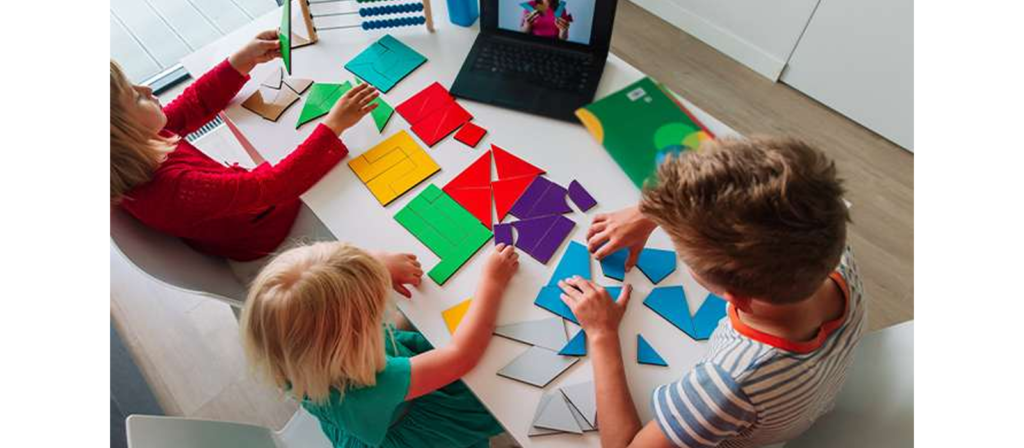
- Early Exposure to Puzzles and Games: Activities like puzzles, mazes, and shape sorters help children develop spatial reasoning skills. These tools encourage them to think critically about how pieces fit together, fostering their problem-solving abilities.
- Physical Exploration and Movement: Children learn about space through movement. Crawling, walking, running, and playing with objects help them build a mental map of their environment.
- Creative Play: Engaging in creative activities such as drawing, building with blocks, or even playing with playdough can stimulate visual spatial thinking. These activities require children to manipulate shapes, structures, and objects in space, enhancing their spatial reasoning skills.
- Technology and Visual Tools: With the rise of interactive educational apps and programs, technology can also play a role in enhancing visual spatial intelligence. These tools often involve manipulating digital objects or exploring virtual environments, further strengthening spatial awareness.
- Learn New Hobbies: Engaging in hobbies like sculpture, woodworking, or photography can significantly enhance spatial abilities. These hands-on activities allow individuals to explore how things fit together in space, improving both their spatial reasoning and creativity.
- Use Spatial Tools: Tools such as 3D modeling software and CAD (Computer-Aided Design) programs allow individuals to work with spatial concepts in a digital format, improving their spatial awareness and visualization.
What are Some Examples of Visual-Spatial Intelligence?
- Solving Jigsaw Puzzles: Putting together puzzles requires visualizing how pieces fit together and understanding spatial relationships.
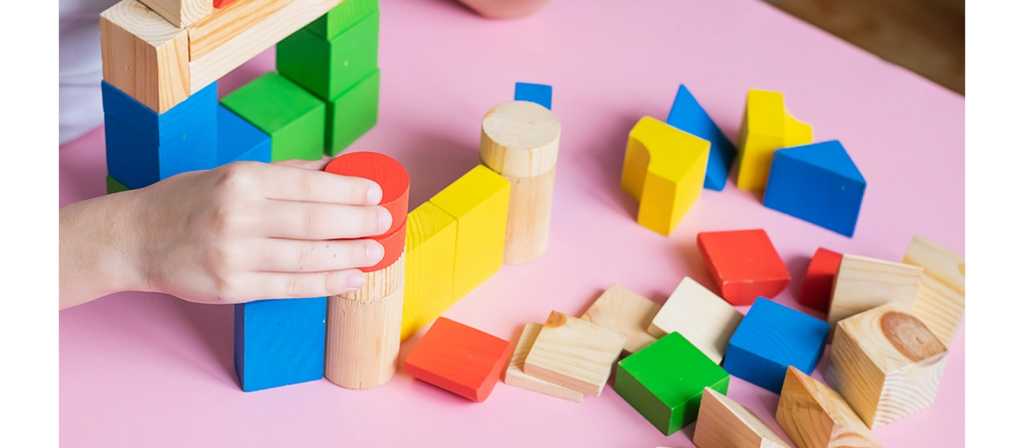
- Playing with Building Blocks: Activities like LEGO or other construction toys that involve creating structures and manipulating shapes.
- Drawing and Sketching: Creating detailed artwork, understanding proportions, perspective, and visualizing designs.
- Navigating Maps: Reading maps and following routes, which involves spatial awareness and the ability to understand directions.
- Playing Video Games: Many video games, especially those that involve navigating 3D environments, require strong spatial reasoning.
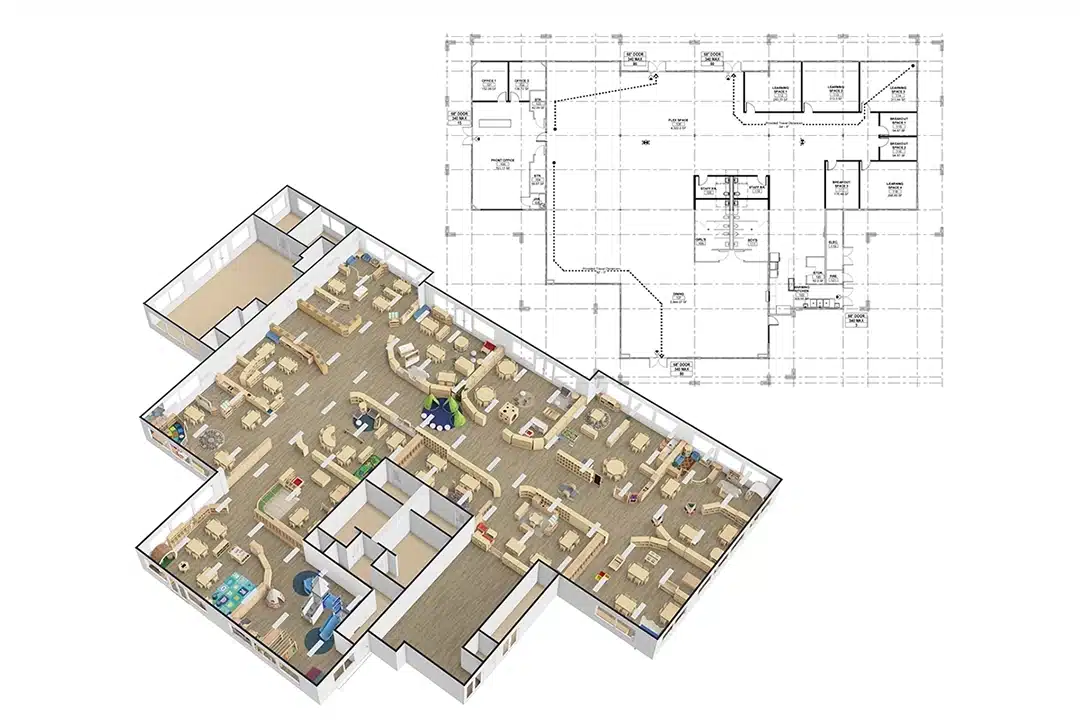
- Reading Blueprints or Diagrams: Interpreting technical drawings, blueprints, or architectural designs that require an understanding of spatial layout.
- Engaging in Dance or Choreography: Understanding movement in space, positioning, and coordination of body parts in a rhythmic sequence.
- Playing Sports: Sports like soccer, basketball, and tennis require awareness of body position, movement, and spatial coordination.
- Solving Mazes: Finding the path through a maze or puzzle, requiring spatial reasoning to visualize and plan the best route.
- Performing Mental Rotation Tasks: Mentally rotating or transforming objects in space to understand their orientation.

How to Test Visual Spatial Intelligence?
Testing visual spatial intelligence involves assessing an individual’s ability to understand, interpret, and manipulate objects or shapes in space. Several methods and tasks can help determine the level of visual-spatial intelligence, and they can be valuable for educators and psychologists looking to understand how well someone processes visual information.
Below are some of the most commonly used tests for visual-spatial intelligence:
1. Mental Rotation Task
One of the simplest and most effective ways to test visual-spatial intelligence is through the mental rotation task. This test involves showing participants images of objects or shapes and asking them to mentally rotate them to match a given target object. It tests the ability to visualize objects from different angles and assess spatial relationships.
2. Paper Folding Test
In the paper folding test, individuals are asked to mentally fold a piece of paper along a series of lines and then predict the outcome after the paper is folded. The ability to envision how the paper will fold and how it will look afterward measures spatial visualization and reasoning.
3. Block Design Challenge
The block design challenge involves using colored blocks to recreate a pattern or design. This test assesses the individual’s ability to interpret and manipulate geometric shapes and their understanding of spatial arrangements. It measures the capacity to visualize and reassemble patterns or designs.
4. Maze Tracing Task
In this task, participants are given a maze and asked to trace the most efficient path to the exit. This test evaluates how well an individual can navigate through complex visual spaces and use spatial memory to find the correct route.
5. Spatial Visualization Task
This task assesses how well individuals can visualize and manipulate objects in their minds. Participants are shown a series of shapes or images and asked to determine how they fit together or what the final structure might look like. This task is used to measure abstract spatial thinking.
6. Map Reading Practice
Map reading is another common way to test visual-spatial intelligence. Participants are given a map and asked to navigate from one point to another or to solve problems based on the map’s layout. This test measures the ability to understand and interpret spatial data and directions.
7. Surface Development Task
In this task, participants are shown a flat image of a three-dimensional object and asked to visualize how it would fold into its 3D form. This task evaluates the ability to think in three dimensions and to understand how flat shapes relate to three-dimensional objects.
Visual Spatial Learning Tools and Resources
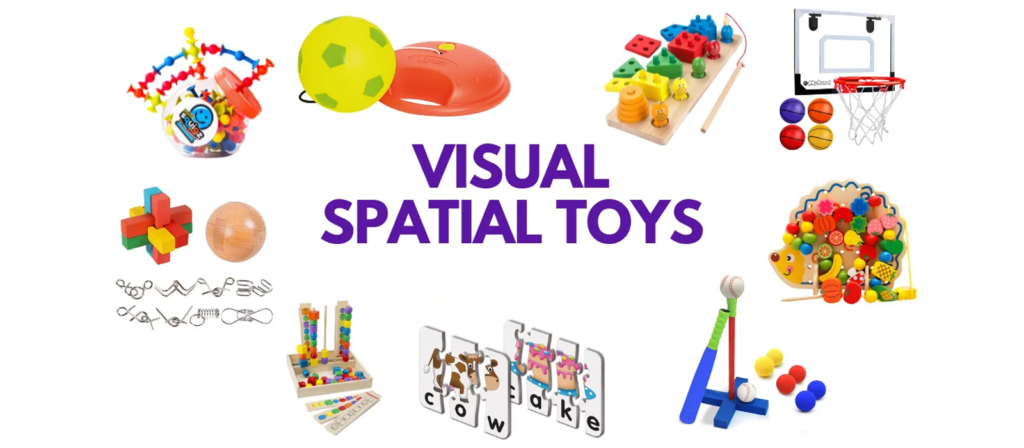
For individuals looking to enhance their visual-spatial intelligence, a variety of tools and resources can help foster improvement. Below are some examples of helpful activities, software, and resources designed to develop spatial reasoning skills.
- 3D Puzzles and Games
Playing with three-dimensional puzzles, such as the Rubik’s Cube, is an excellent way to strengthen visual-spatial intelligence. Many video games, especially those involving puzzles or building (e.g., Minecraft), also challenge players to think in 3D space, thus promoting spatial skills. - Educational Software
Various software tools like SketchUp or AutoCAD are widely used in architectural and design fields, but they also serve as excellent learning tools for improving visual-spatial skills. T - Virtual Reality (VR) and Augmented Reality (AR)
Many VR games and apps specifically focus on navigation, problem-solving, and exploration, providing an interactive and engaging way to enhance spatial reasoning. - Board Games and Strategy Games
Classic strategy games like chess or modern games like Tetris require players to think spatially in order to succeed. These games improve pattern recognition, planning, and spatial manipulation, which are key components of visual-spatial intelligence. - Building and Construction Sets
Building toys such as LEGO sets or K’NEX encourage children and adults alike to build and create three-dimensional structures, fostering the development of spatial reasoning and problem-solving abilities.
Common Challenges Faced by Children with Poor Spatial Visualization Skills
Children who struggle with visual-spatial intelligence often face a number of challenges in their learning and everyday activities. These challenges can impact their academic performance, particularly in subjects like mathematics, geometry, and science, where spatial reasoning is key.
- Difficulty with Reading and Writing
Children with poor spatial skills may have trouble organizing their thoughts on paper. This can result in disorganized writing, difficulty with spelling, and trouble visualizing what they are trying to express. - Struggles with Mathematics and Geometry
Understanding shapes, spatial relationships, and mathematical concepts that involve 3D space (like volume and surface area) can be challenging. Students may struggle to visualize and solve problems that require them to mentally manipulate geometric shapes. - Challenges with Physical Navigation
Children with weak visual-spatial skills might have difficulty with tasks such as reading a map, understanding the layout of their school or home, or following directions in unfamiliar settings. - Low Performance in Artistic Tasks
Since visual-spatial intelligence is integral to artistic activities, children with poor spatial skills may find it difficult to draw, paint, or create sculptures, as these tasks require the ability to visualize objects and interpret how shapes fit together. - Difficulties with Sports and Coordination
Many sports, such as basketball or soccer, require players to anticipate movements and position themselves effectively. Children with poor visual-spatial intelligence may find it difficult to predict trajectories, judge distances, or react swiftly in athletic settings. - Challenges in Everyday Problem-Solving
Simple tasks like assembling furniture, organizing a room, or arranging items spatially can become difficult for children who struggle with visual-spatial intelligence. These tasks require an understanding of how objects fit together in space, which they may find challenging.
FAQs
- What are some common signs of poor visual-spatial intelligence in children?
Difficulty with map reading, poor hand-eye coordination, struggles with geometry, and disorganized writing are common signs. - Can visual-spatial intelligence be improved in children?
Yes, through engaging activities such as puzzles, drawing, and using 3D modeling tools, children can develop their spatial skills. - How does visual-spatial intelligence affect academic performance?
Students with high visual-spatial intelligence tend to excel in subjects like geometry, science, and art, while those with lower spatial skills may face challenges in these areas. - What is the difference between visual-spatial intelligence and logical-mathematical intelligence?
Visual-spatial intelligence involves the ability to visualize and manipulate objects in space, while logical-mathematical intelligence involves reasoning and problem-solving with numbers and abstract concepts. - What are the benefits of visual-spatial intelligence in daily life?
People with high visual-spatial intelligence are better at navigating environments, solving spatial problems, and engaging in creative tasks. - What challenges do children with poor spatial skills face in school?
Children with weak spatial skills may struggle with subjects like math, reading, and navigating new environments, making school tasks more challenging. - Is visual-spatial intelligence the same as intelligence in art?
While they overlap, visual-spatial intelligence involves the ability to manipulate and understand objects in space, while artistic ability focuses on creativity and expression.
Conclusion
Visual-spatial intelligence is a vital cognitive ability that plays a key role in everything from academic success to daily tasks and professional achievements. Understanding how it works, recognizing its importance, and providing appropriate tools and resources for development can make a world of difference for individuals of all ages. For those looking to enhance their spatial reasoning skills, a combination of practice, education, and interactive activities can help unlock the full potential of visual-spatial intelligence.