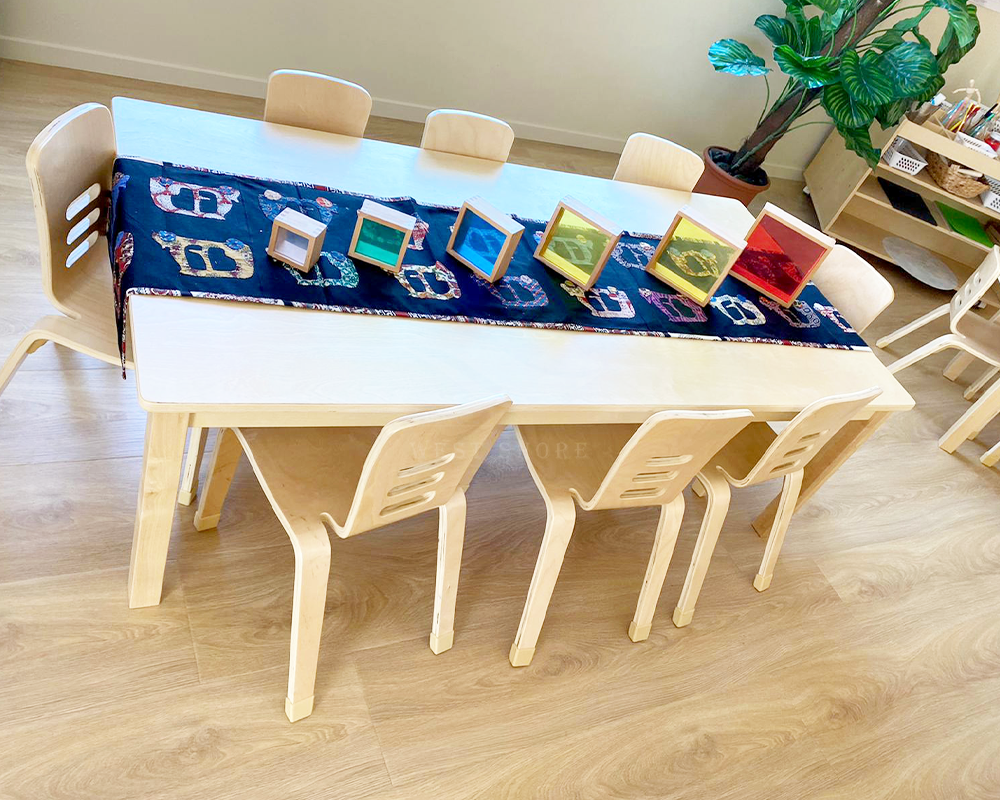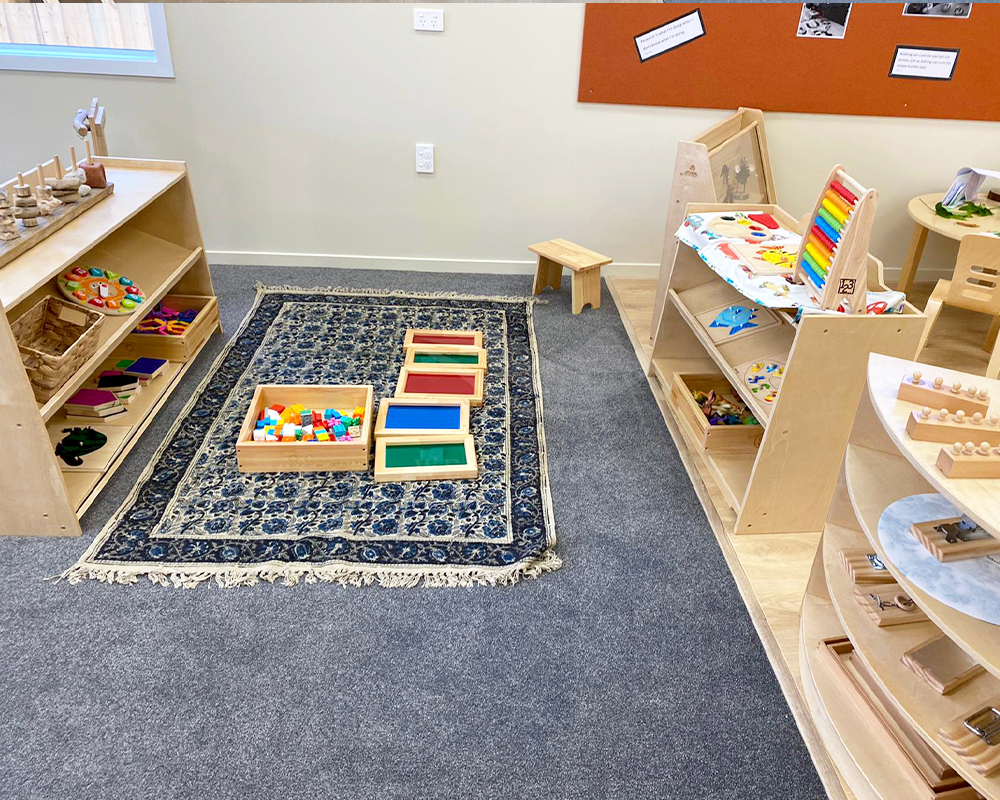
Mirror Play is a deliberate learning experience that utilizes reflection to stimulate a child’s brain. It acts as a bridge between visual perception and self-identity. When we ask What is Mirror Play, we are defining a process where infants and toddlers engage with a reflective surface to understand the boundaries of their own bodies and the reality of the space around them. It is a critical cognitive workout disguised as a simple game. It transforms a passive look into an active investigation of the self.
Key Takeaway: What is Mirror Play?
Mirror Play is a purposeful developmental activity where infants and toddlers interact with their reflection to build self-awareness, visual tracking skills, and emotional intelligence. Unlike passive observation, active Mirror Play turns a reflective surface into a dynamic learning tool, supporting milestones from lifting the head during tummy time to recognizing one’s own identity.
This activity serves as a primary method for infants to practice visual tracking and focus before they have the physical ability to move around a room. It turns a static environment into a dynamic feedback loop. Every smile, wave, or movement creates an instant reaction in the glass, teaching the child about cause and effect. This immediate feedback is essential for developing neural pathways related to coordination and social awareness long before verbal communication begins. It provides a consistent partner for interaction, allowing the child to study facial expressions and movements in real time.
You will see Mirror Play in action in various daily settings, from a baby lifting their head during tummy time to catch a glimpse of the friend in the glass, to a toddler laughing while making funny faces during a diaper change. It happens in quiet corners of a Montessori nursery where a low mirror encourages a creeper to pull up to standing. Whether through a specialized Montessori Pull-Up Bar Mirror or a simple handheld safety mirror, these moments provide the visual motivation children need to stretch, reach, and interact with the world.
The Importance of Mirror Play for Babies and Toddlers
When we look at the tools available for early childhood development, simple solutions often get overlooked in favor of high-tech gadgets or complex educational toys. However, Mirror Play stands out as a fundamental component of a child’s growth strategy. It is not just about keeping a child occupied; it is about laying the groundwork for how they perceive themselves and the world around them. The importance of this activity stretches across multiple domains of development, acting as a catalyst for physical strength, cognitive leaps, and emotional intelligence.
Early Experiences That Support Mirror Play
The journey with Mirror Play begins long before a child can walk or talk. In fact, it starts when they are still finding their footing in the world, literally and figuratively. These early encounters are less about vanity and more about making sense of visual stimuli.
Mirror play during tummy time
Let us be real, tummy time is not always a baby’s favorite activity. Many infants fuss, cry, or give up because lifting that heavy head is hard work. This is where a mirror becomes a parent’s best friend. Placing a sturdy, baby-safe mirror on the floor in front of an infant transforms a grueling workout into an engaging session of “who is that?”
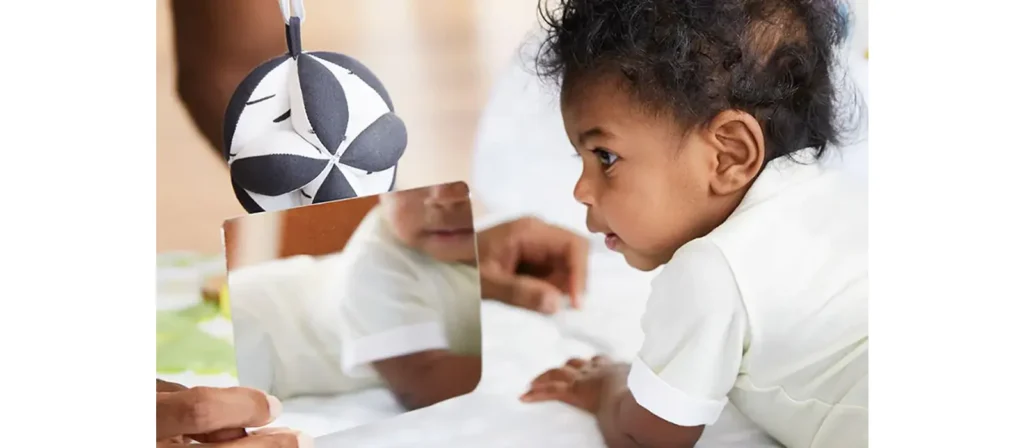
When a baby is on their tummy, the motivation to lift their head often wanes if nothing is interesting to look at. A carpet or a blanket is boring. But a face? That changes everything. Humans are hardwired to look at faces. When a baby sees a face in the mirror, even if they don’t yet realize it is their own, they are compelled to look up. This action forces them to engage their neck, shoulder, and upper back muscles.
Holding this position to gaze into the mirror builds the core strength necessary for future milestones like rolling over, sitting up, and eventually crawling. It extends the duration of tummy time without the tears, turning a physical chore into a period of fascination. The mirror acts as the ultimate distraction, allowing the physical body to strengthen while the brain is busy processing the visual input.
Visual focus and body movement in early infancy
In the first few months of life, a baby’s vision is still a work in progress. They don’t see colors clearly right away, and their depth perception is still loading. However, they are highly sensitive to light, movement, and contrast. Mirrors provide all three in abundance.
When a baby moves their arm in front of a mirror, the reflection moves instantly. This creates immediate visual feedback. At first, it might just look like random motion. But over time, the baby begins to notice a pattern, realizing that when they feel their arm move, that image moves too. This is the very beginning of visual tracking and hand-eye coordination.
They start to focus their eyes on the reflection, following the movements. This strengthens the eye muscles and improves their ability to lock onto objects. It also encourages them to move more. If kicking a leg makes the “other baby” kick, they are likely to do it again. This cycle of action and reaction helps them map out their own body movements. They are not just flailing limbs anymore; they are beginning to understand that they have control over their physical actions.
Developmental Benefits of Mirror Play
As babies transition into toddlerhood, the benefits of Mirror Play shift from purely physical and sensory to deeply cognitive and emotional. It becomes a laboratory where they test hypotheses about the world.
Builds self-awareness
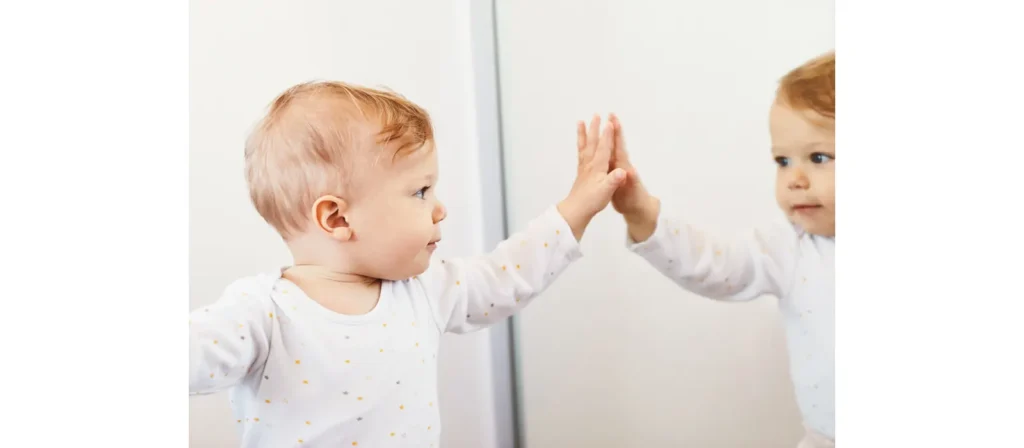
This is the big one. The Self is a complicated concept. For the first year or so, babies often treat the reflection as a playmate. They smile at it, babble to it, and maybe even try to look behind the mirror to find the friend. But somewhere around the 18-month mark, give or take, a massive cognitive shift happens. We often call this the Rouge Test phase in psychology, but at home, it is simply the moment they realize, Wait, that is me!
Mirror Play accelerates this understanding. By constantly observing the reflection and seeing it mimic their exact actions, such as touching an ear or opening a mouth, they begin to construct an identity. They recognize that they are a separate entity from their parents and the rest of the world. This self-recognition is the foundation of the ego and identity. Without this realization, a child cannot fully develop social skills because they have to know who they are before they can understand how they relate to others.
Supports object permanence
Object permanence is the understanding that things continue to exist even when you cannot see them. Mirrors provide a unique twist on this concept. A child might be looking in the mirror and see their parent walk into the room behind them. They see the parent in the glass, but they know the parent is actually behind them.
This forces the brain to do some serious mental gymnastics. They learn to turn around to verify what they see in the reflection. They realize that the mirror image is a representation of reality, not reality itself. Playing peek-a-boo in front of a mirror, where the parent disappears from the reflection but is still audible, or appears in the reflection but isn’t in the direct line of sight, reinforces this crucial cognitive milestone. It teaches them that the world exists in 360 degrees, not just right in front of their nose.
Develops spatial awareness
Navigating the world requires a good sense of space. How far away is that table? Can I fit through that gap? Mirror Play helps refine these judgments. When a child sees a room reflected, they are seeing depth and distance on a flat surface.
Toddlers often try to step into the mirror or hand a toy to the reflection. When the toy hits the glass, they learn about boundaries and solid surfaces. They learn that the room in the mirror has depth visually but not physically. This helps them calibrate their visual perception. They start to understand distances, noting that the reflection of the couch looks smaller because it is further away. This perception is vital for safety and coordination as they start running and climbing.
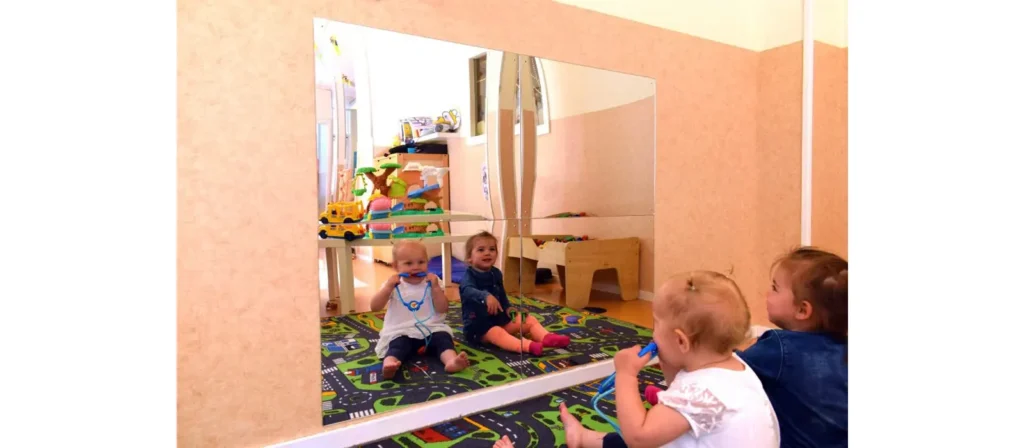
Strengthens fine and gross motor skills
We already talked about the neck muscles during tummy time, but the workout doesn’t stop there. As children get older, Mirror Play drives both large and small movements.
For gross motor skills, mirrors encourage standing. A toddler pulling up on a bar in front of a wall mirror will stand longer just to look at themselves. They might dance, stomp, or spin to watch how the reflection changes. This builds balance and leg strength.
On the fine motor side, mirrors are fantastic for precision. Have you ever seen a toddler try to touch a specific spot on their face while looking in the mirror? Or perhaps they are trying to press a sticker onto the glass. These actions require precise finger control. They have to coordinate what their hand is doing with what their eyes are seeing in reverse. It acts like a gym for their fingers and hand-eye coordination systems, refining their ability to manipulate objects with intent.
Sparks creativity and curiosity
Finally, a mirror is a versatile and open-ended toy. It doesn’t sing, it doesn’t flash lights, and it doesn’t have specific rules of play. It is precisely this lack of structure that sparks a child’s creativity.
A mirror can be a lake, a portal, or a stage. Children can use it to check their outfits, act out scenes, or make funny faces. It guides them to examine the endless possibilities of light and reflection. They might shine a flashlight at the mirror and observe the reflection of the beam, or breathe onto the mirror and watch the mist appear and disappear.
The blank canvas quality of a mirror keeps a child’s brain active. They are not passively receiving entertainment, but actively creating it. They become the directors of their own game. This type of play fosters a child’s curiosity. They ask all sorts of questions, both verbally and through their actions: What happens if I get really close? What happens if I cover one eye? This continuous spirit of inquiry is the driving force behind learning, propelling them to seek new information and test new ideas about how the physical world works.
Practical Strategies for Implementing Mirror Play
Now that we understand why mirrors are so powerful for development, it is time to put that knowledge into action. You do not need a degree in education to facilitate these moments. Most of the best mirror play happens naturally during daily routines. However, having a few structured games in your back pocket can turn a rainy afternoon into a productive learning session. These activities range from simple naming games for young toddlers to complex emotional regulation exercises for preschoolers.
Identify body parts
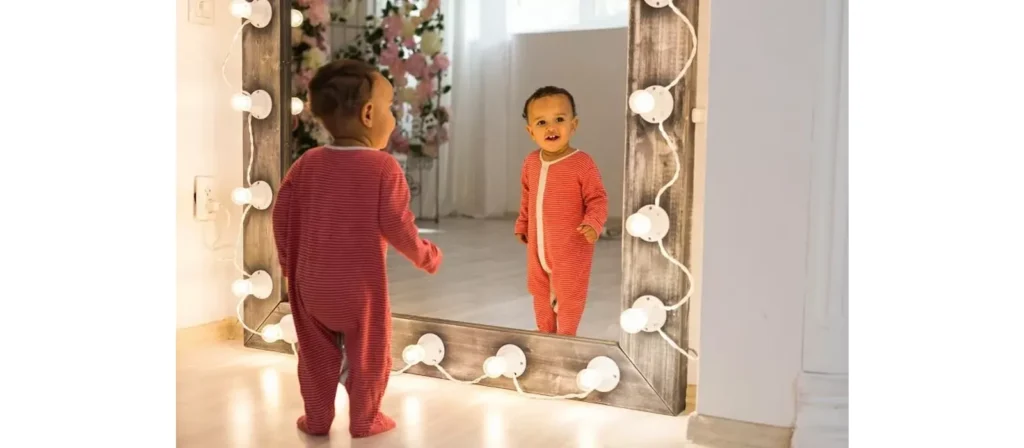
This is one of the classic games to play with toddlers who are just starting to talk. It combines vocabulary building with visual verification. When you ask a child where their nose is without a mirror, they might point to their face based on muscle memory. When you do it in front of a mirror, they get to see the connection between the word and the body part.
Start by sitting with your child in front of a large mirror. Point to your own nose and say, “This is my nose.” Then point to their nose in the reflection and say, “That is your nose.” Ask them to point to their own nose while looking in the mirror. You might notice they hesitate at first or try to touch the reflection instead of their own face. This is part of the learning process.
As they get better at this, you can increase the difficulty. Ask them to find their ears, their elbows, or their belly button. You can even add descriptors to make it more challenging. Ask them to find their two eyes or their one mouth. This reinforces counting skills alongside anatomical vocabulary. It turns the abstract concept of language into a concrete visual reality that they can verify with their own eyes.
Try two-step directions
Once a child has mastered identifying body parts, you can ramp up the cognitive load by introducing two-step directions. This activity is fantastic for building working memory and listening skills. Working memory is the ability to hold information in your head for a short time and then use it.
Stand with your child in front of the mirror and give them a command that involves two distinct actions. For example, you might say, “Touch your head and then touch your toes.” The mirror provides immediate feedback. They can see if they are doing it right, and you can see if they are processing the order of events correctly.
You can mix this up with spatial concepts, too. Try commands like, “Stand behind me and then jump out,” or “Put your hands up high and then stick your tongue out.” The reflection makes the actions more engaging than just doing them in the middle of the room. It adds a performance element that keeps children focused on the task. If they struggle, you can use the mirror to model the action first, showing them exactly what the sequence looks like before asking them to try it again.
Play “match that feeling.”
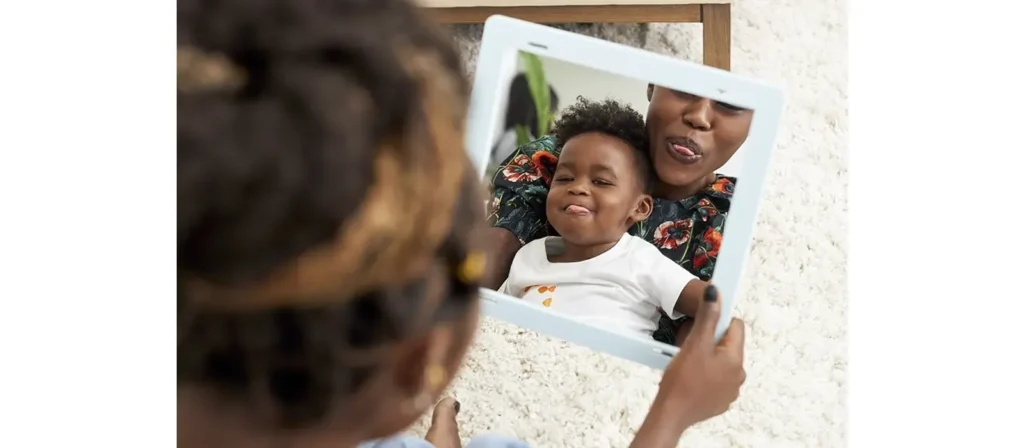
Emotional intelligence is just as important as academic intelligence, and mirrors are the perfect tool for teaching it. Children experience big emotions, but they often do not know what those emotions look like or what they are called. This activity helps bridge the gap between an internal feeling and an external expression.
Sit with your child and make an exaggerated sad face. Ask them, “How do I look?” When they answer “Sad,” ask them to make a sad face in the mirror, too. Guide them to look at their own eyebrows and mouth. Point out that their mouth are curving down and their eyes are squinting. This visual feedback helps them recognize the physical signs of sadness.
Cycle through different emotions like happiness, anger, surprise, and fear. You can turn it into a game where you call out an emotion, and they have to switch their face instantly to match it. This practice is incredibly helpful for moments of real frustration later on. When a child is having a meltdown, you can sometimes bring them to a mirror and ask them to look at their face. Seeing their own distress can sometimes help them pause and begin the process of regulating their emotions because they step out of the feeling just enough to observe it.
Make funny faces
While this might sound similar to the emotion game, the goal here is purely motor control and muscle strengthening. The face has many muscles that are essential for speech production and feeding. Making funny faces is essentially a workout for the mouth and jaw.
Challenge your child to see who can open their mouth the widest or stick their tongue out the furthest. Try puffing out your cheeks like a fish and popping them with your hands. Practice curling your lips or wiggling your nose. These silly actions require significant fine motor control.
For children who are struggling with speech sounds, this type of play can be very beneficial. Watching their mouth form shapes in the mirror helps them understand how to manipulate their lips and tongue to make different sounds. It is speech therapy disguised as a comedy routine. You can take turns being the leader, where one person makes a ridiculous face and the other has to copy it exactly. The laughter that inevitably follows is just a bonus that strengthens your bond.
Sensory Play on a Full-Length Mirror
If you want to take engagement to the next level, introduce messy sensory play on the surface of the mirror itself. A full-length mirror laid flat on the floor or a secure wall mirror serves as a fantastic, wipe-clean canvas. The reflection adds depth to the mess, making it look twice as deep and interesting.
You can spray a thin layer of shaving cream or whipped cream over the glass. Let the child use their fingers to draw lines, shapes, or letters in the foam. As they clear the foam away, they see their own face peeking back at them. This game of hide-and-seek with their own reflection is thrilling for toddlers.
You can also use water. Give them a paintbrush dipped in water and let them paint on the glass. It changes the way the light reflects and distorts the image. You can stick wet foam shapes onto the mirror, and they will stick like magic. This adds a tactile element to the visual experience. The cold, smooth feel of the glass combined with the texture of the sensory material provides a rich, multi-sensory environment that stimulates the brain in unique ways. Just be sure to supervise closely to ensure they do not lean too hard on the glass, although using an acrylic safety mirror removes this worry.
Making Art on a Mirror in Preschool

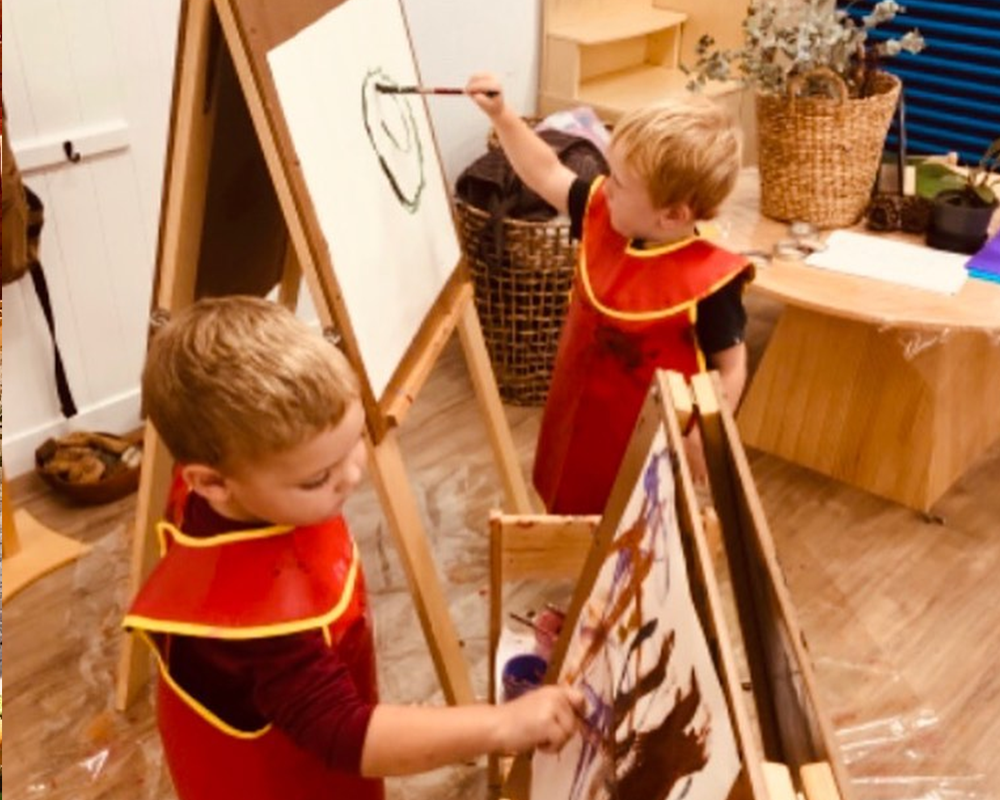
In a preschool setting, mirrors can transform the art corner. Instead of painting on paper, tape a large sheet of paper over a portion of the mirror, or use special window crayons and paint sticks that wipe off directly from the glass.
When children paint on a mirror, they are not just looking at the paper; they are looking at themselves painting. They can see the brush strokes from underneath if they are painting directly on the glass. This changes their perspective on the creative process. It allows for what educators call transient art, which is art that is not meant to last forever.
You can also provide loose parts like buttons, glass beads, or colorful translucent tiles. When children arrange these on a flat mirror, the reflection creates symmetry. A half-circle of beads becomes a full circle. A simple tower looks like it goes down into a hole as well as up into the air. This introduces concepts of symmetry, geometry, and pattern-making in a hands-on way. It encourages them to observe the artwork from different angles and appreciate the beauty of light and reflection. It shifts the focus from creating a finished product to enjoying the process of creation itself.
Quick Tips for Successful Mirror Play
- Keep it short: 5 to 10 minutes of focused Mirror Play is enough for young babies.
- Lighting matters: Ensure the area is well-lit so the reflection is clear and engaging.
- Follow their lead: If your child kisses the mirror or taps it, imitate them to reinforce the interaction.
Mirror Play Educational Value
While parents often view mirrors as a fun distraction during diaper changes or tummy time, educators see them as a robust pedagogical tool. In the world of early childhood education, every object in the classroom must have a purpose. Mirrors are rarely just decorative. They are strategically placed to deepen the learning experience. Understanding the educational theory behind this simple object can help parents appreciate why it is a staple in high-quality childcare centers and preschools. It transforms a passive household item into a dynamic learning tool.
How mirror play supports holistic development
Holistic development refers to the comprehensive growth of the whole child, encompassing not just one specific area, such as math or reading. It looks at how physical, emotional, social, and cognitive skills weave together. Mirror play is a prime example of a holistic activity because it engages multiple developmental domains simultaneously.
When a child sits in front of a mirror, they are not isolating a single skill. They are practicing visual tracking, which is physical. They are processing the concept of reflection, which is cognitive. They are reacting to their own smile, which is emotional. They might be vocalizing at the image, which is linguistic. It is a multitasking workout for the brain.
In many educational settings, teachers use mirrors to tie these loose ends together. For example, a child stacking blocks in front of a mirror gets to see the back of their tower without moving. This enhances their spatial reasoning while they work on fine motor precision. The mirror acts as a feedback loop. It allows the child to self-correct and adjust their actions in real time without an adult needing to intervene. This builds autonomy and confidence, which are central pillars of holistic growth.
Connections to language, social-emotional learning, and motor development
Mirror play serves as a bridge connecting three critical pillars of early education: language, social-emotional learning (SEL), and motor development. These areas often overlap, and the mirror provides a shared space for them to flourish.
Regarding language, the mirror is a conversation starter. It gives children something immediate and concrete to talk about. When an adult sits with a child and narrates what they see, they are flooding the child with vocabulary. Words like “shiny,” “bright,” “smiling,” or “frowning” become tangible because the child can see exactly what the word refers to. It helps ground abstract adjectives in reality. For older toddlers, it supports storytelling. They can watch themselves speak, observing how their lips move to form sounds, which is a technique often used in speech therapy to improve articulation.
In terms of Social-Emotional Learning, the mirror is the primary tool for identity formation. You cannot have social skills without self-awareness. Before a child can empathize with a friend who is crying, they must understand what sadness looks like on their own face. Mirrors provide a safe space to test these emotions. A child can practice roaring like a lion to feel brave or make a sad face to process disappointment. It validates their feelings and proves that their internal state has an external expression.
For motor development, the incentives are visual. We often see infants motivated to crawl simply because they want to reach the baby in the glass. The reflection provides a target. It encourages reaching, stretching, and eventually pulling up to a standing position. The mirror provides immediate visual confirmation of their movements, reinforcing the connection between the brain’s command and the body’s action.
The role of mirror play in early childhood education frameworks
Different educational philosophies have championed the use of mirrors for decades, each using them in slightly different ways to support their unique curriculum goals.
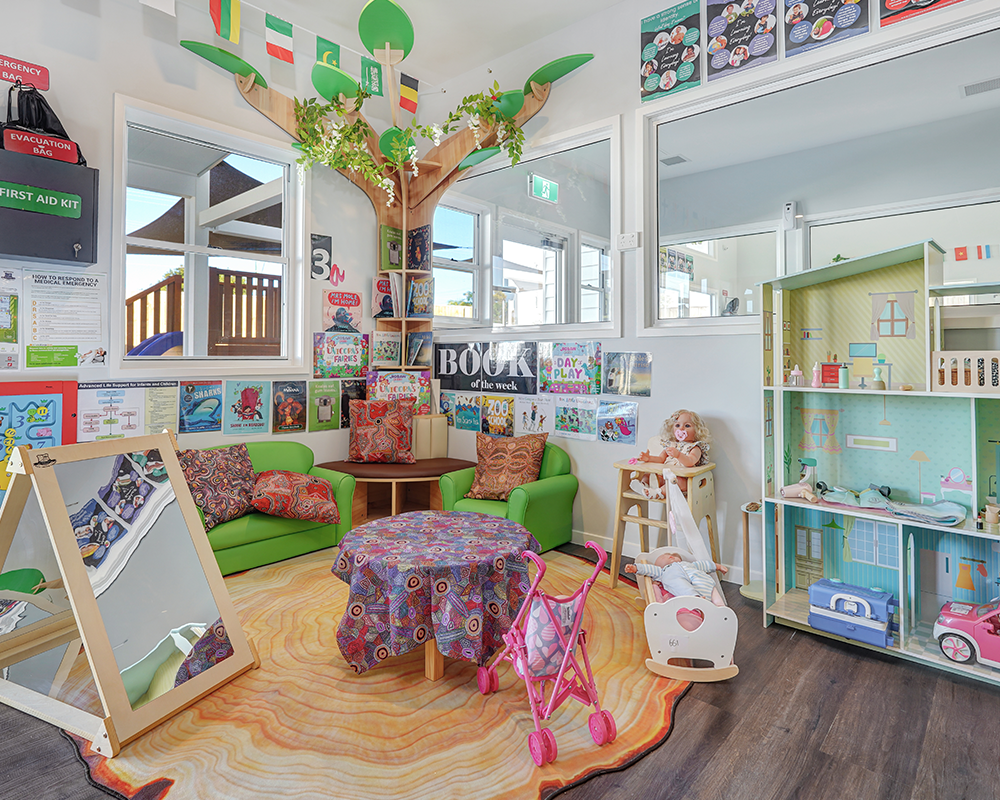
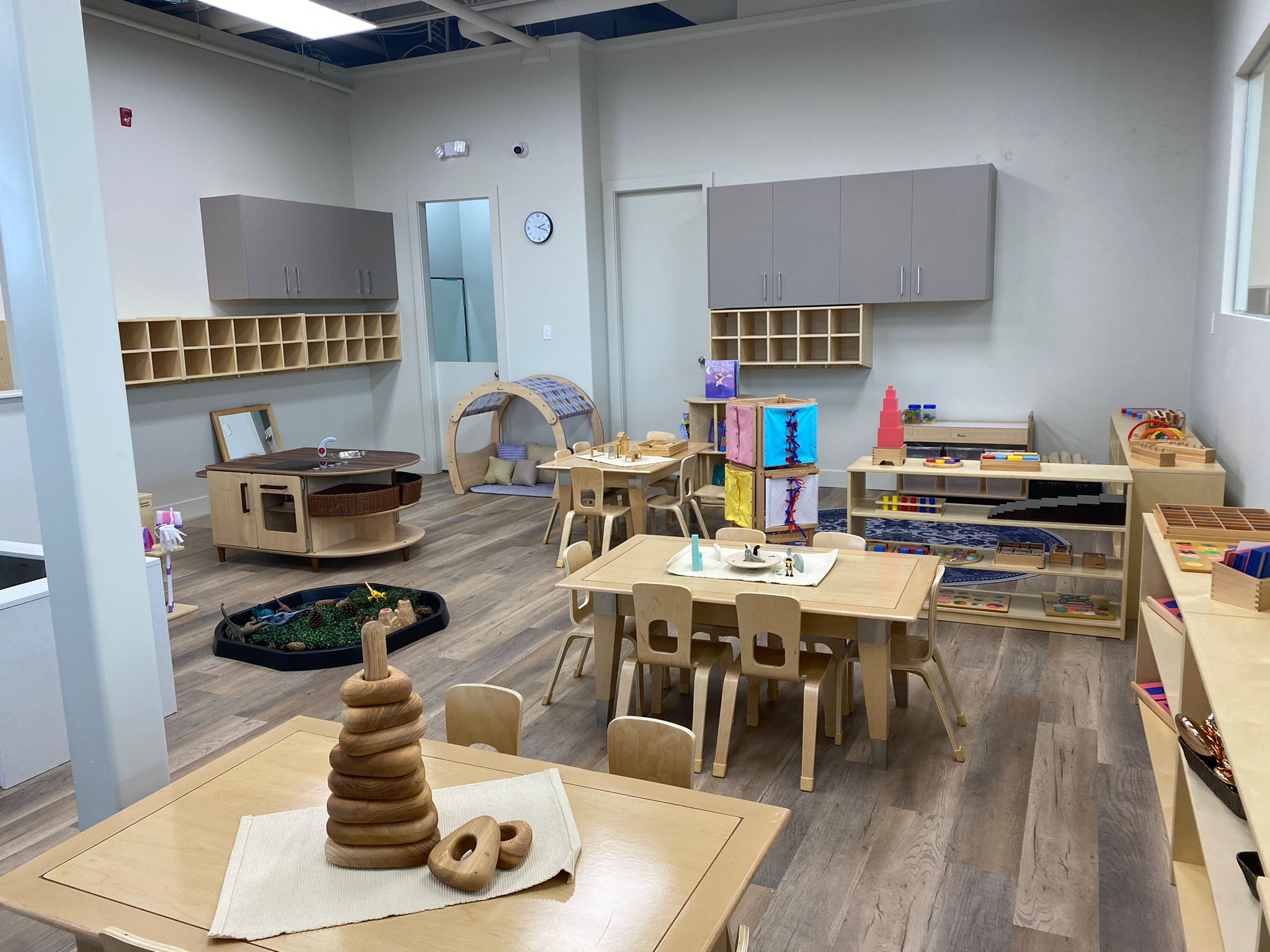
In the Montessori method, the mirror is a standard fixture in the infant area, often referred to as the “Nido.” You will typically find a horizontal mirror secured low on the wall next to a floor mat. The purpose here is to support freedom of movement and independence. The Montessori philosophy believes that babies should not be restricted in containers or high chairs. The mirror allows the infant to observe the entire room and their own body within it. It respects the child’s intelligence, giving them a tool to study their environment on their own terms. It transforms the floor from a passive holding space into an active laboratory for movement.
The Reggio Emilia approach, which originated in Italy, takes a slightly different angle. They often refer to the environment as the “third teacher.” In Reggio classrooms, mirrors are everywhere. They are used on walls, on tables, and even in corner constructs to create prisms. Here, the focus is on light, perspective, and identity. Teachers use mirrors to provoke wonder. They might place natural objects like shells or leaves on a mirror so children can see the object from underneath. It teaches children that there is always more than one way to look at something. It encourages them to investigate items from multiple angles, fostering a mindset of curiosity and critical thinking.
Even in Waldorf education, which typically favors natural materials and a slower pace, mirrors have a place, though often more subtly. They are used to help children ground themselves in their physical bodies. The goal across all these frameworks is consistent: to use the reflection to affirm the child’s existence and importance in the world. It tells the child, “You are here, you are visible, and you matter.”
Creating an Effective Mirror Play Environment
Integrating mirrors into a home or classroom requires more thought than simply hanging a reflective surface on the nearest wall. To truly maximize the developmental benefits we have discussed, the environment must be intentional. The goal is to create a space that is safe, accessible, and inviting. When a mirror is positioned correctly, it draws the child in and sustains their attention without any need for adult coercion. It becomes a passive invitation to play. The following guidelines will help you design a space that facilitates independent learning and safety.
Choosing Safe Mirrors
The first and most critical step is selecting the right hardware. Standard household mirrors are typically made of glass, which poses a significant safety risk in a play environment. If a glass mirror shatters, it creates dangerous shards that can cause serious injury. Therefore, for any space where children will be playing unsupervised or actively engaging with the surface, you must prioritize safety materials.
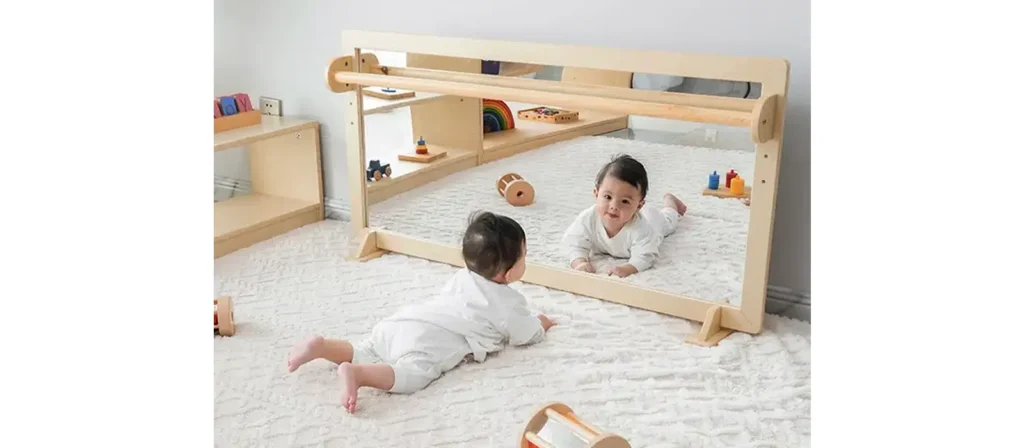
This is why specialized Montessori mirrors are the industry standard for childcare settings and conscious homes. These mirrors are almost exclusively made from high-quality acrylic. They are lightweight, shatter-resistant, and far more durable than glass. While they can scratch more easily, the safety trade-off is worth it. If an acrylic mirror falls or is struck by a wooden toy, it might crack, but it will not explode into sharp pieces.
Another factor to consider is the framing. Unframed mirrors can have sharp edges. It is best to choose mirrors that are mounted on sturdy wooden backings, often made from beech or birch wood to match other playroom furniture. If you are mounting a mirror directly to a wall, ensure it is flush with the surface so that small fingers cannot pry it loose from the sides.
Vertical vs. Horizontal Mirrors
The shape and orientation of the mirror change how a child interacts with it. Understanding the difference between full-length (vertical) and wall-mounted (horizontal) mirrors helps you tailor the space to specific activities.
Full-length vertical mirrors are excellent for gross motor development. They allow a child to see their entire body from head to toe. This is crucial for activities involving dancing, dressing up, or general movement. A toddler learning to walk benefits from seeing their feet and their face at the same time. It helps them understand the connection between their legs moving and their position in the room changing.
Wall-mounted horizontal mirrors, on the other hand, are often better suited for group settings or specific, focused areas. In a Montessori infant area, a long horizontal mirror is preferred because it spans the length of the play mat. It allows a baby to roll over and still see themselves. In a preschool classroom, a horizontal mirror above a sink or a low table allows multiple children to stand side-by-side. This fosters social interaction. They can look at themselves, but they can also look at their peers in the reflection, creating a shared communal experience.
Placement by Age Group
Ergonomics is key. A mirror is useless if the child cannot see themselves in it. The placement must evolve as the child grows.
For infants, the mirror needs to be at floor level. If you are using a wall mirror, it should start right at the baseboard. This ensures that a baby lying on their tummy or side has a direct line of sight. This is where the Montessori Pull-Up Bar Mirror becomes an essential tool. This specific product combines a safety mirror with a sturdy wooden rail fixed at about chest height for a cruising baby. It gives them a secure tool to hoist themselves up, rewarding their physical effort with a view of their own smiling face. It supports the transition from floor play to standing.
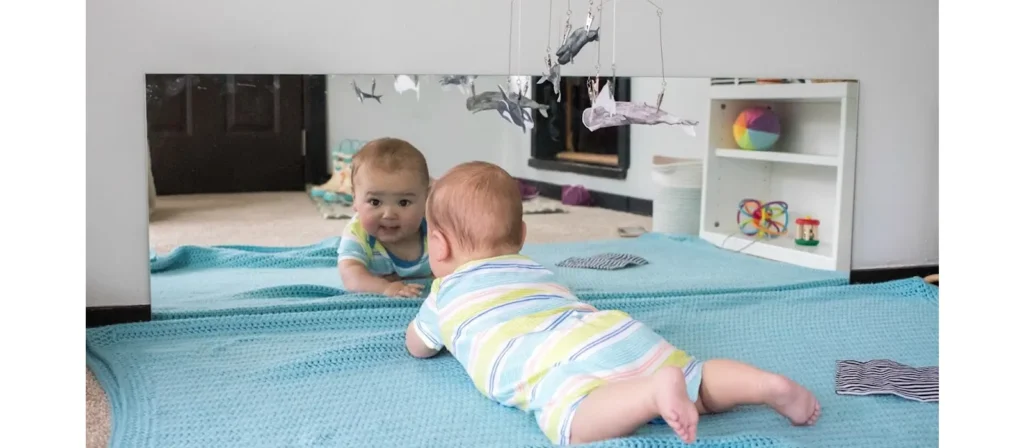
For toddlers, the mirror needs to rise with them. A vertical mirror is often best here. It should be low enough that they can see their feet, but tall enough to frame their head when they stand up straight. This is the age of dramatic play, so placing mirrors near dress-up bins or open spaces allows them to act out roles and observe their costumes.
For preschoolers, you can start to be more task-specific. Mirrors at eye level above a washing station help with self-care skills like brushing teeth or wiping faces. Mirrors placed on tables or behind art stations support creative work. At this stage, they do not always need full-body views; they often need focused reflections for detailed tasks.
Mirrors and Montessori Furniture
Mirrors do not have to be isolated on a wall. Integrating them with other Montessori furniture creates a cohesive, yes, environment where everything is accessible.
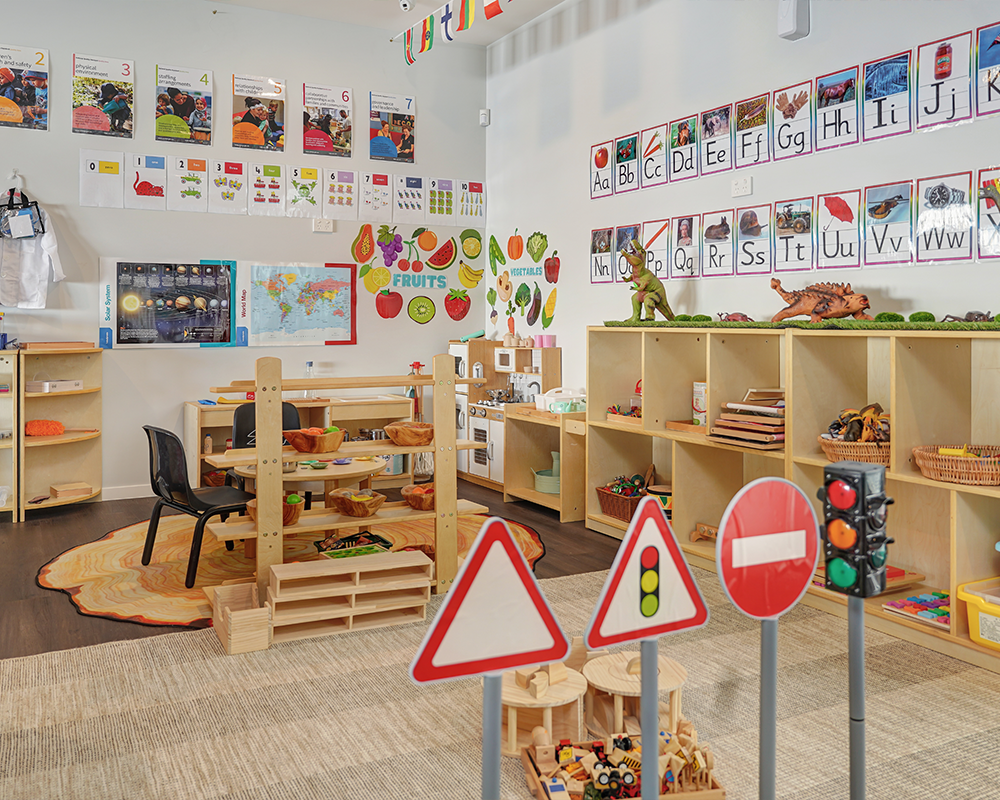
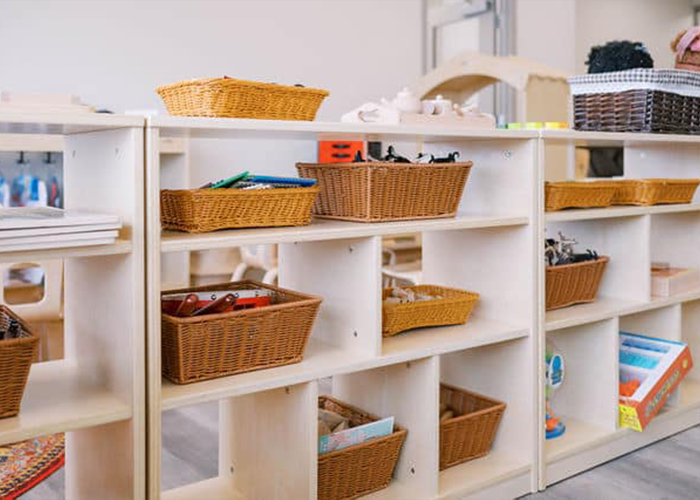
Placing a mirror behind a Montessori low shelf is a classic design trick. It makes the toys on the open shelf look more abundant and inviting. It also allows the child to see the back of the object they are selecting. This helps with object rotation tasks, as they can see all sides of a toy without picking it up. It creates a visually rich area that anchors the room.
Activity tables, such as a Montessori weaning table, can also benefit from nearby mirrors. When a child sits at a table to eat or work on a puzzle, a mirror at their seated eye level reinforces their posture and manners. Furthermore, using mirror trays on top of these tables is fantastic for loose parts play. When a child builds a structure with translucent magnetic tiles on a mirror tray, the light reflects up through the construction. It adds a magical quality to the building process.
In reading corners, a small mirror can change the dynamic of storytime. Children can watch themselves mimic the expressions of the characters in the book. If the story is about a grumpy bear, they can look in the mirror and make a grumpy bear face. This connects the literacy experience with emotional recognition.
Designing for Independence
The ultimate goal of setting up this environment is to foster independence. You want the child to initiate the activity. A well-placed mirror acts as a silent teacher. It provides immediate feedback without an adult needing to say a word.
For instance, if a child is putting on a hat, they might struggle to get it on straight. If there is a mirror nearby, they can check their work and adjust it themselves. This builds a sense of agency and competence. They learn that they can solve their own problems using the tools in their environment.
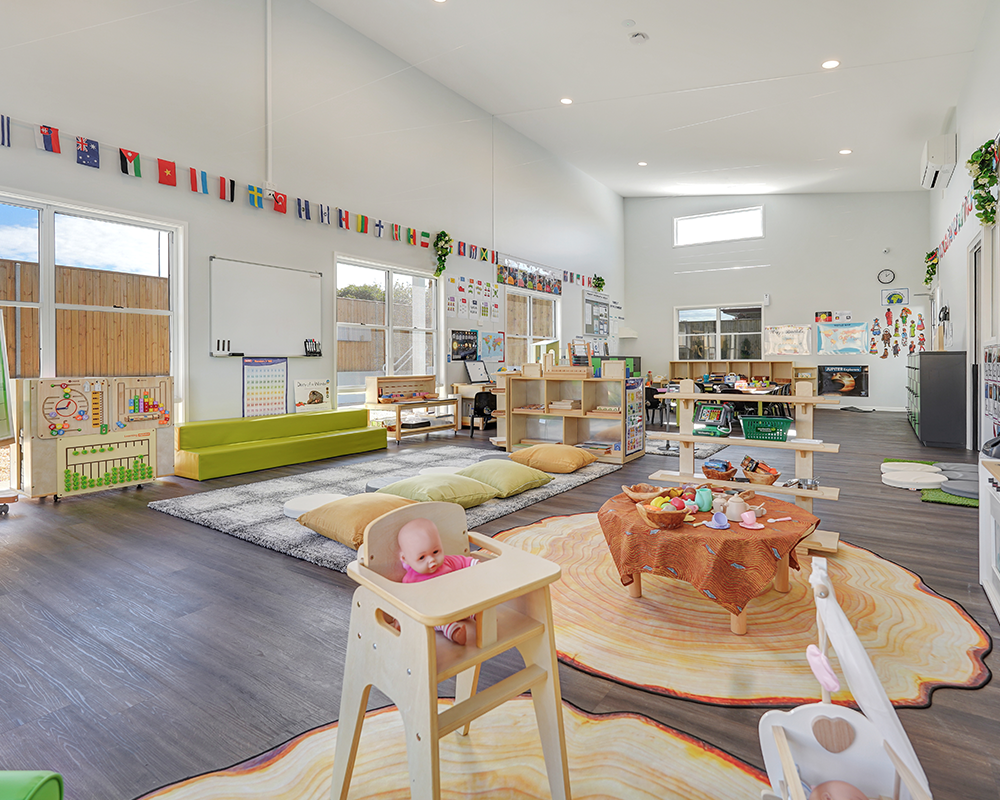
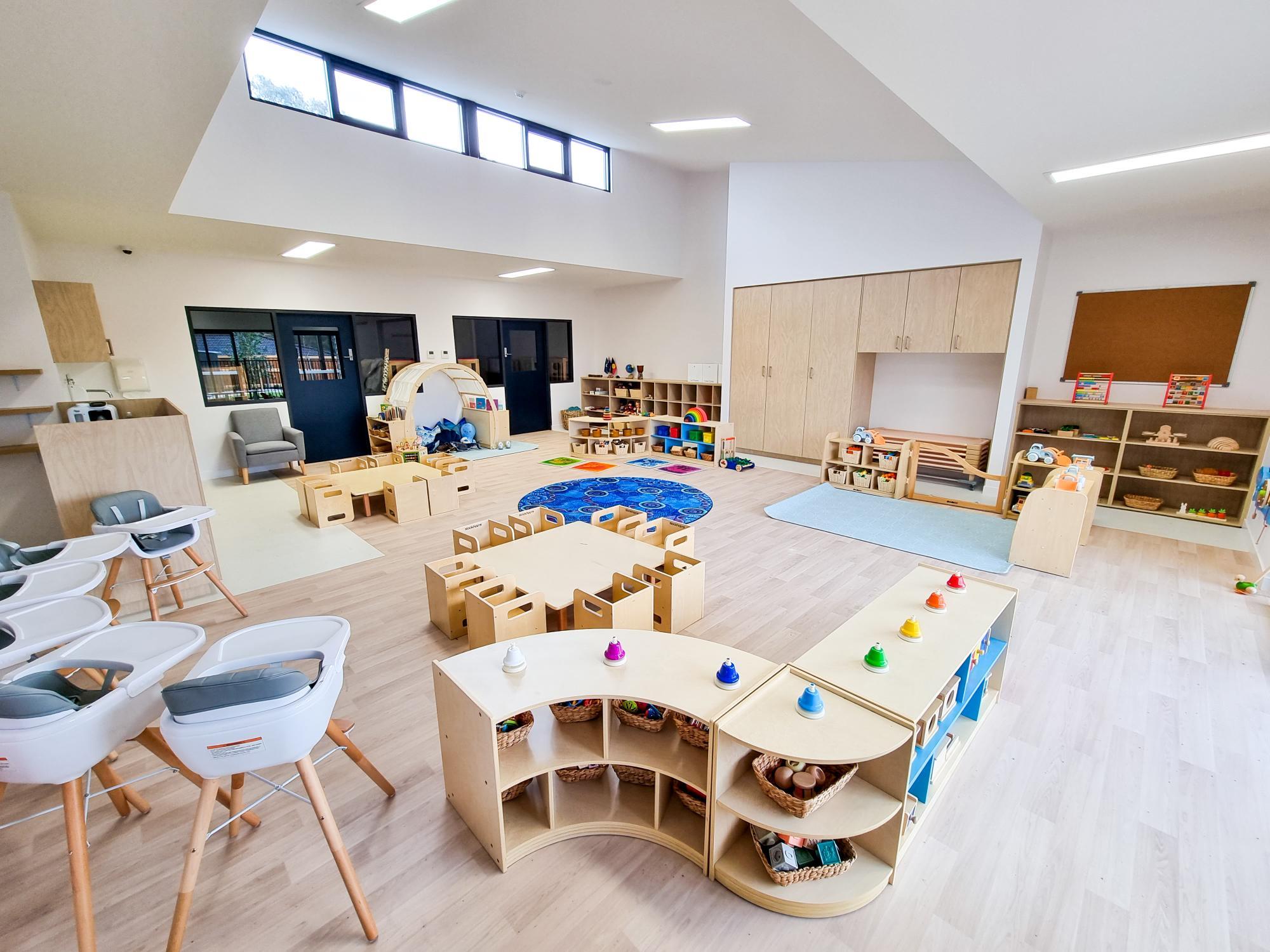
Keep the area in front of the mirror clear. Clutter is the enemy of focus. If there are too many toys piled up in front of the glass, the child cannot get close enough to engage with the reflection. A clear, open mat or rug invites them to step in and stay awhile. By carefully curating this space with high-quality tools like the Montessori Pull-Up Bar Mirror and accessible shelving, you are signaling to the child that their investigation of themselves and their world is a valid and important use of their time.
Conclusion
To wrap things up, Mirror Play is more than just a cute photo opportunity. It is a scientifically backed method for helping children understand who they are. From the first days of tummy time to the complex imaginative games of preschool, mirrors provide a constant source of learning. By setting up a safe environment with intentional tools like the Montessori Pull-Up Bar Mirror, you are giving your child a front-row seat to their own development.
You do not need complicated equipment to get started. You simply need a safe reflective surface and a willingness to let your child lead the way. Whether they are building neck strength, learning vocabulary, or simply enjoying their own smile, the benefits are immediate and lasting. We encourage you to observe your child in front of a mirror today. You might be surprised by the focus and joy you witness.
FAQ
What is the play mirror about?
A play mirror is primarily about developmental growth rather than vanity. It serves as a visual tool for infants to view themselves and their environment. The main goal is to foster self-recognition, visual tracking, and engagement during physical activities like tummy time. It transforms a passive room into an interactive space where a child can observe cause and effect.
Why mirror play is good for babies?
It boosts brain development in multiple ways. It strengthens gross motor skills by encouraging head lifting during tummy time. It improves fine motor skills as they reach and pat the reflection. It also lays the groundwork for social and emotional intelligence by allowing them to see facial expressions. Essentially, Mirror Play turns a difficult physical workout into an entertaining social interaction.
How does mirror play work?
It operates on the principle of immediate visual feedback. When a child moves, the reflection moves instantly. This signals to the brain that the child controls the movement. It helps them connect their internal physical sensations with external visual evidence. This process teaches them that they are separate from the rest of the world and have agency over their own bodies.
How do you tell if it’s a two-way mirror?
You can perform the fingernail test to ensure safety. Place your fingernail against the glass surface. If there is a small gap between your fingernail and its reflection, it is a genuine mirror. If there is no gap and they touch directly, it could be a two-way mirror. For a nursery or playroom, always buy from reputable suppliers to ensure you are getting a standard, high-quality safety mirror.
At what age should I introduce Mirror Play?
You can introduce Mirror Play as soon as a baby is born. While newborns have limited vision, they are fascinated by light and high-contrast images. Placing a non-breakable mirror on the floor during tummy time from 0 to 3 months is highly beneficial. As they grow into the 6 to 12-month range, the play evolves from visual tracking to social interaction.
Is it safe to use a regular glass mirror?
No, standard glass mirrors are not recommended for unsupervised play with infants or toddlers. Glass can shatter into sharp shards if struck with a toy or if it falls. For a safe environment, always use high-quality acrylic mirrors or shatter-resistant safety mirrors specifically designed for schools and nurseries, such as the Montessori Pull-Up Bar Mirror.