Tummy time is the awake, supervised time that your baby spends lying on their stomach, and it is important because it supports muscle strength, motor development and a healthy head shape. When practiced regularly, tummy time helps your baby learn to lift and turn the head, push up on the arms, and coordinate movements that lead to rolling and crawling.
From the outside, it may look like your baby is simply resting on a blanket, but a lot is happening inside the body and brain during tummy time. Muscles are working against gravity, joints are learning to move smoothly and the brain is building new pathways every time your baby explores and adjusts in this position.
In this article, we’ll walk you through everything you need to know about tummy time. From when to start to how to make it enjoyable, you’ll be ready to support your baby’s early growth with confidence.
What Are the Benefits of Tummy Time?
Tummy time supports a baby’s physical, sensory, and motor growth during the first months of life. By spending supervised time on their stomachs while awake, babies strengthen key muscle groups, improve body control, and build the foundation for important movement milestones. Tummy time also encourages active exploration and helps balance the time babies spend on their backs, making it an essential part of healthy early development.

1. Prevents Flat Head Syndrome (Positional Plagiocephaly)
One of the most immediate reasons pediatricians recommend tummy time is to prevent Positional Plagiocephaly, commonly known as flat head syndrome. Newborn skulls are soft and pliable. If a baby spends too much time lying on their back, the constant pressure can cause the back of the head to flatten. Tummy time provides necessary relief from this pressure, helping the skull develop a rounded, healthy shape.
2. Builds Essential Neck, Shoulder, and Core Strength
Think of tummy time as your baby’s first workout. Lifting their head against gravity is hard work! This exertion strengthens the neck extensors and shoulder muscles. As they get stronger, they will begin to push up on their forearms and eventually their hands. This upper body strength is the prerequisite for all future gross motor skills, including rolling over, sitting up independently, and pulling themselves up to stand.
3. Lays the Foundation for Crawling
Tummy time is the launching pad for mobility. It encourages the development of the pincer grasp and arm strength needed to drag their body forward. Babies who spend adequate time on their stomachs often learn to crawl sooner because they have had more practice shifting their weight and coordinating their limbs. It teaches them how to engage their core and pelvis, which are the mechanics behind crawling.
4. Enhances Visual Development and Hand-Eye Coordination
When a baby is on their back, their visual field is limited mostly to the ceiling or objects directly above them. Flipping onto their tummy opens up a whole new world. It forces them to look up, look around, and focus on objects at different distances. This helps develop depth perception and binocular vision. Furthermore, seeing their hands on the floor in front of them helps establish hand-eye coordination as they reach for toys placed nearby.
5. Relieves Gas and Constipation
If your baby is fussy or suffering from colic, tummy time can act as a natural remedy. The gentle pressure on their abdomen can help massage their digestive tract, aiding in the movement of trapped gas bubbles and stimulating bowel movements. Many parents find that a few minutes of tummy time can help soothe a gassy baby better than simply patting their back.
When to Start Tummy Time?
A common misconception among new parents is that they need to wait until the baby’s neck is stronger or until the umbilical cord stump falls off before attempting tummy time. However, the American Academy of Pediatrics (AAP) recommends starting as soon as your baby comes home from the hospital.
Starting early is crucial not just for physical development but for behavioral conditioning. Babies who start tummy time from day one are less likely to resist it later, as it becomes a normal part of their daily routine rather than a scary new challenge introduced months later.
How Long Should I Do Tummy Time For?
Consistency is more important than duration. You do not need to do it all at once. It is best to break tummy time into short, manageable sessions throughout the day.
- Newborns (0 to 2 Months): Start with short bursts. Aim for 1 to 2 minutes at a time, repeated 2 to 3 times a day. If the baby seems comfortable, you can gradually extend this to 5 minutes.
- Infants (3 to 4 Months): As the baby’s neck strengthens, increase the duration. Aim for 10 to 15 minutes per session.
Tummy Time Chart by Age
| Baby’s Age | Recommended Tummy Time | What to Expect During Tummy Time |
|---|---|---|
| 0 to 1 month | 1 to 5 minutes, 2 to 3 times per day | Brief head lifting, turning head side to side, beginning neck engagement |
| 1 to 2 months | 5 to 10 minutes, 2 to 3 times per day | Improved head control, longer head lifts, early arm support |
| 2 to 3 months | 15 to 20 minutes total per day | Stronger neck and shoulders, pushing up on forearms |
| 3 to 4 months | 20 to 30 minutes total per day | Steady head control, weight shifting, reaching during tummy time |
| 4 to 6 months | 30 minutes or more per day | Pushing up on hands, rolling, preparing for crawling |
How to Do Tummy Time?
Tummy time is most effective when it is done safely, consistently, and in a way that matches a baby’s comfort and developmental stage. Understanding how to do tummy time correctly helps parents build a positive experience that supports healthy growth without causing unnecessary stress.
Here are four pediatrician-approved positions to try:

1. Tummy-to-Tummy (Chest-to-Chest)
Best for: Newborns and bonding. This is the gentlest way to start, especially for brand-new babies who crave closeness.
- How to do it: Lie down on your back (either flat or propped up on pillows). Place your baby on your chest so you are face-to-face.
- Why it works: Your baby is motivated to lift their head to look at your face. It also provides skin-to-skin contact, which is soothing and regulating for the baby.
2. Lap Tummy Time(Soothing Position)
Best for: Babies who get fussy quickly or have gas.
- How to do it: Sit in a chair and place a blanket across your knees. Lay your baby across your lap, with their tummy resting on your thighs. Their head should hang slightly off one side (supported by your hand if needed) and their legs off the other.
- Why it works: You can gently rub or pat their back while they are in this position. The pressure on their belly is excellent for relieving gas pain, making this a “two-in-one” parenting hack.
3. The Tummy-Down Carry (The Football Hold)
Best for: Active parents and settling a crying baby. You can get Tummy Time minutes in while walking around the house!
- How to do it: Slide one arm between your baby’s legs and under their tummy. Use your other hand to support their head and neck. Hold them close to your body.
- Why it works: This is great for babies who hate being stationary. The motion of walking can be very calming, and they still get the benefit of using their neck muscles to look around the room.
4. Supported Floor Tummy Time (Using Props)
Best for: Babies who struggle to lift their heads or suffer from reflux.
- How to do it: Place a rolled-up towel or a small nursing pillow under your baby’s chest and armpits. Their arms should be over the roll.
- Why it works: The slight elevation makes it mechanically easier for the baby to lift their head. It reduces the gravity load on their weak neck muscles, allowing them to sustain the position for longer without getting frustrated.


Tips to Reduce Tears
It is common for babies to fuss or cry during tummy time, especially in the early weeks. This reaction usually comes from unfamiliar muscle use rather than discomfort or pain. With the right approach, tummy time can become more comfortable and enjoyable over time.
Choose a Safe and Comfortable Surface
Place your baby on a clean, flat, and firm surface such as a play mat, blanket on the floor, or a tummy time pillow. Always avoid elevated surfaces like beds or sofas to prevent falls.
Start Small and Increase Slowly
Short and frequent tummy time sessions are often better tolerated than longer ones. Even a minute or two at a time can be effective. Gradually increasing the duration helps babies build strength without becoming overwhelmed.
Choose the Right Timing
Timing creates success. To minimize crying and maximize engagement, choose your moments wisely:
- The Best Time: Practice when your baby is awake, alert, and calm. A great habit is to do a few minutes of tummy time immediately after every diaper change or right after a nap. This ties the activity to a routine trigger.
- The Worst Time: Avoid tummy time immediately after a feeding, as the pressure on a full stomach can cause spit-ups or discomfort. Also, avoid it when the baby is already overtired or hungry, as they will have zero tolerance for the effort required.
Stay Close and Offer Comfort
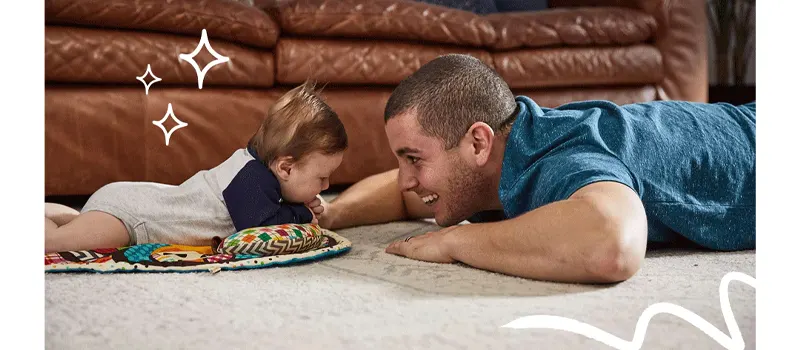
Being physically close reassures babies. Sit or lie down in front of them, talk softly, smile, or gently touch their back. Your presence helps babies feel safe and supported during tummy time.

Use Gentle Positioning Support
If a baby struggles to lift their head, placing a rolled towel under the chest can reduce strain. This small adjustment makes tummy time more manageable while still allowing muscles to activate and strengthen.
Add Simple Visual Interest
Babies are more willing to lift their heads when there is something to look at. Simple toys, mirrors, or even a caregiver’s face can provide motivation. Changing the visual focus keeps tummy time engaging without overstimulation.
Keep Sessions Positive
End tummy time before frustration builds. Stopping while the baby is still calm helps create a positive association. Over time, these positive experiences make tummy time easier and more successful.
Tummy Time Activities and Toys to Keep Baby Engaged
The key to extending Tummy Time sessions is distraction. If a baby has nothing to look at but the carpet, they will naturally get bored and frustrated. By introducing engaging toys and sensory activities, you can turn a “workout” into playtime. Here are the best tools and activities to keep your baby happy on their belly.
1. Baby-Safe Floor Mirror

A shatterproof floor mirror is arguably the single most effective tool for tummy time. Babies are biologically programmed to love faces. Placing a mirror in front of your baby encourages them to lift their head higher to catch a glimpse of the “other baby.”
Activity: Tap on the mirror gently to draw their attention to their reflection. You can also mirror play “peek-a-boo” by hiding behind the mirror and popping out, which motivates them to keep their head up to find you.
2. High-Contrast Flash Cards (Black & White)
For newborns (0-3 months), color vision is not yet fully developed, but they see high-contrast patterns very well. Black and white cards with bold geometric shapes or animal outlines act like a magnet for a newborn’s eyes.
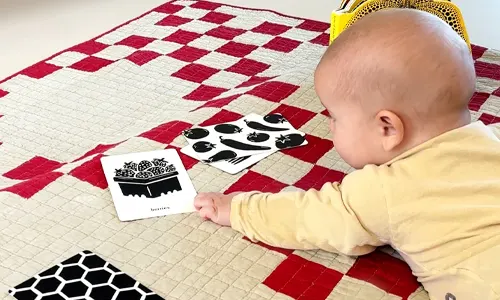
Activity: Prop the cards up about 8-12 inches from your baby’s face. Slowly move a card from the left side to the right side. This encourages your baby to turn their head and track the object, working the neck muscles on both sides equally to prevent stiffness.
3. Tummy Time Water Mat

As babies get older and start pushing up on their hands, they crave tactile stimulation. A water mat—filled with water and floating foam toys—provides a fascinating sensory experience without the wet mess.
- Activity: Place the mat under your baby’s chest and arms. Encourage them to slap or press the mat to make the floating fish move. This “cause-and-effect” play distracts them from the effort of holding themselves up and strengthens their shoulder stability.
4. Textured Activity Gym or Play Mat
A standard blanket can be slippery, but a dedicated activity mat offers traction and entertainment. Look for mats that feature “crinkle” paper, different fabrics (like soft fleece or smooth silk), and sewn-in squeakers.

- Activity: Lay your baby down so their hands are near the textured parts of the mat. Scratch the crinkled fabric with your fingernails to make a sound. This prompts the baby to reach out, grab, and scrunch the material, which helps develop fine motor skills and tactile processing.
5. Rolling Toys (Balls or Cylinders)

Once your baby has mastered the “mini push-up” (lifting the chest off the floor), it is time to encourage movement. Soft balls, rattles, or rolling cylinders are perfect for this stage.
- Activity: Place a rolling toy just out of your baby’s reach. This creates a challenge that motivates them to shift their weight to one arm so they can reach with the other, or to “pivot” (spin around on their belly). This reaching and weight-shifting is the direct precursor to crawling.
When Should You Ask a Doctor Before Tummy Time?
Most babies can safely begin tummy time shortly after birth. However, there are certain situations where it is important to speak with a doctor before starting or continuing tummy time. Medical guidance helps ensure that tummy time supports development without placing unnecessary stress on a baby’s body.

Premature Birth or Medical Complications
Babies who are born prematurely or who require extended medical care after birth may have different physical needs. A doctor can advise on when to start tummy time, how long sessions should last, and what positions are most appropriate.
Breathing or Airway Concerns
If a baby has ongoing breathing difficulties, frequent apnea episodes, or conditions that affect the airway, tummy time positioning may need adjustment. A healthcare professional can recommend safe alternatives or modified approaches.
Diagnosed Neck or Muscle Conditions
Babies with conditions such as torticollis or low muscle tone may need a customized tummy time plan. In these cases, tummy time is often still beneficial, but it should be guided by medical or physical therapy advice to avoid discomfort or imbalance.
Spinal, Skeletal, or Neurological Conditions
If a baby has been diagnosed with spinal abnormalities, hip issues, or neurological concerns, a doctor should be consulted before starting tummy time. Professional guidance ensures that positioning supports healthy movement and alignment.
Ongoing Discomfort or Unusual Reactions
If a baby consistently shows signs of pain, extreme distress, or unusual physical reactions during tummy time, it is important to pause and seek medical advice. Persistent discomfort is not typical and should be evaluated.
Recovery After Medical Procedures
Babies recovering from surgery or medical procedures may need to delay or modify tummy time. A doctor can provide clear guidance on when it is safe to resume and how to reintroduce tummy time gradually.
FAQs
Can I do tummy time on my bed or sofa?
It’s safest to do tummy time on a firm, flat surface like a floor mat or blanket. Elevated surfaces pose a risk of falls.
Can tummy time help with flat head syndrome?
Yes. Tummy time reduces pressure on the back of the head and promotes healthy skull development, helping to prevent flat spots.
What if my baby hates tummy time?
It is common for babies to resist tummy time at first. Starting with short sessions, using gentle support, and engaging with your baby at eye level can help make tummy time more enjoyable.
What should I do if my baby falls asleep during Tummy Time?
If your baby falls asleep while on their tummy, you should immediately roll them onto their back. It is not safe for sleep due to the risk of SIDS (Sudden Infant Death Syndrome). Always follow the “Back to Sleep” guidelines for naps and nighttime sleep.
Conclusion
Tummy Time is more than just a daily exercise checklist; it is the fundamental building block for your baby’s physical independence. From preventing flat head syndrome to strengthening the muscles needed for rolling, crawling, and eventually walking, those few minutes on the floor pay off in huge developmental dividends.
However, it is important to remember that progress is not linear. Some days your baby might happily push up and look around, and other days they might protest the moment their belly touches the mat. This is completely normal.
Don’t stress about hitting a perfect “60 minutes” every single day. Instead, focus on consistency and connection. Whether you are doing chest-to-chest snuggles with a newborn or watching your 5-month-old reach for toys, every moment counts. Keep the sessions short, keep them fun, and before you know it, your little one will be rolling across the room on their own.