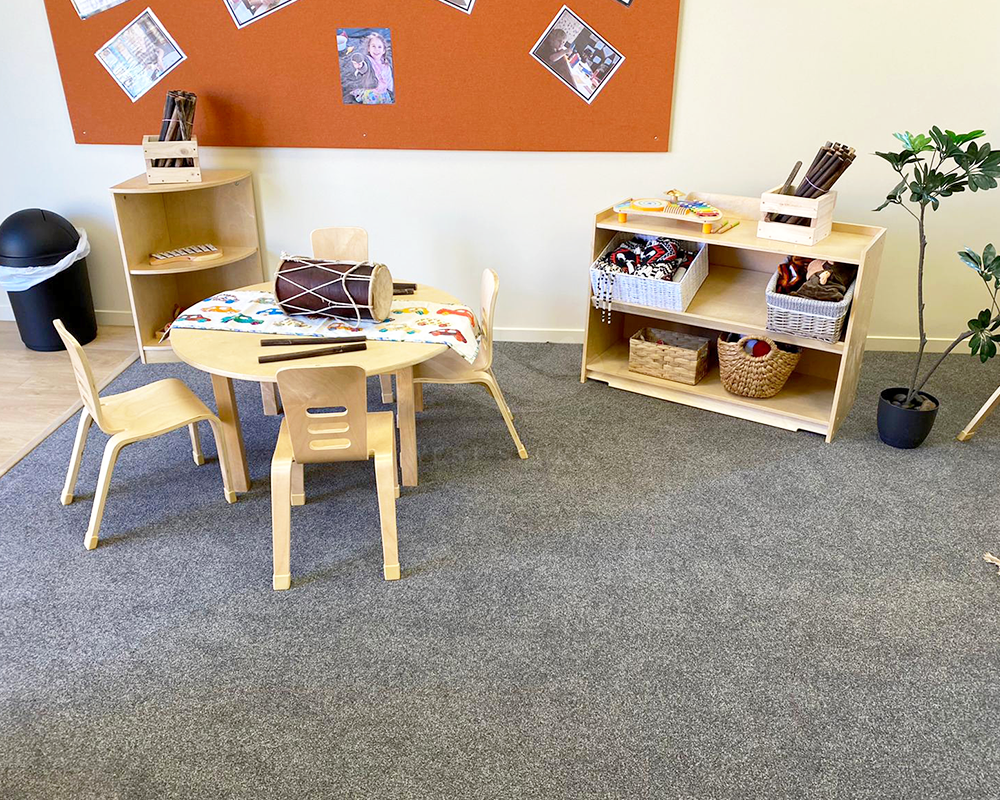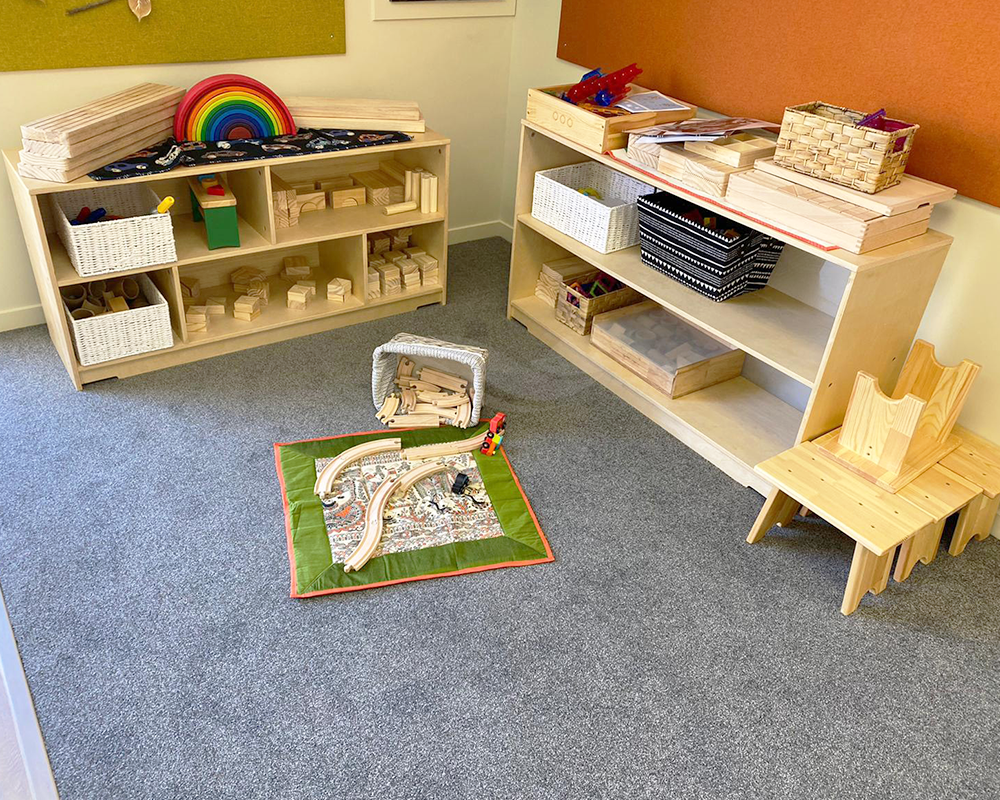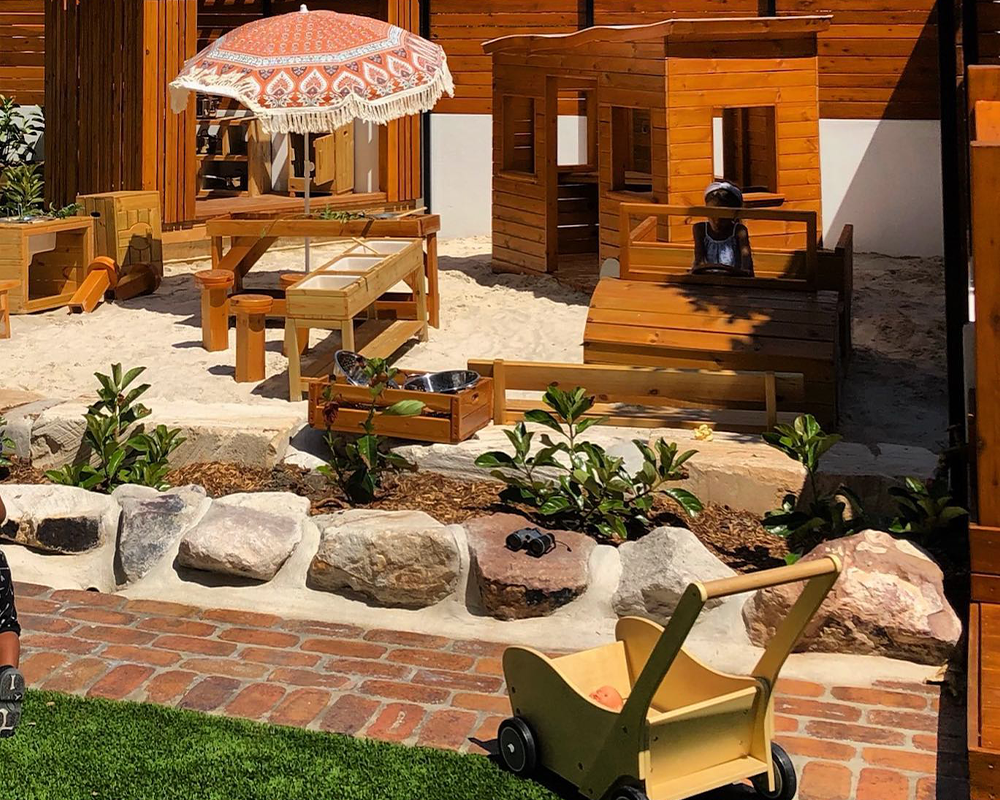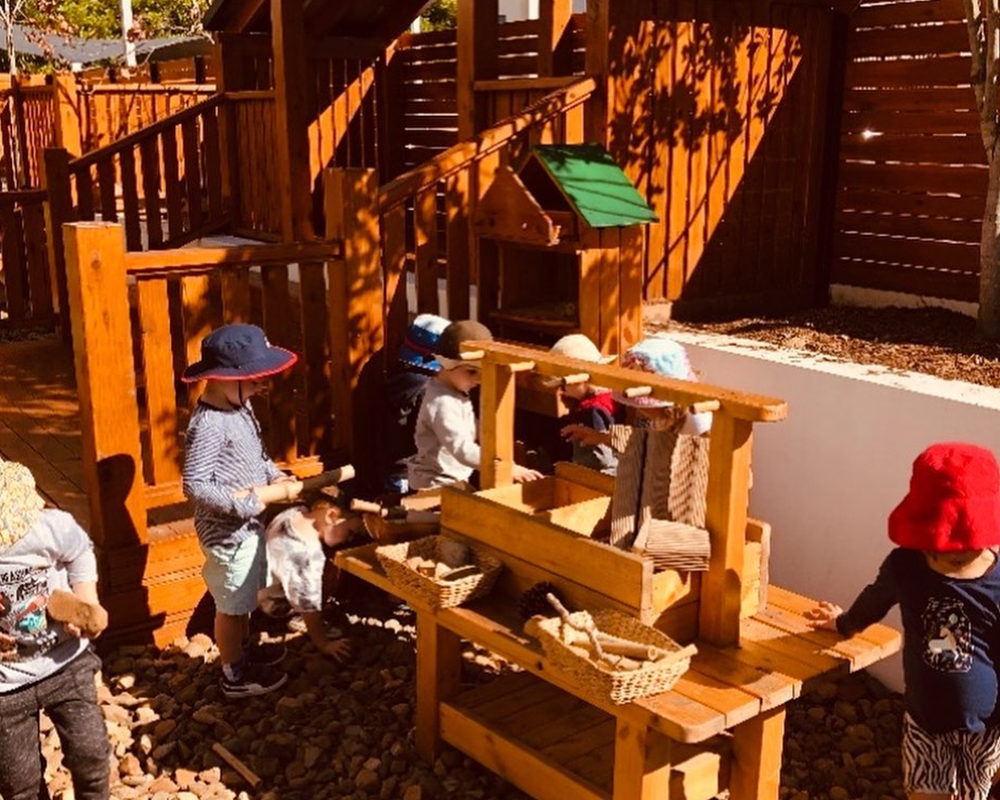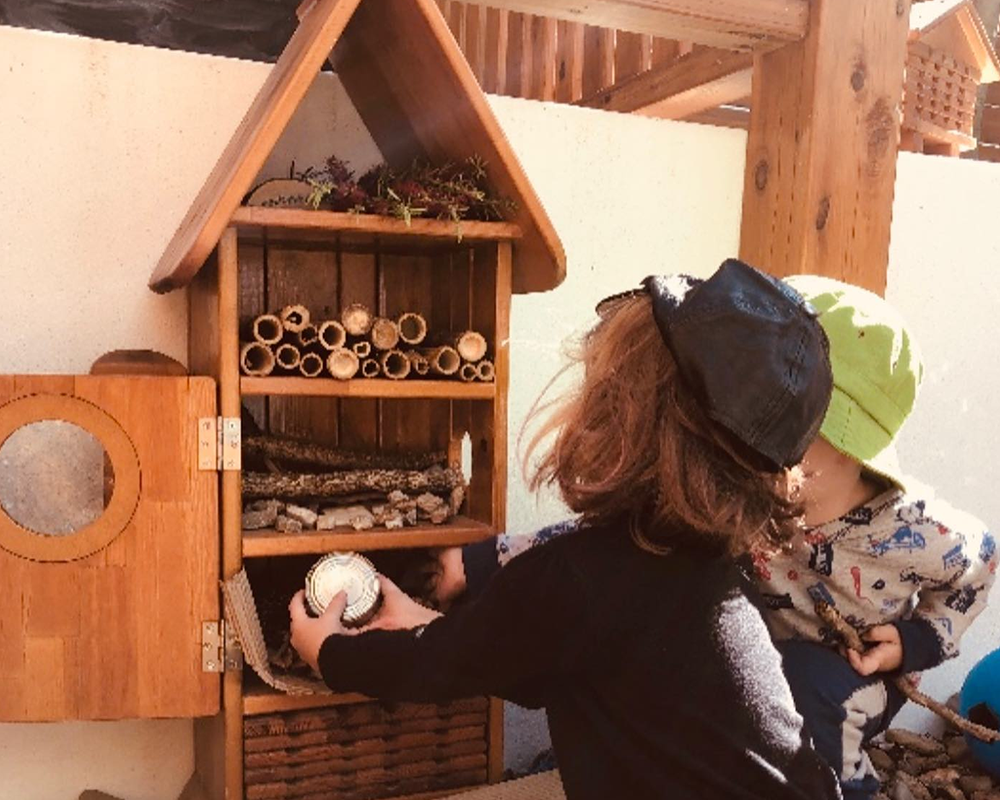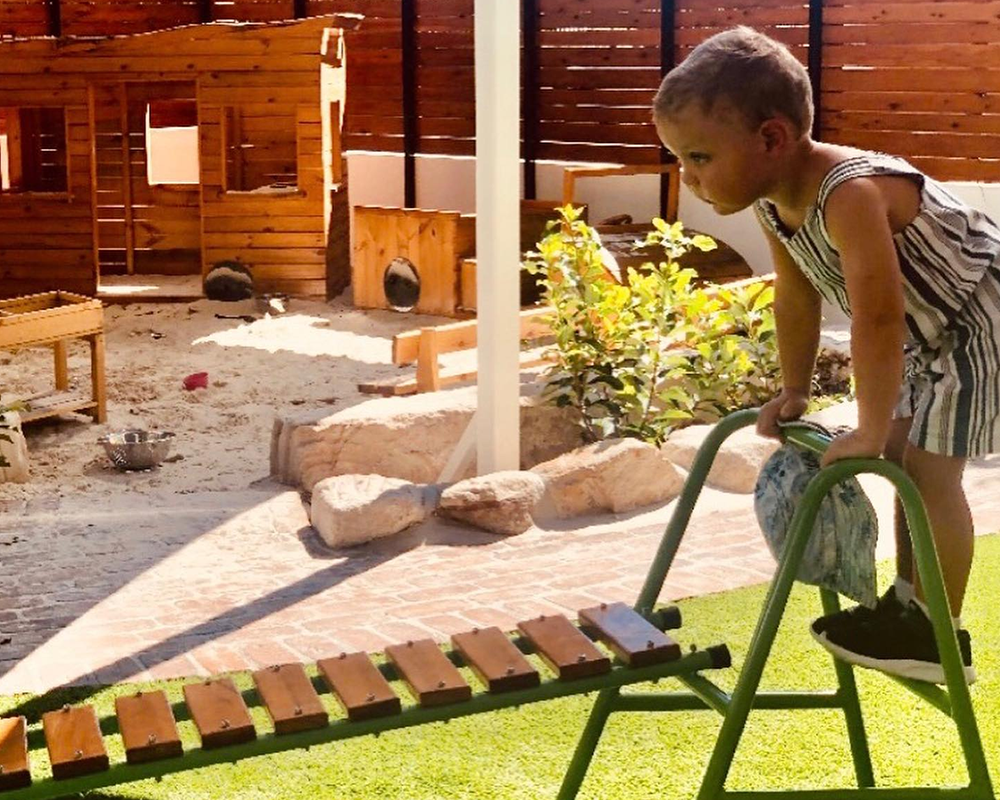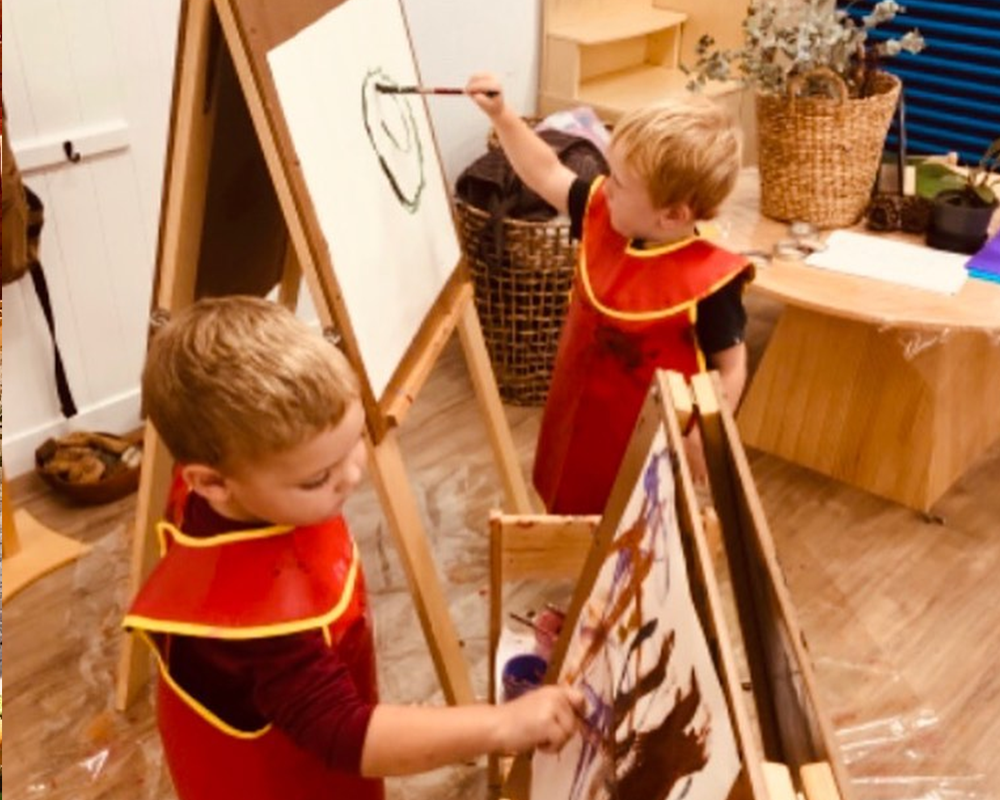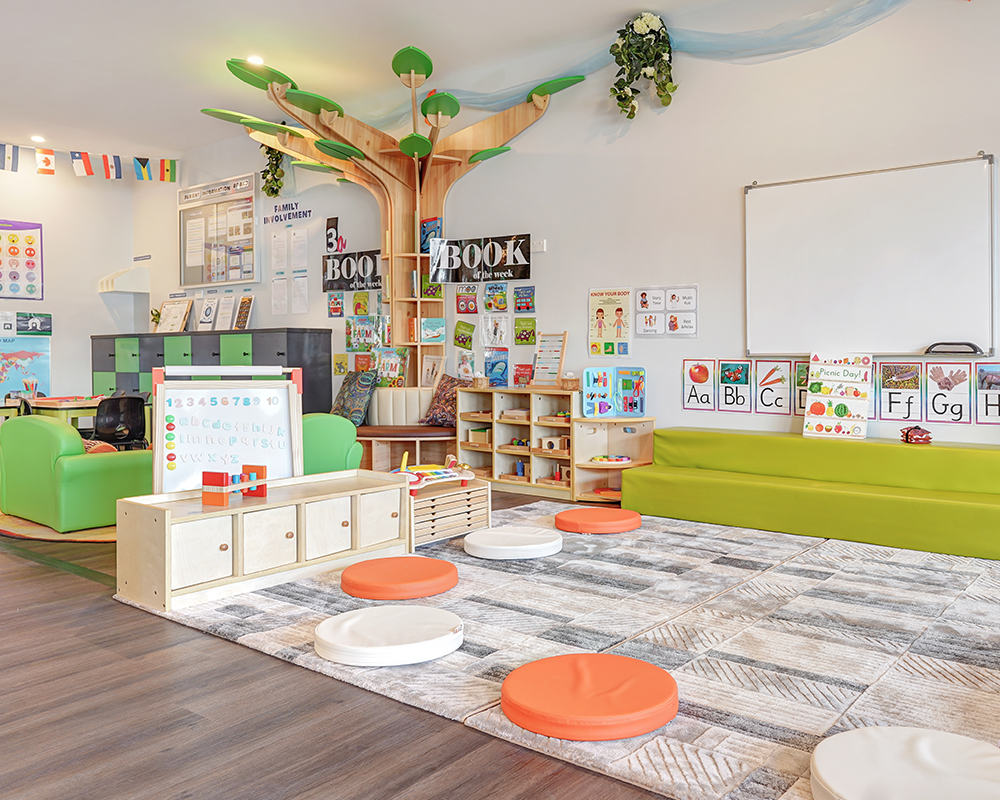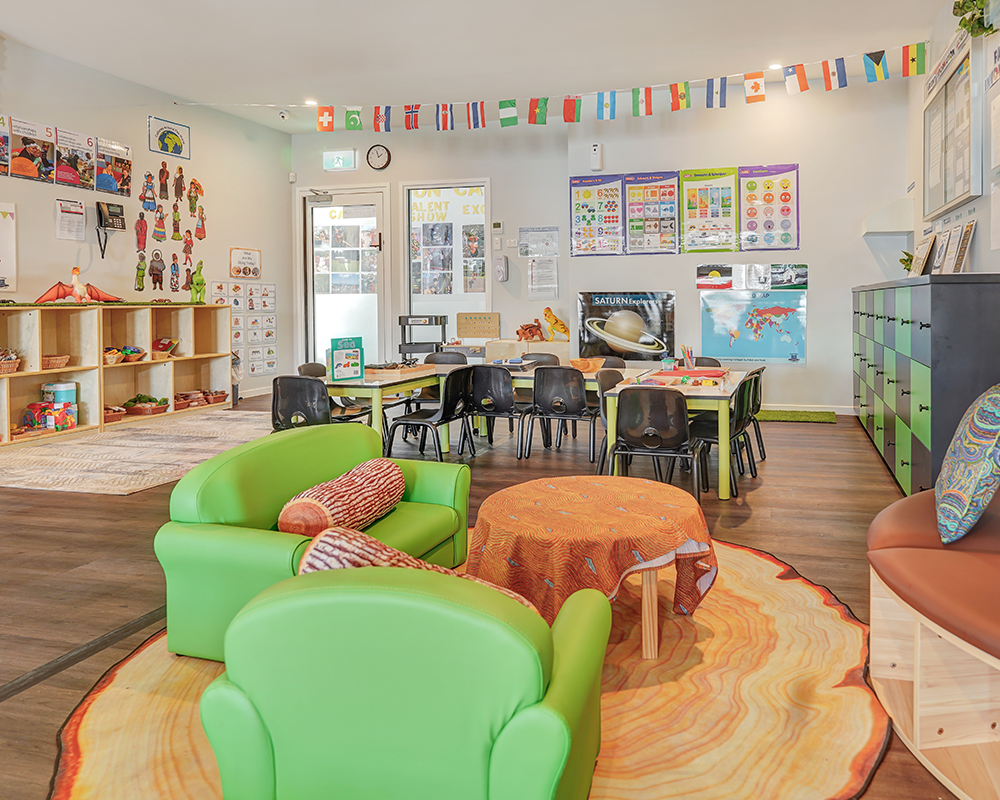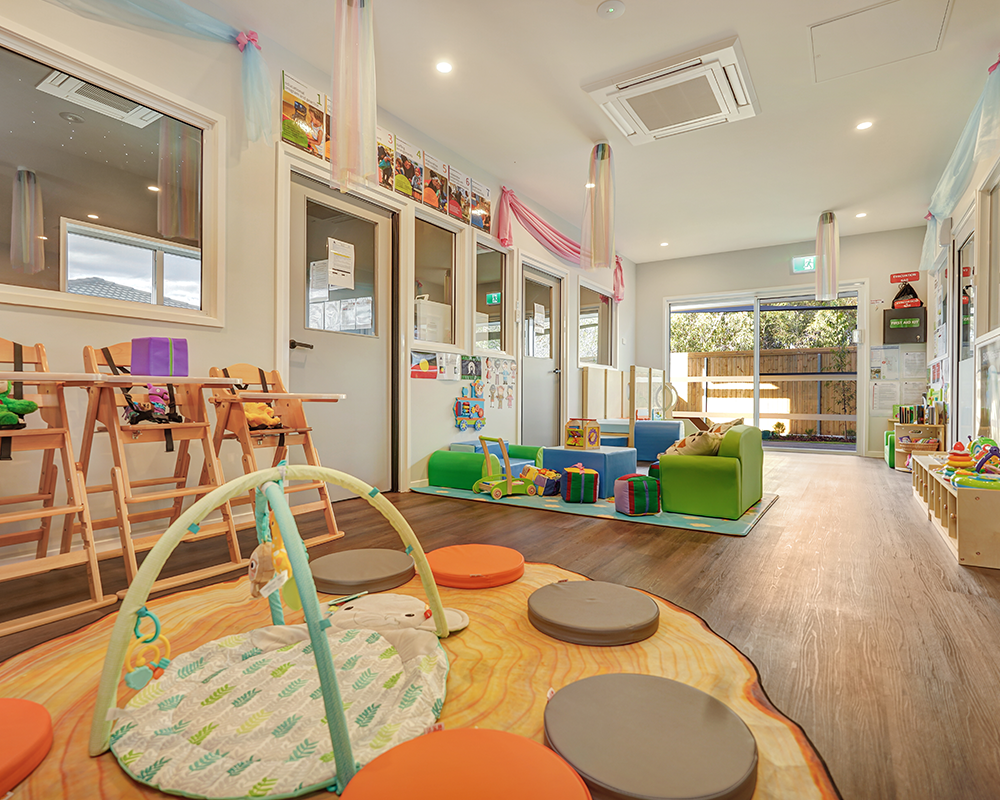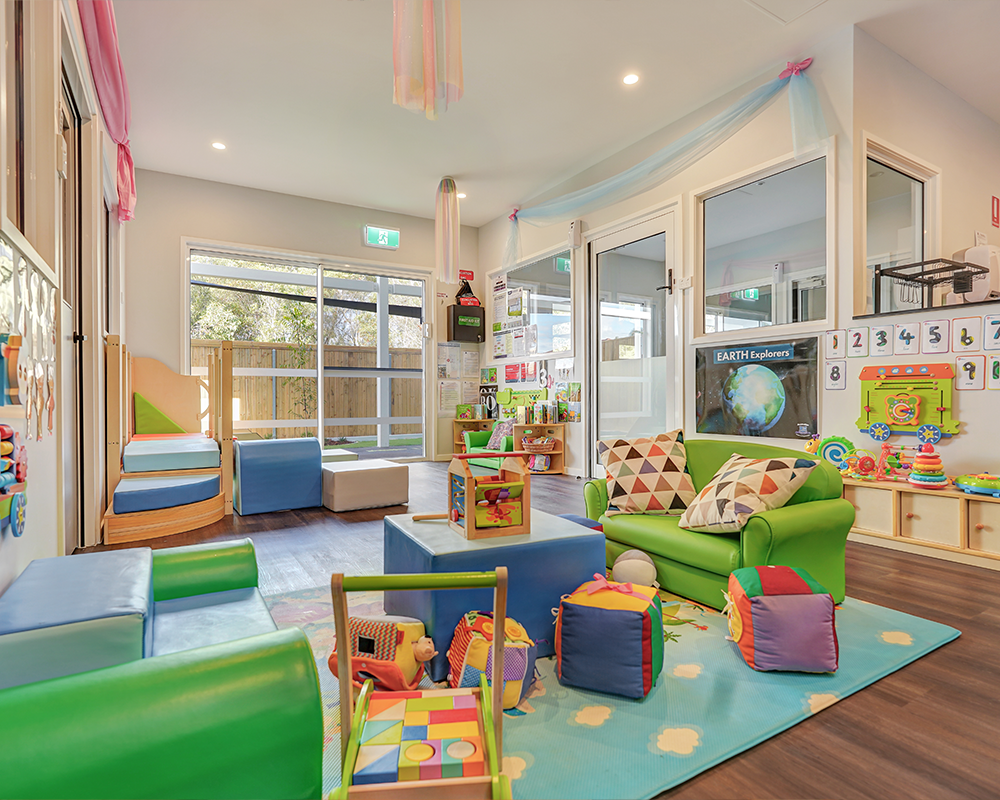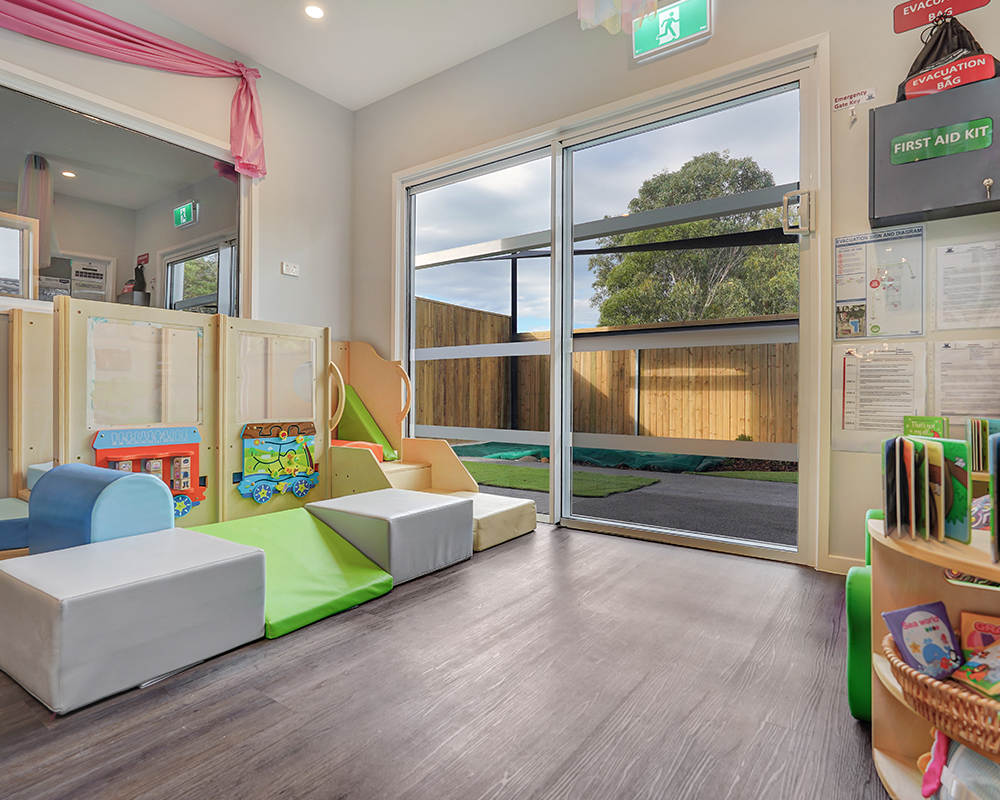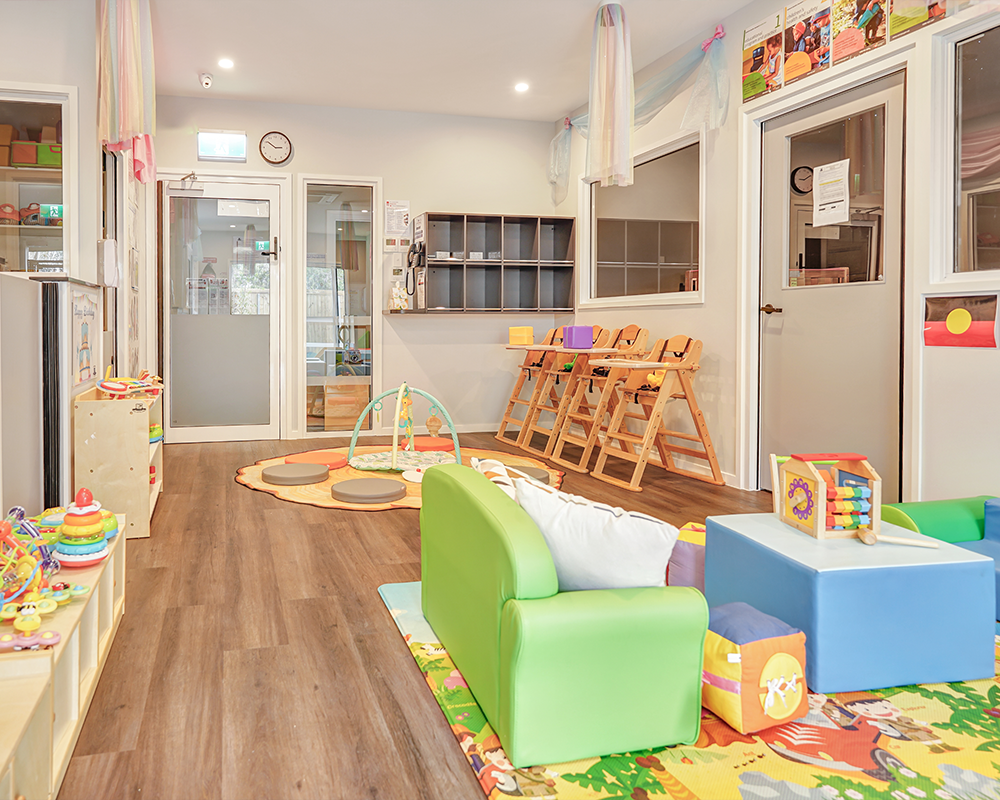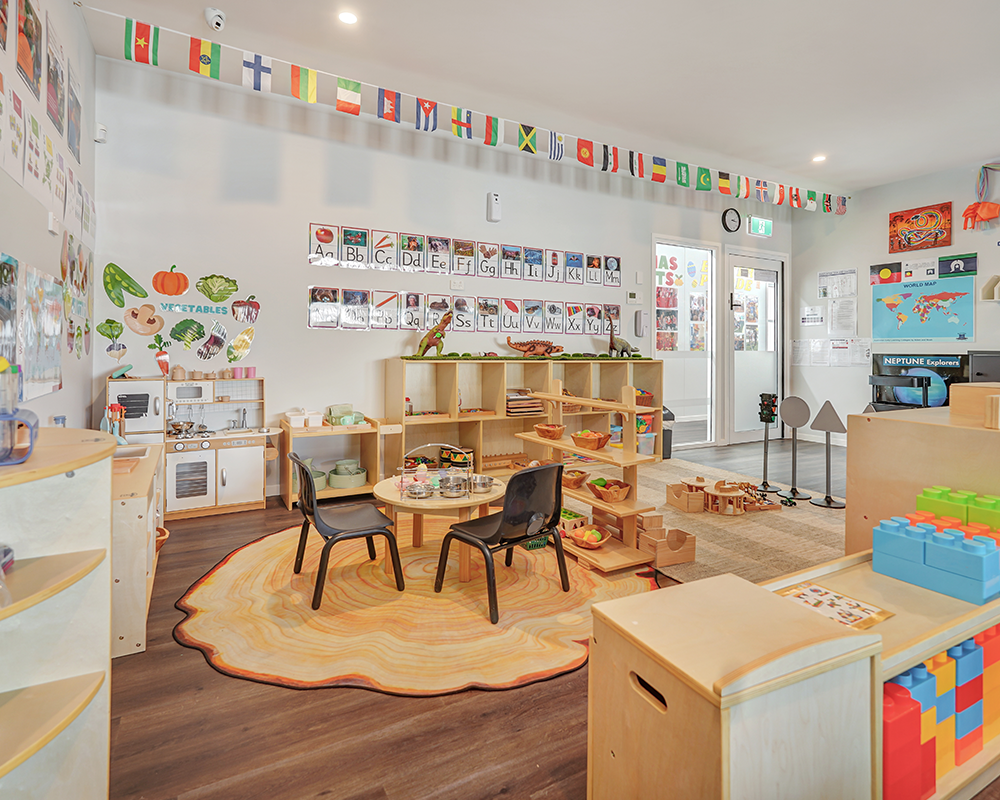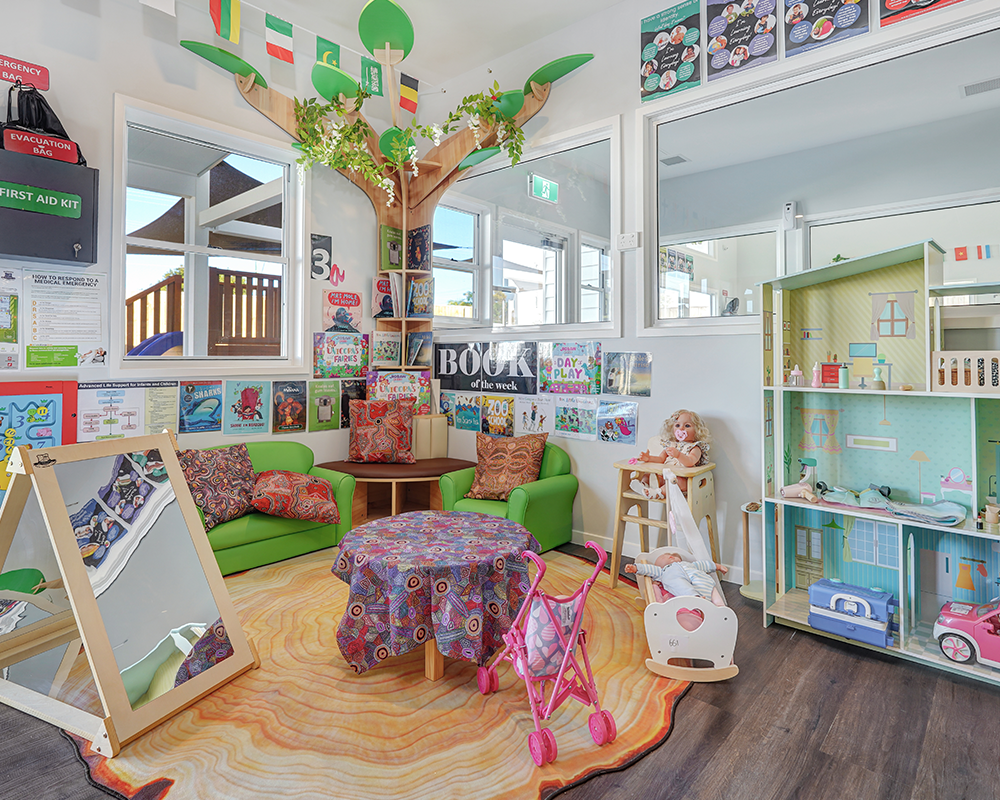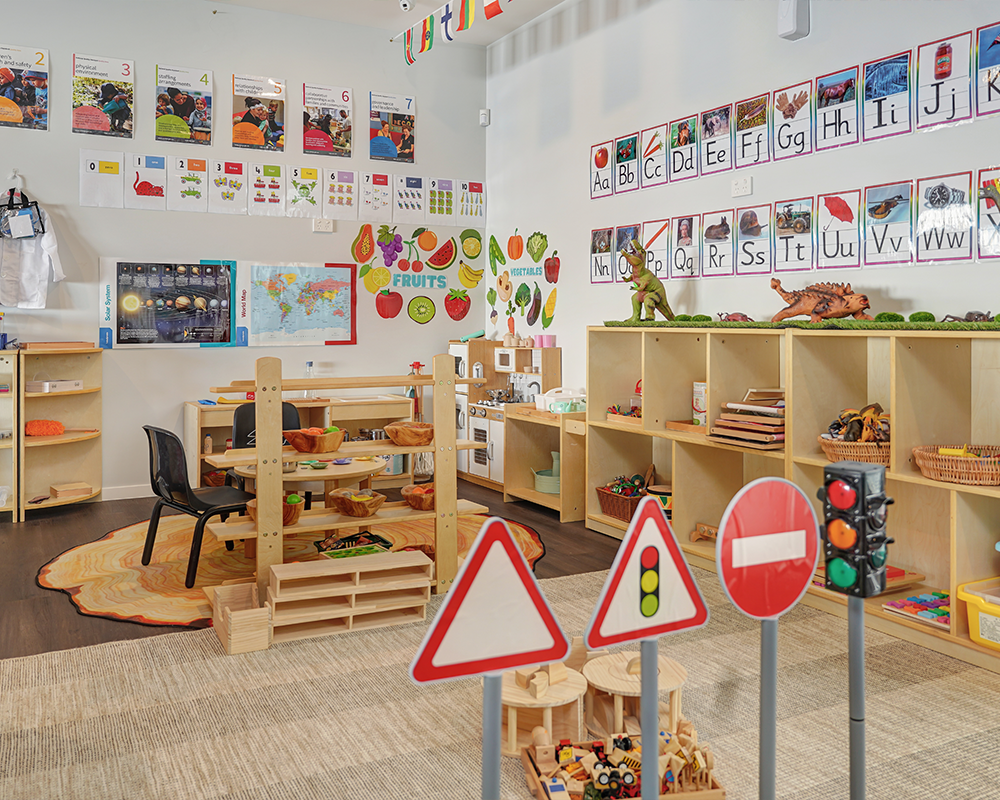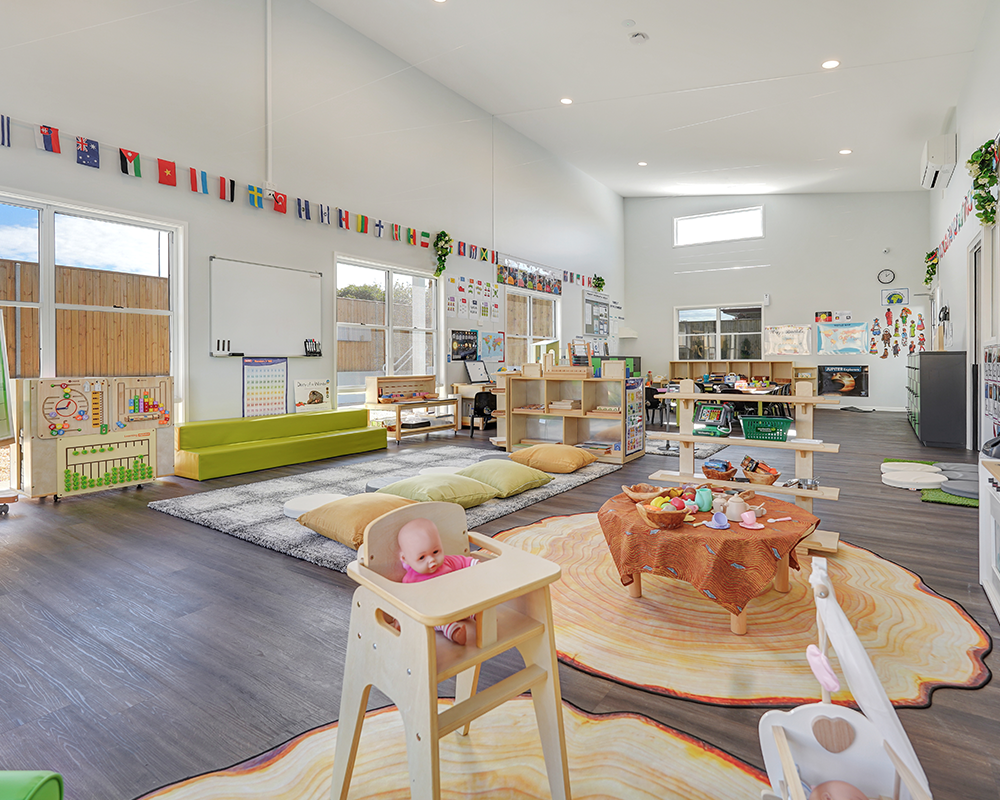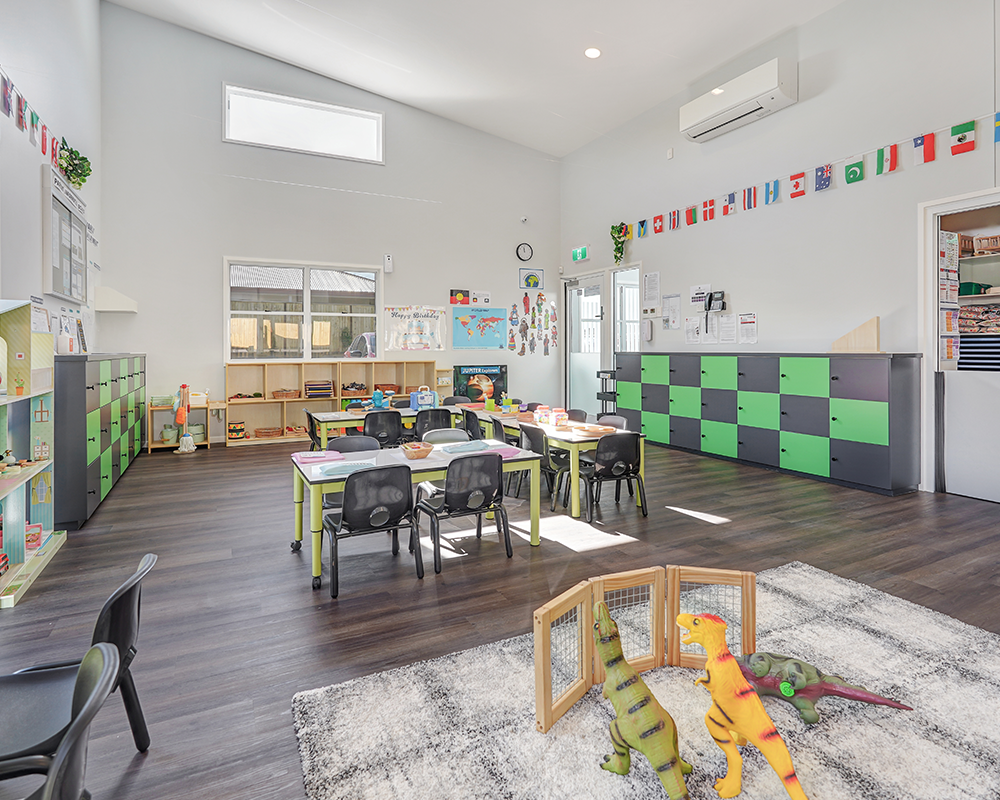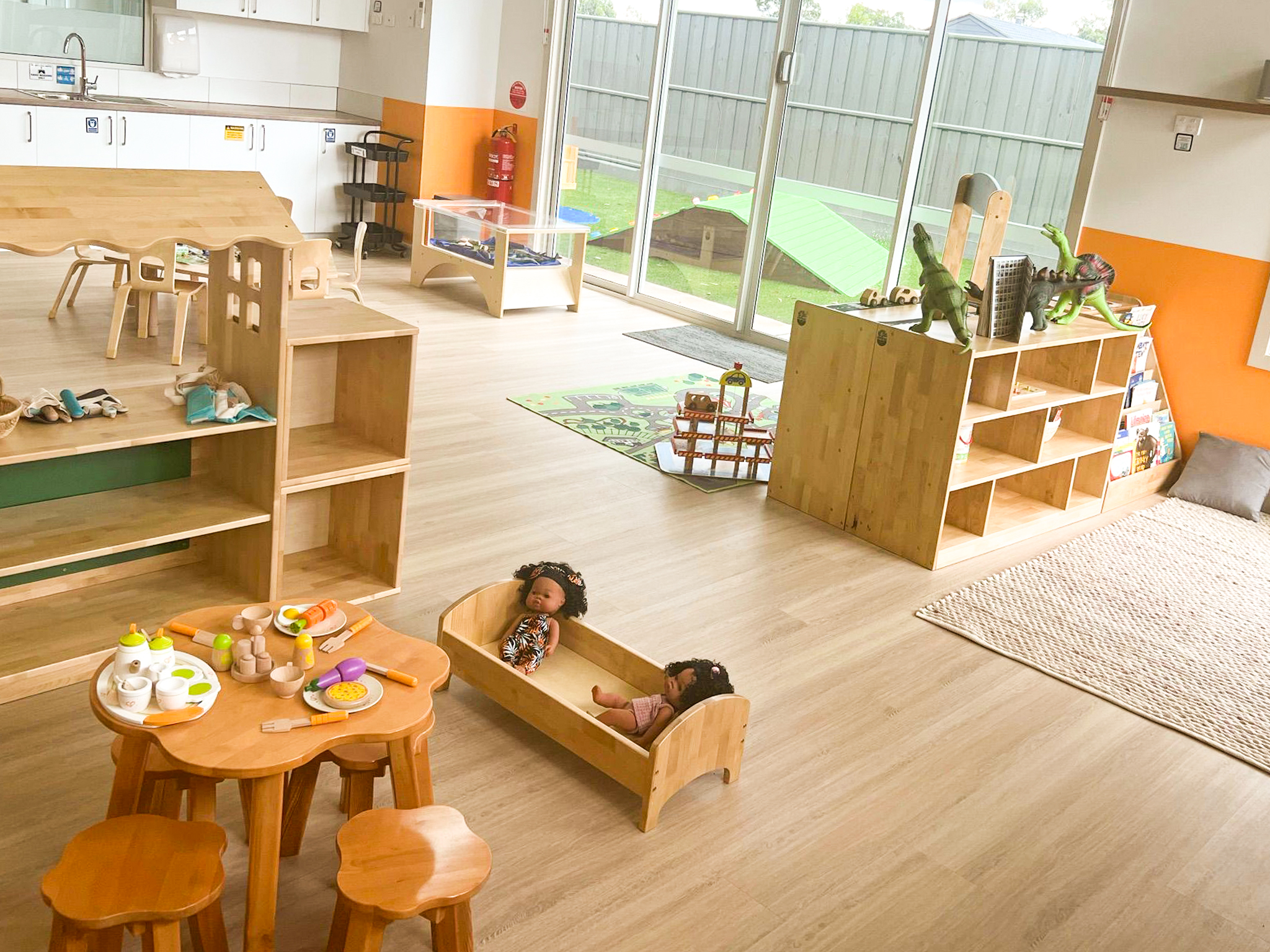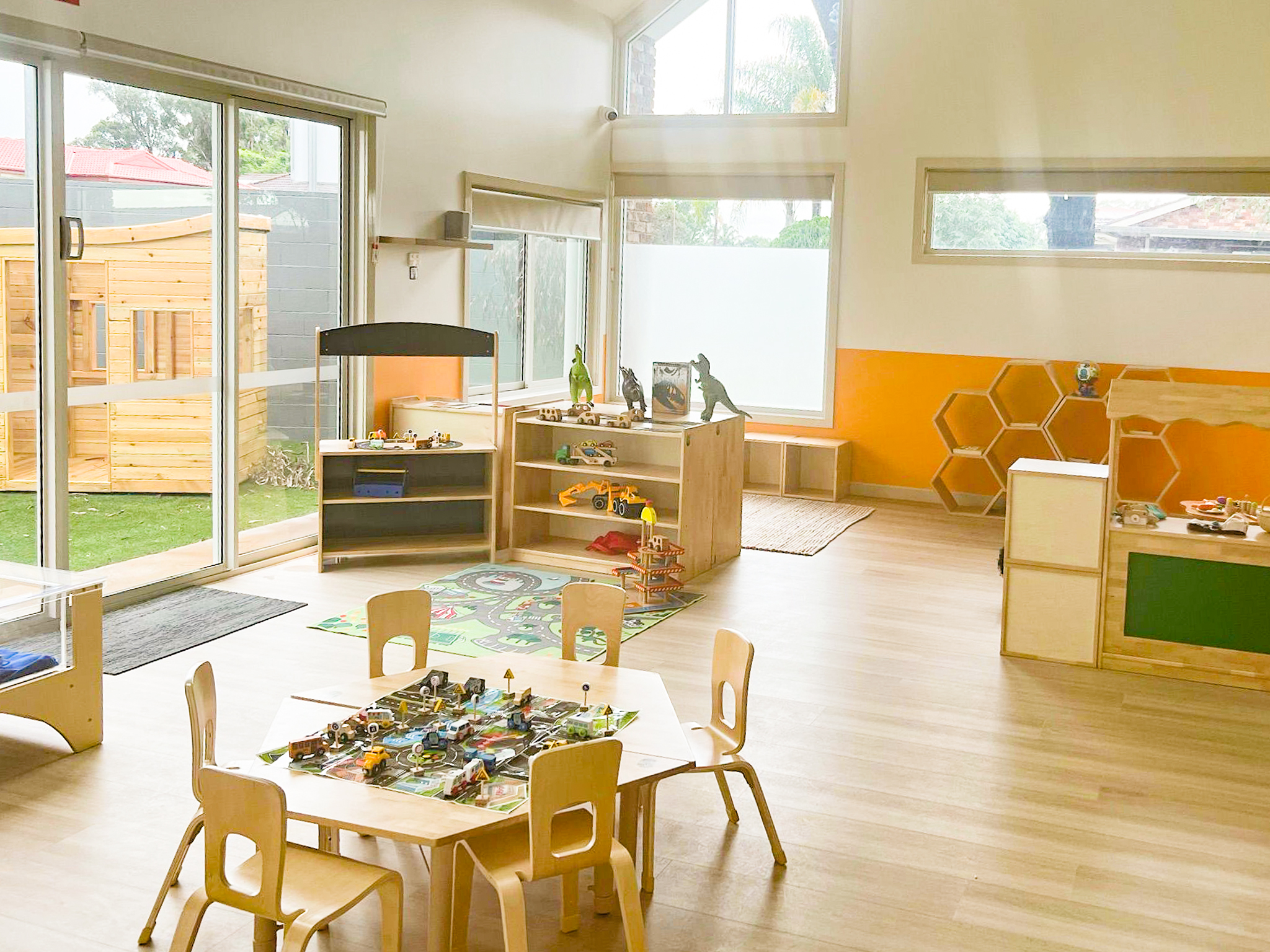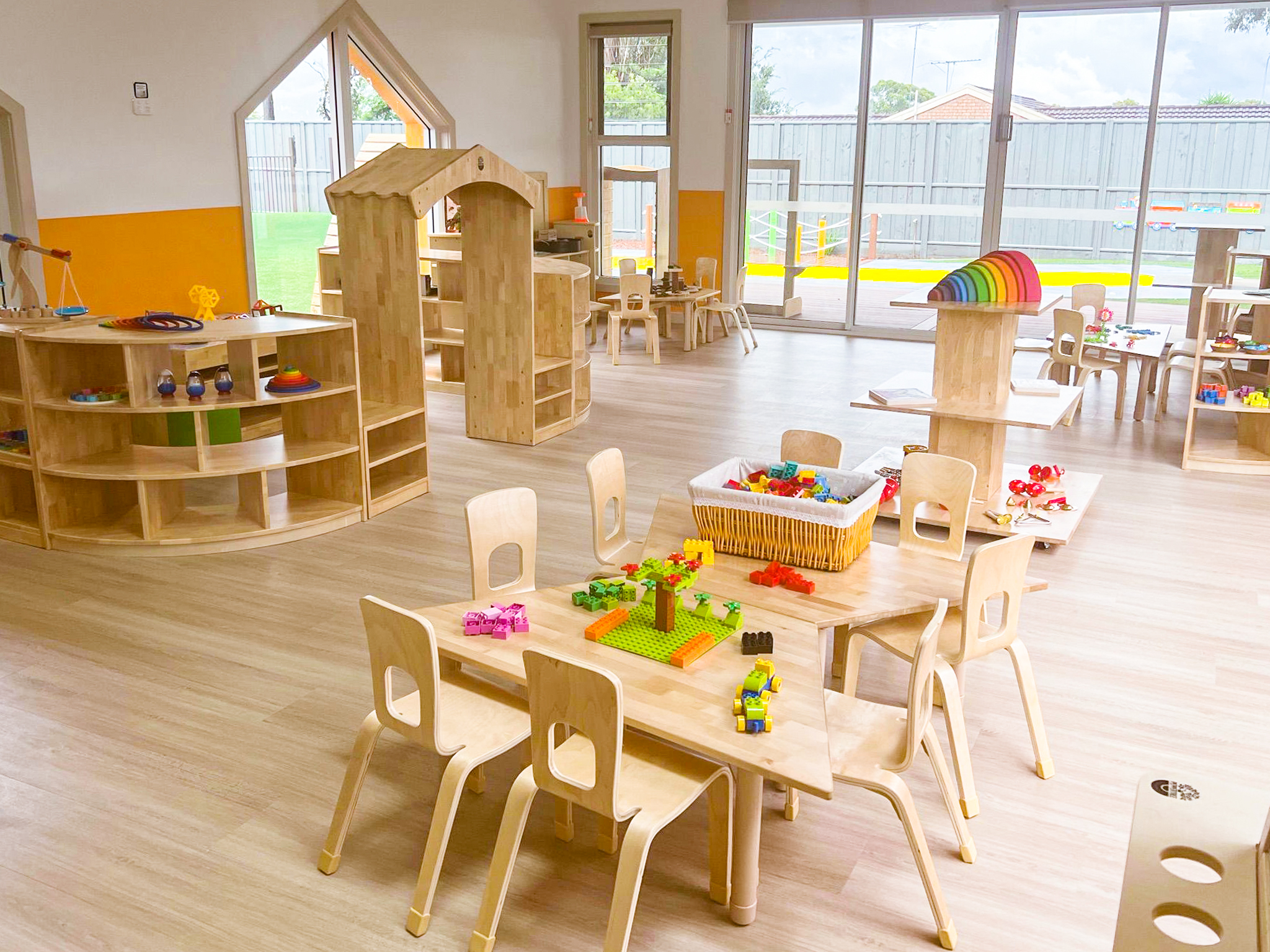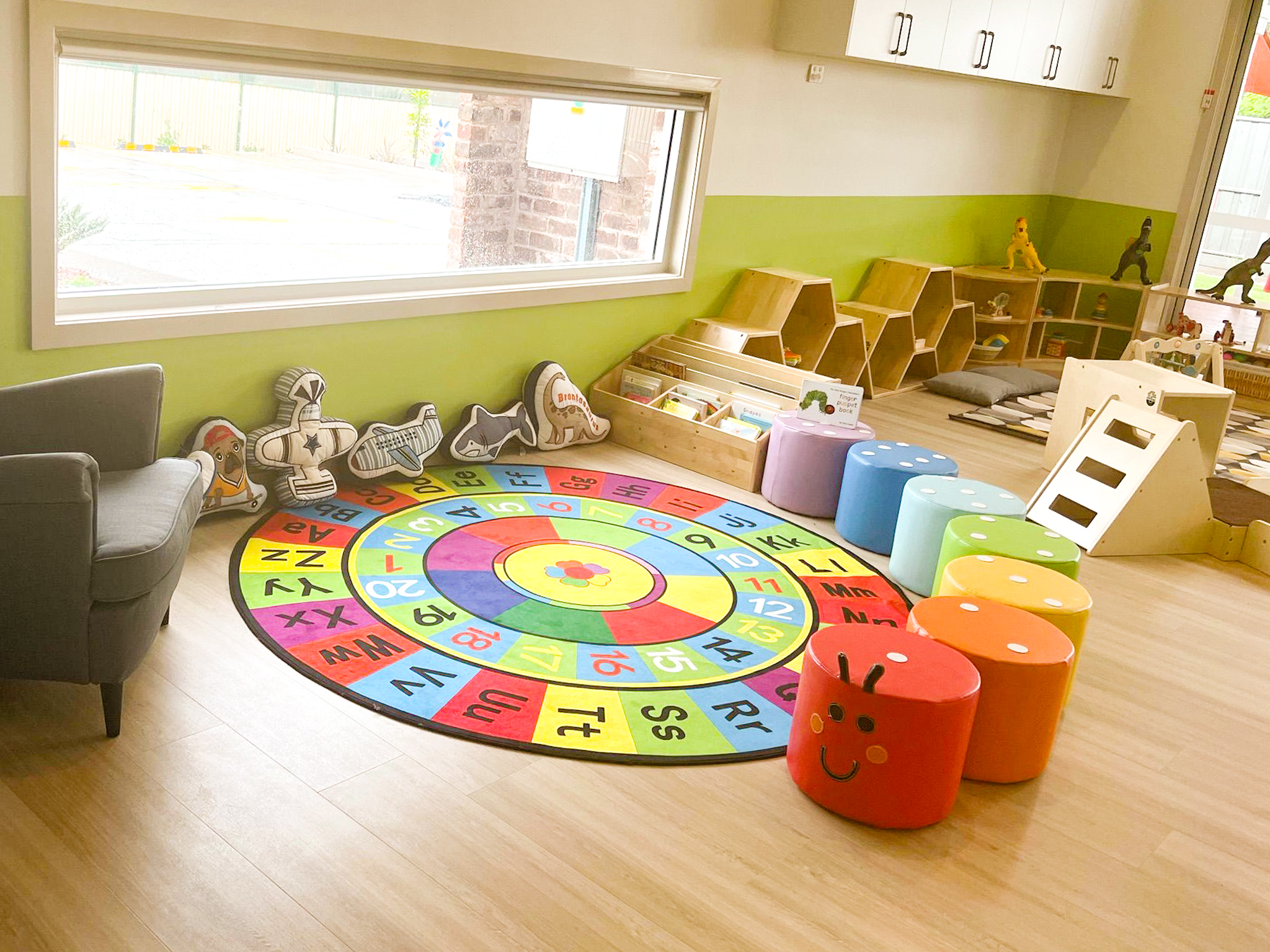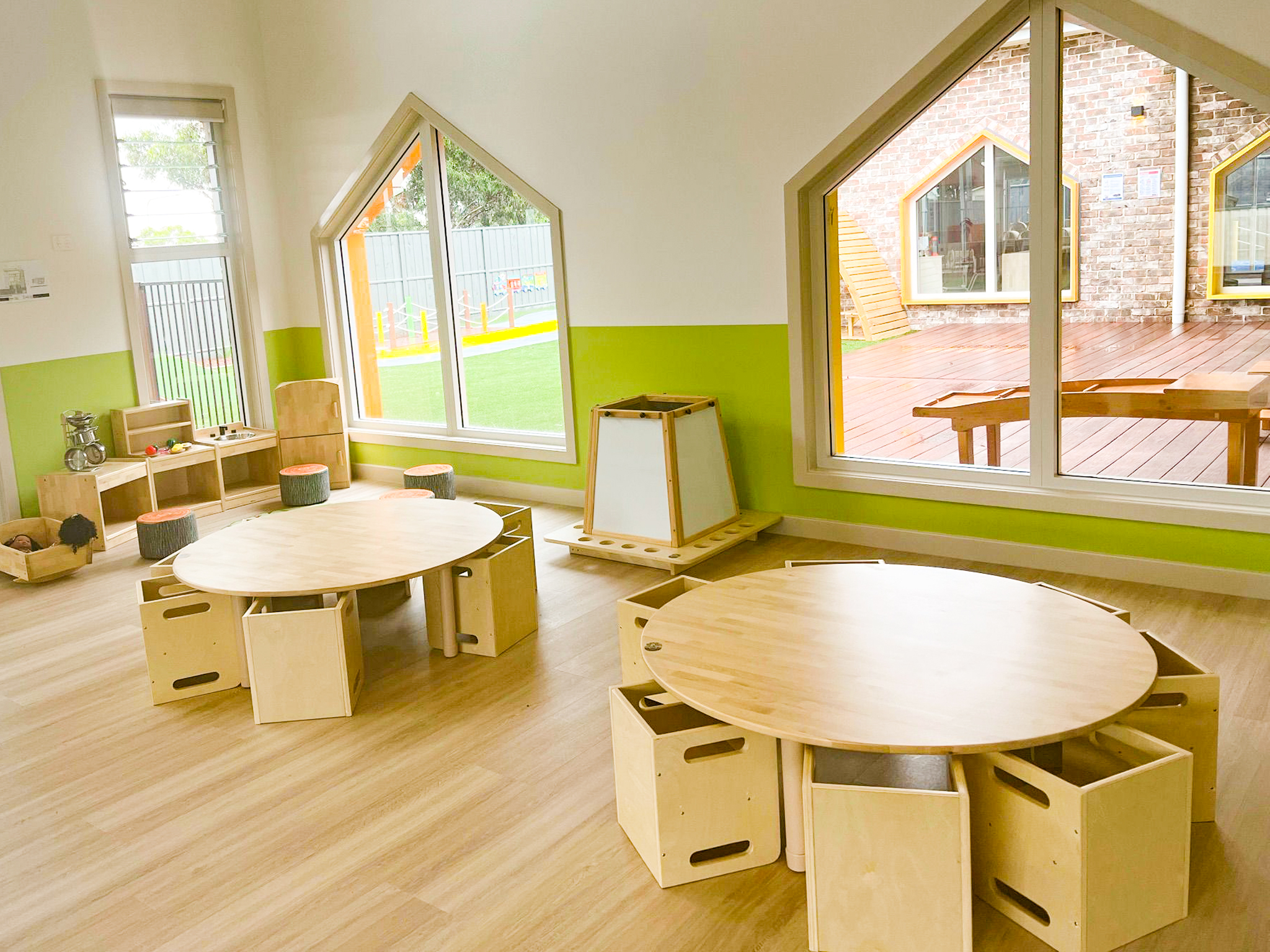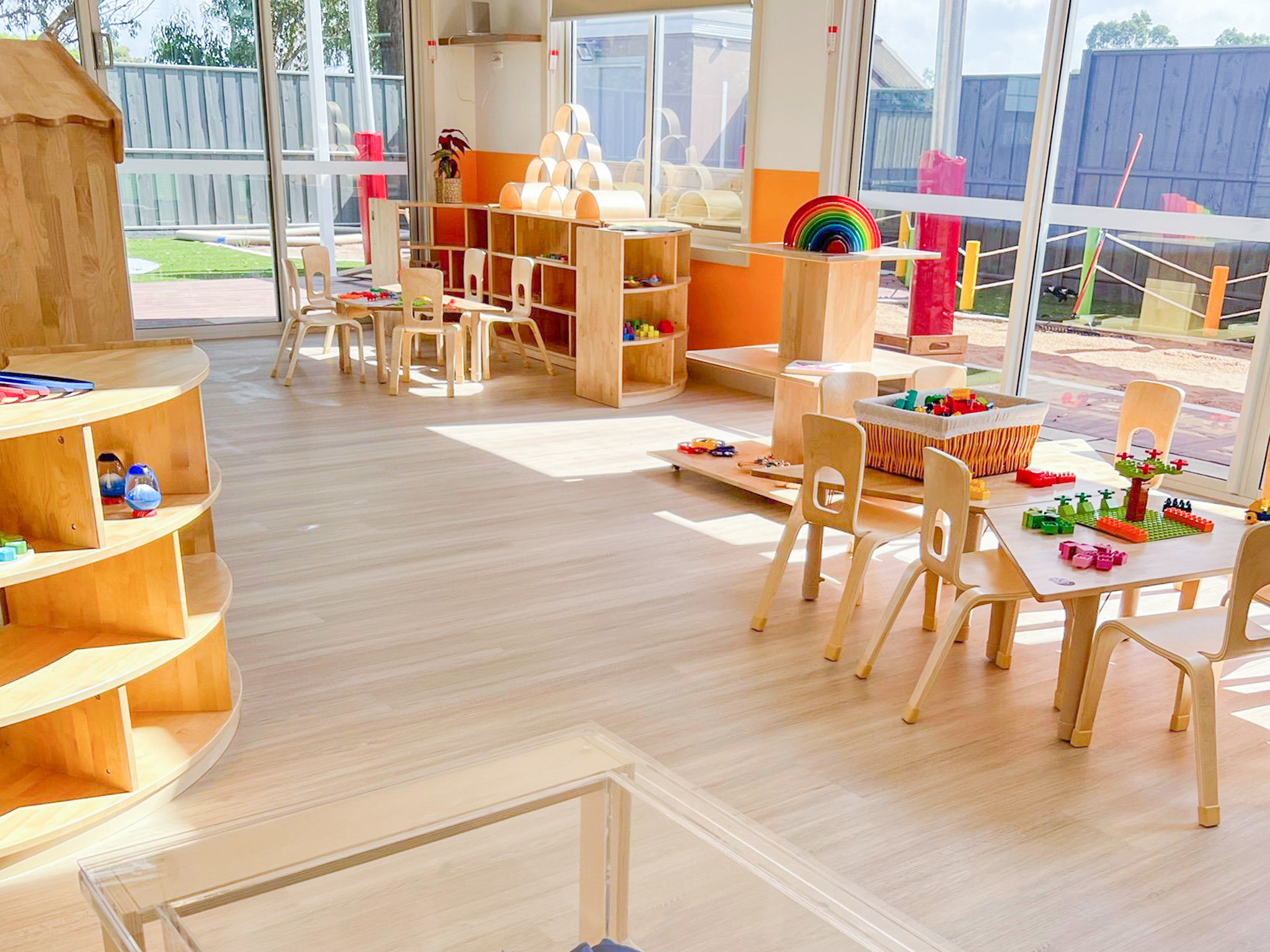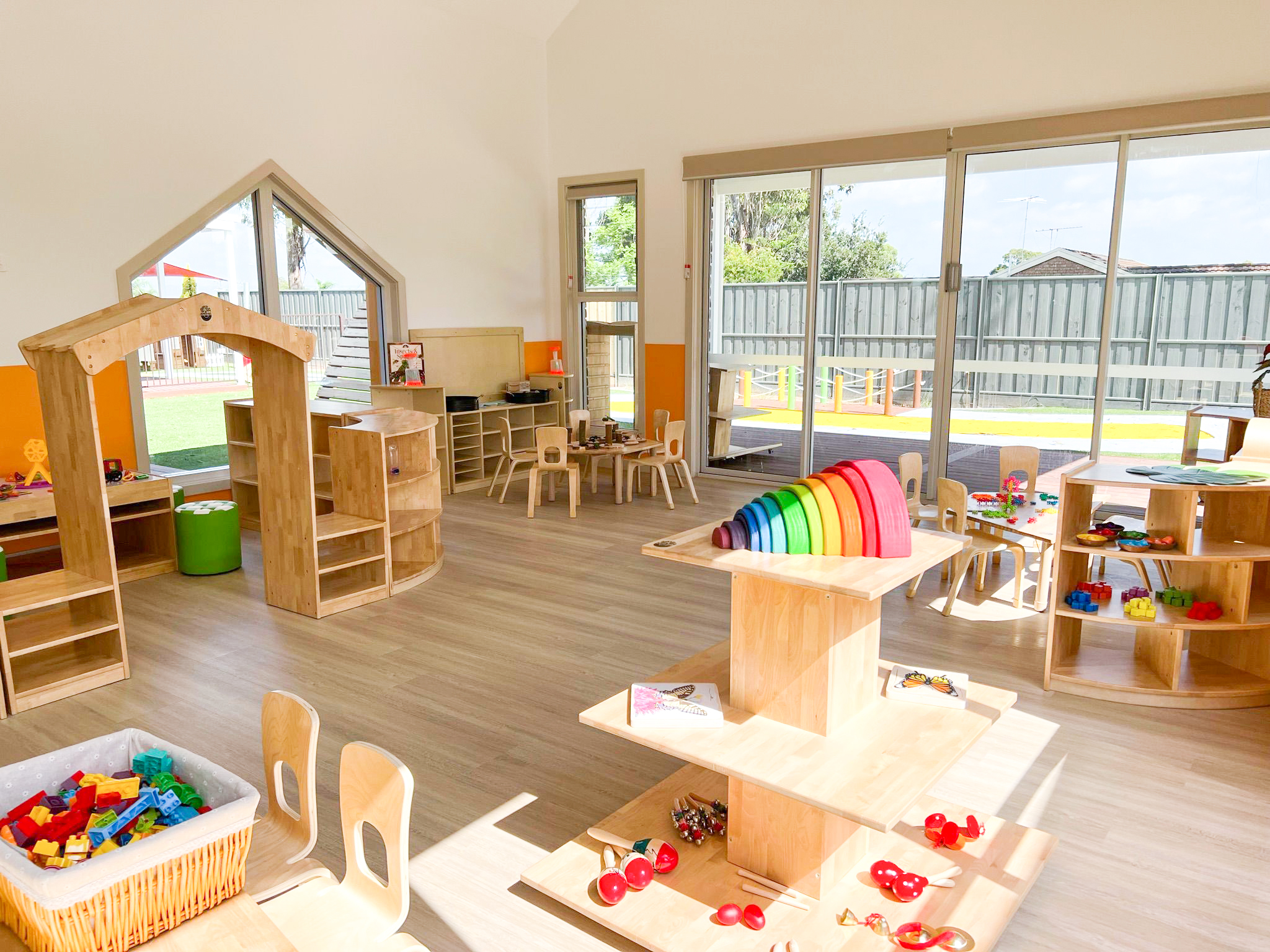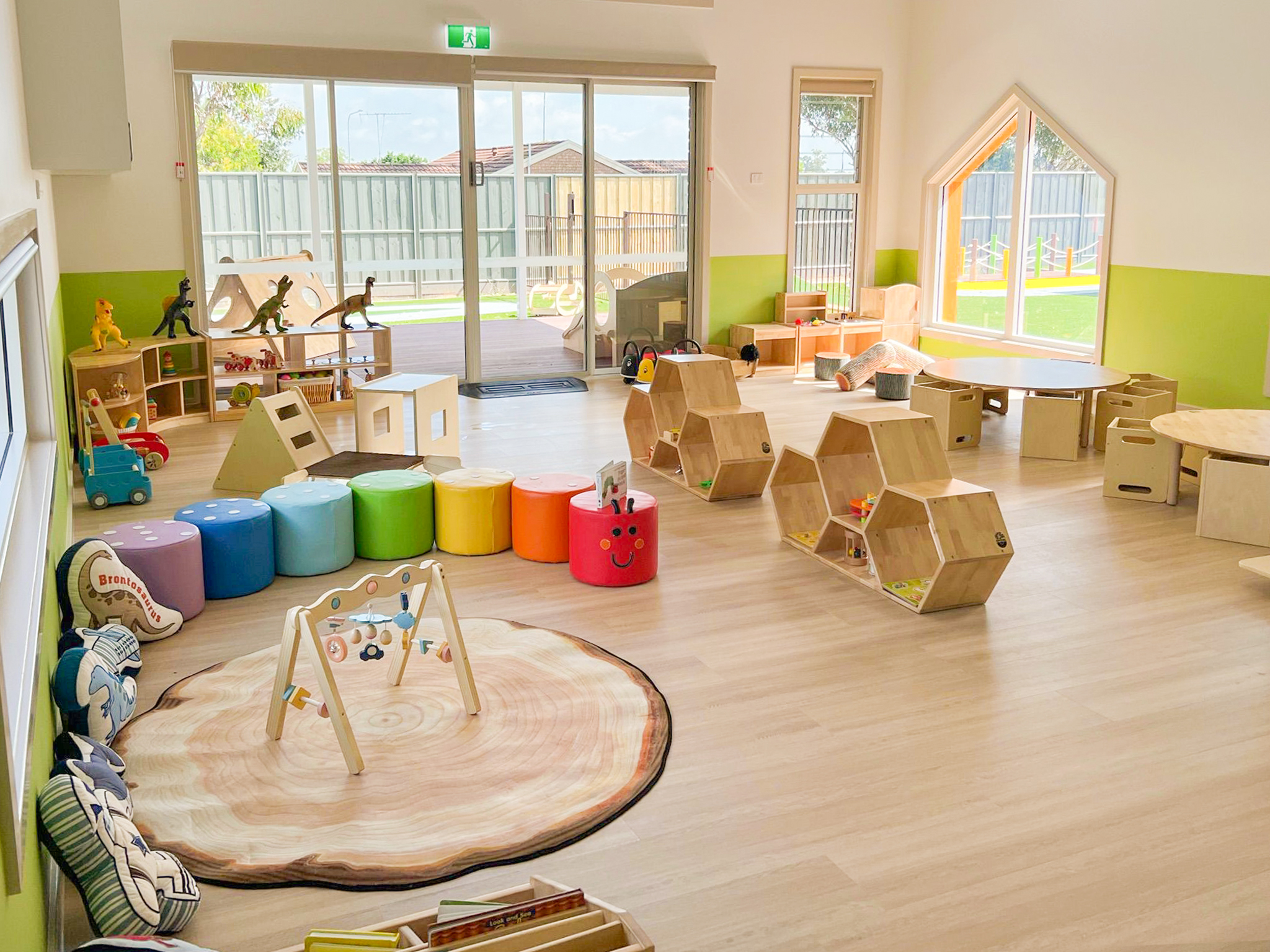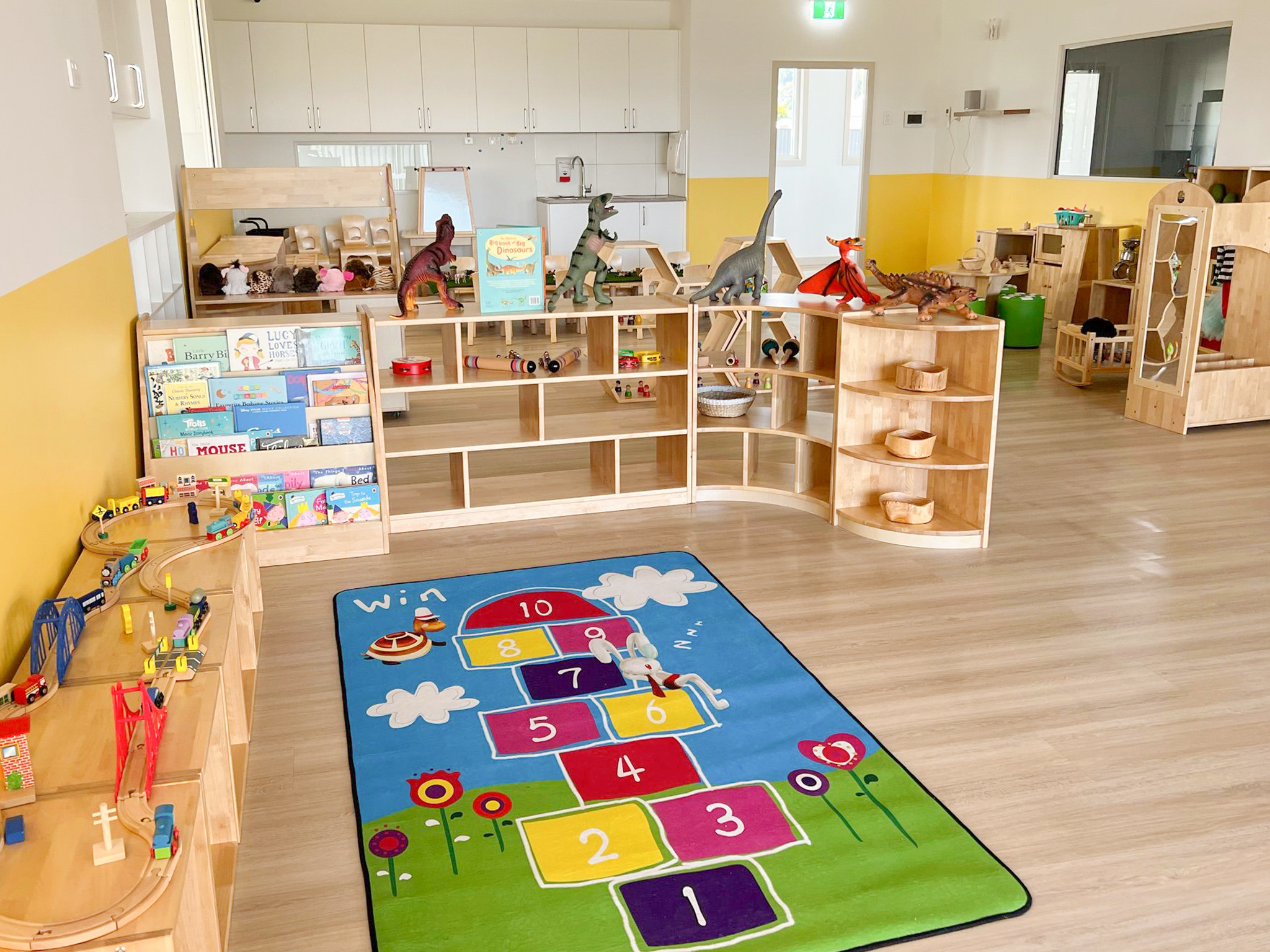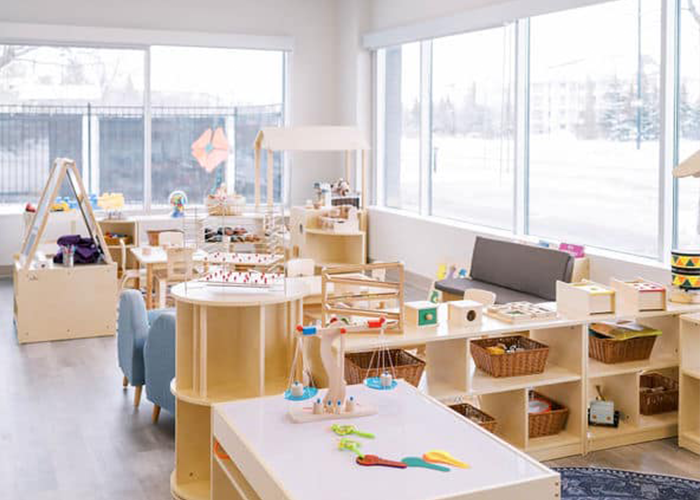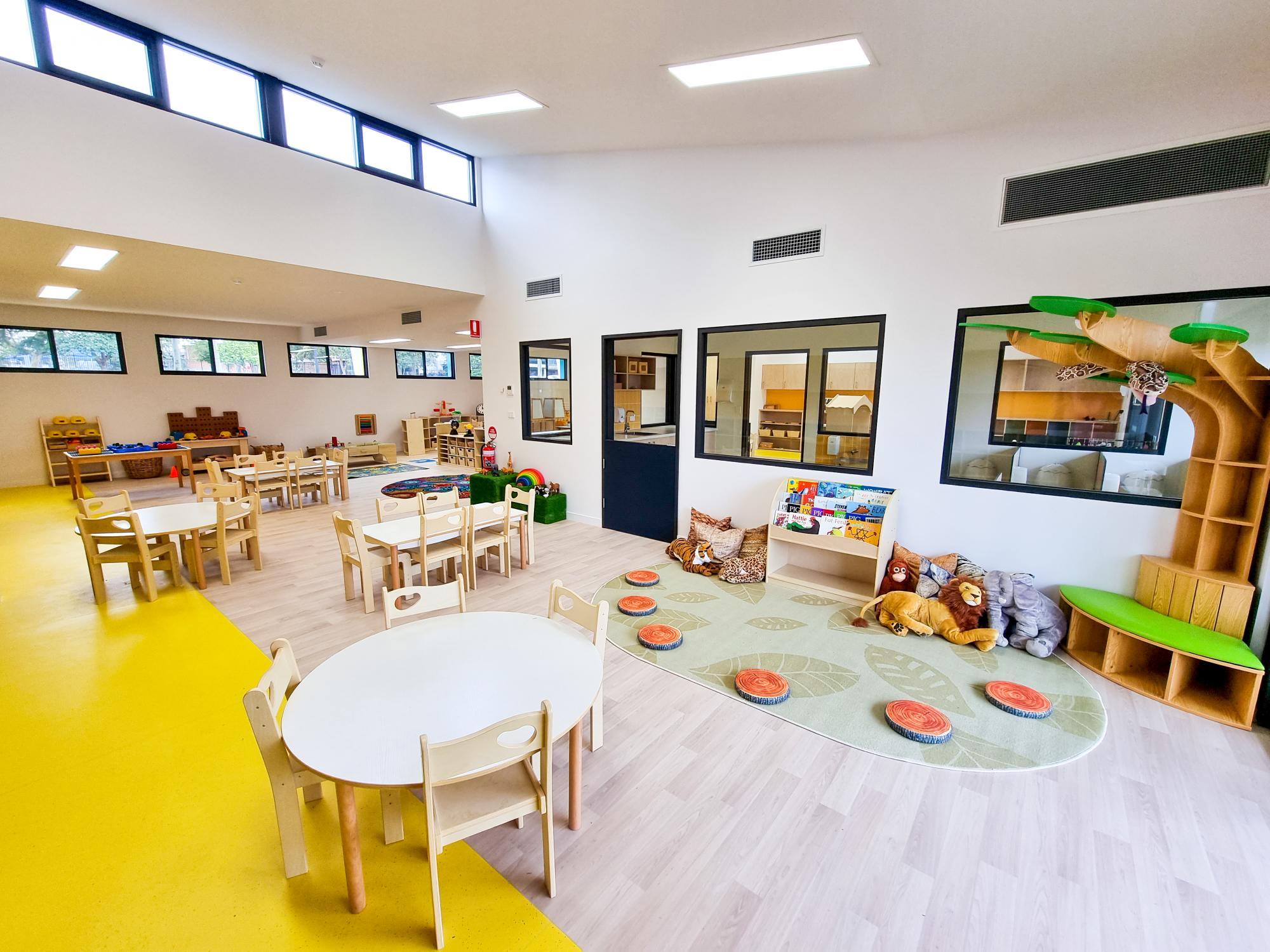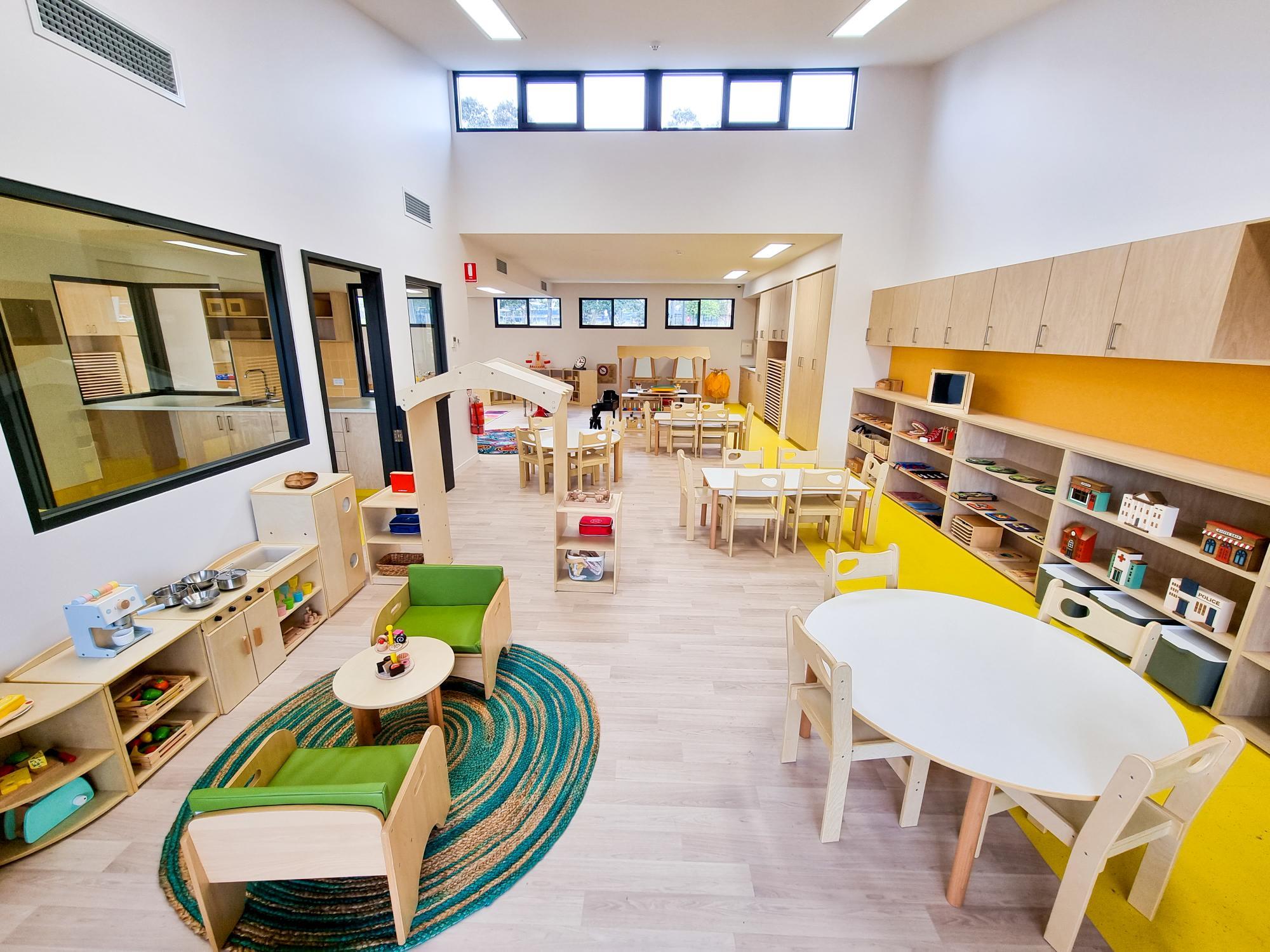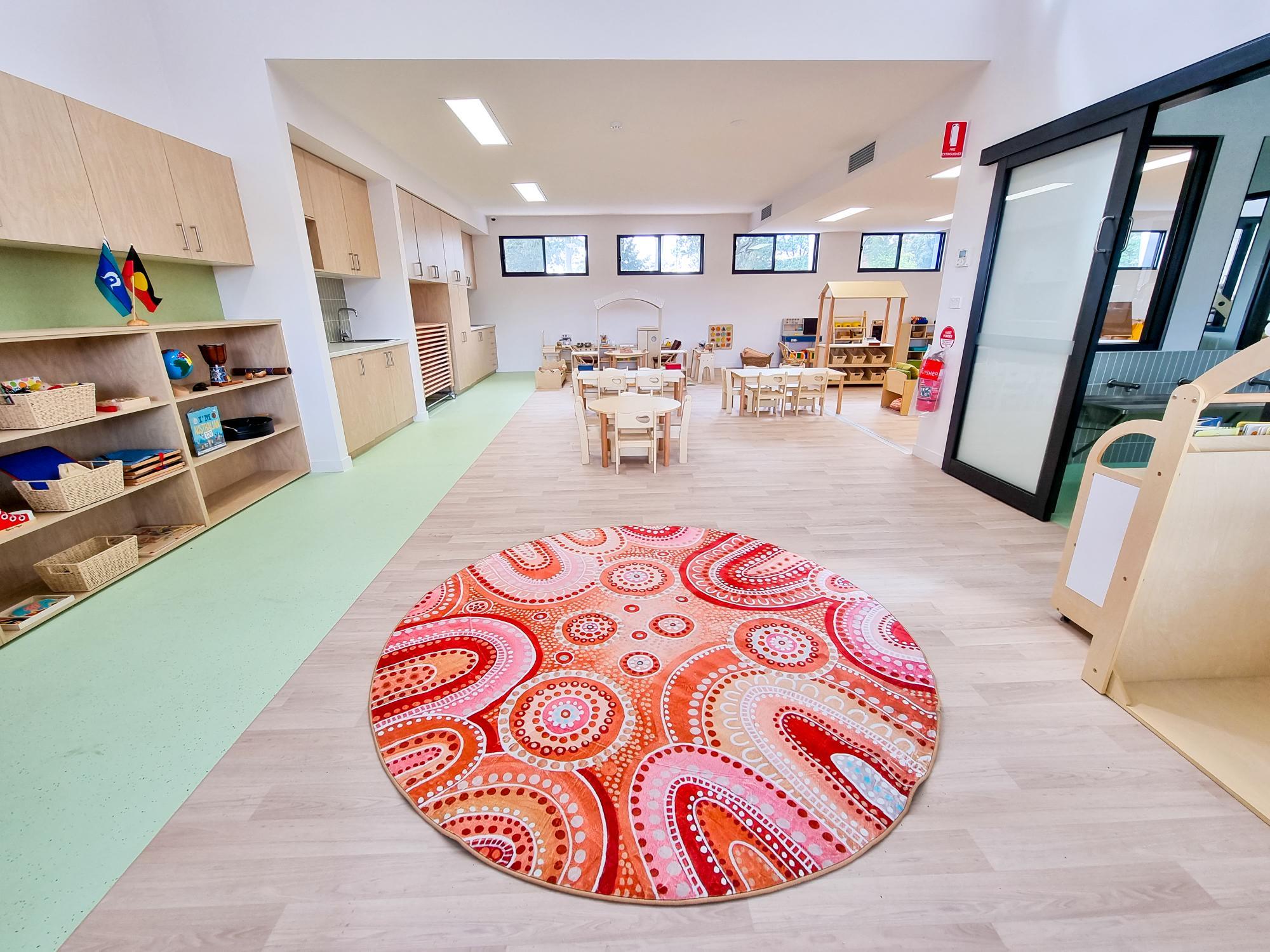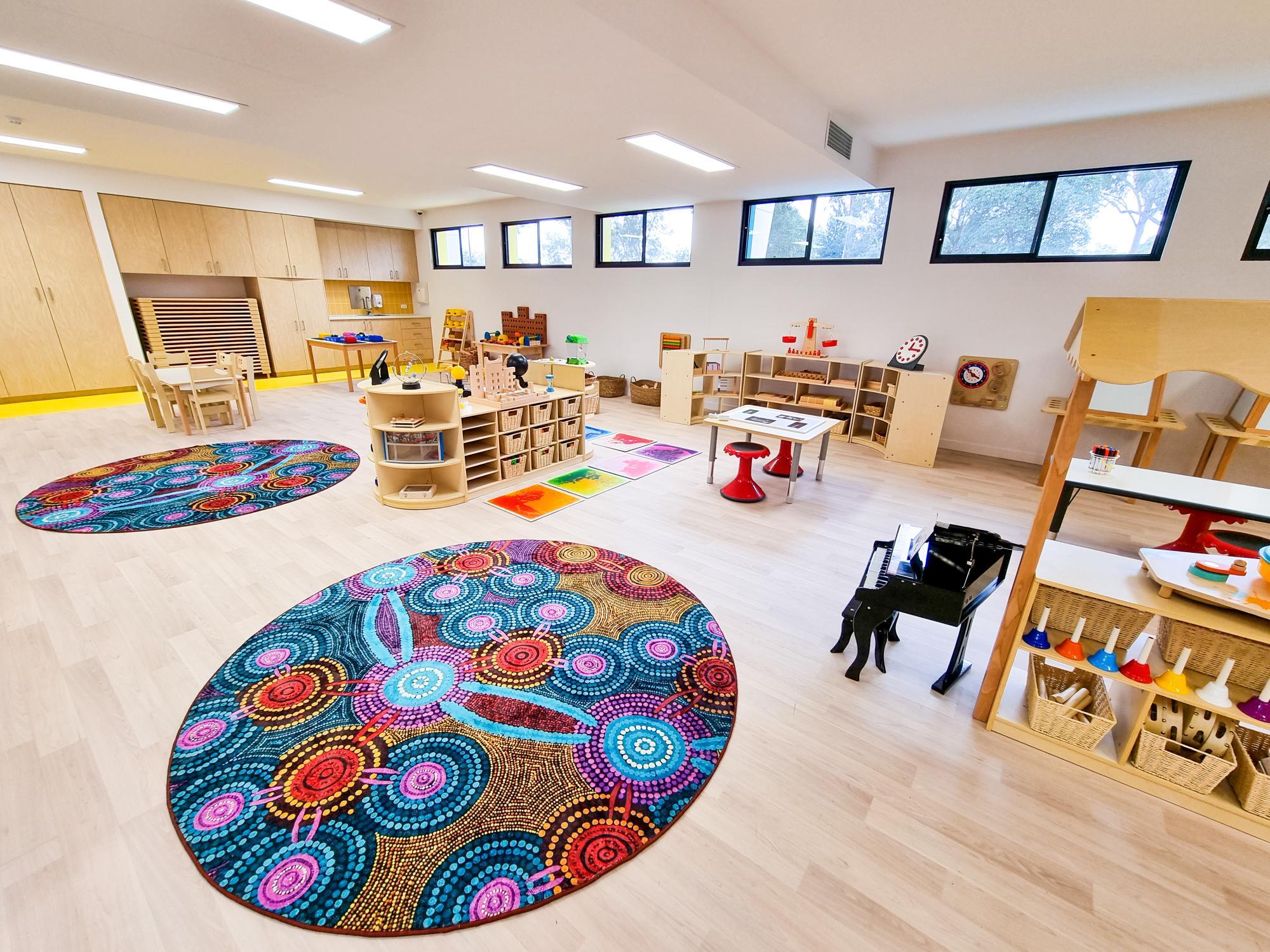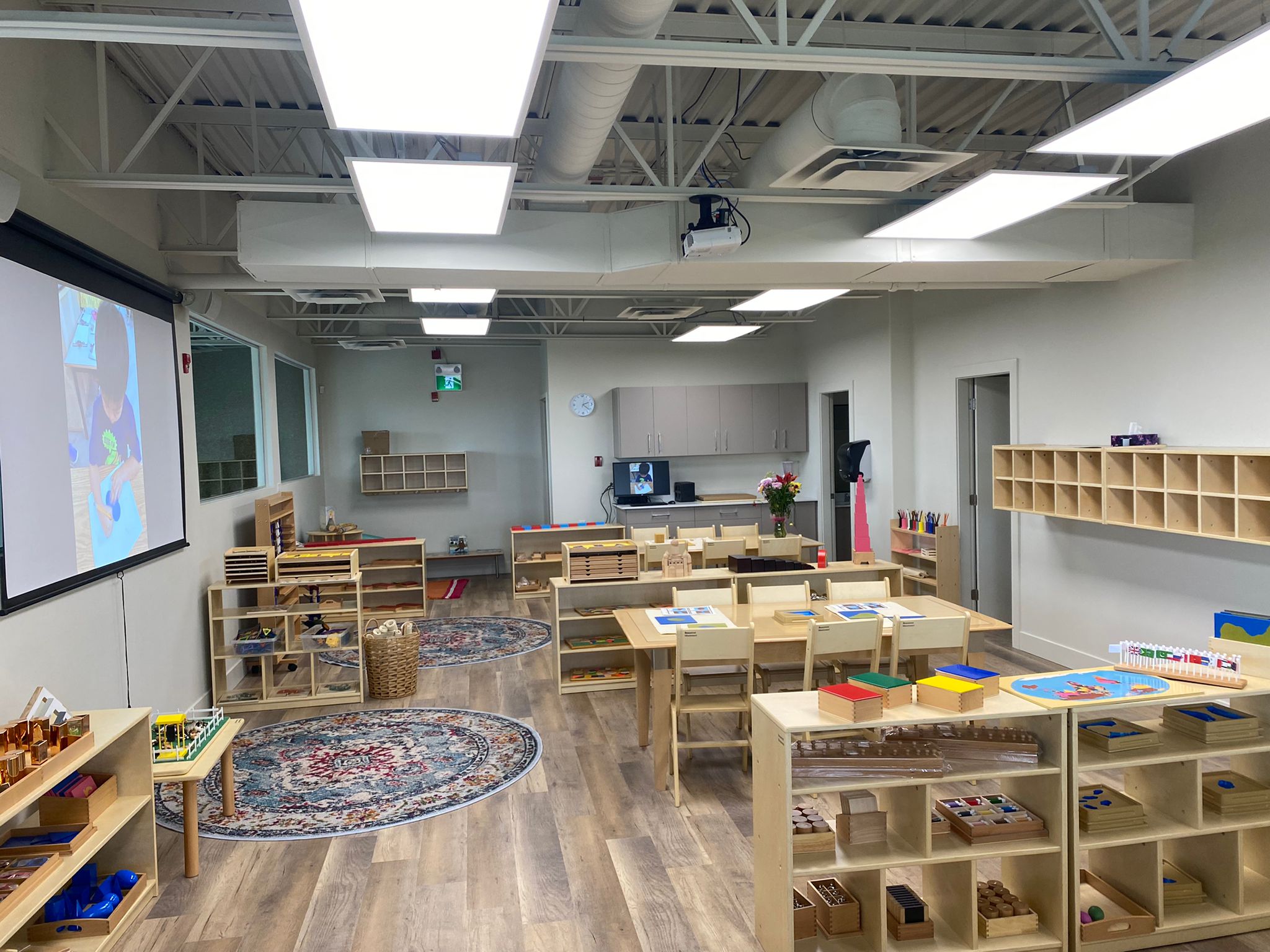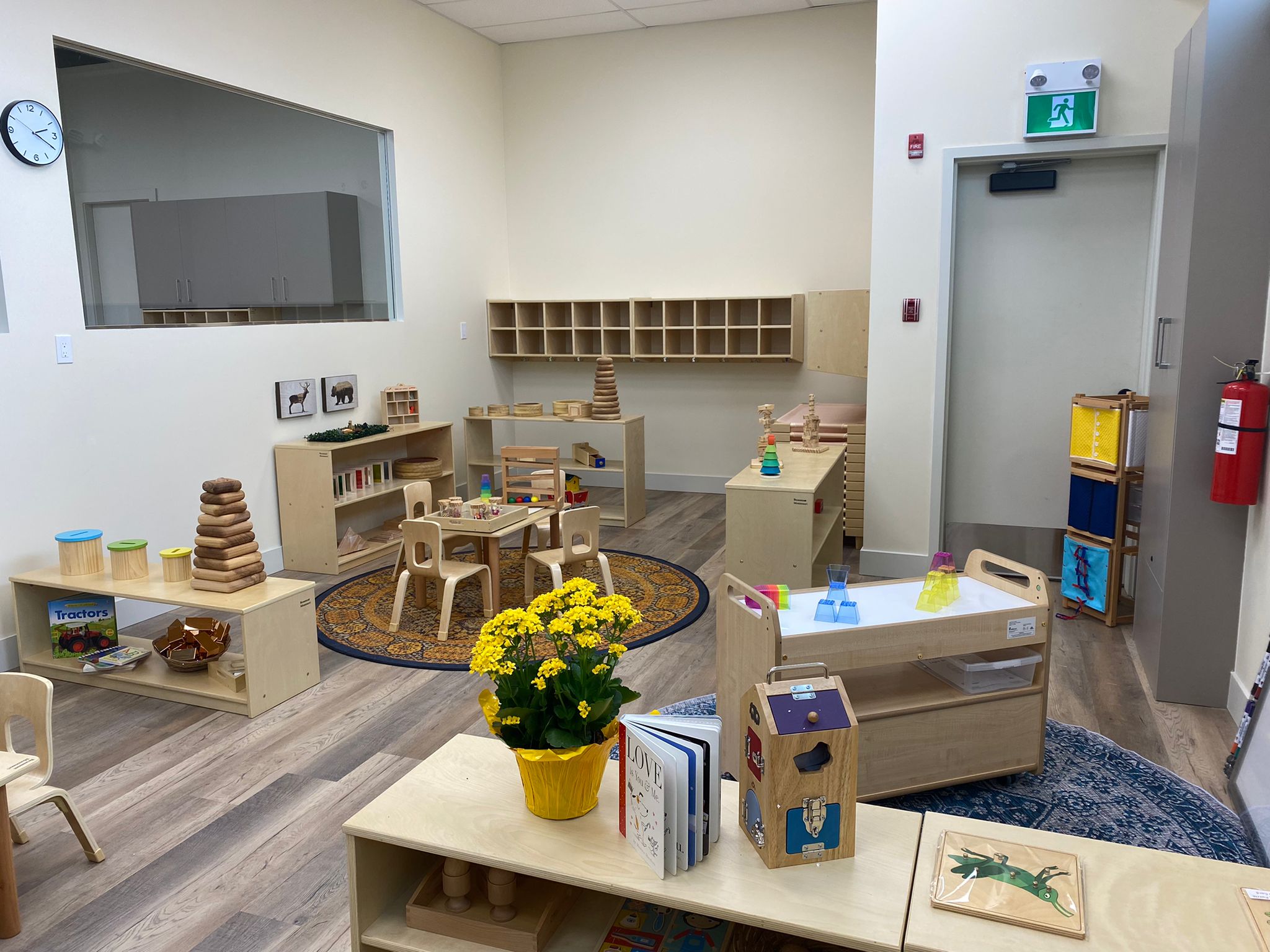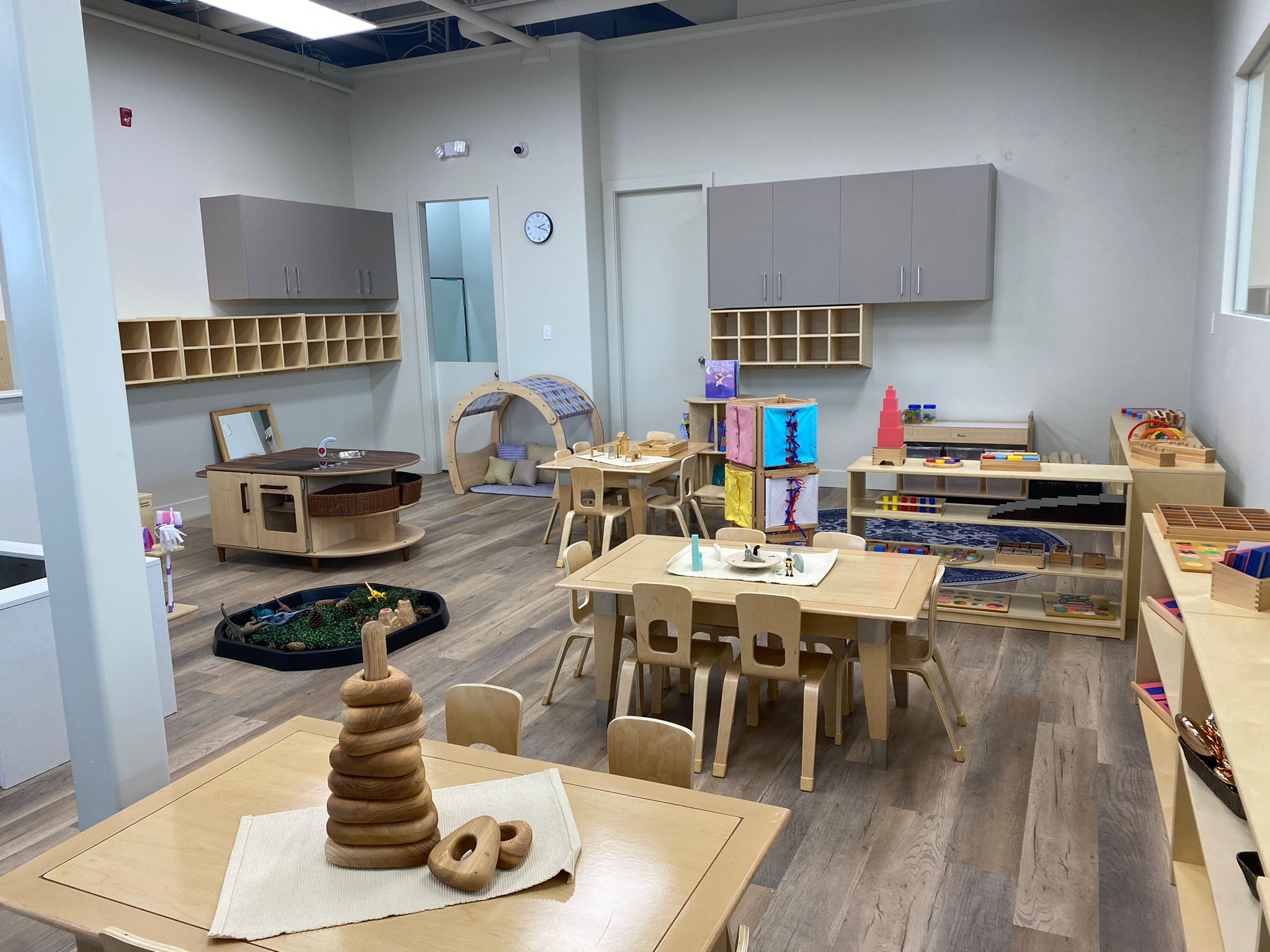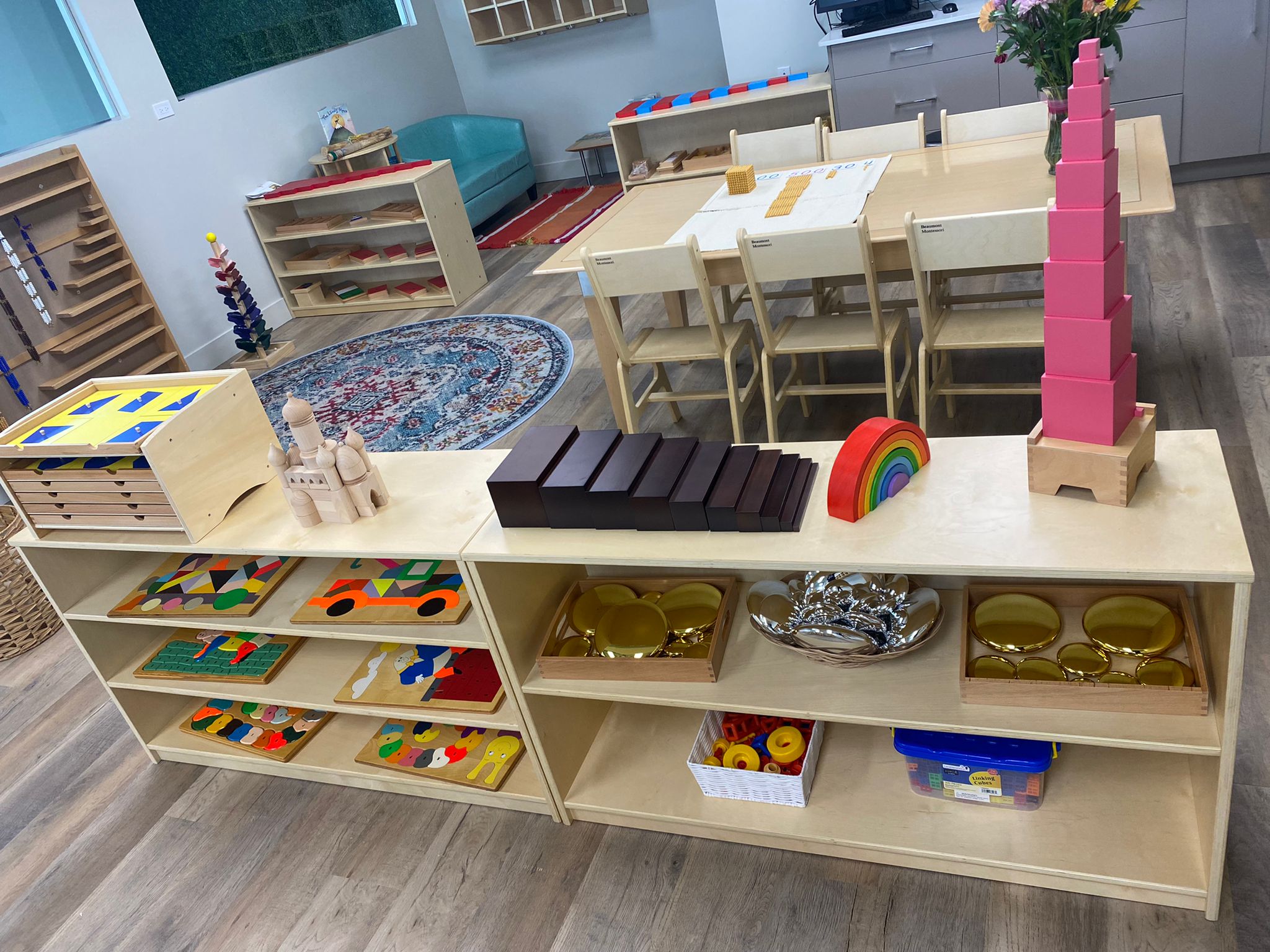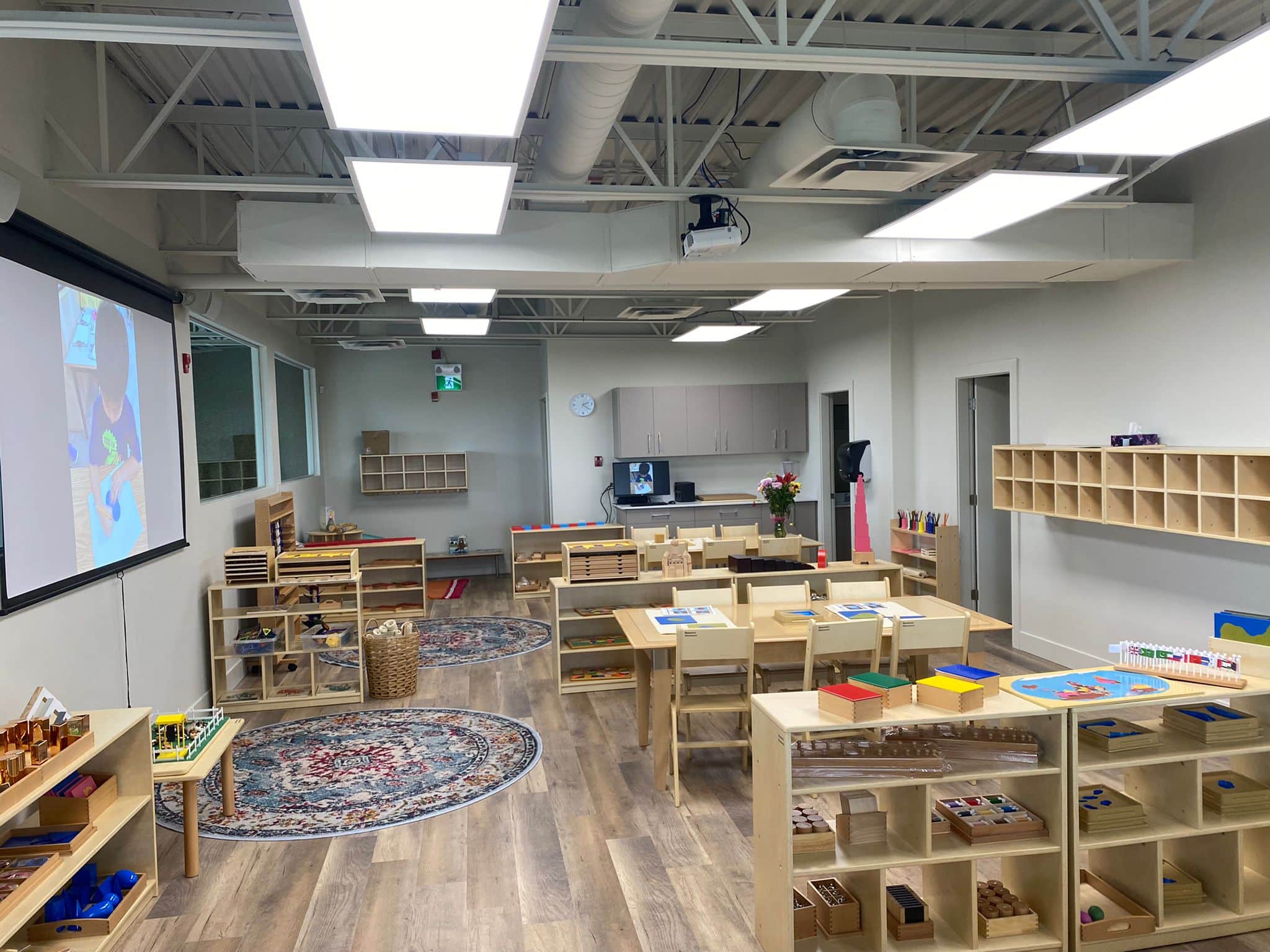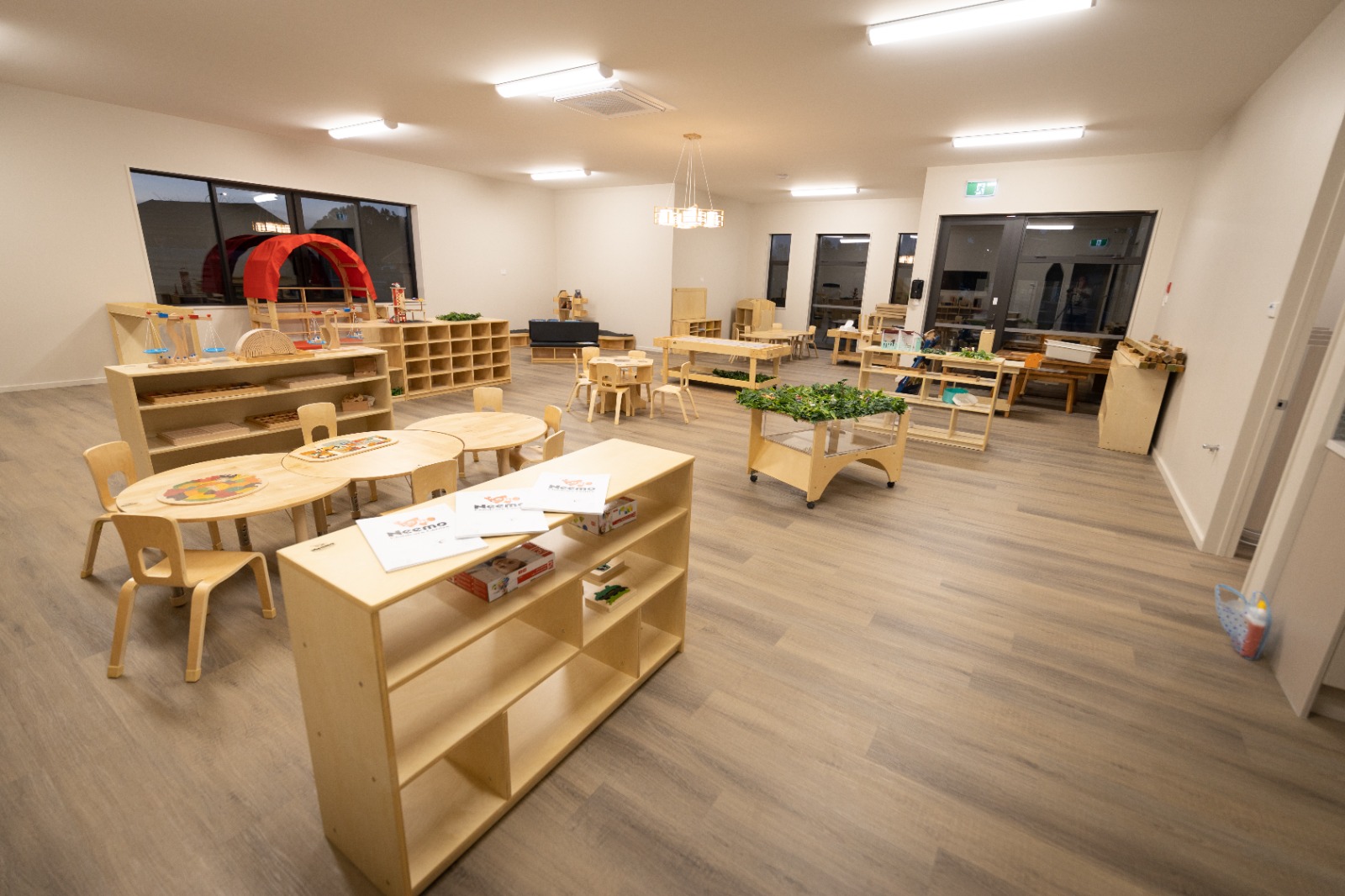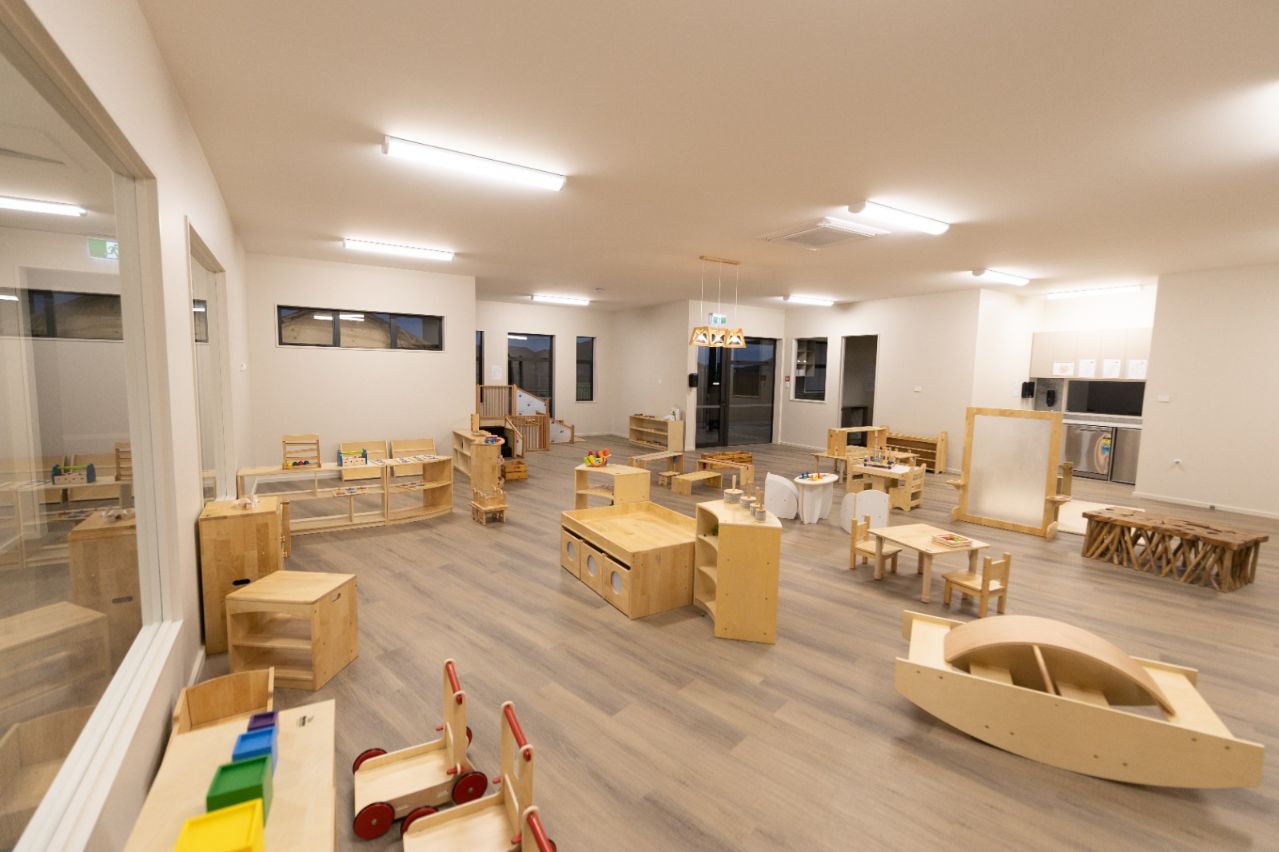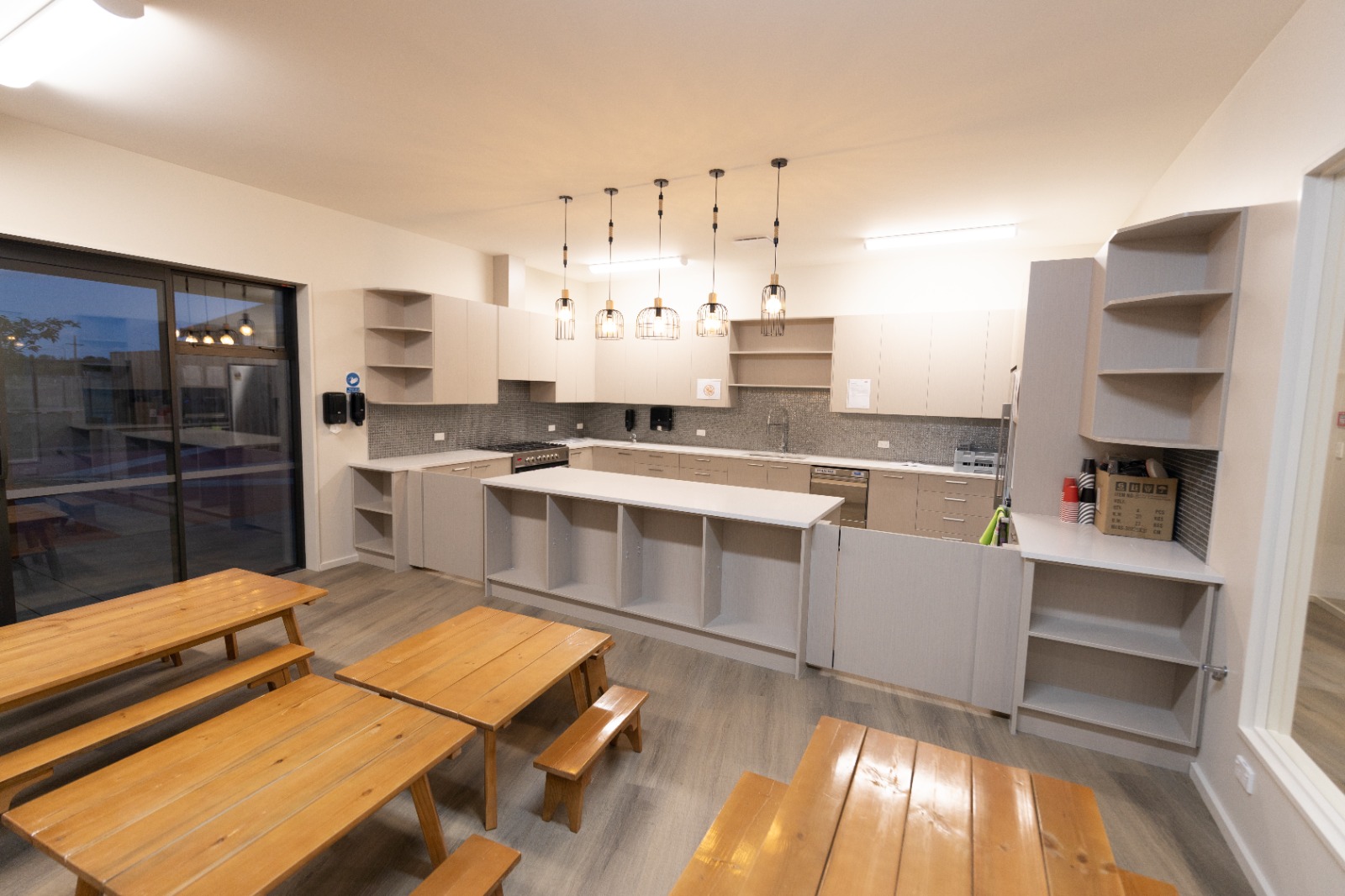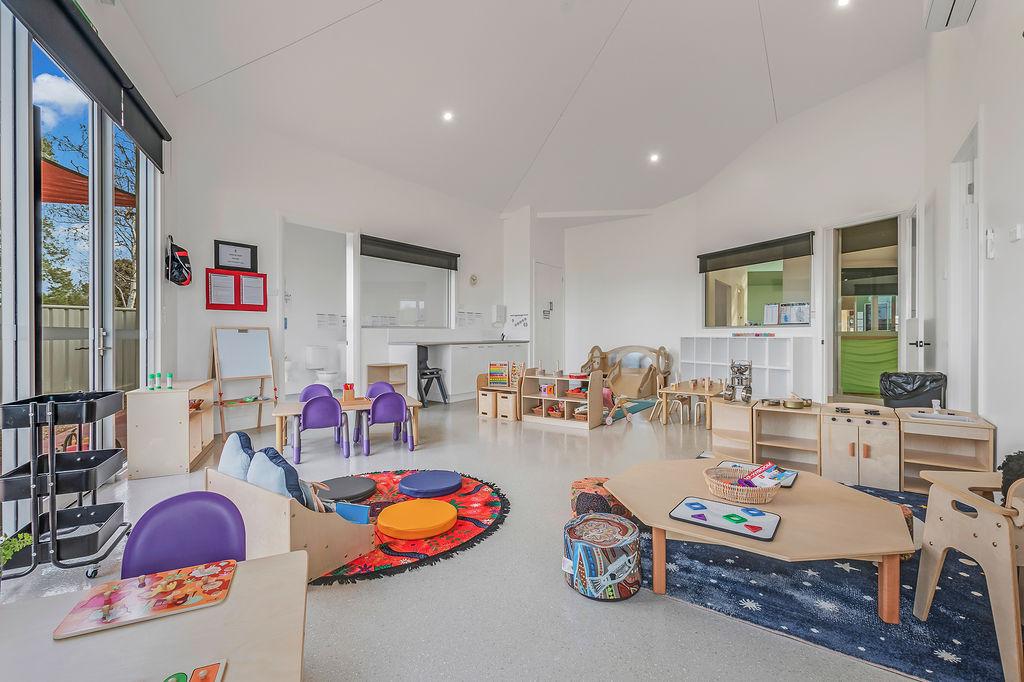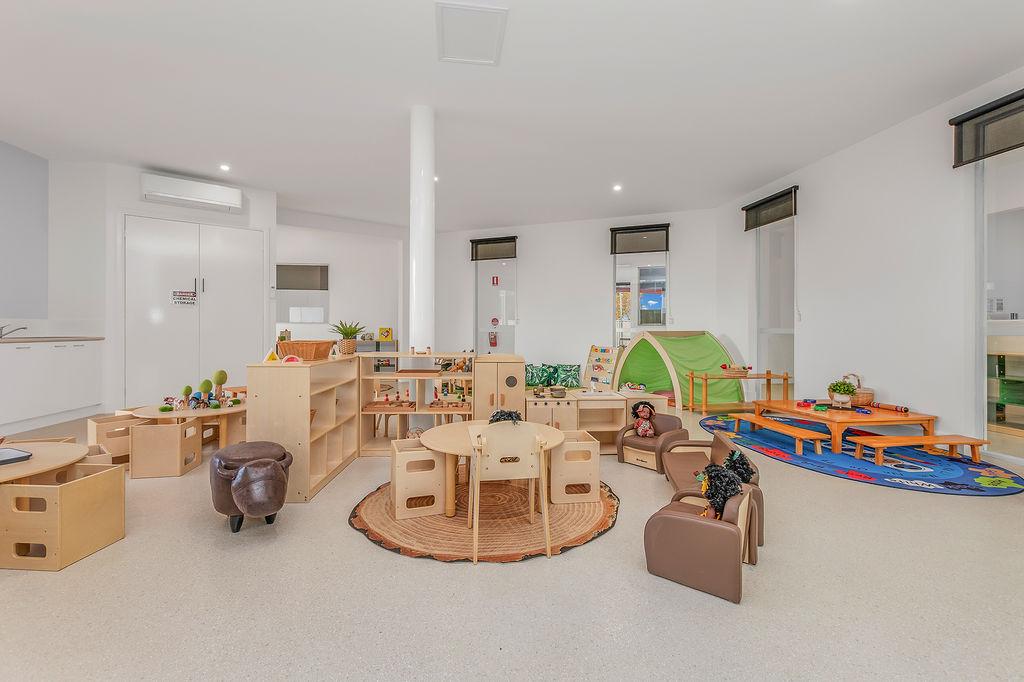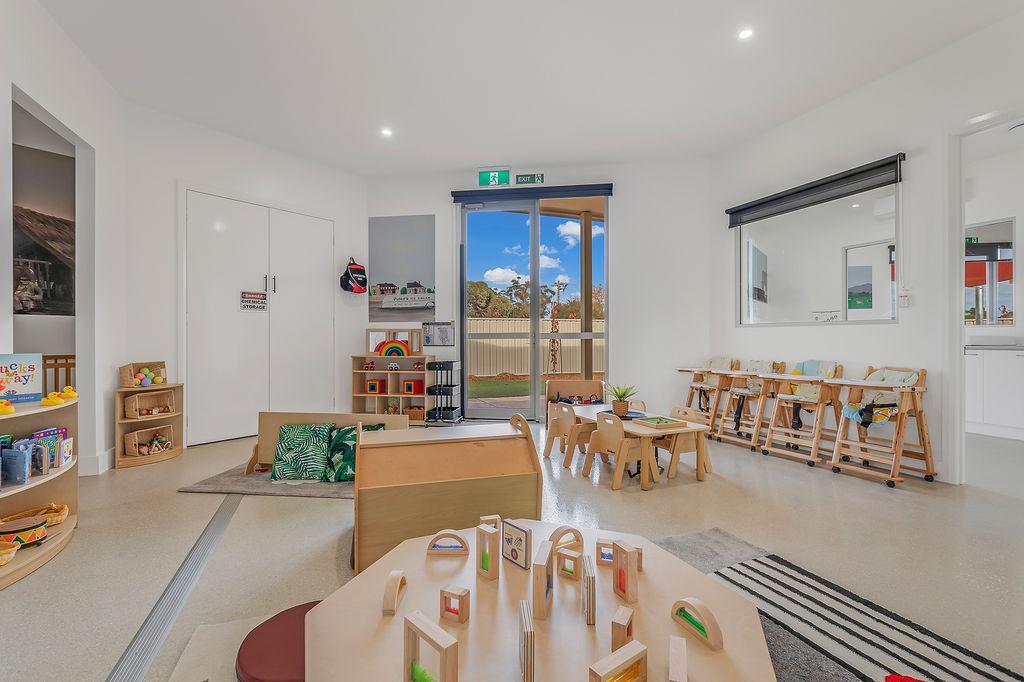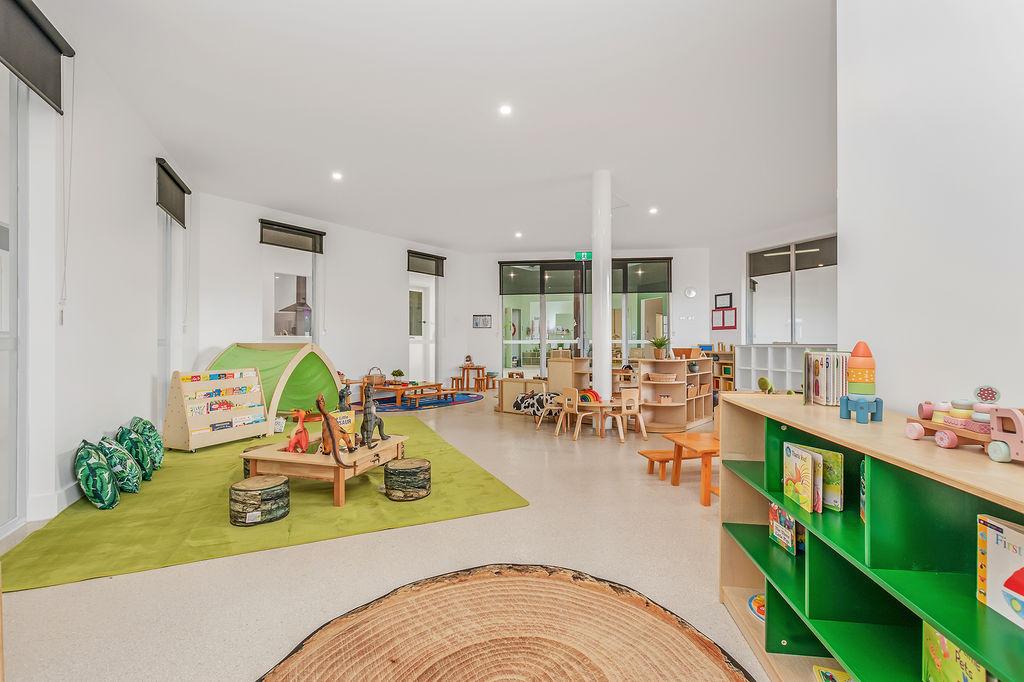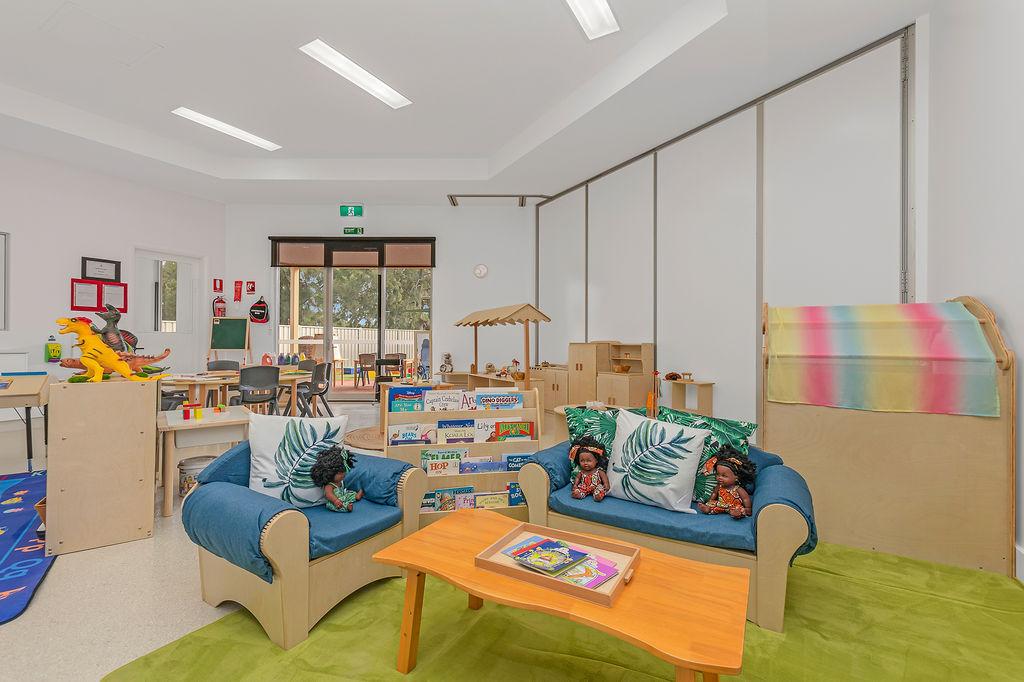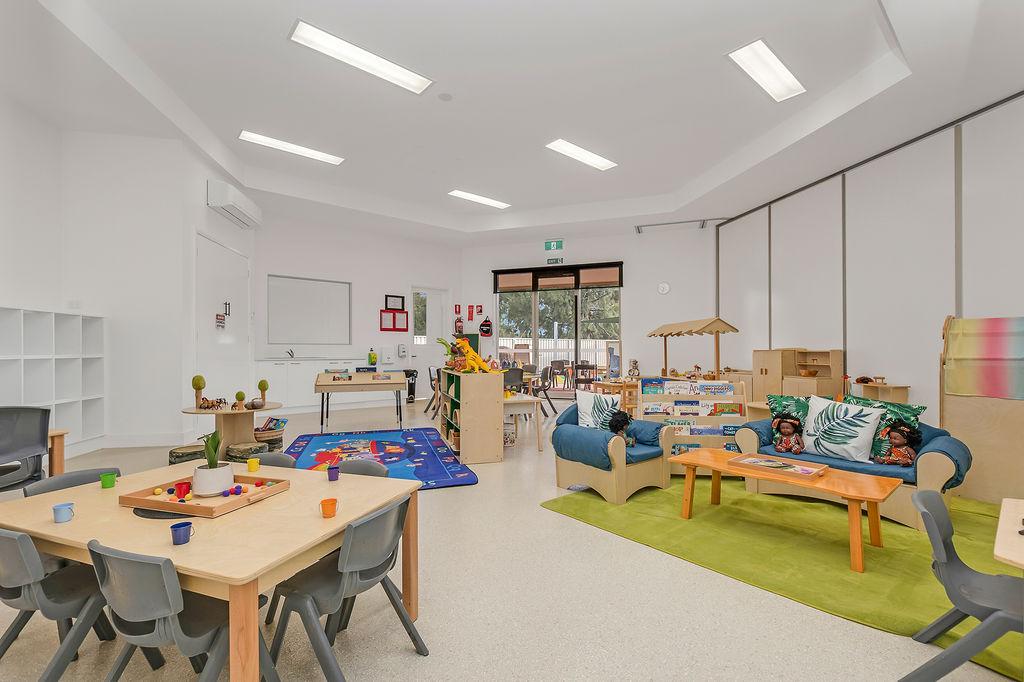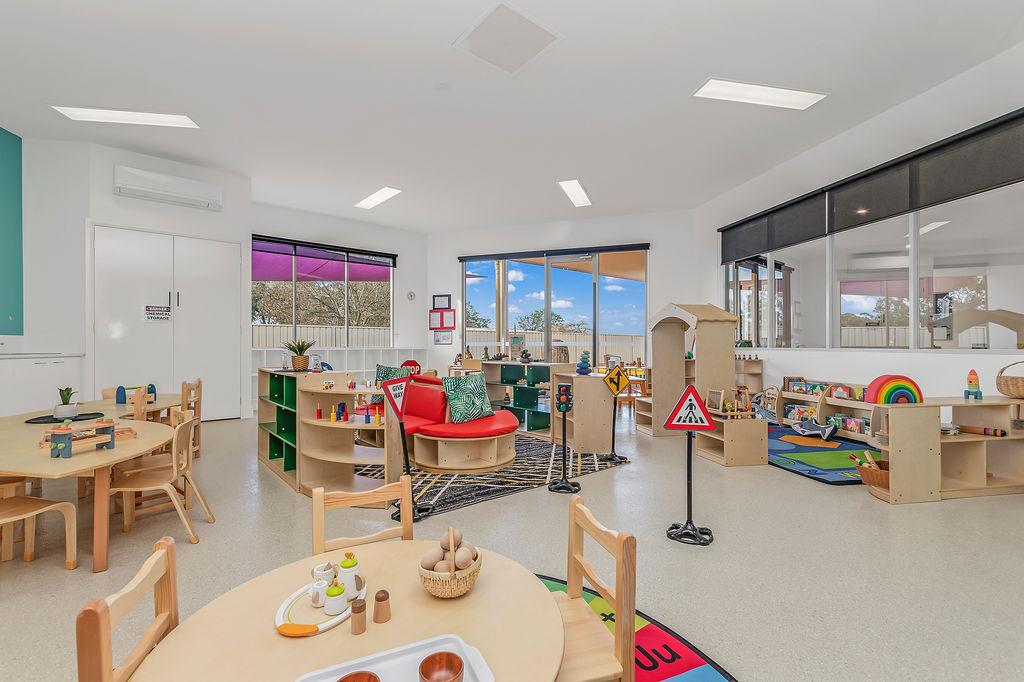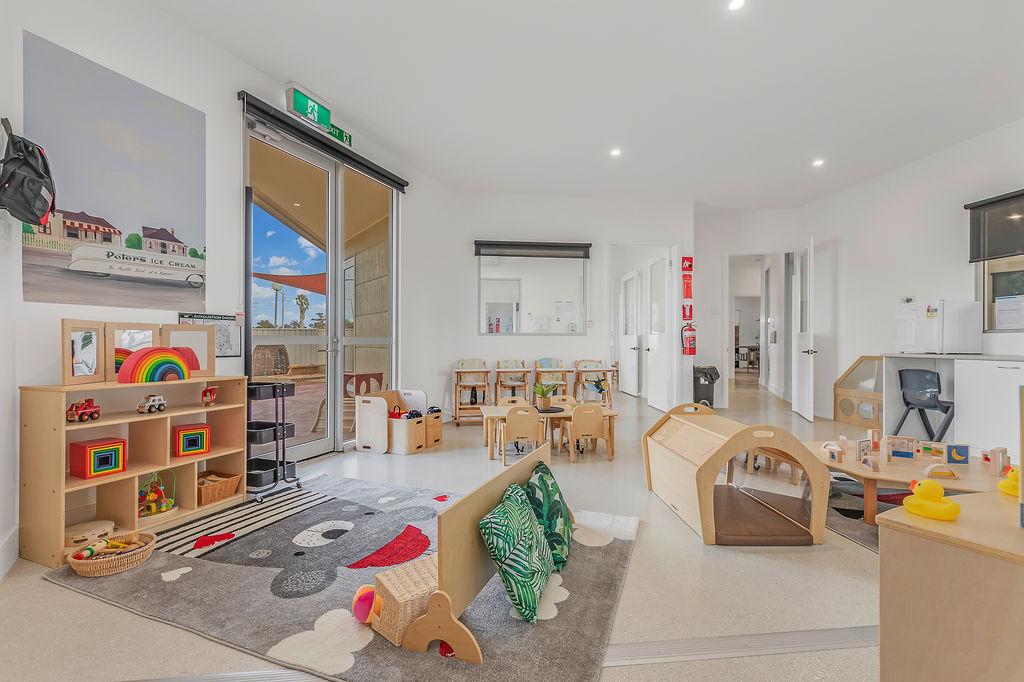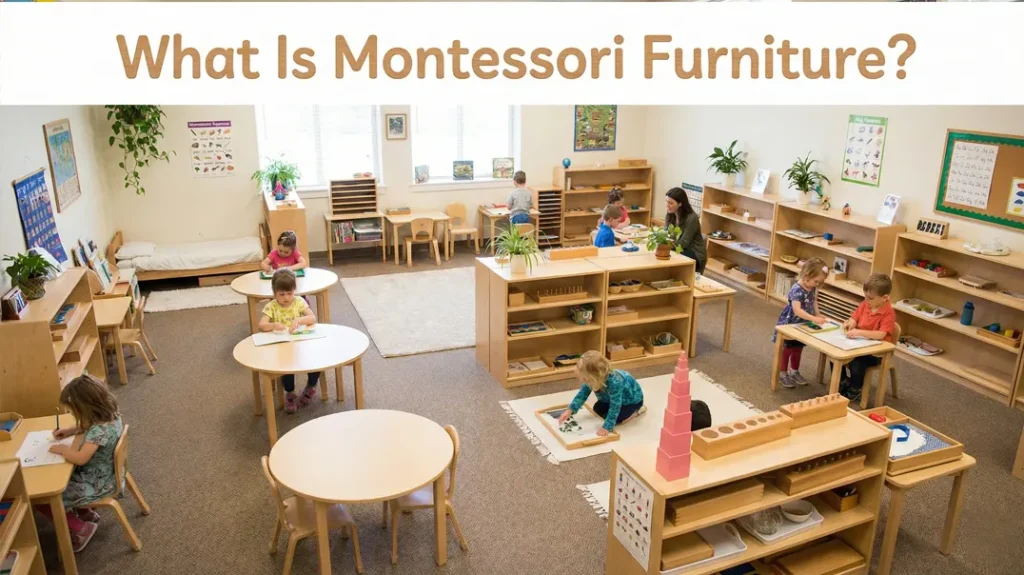
Montessori furniture refers to classroom furniture specifically designed to support the core principles of Montessori education. It is built to match children’s size, encourage independent use, and allow learning materials to be accessible without constant adult assistance. In a true Montessori environment, furniture is not decoration. It is part of the learning structure itself.
One common misunderstanding preschools is viewing Montessori furniture as a visual style rather than an educational tool. A classroom may look Montessori inspired, yet still limit freedom of movement or choice if the furniture does not align with Montessori principles. The difference is subtle, but it has a real impact on how children interact with their environment every day.
This article focuses on what Montessori furniture truly is, how it fits into a Montessori learning environment, and how it is typically used in US preschools. By understanding its role and purpose, educators and school leaders can better evaluate whether a classroom environment genuinely supports Montessori practice.
In Montessori classrooms, furniture shapes behavior long before lessons do.
1. What is Montessori Furniture?
At its core, Montessori furniture is furniture designed around the child, not the adult. It grew out of the Montessori method, an educational approach created by Dr. Maria Montessori in the early 1900s. She observed that when children are placed in an environment that fits their size, abilities, and natural drive to explore, they show concentration, independence, and self-discipline that surprise most adults.
Modern American Montessori organizations such as the American Montessori Society emphasize child sized furniture, open shelves, and uncluttered layouts as essential parts of this prepared environment. The goal is not to impress adults, but to give children a space that fits their bodies and supports their developmental needs.
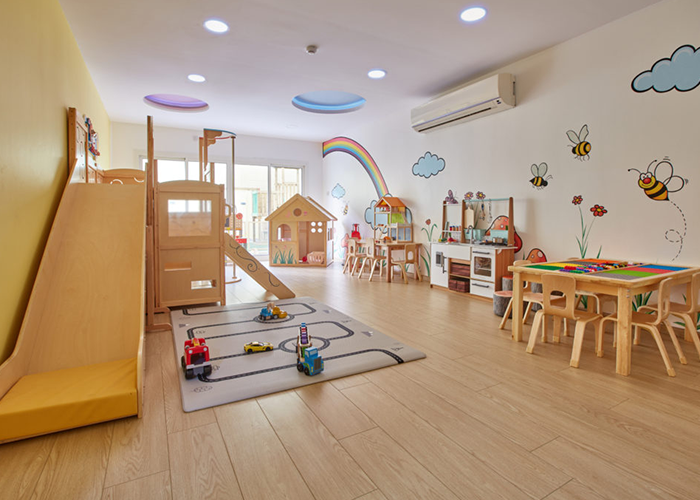
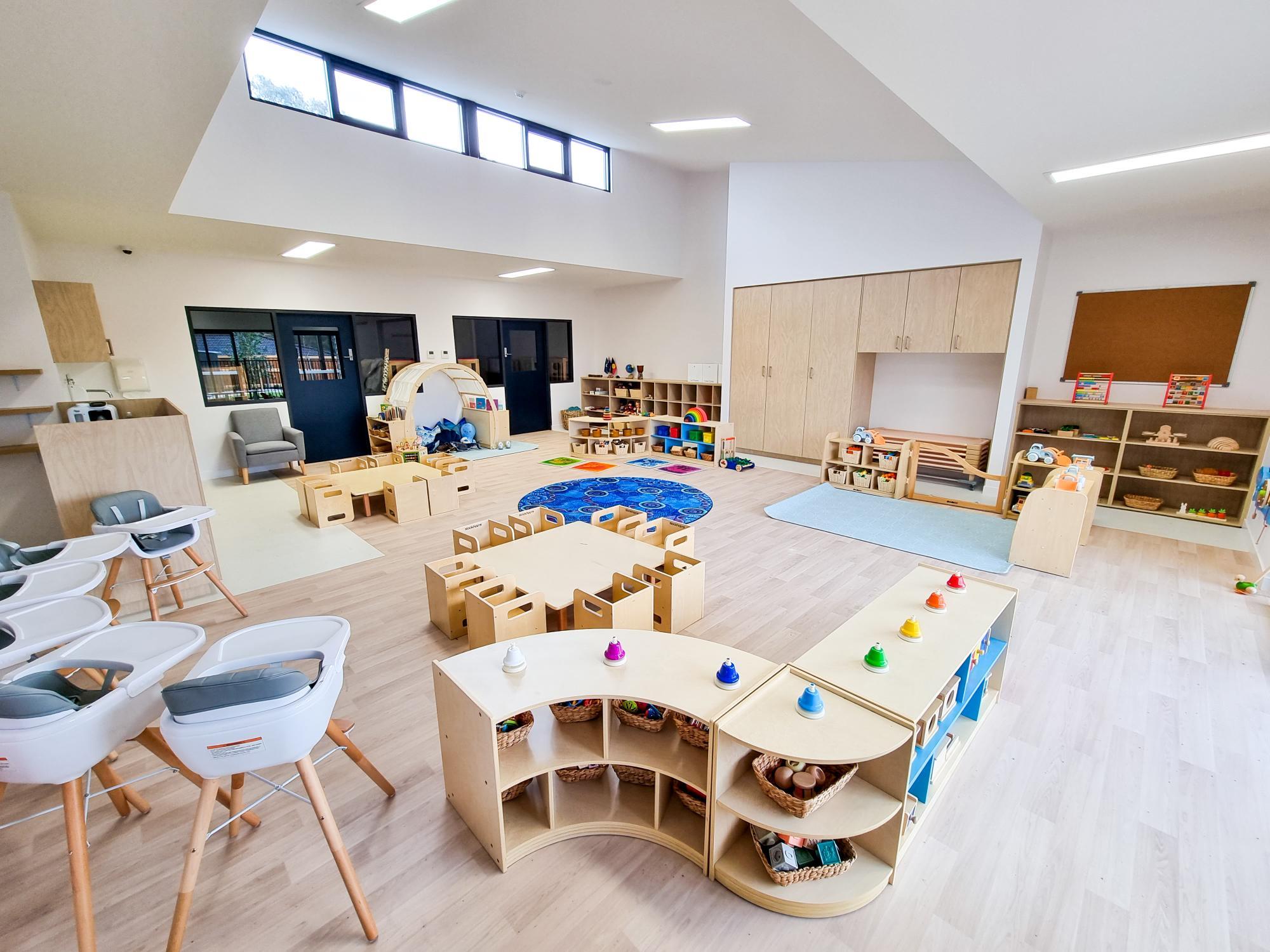
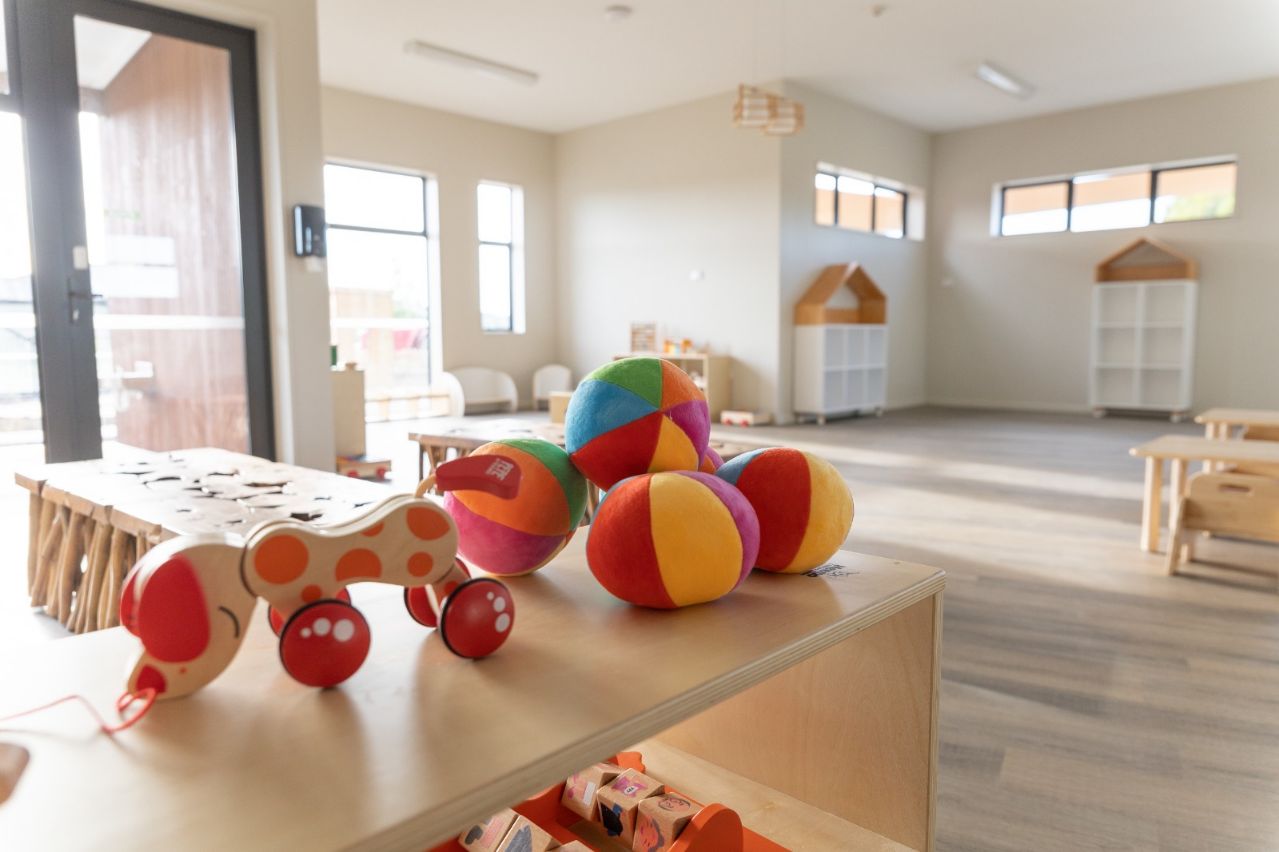
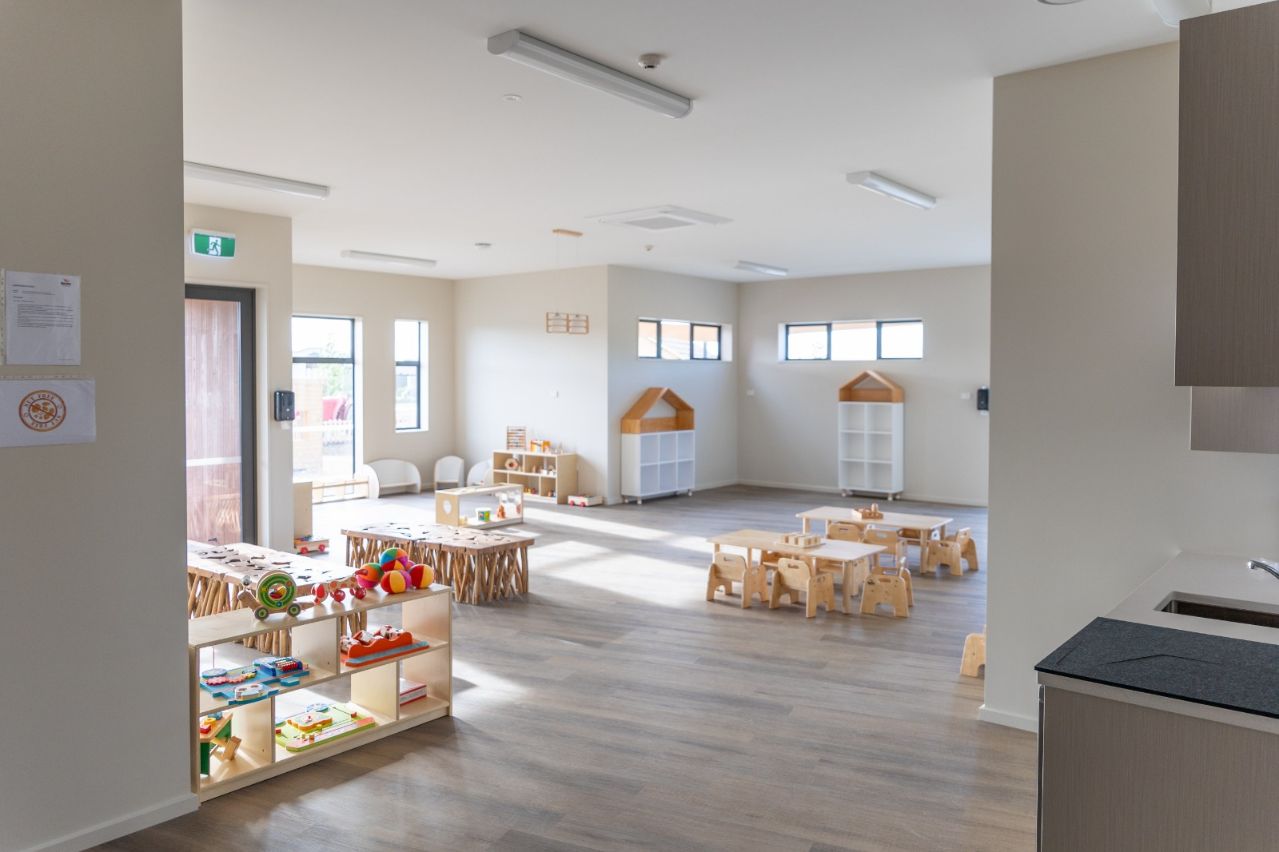
Compare this to a traditional preschool classroom filled with bright plastic, tall shelves, and heavy tables. In that kind of room, adults have to pass out materials, move furniture, and constantly direct traffic. In a Montessori classroom built around Montessori furniture, children can choose their own work, carry a tray to a table, roll out a mat on the floor, and then return everything when they are finished. The furniture literally makes independence possible.
In a typical American preschool classroom, you might see:
- One or two big group tables
- Tall storage cabinets that only adults can reach
- Bright plastic shelves overflowing with toys
That setup naturally leads to adult-directed activities. Teachers pass things out, manage transitions, and tell children what to do next.
So when you ask, “What is Montessori furniture?” the best answer is: it’s the physical foundation of the prepared environment—the kind of classroom where children are expected and trusted to act capable.
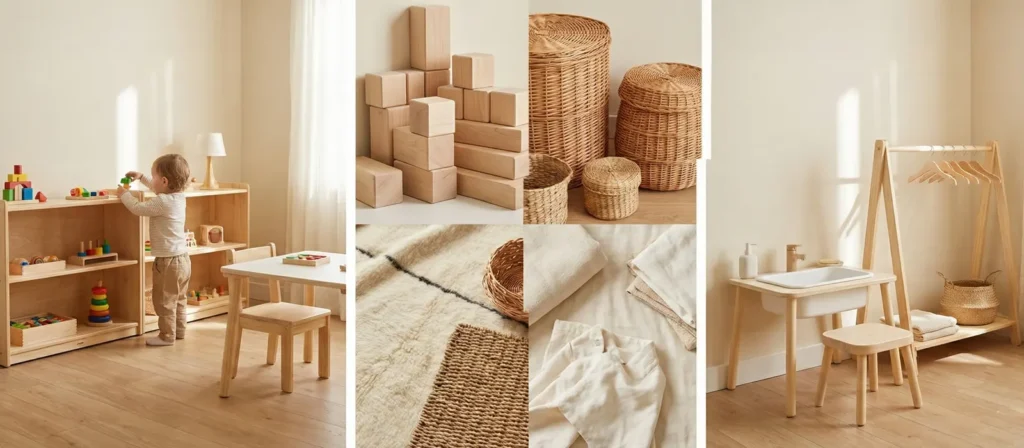
Key Characteristics of Montessori Furniture
Not every “Montessori” piece you see online truly lines up with the approach. To cut through the noise, it helps to know the core characteristics Montessori furniture typically shares.
1. Simple Design
Montessori classrooms are calm on purpose. Furniture usually has:
- Clean lines
- Neutral or wood tones
- Very few decorative elements
In an environment where children are meant to concentrate on tasks, simple design reduces distractions. When materials and furniture don’t compete for attention, children can meet learning objectives more easily. This simplicity also mirrors the philosophy of minimalism in child development.
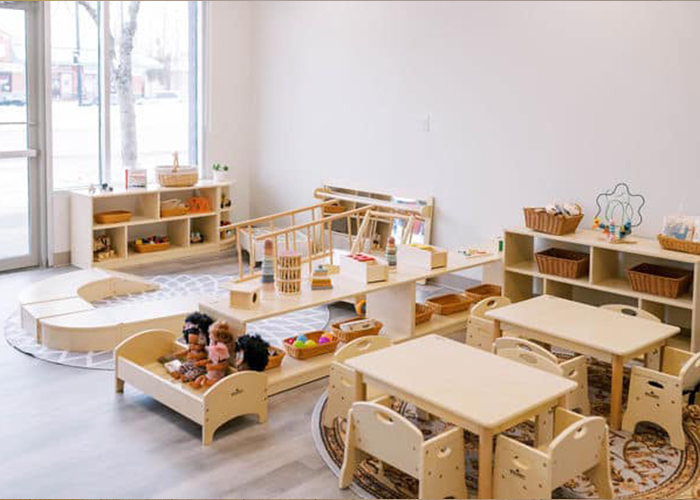
In a lot of American preschool rooms, walls, carpets, shelves, and bins are all competing for attention. It looks cheerful to grown-ups, but for many kids it’s a lot of sensory clutter. Montessori furniture strips that down. A solid wood shelf with clear trays, a plain rectangular table, and a basic wooden chair doesn’t scream for attention. It whispers, “Let’s get to work.”
2. Independence and Self-reliance
If you had to capture Montessori in one sentence, it might be: “Help me do it myself.”
Montessori furniture is designed so that children can:
- Pull out their own chairs and sit down safely
- Move a chair from a table to a reading corner
- Take a material from a shelf, carry it to a table or mat, and return it
- Access basic care-of-self and care-of-environment tasks
Classrooms designed for independence reduce constant “Can you help me?” interruptions. That frees teachers to observe, give individual lessons, and build deeper relationships with children instead of just managing logistics.
3. Active Learning
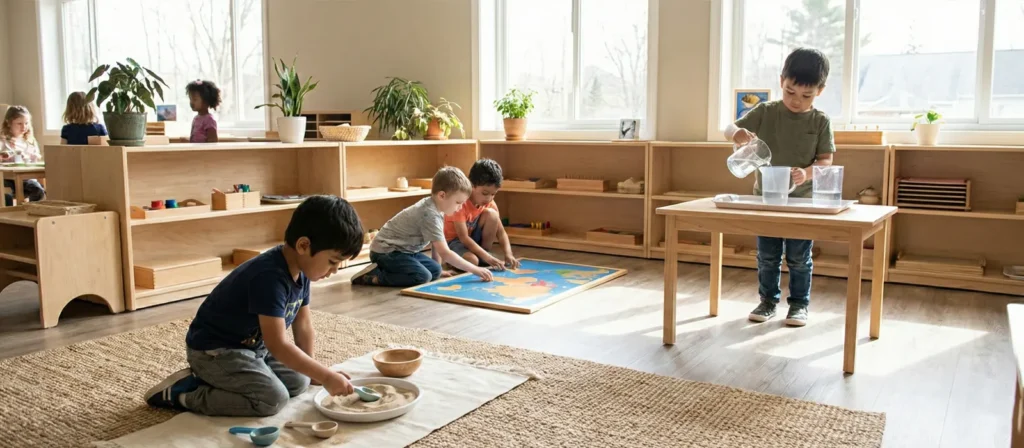
In Montessori philosophy, learning is active rather than passive. Children learn by doing, manipulating objects, exploring materials, and solving problems through interaction. The furniture supports this by:
- Allowing movement between centers
- Supporting multi‑sensory engagement
- Integrating physical activity with cognitive development
For example, tables that are the right height for a child allow them to explore puzzles and manipulatives comfortably, while shelves at eye level make materials visible and inviting. This contrasts with traditional classrooms where children might sit at uniform desks waiting for instruction.
4. Personalized Development
Montessori furniture supports individualized pacing and development. Montessori education is often described as child centered, but that phrase can become vague. In practice, it means children are allowed to choose work that matches their readiness and interest, and they are allowed to repeat tasks until mastery.
Furniture supports personalized development by creating access. When materials are on open shelves, children can choose what they are drawn to. When tables and floor spaces are available, children can work at their own rhythm. When storage is organized, children can return to familiar work without an adult having to set it up again.
5. Natural Materials
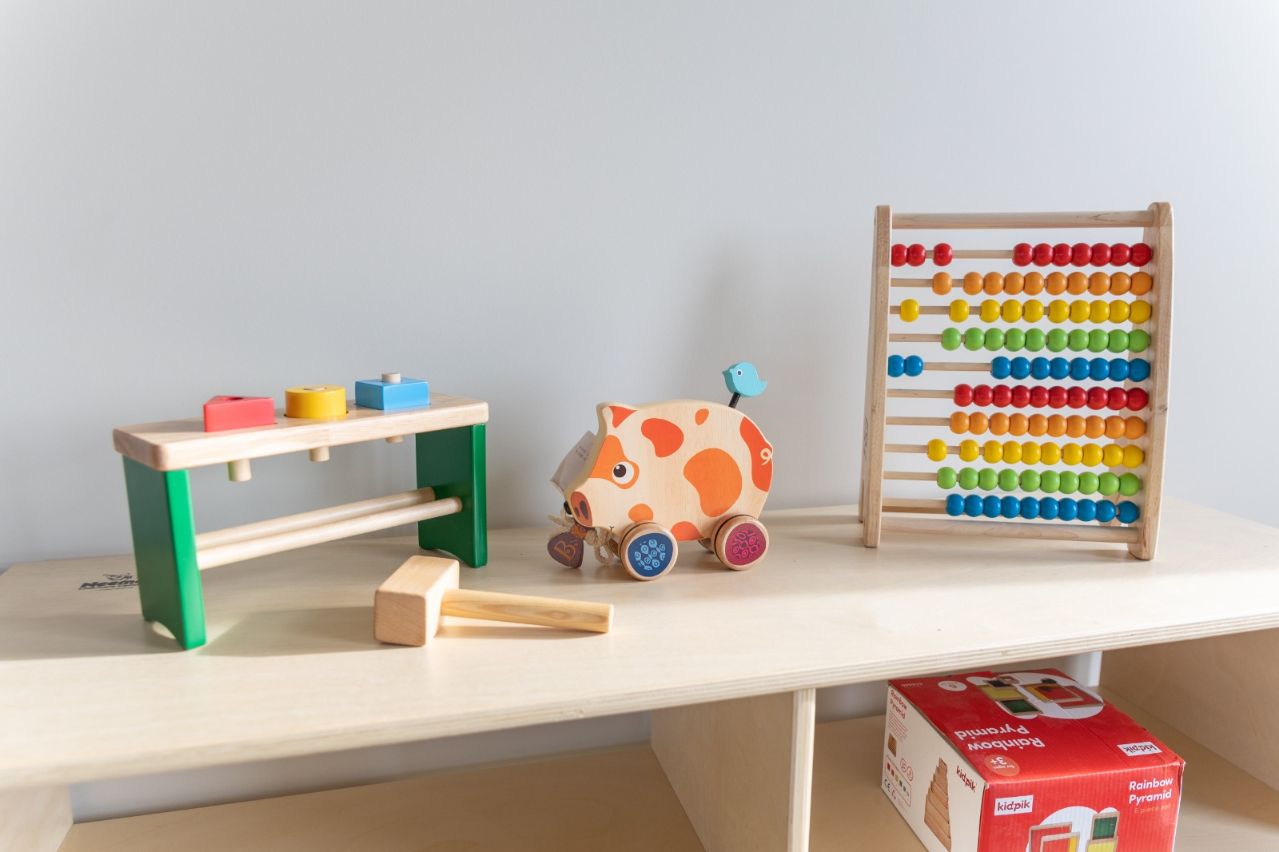
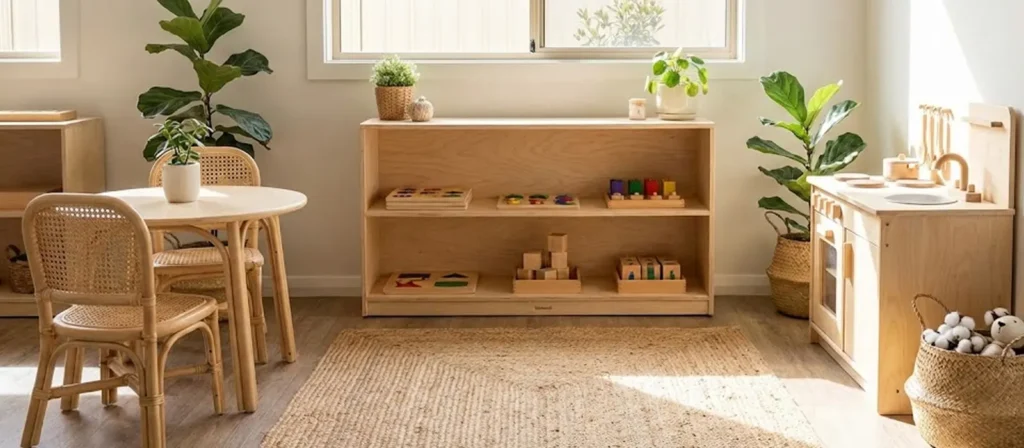
Montessori furniture favors natural, tactile materials like wood, wicker, and metal over plastic or synthetic options. There are several reasons for this:
- Natural materials are durable and age well
- They provide sensory richness that children perceive unconsciously
- They create a quieter, calmer classroom environment
In preschool classrooms, children often touch, move, and interact with furniture. Choosing wood or other natural materials supports sensory integrity and subtly communicates respect for the environment and the child.
6. Child-Size Design
Finally, Montessori furniture is literally built to a child’s proportions. That sounds obvious, but a lot of preschool furniture is still closer to “mini adult” size than true child size.
Good child-size design considers:
- Chair height: When a child sits, their feet should be flat on the floor and knees at roughly a 90-degree angle.
- Table height: The tabletop should be high enough for good posture but low enough that shoulders stay relaxed. Many Montessori guides suggest table tops sit several inches above the child’s bent elbow but not so high that they need to hunch.
- Shelf height: Children should see everything on the shelf without stretching or climbing.
Common Types of Montessori Furniture
Now let’s make this concrete. When you’re shopping or planning a Montessori-inspired classroom, these are the types of furniture you’ll see again and again.
You don’t have to buy every piece at once, and you don’t need to go all-in on the most expensive brands. What matters is understanding what each item is supposed to do for the child and then choosing pieces that do that job well.
1. Montessori Cube Chair
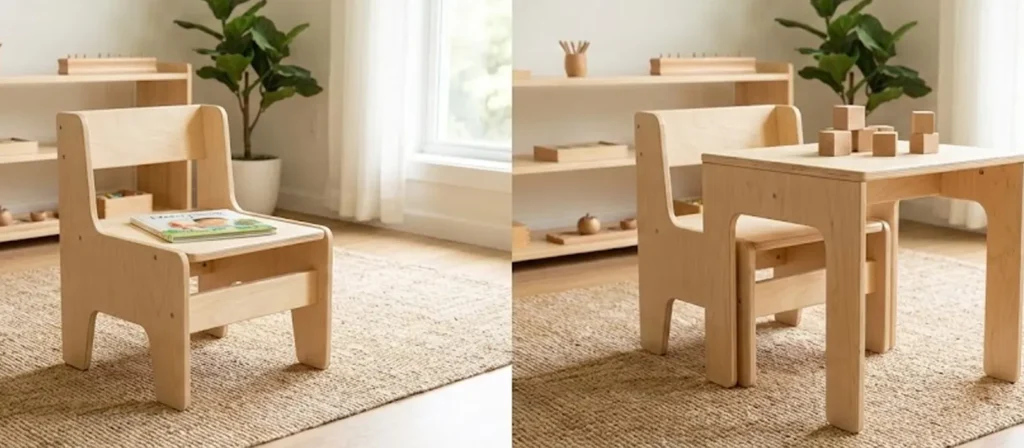
A Montessori cube chair looks like a simple wooden cube with openings. But it’s incredibly versatile. It usually has:
- Two seat heights (flip it over to change the height)
- Cut-out handles so children can carry it
- A wide, stable base to prevent tipping
In Montessori terms, the value of a cube chair is stability and independence. Children can move it themselves, position it where they need, and sit with appropriate posture. In a classroom of toddlers, cube chairs can support snack routines, table work, and small group activities. They are also often used for practical life activities where a child needs a stable seat at a low table.
2. Montessori Table and Chair Set
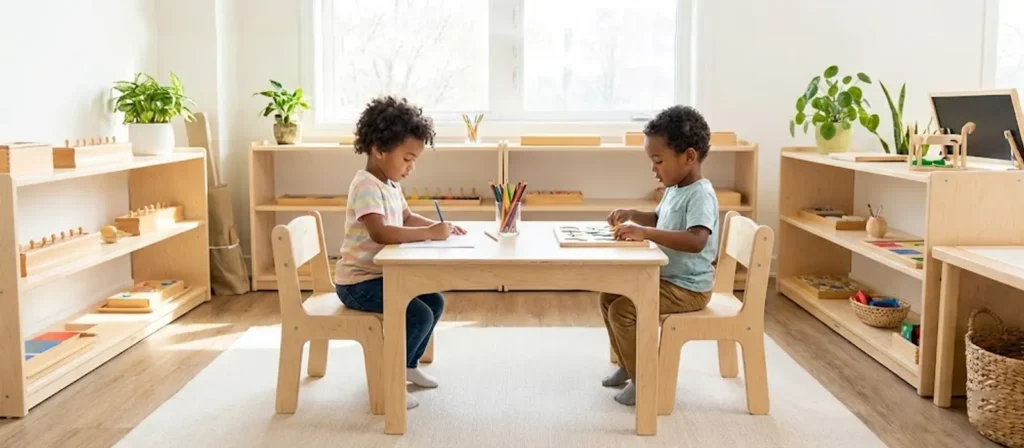
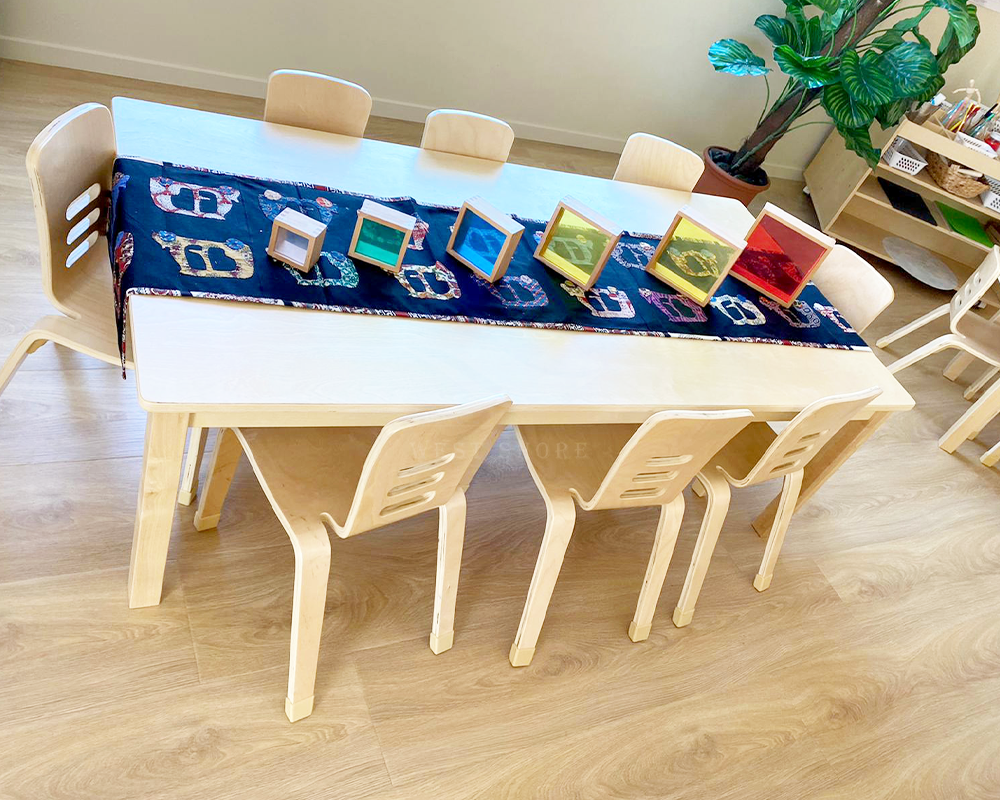
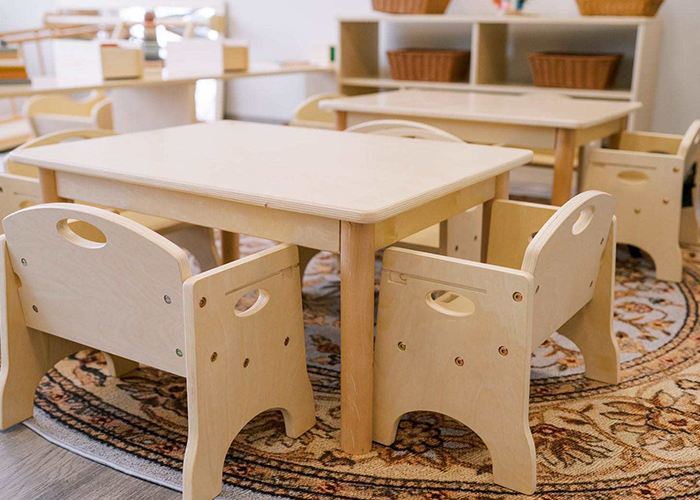
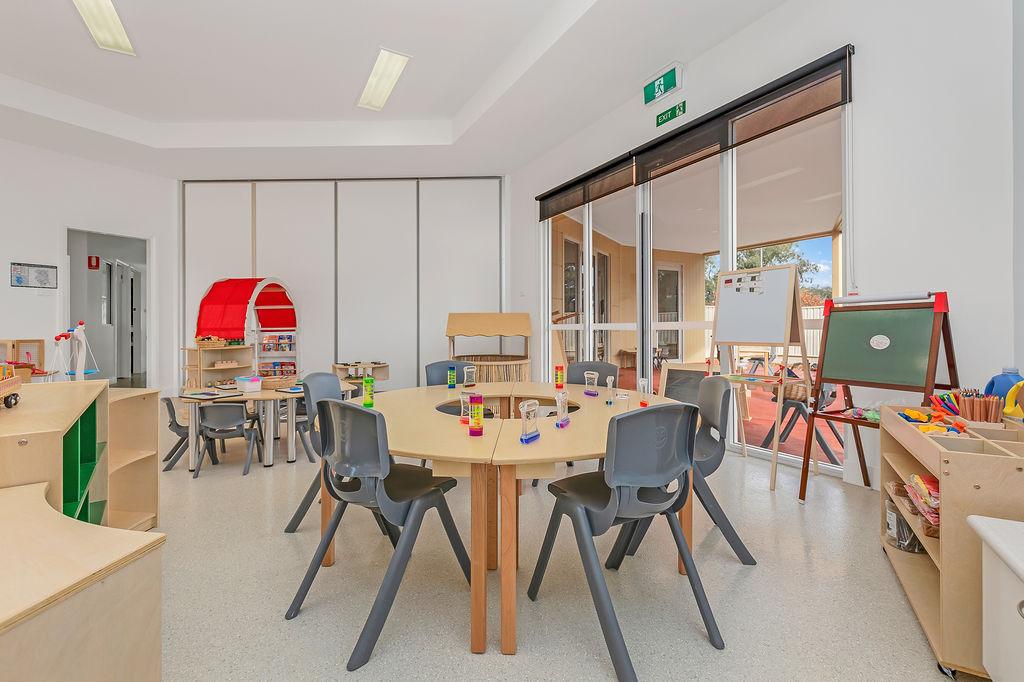
Tables are the centerpiece of many Montessori activities. Unlike long rows of desks, Montessori tables are usually:
- Small clusters of 2–4 seats
- Rounded or rectangular to support group work
- Sized to match children’s seated height
The table is not automatically the “default” place to learn. It is one option. That is why Montessori tables are often easy to move and not treated as fixed seating assignments. Children may choose a table for a certain activity and the floor for another.
3. Learning Tower
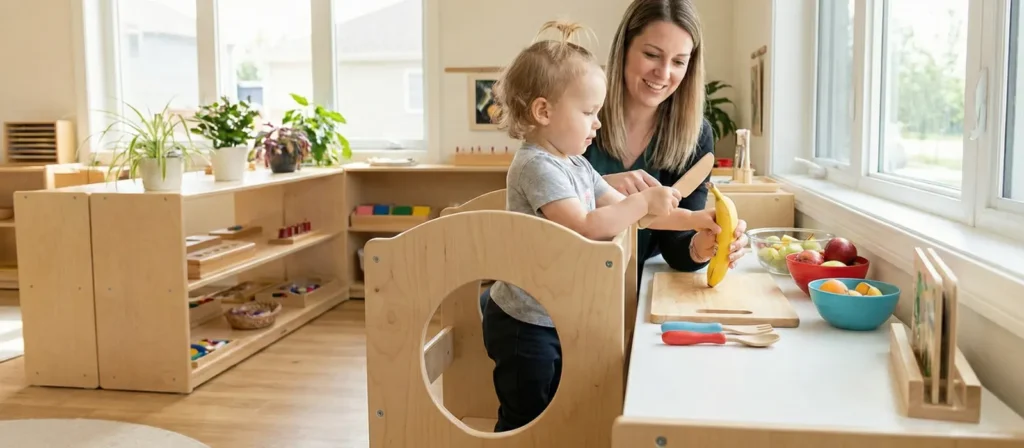
While not strictly a “classic” school item, learning towers (also called kitchen helpers or step towers) are increasingly common in Montessori-inspired environments, especially in practical life areas.
The tower’s high sides and railings keep kids safe while giving them real access to adult-height surfaces. That’s pure Montessori: real tasks, real tools, scaled to the child’s abilities.
4. Bookshelves
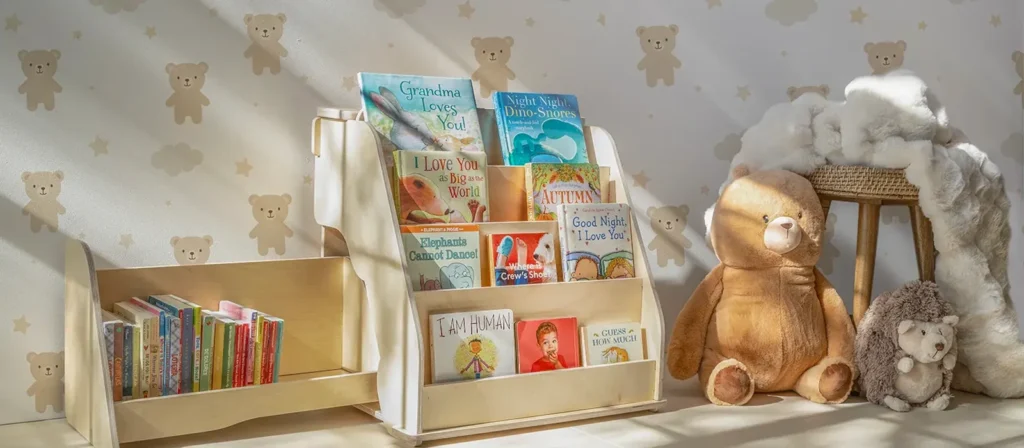
Bookshelves in Montessori classrooms are more than storage. They are:
- Open and low, making books visible and accessible
- Arranged by theme or reading level
- Often accompanied by a small reading nook
Children can choose books independently because their eyes can fully see the book covers. Studies show that children choose more books and read them more frequently when the covers are clearly visible.
In many classrooms, bookshelves also serve as transition points between areas. A child might move from sensorial work to a quiet reading zone without teacher direction. This is a prominent feature of the autonomy of Montessori education.
5. Storage Shelves
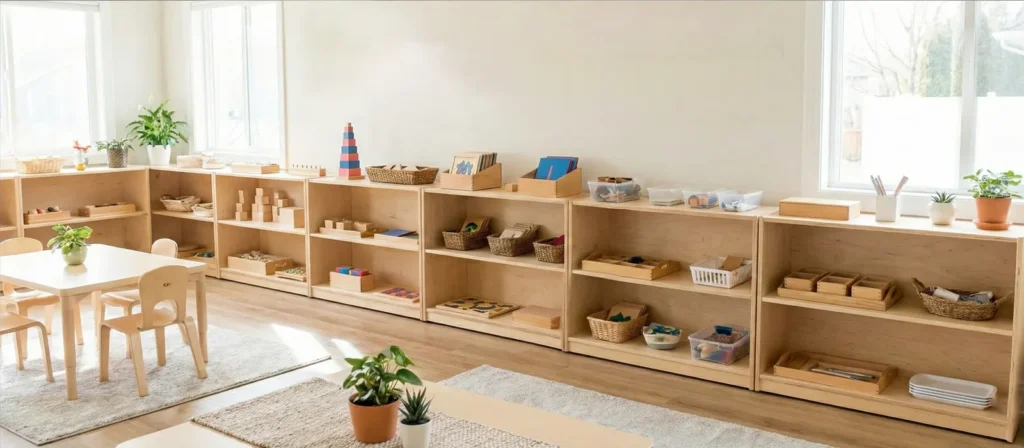
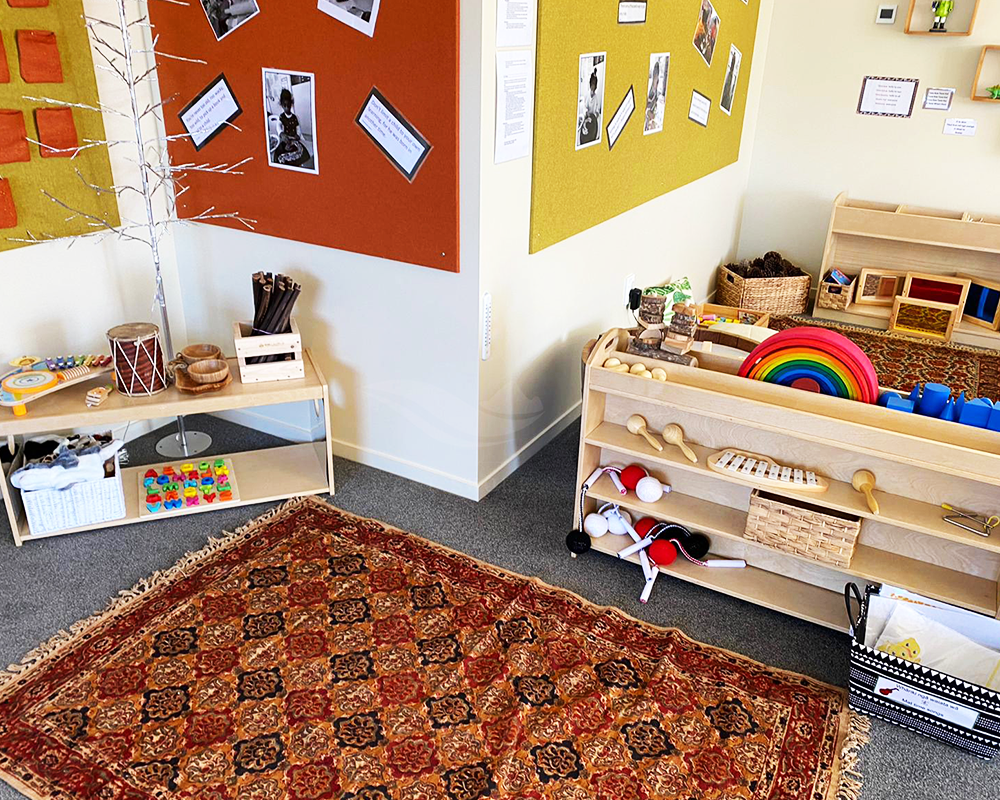
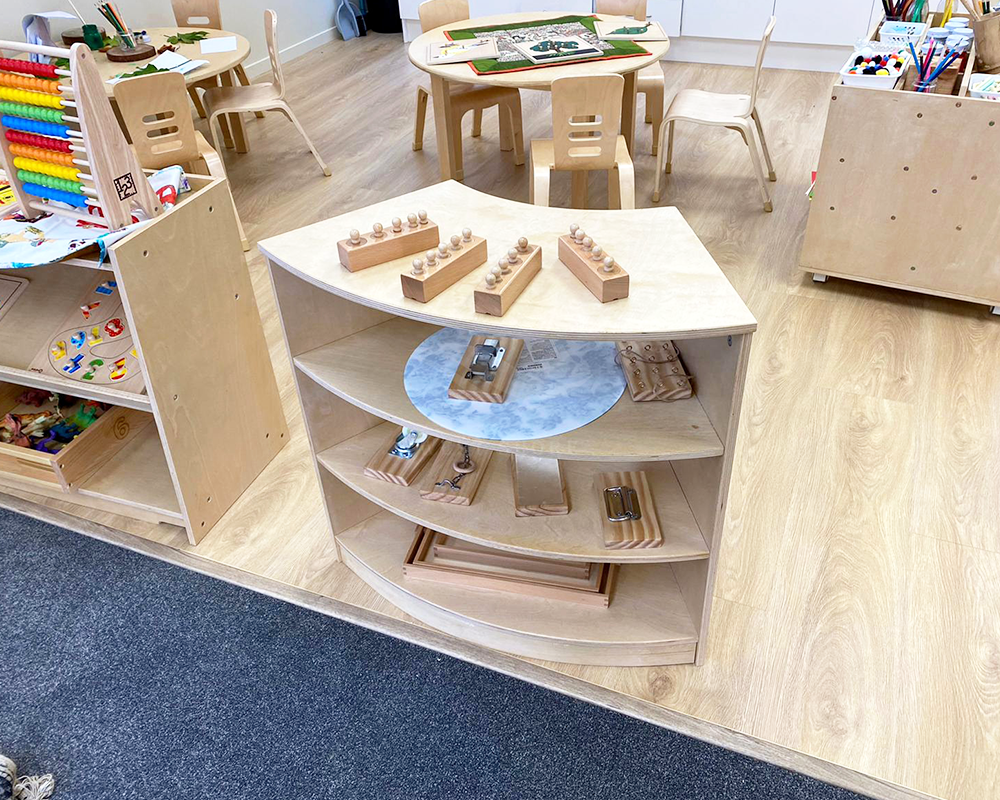
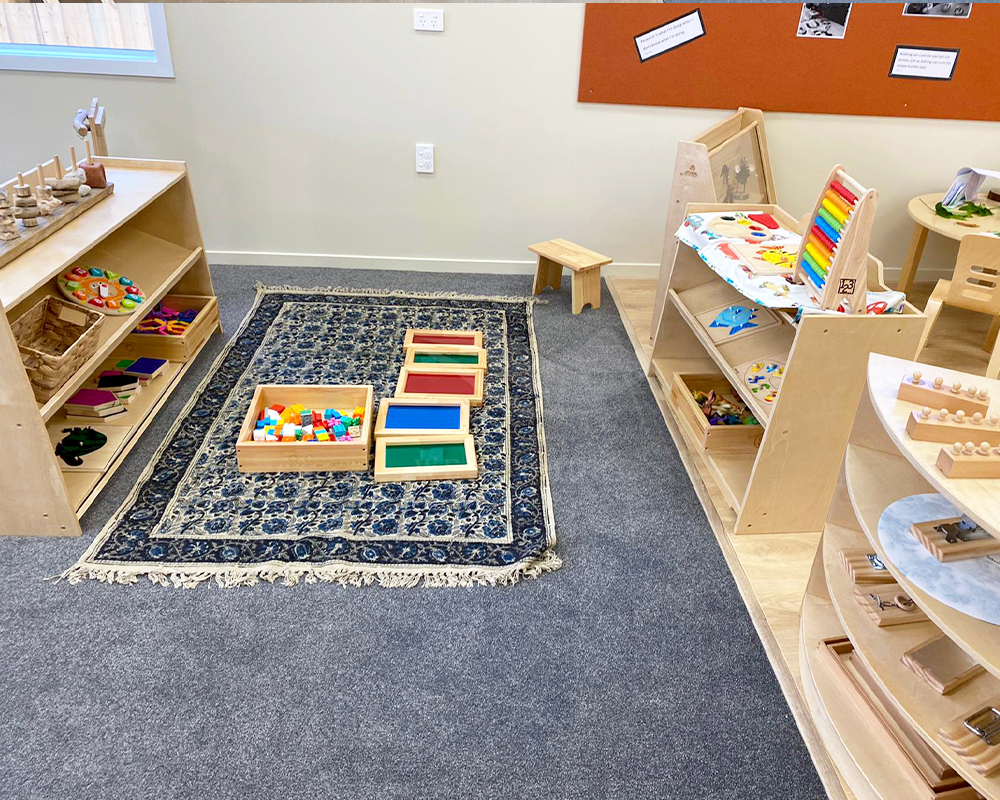
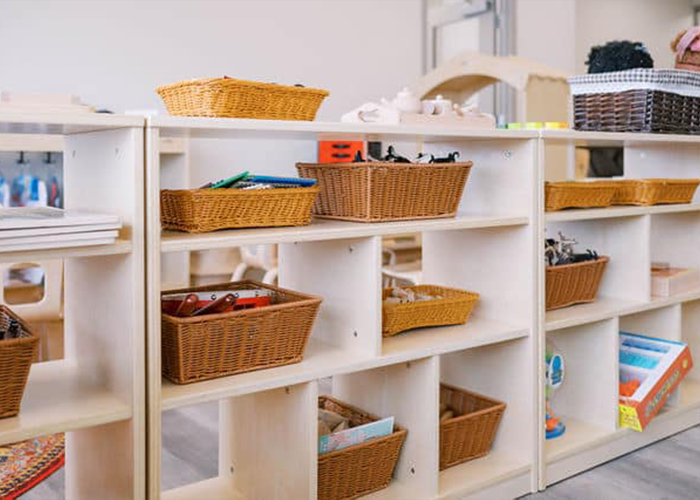
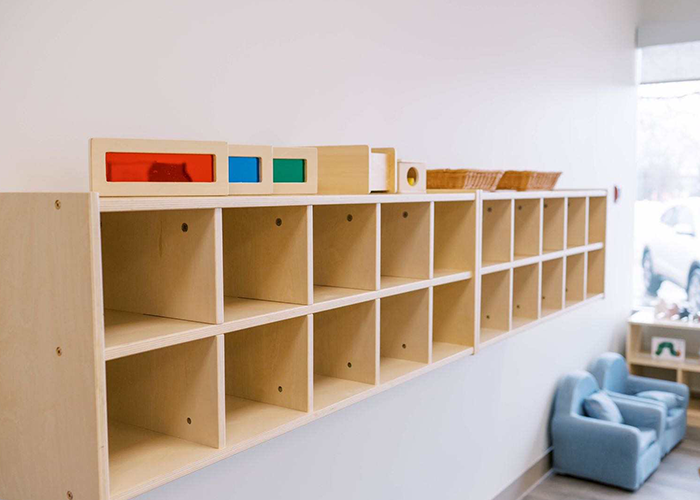
Storage shelves are the backbone of Montessori classrooms. When people picture a Montessori room, they often picture long low shelves with trays and baskets. That is not an aesthetic trend. It is a functional design that supports independent work.
Montessori storage shelves are typically open, low enough for children to reach, and organized so each material has a defined place. Trays are commonly used because they contain materials neatly and make it easier for children to carry a complete activity. Baskets may be used for items that are safe and easy to manage. The point is clarity. Children should be able to see what is available, choose an activity, and return it when finished.
Montessori Furniture vs. Traditional Classroom Furniture
| Feature | Montessori Furniture | Traditional Preschool Furniture |
|---|---|---|
| Height | Child‑sized | Often one universal height |
| Accessibility | Materials within reach | Materials often teacher‑controlled |
| Function | Supports self‑chosen work | Often adult‑directed activities |
| Design | Simple, purposeful | May be decorative/childish |
| Movement | Encourages exploration | Often desk‑bound |
The Role of Montessori Furniture in Education
Montessori furniture is not the curriculum, but it quietly supports the curriculum by shaping how children move, choose, and care for their environment. Here are the main roles it plays in Montessori education.
- Promotes Physical Independence: Children access materials, sit, stand, and move without adult help.
- Supports Cognitive Engagement: Accessible materials help children make choices and pursue focused work.
- Reinforces Routines: Shelves and zones guide predictable classroom patterns.
- Encourages Social Interaction: Group tables and shared spaces provide contexts for cooperation.
- Develops Responsibility: Children learn to return items to their designated places.
Understanding these functions helps preschool leaders see furniture not as décor but as a dynamic learning infrastructure.
How to Choose Montessori Furniture?
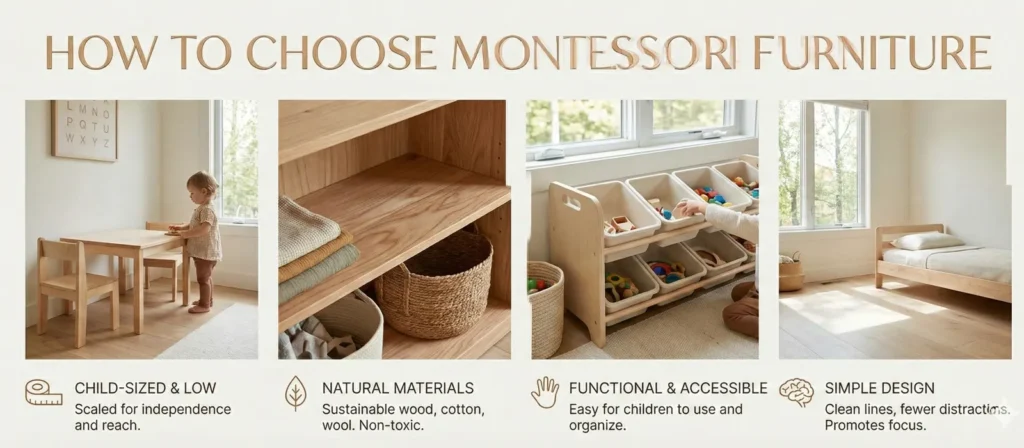
Choosing Montessori furniture is about more than aesthetics or cost. It requires clarity about your educational goals, space, and the developmental needs of the children you serve.
A short, practical checklist:
- Child can reach it and use it safely
Shelves should be low enough for full access, and furniture should be stable enough that a child does not need an adult to steady it. - Supports the Montessori work cycle
The child can choose, carry, complete, and return materials without extra steps. - Simple and durable, built for heavy daily use
In US classrooms, furniture has to handle constant movement, quick cleanup, and real wear over years, not weeks. - Easy to maintain
Look for finishes and surfaces that clean well and hold up to disinfecting routines without becoming sticky or rough. - Right size for the age group
Toddlers, primary, and elementary classrooms have different needs. A chair that works for a three year old will not work for a six year old. - Fits your room layout and supervision needs
Low, open furniture supports sight lines. Avoid tall pieces that block visibility, especially in active classrooms.
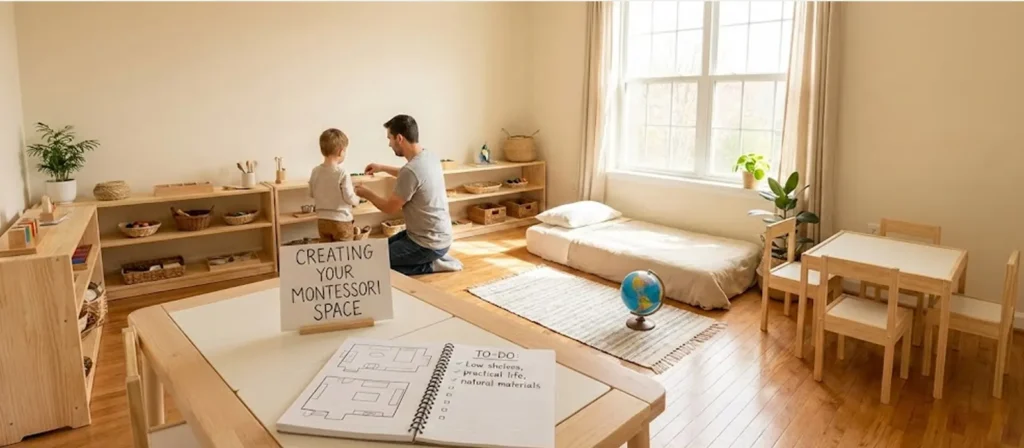
Creating Your Montessori Space
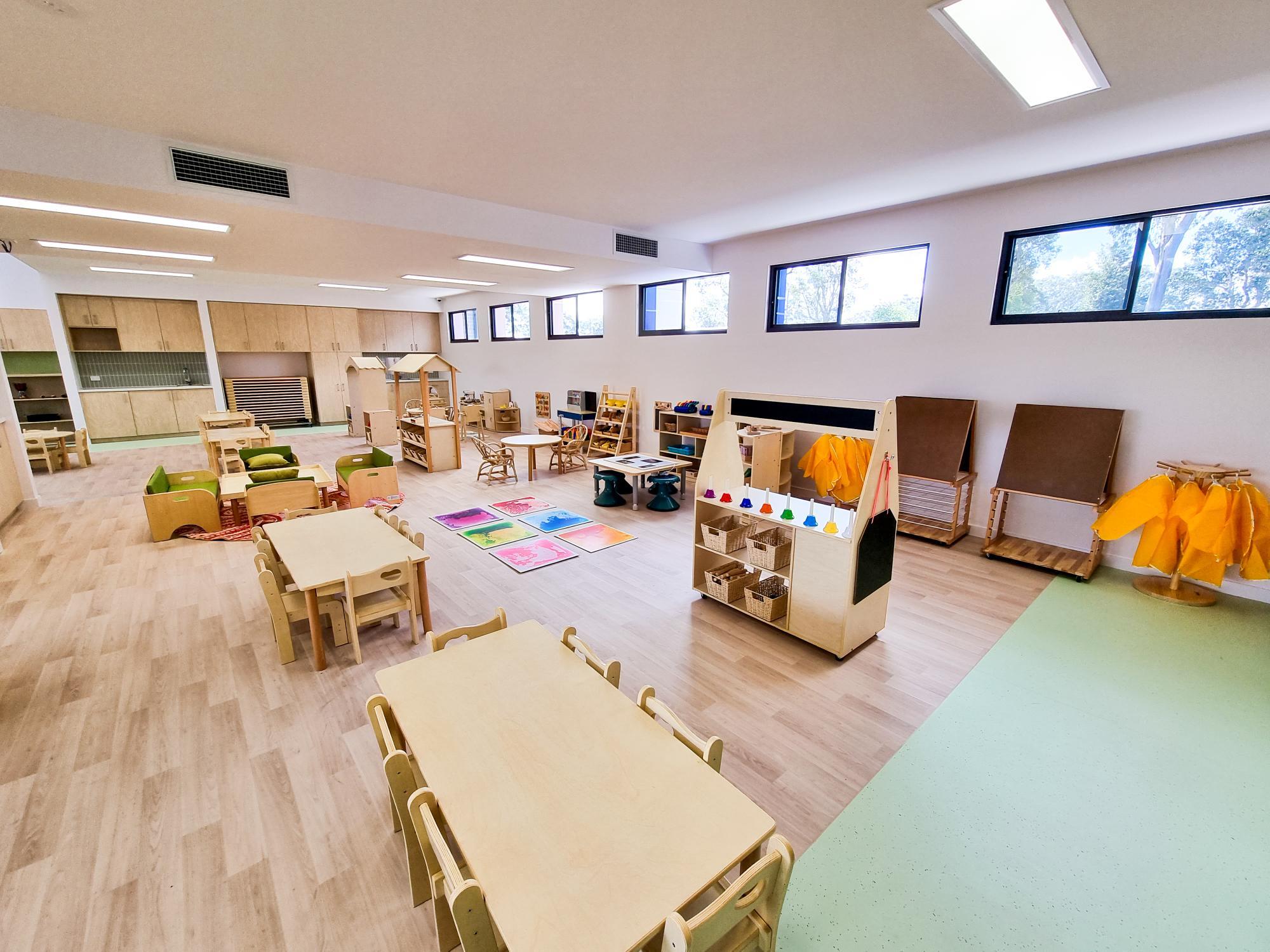
You can create a Montessori aligned space in a classroom or at home without over building it. Montessori spaces work best when they are calm, organized, and intentionally limited. More furniture does not automatically create a better Montessori environment.
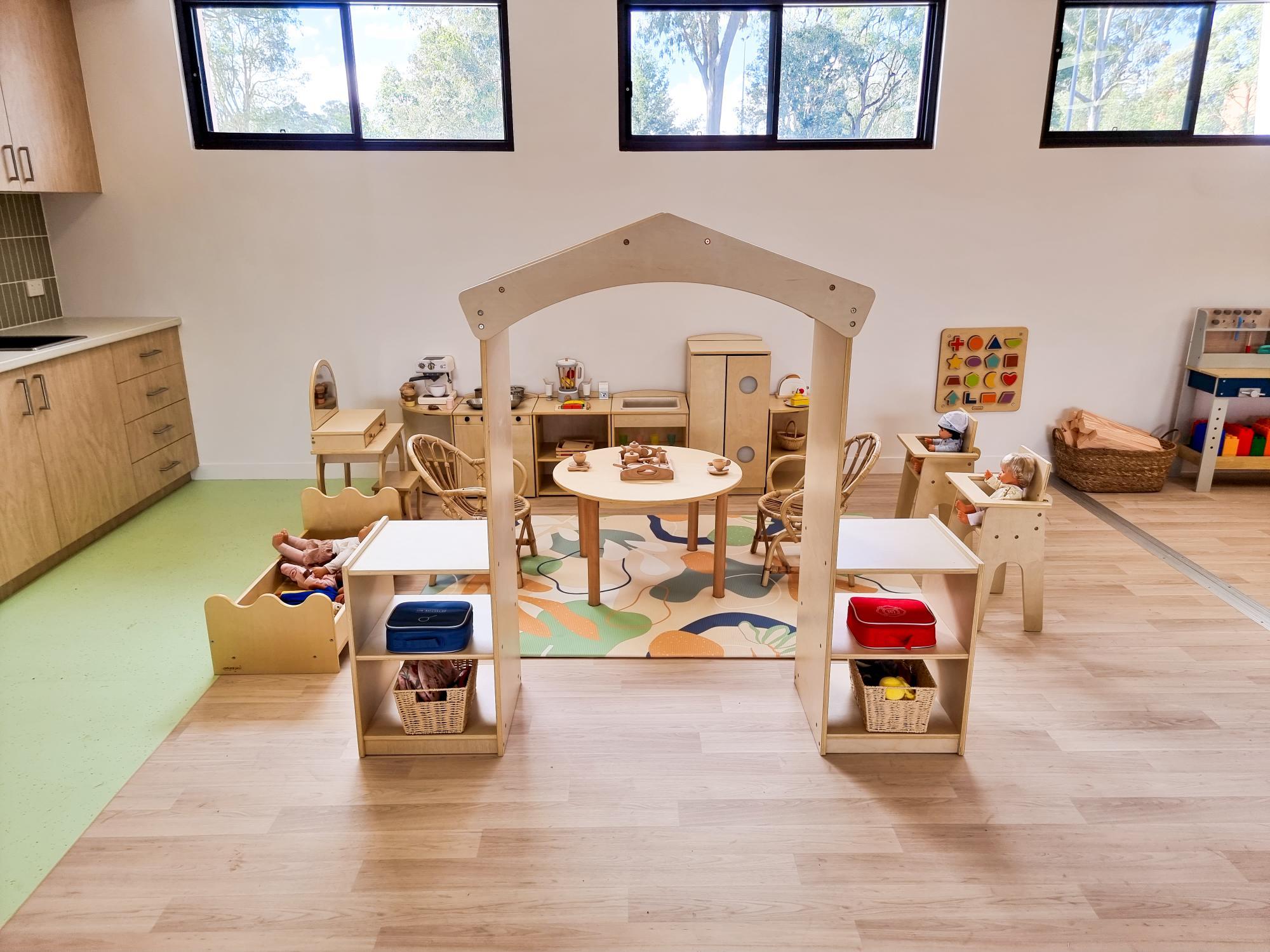
A practical approach is to think in terms of “zones” that match how children actually function in a day. You do not need to copy a catalog setup. You need a space that makes it easy for children to do real work and return it to order.
Where Can I Buy Montessori Furniture?
Once you decide to buy, the question will keep popping up: “Okay, I’m interested. But where do I buy these things?”
The best approach is usually a multi-pronged strategy: combining professional Montessori materials manufacturers, reliable school furniture companies, and various market channels.
Montessori Manufacturers and Suppliers
This category includes companies that design, manufacture, or supply Montessori aligned furniture, often serving schools, daycare centers, and early learning organizations.
- Often support bulk orders for multiple classrooms or full school projects
- May provide classroom layout guidance, sizing recommendations, or customization options
- Suitable for new school openings, large scale upgrades, or programs seeking consistency across rooms
For example, Xiha Montessori, a global Montessori furniture supplier, offers customized classroom furniture solutions known for balancing affordability and functional design. They provide a one-stop service from design to shipping, reducing the burden of procurement.
Online Retailers and Marketplaces
Online stores offer a mix of genuine Montessori furniture and Montessori-inspired items. Be selective to ensure proper sizing and quality.
- Amazon (Montessori Furniture section) – Convenient but variable quality; ideal for smaller items like cube chairs, floor beds, or bookshelves.
- Etsy – A strong source for handmade Montessori furniture; look for highly rated U.S. sellers specializing in child-sized wooden designs.
- Wayfair – Offers Montessori-style furniture and bundles for preschools, though not always strictly Montessori in pedagogy.
Local Brick-and-Mortar Stores and Showrooms
The last category might feel old-school, but it’s still valuable: physical stores and showrooms where you can actually see and touch furniture before you buy.
FAQs
- Is Montessori furniture required to run a Montessori preschool?
While not legally required, authentic Montessori practice depends heavily on furniture that supports independence and a prepared environment. - What age group is Montessori furniture designed for?
Most Montessori preschool furniture is designed for children ages 3–6, with specific sizing options for toddlers and early elementary classrooms. - Can Montessori furniture work in a non‑Montessori preschool?
Yes. Many U.S. preschools use Montessori furniture to encourage independence and improve classroom organization, even without full Montessori programs. - How do I know if furniture is truly Montessori‑aligned?
Look for child‑sized dimensions, open shelving, simple design, and furniture that allows children to choose and return materials independently. - Is Montessori furniture worth the investment?
Yes. Quality Montessori furniture supports long‑term use, reduces classroom management issues, and directly contributes to children’s independence and focus. - How do I know if a chair or table is the right size?
When a child sits, their feet should rest flat on the floor and knees bend comfortably. At the right table height, shoulders stay relaxed and arms rest easily on the surface without hunching. - What should I buy first if my budget is tight?
Prioritize core items: low open shelves and properly sized tables and chairs. These pieces impact daily routines far more than specialty items like learning towers or cube chairs. - How do I explain Montessori furniture to parents on a tour?
Keep it simple: tell them the furniture is child-sized and natural so kids can move, choose work, and clean up independently. Emphasize that the room is designed to build confidence, focus, and real-life skills. - Is Montessori furniture required to be wooden?
No. While natural materials like wood are common, Montessori furniture is not defined by material alone. Safety, durability, and usability matter more than appearance.
Conclusion
Montessori furniture is not merely random decoration, but an educational tool that shapes how children interact with their learning environment. Designed to foster children’s independence, Montessori furniture emphasizes practicality and is based on child development principles, thereby promoting the holistic development of preschool children.
As early childhood education increasingly emphasizes child autonomy, real-world engagement, and differentiated instruction, Montessori furniture offers a research-based, directly applicable classroom solution that supports every step of a child’s development.