The three failure modes that actually hurt children
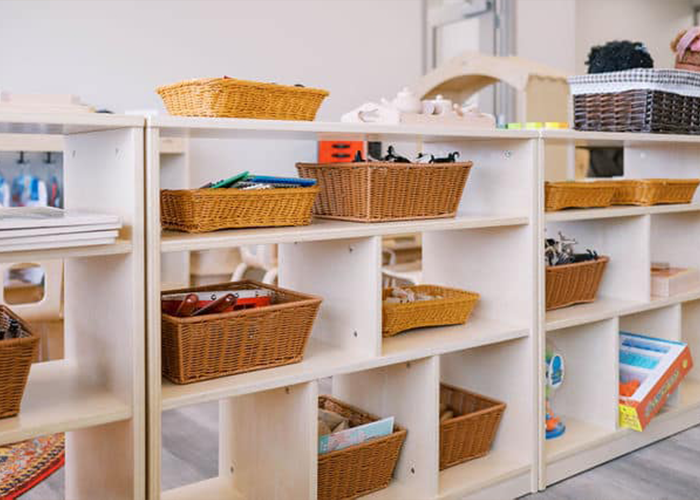
Walk into any preschool classroom and look at the furniture the way an inspector would. Nearly every injury story involving furniture falls into one of three groups: contact with a hard edge, a finger or hand caught in a gap, or a piece that tips when a child leans or climbs it. Standards papers call these mechanical and physical hazards; teachers call them Tuesday afternoon.
The good news for a buyer is that all three are testable. EN 71-1 in Europe and ASTM F963 in the US both contain clause-level checks for edges, tips, gaps, and stability, and the results are recorded as Pass or fail per clause. A supplier who runs real testing can point at clauses. A supplier who says “our furniture is safe” is pointing at nothing.
This page is the checklist we wish every buyer brought to a sample review, with the test evidence from our own reports next to each item.
Item one: rounded edges and tip-free corners
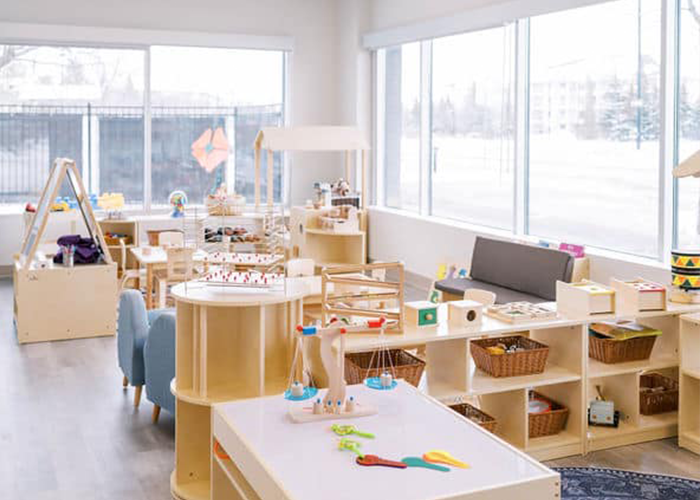
What to check on a sample: run your hand along every edge at a child’s reach height — table tops, shelf fronts, chair backs, tower platforms, climbing rungs. Look for radius work instead of square-cut edges, and check corners where two panels meet.
The test behind it: EN 71-1 clause 4.7 (edges) and clause 4.8 (tips), judged Pass in SGS report SHHL2102005542TY on the Pikler series and in report NBHL2205008296TY on our wooden children’s tables and chairs (for children one year and older). The EN 71-8 report SHHL2102005958TY adds clause 4.1.4, sharp edges and corners on activity toys, Pass, plus clause 4.1.5 on projections — the knob, hook and handle checks.
What we do in production: every edge a hand runs along gets sanded to a radius before finishing. Corners at head height for a standing toddler get the most attention, because that is the geometry of a fall.
Item two: pinch and entrapment gaps
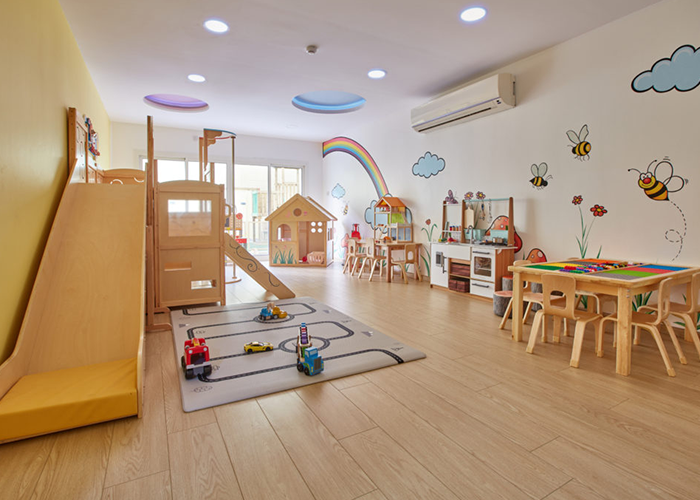
What to check: folding mechanisms first — learning towers, folding chairs, anything with a hinge. Look at where the hinge closes, at finger-width gaps around moving parts, at rung spacing on climbing pieces where a foot or head could wedge in.
The test behind it: ASTM F963-17 clause 4.13.2 (folding mechanism hinge gaps), judged Pass on the Pikler triangle report BCTC2106131273R — with the hinge assembly weighing under half a pound, a detail the report records because hinge mass affects the pinch hazard. EN 71-8 clause 4.3.3 (foot entrapment) is judged Pass on SGS report SHHL2102005958TY, which is the clause covering gaps a small foot can slide into but not pull back out of.
What we do in production: hinge areas are designed so no closing gap matches a child’s finger width, and the folding version of a product is the version that gets tested — not a fixed variant tested while a folding one ships.
Item three: stability and tip-over
What to check: lean on the piece the way a child does — one hand on a shelf edge, one foot on a chair seat, a knee on a table corner. Watch whether the piece shifts. On tall pieces, ask how the load path reaches the floor and whether anti-slip feet are fitted.
The test behind it: EN 71-8 clause 4.4.2 — stability of activity toys with a drop height of 600 mm or less — judged Pass on retest in SGS report SHHL2102005958TY. ASTM F963-17 clause 4.15 (stability and overload) and 4.15.5 (seating overload) are judged Pass in report BCTC2106131273R. EN 71-1 clause 4.15.4 — toys supporting a child’s body weight — is judged Pass in report SHHL2102005542TY. Three labs, three standard sets, the same question answered three ways.
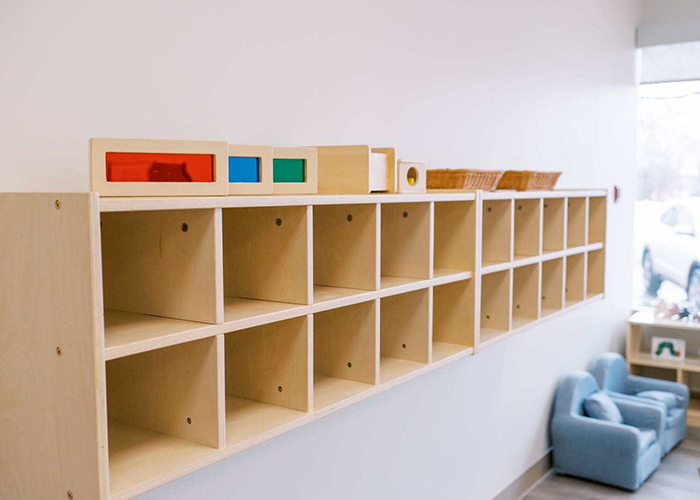
What we do in production: shelf heights are set so the top shelf stays at a child’s reach — the aim is that a three-year-old reaches every toy without climbing. That is also a stability decision: furniture children do not need to climb is furniture children climb less.
The checklist, in the order we would use it
- Edge and corner radius at child reach height — evidence to request: EN 71-1 clause 4.7 and 4.8 results.
- Hinge and folding gap design — evidence: ASTM F963 clause 4.13.2 results on the folding model.
- Rung and shelf gaps — evidence: EN 71-8 clause 4.3.3 foot entrapment result.
- Stability under lean and climb — evidence: EN 71-8 clause 4.4.2, ASTM F963 clause 4.15, EN 71-1 clause 4.15.4.
- Material and finish: E0-grade birch plywood and non-toxic paint as the spec, with our finish schedule running about two primer coats and two topcoats. Ask for the EN 71-2 flammability result on the finished piece.
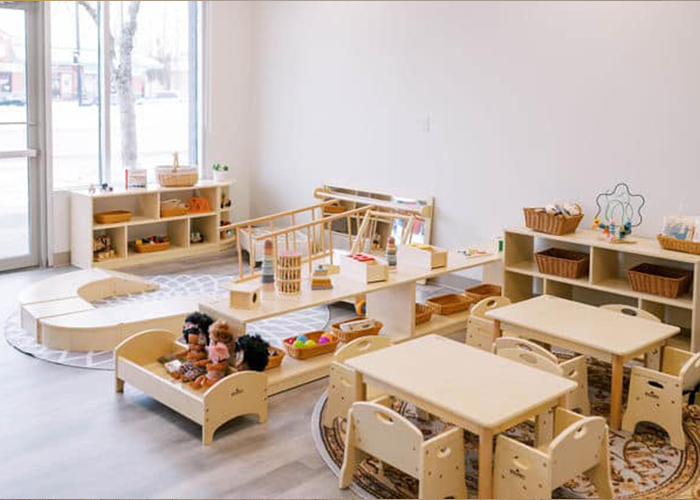
- Age grade on the reports matching your rooms — our reports grade the Pikler series for ages 3 to 5 and the table-and-chair line from one year and older.
- The product description on each report matching the product in your carton.
The reason we publish clause numbers is that this checklist only works if a buyer can verify it. Our furniture reaches over 1,500 kindergartens globally, and we hold sole supplier status for Guidepost Montessori’s 20+ branches — those rooms were won on documentation that survived exactly the kind of reading above.
Send us a photo or drawing of the room you are furnishing and the ages of the children, and we will return a safety-first layout with the report references per item in a few working days.
Factory-direct supply, E0-grade birch plywood and non-toxic paint
Certified: EN71-1/2/3, CE, CPC, EN 1729 (report numbers available on request)
No minimum order · We accept PayPal