Montessori teaches children how to care for themselves, work with focus, communicate respectfully, solve problems, and build academic knowledge through hands-on sequences. These skills develop through purposeful materials, clear routines, choice within limits, and an environment children can use independently. This guide explains the main skill areas and what schools need to provide for them to work in daily classroom life.
The Main Skills Children Learn
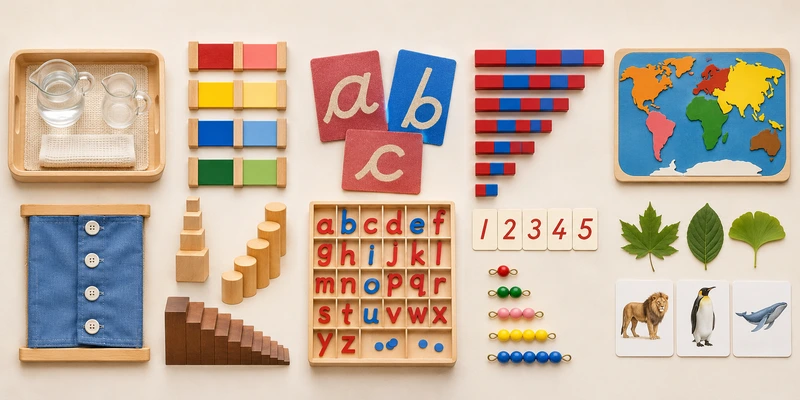
Montessori teaches practical life, motor, sensory, language, math, social, emotional, and executive-function skills. Early childhood programs commonly organize lessons into five main curriculum areas: Practical Life, Sensorial, Language, Mathematics, and Cultural Studies. Independence, concentration, coordination, and problem-solving develop across all five.
| Classroom Area | Skills Children Practice | What You May Observe |
|---|---|---|
| Practical Life | Self-care, order, coordination, responsibility | Pouring, fastening, cleaning, preparing food, and returning tools |
| Sensorial | Comparison, classification, precise vocabulary | Grading size, matching sound, naming texture, and sorting color |
| Language | Listening, speaking, sound awareness, writing, reading | Sound games, letter tracing, word building, and storytelling |
| Mathematics | Quantity, symbols, place value, operations, patterns | Moving from concrete quantities to written number work |
| Cultural Studies | Observation, scientific thinking, geography, art, music | Classifying plants and animals, using maps, and recording observations |
Independence And Practical Life Skills
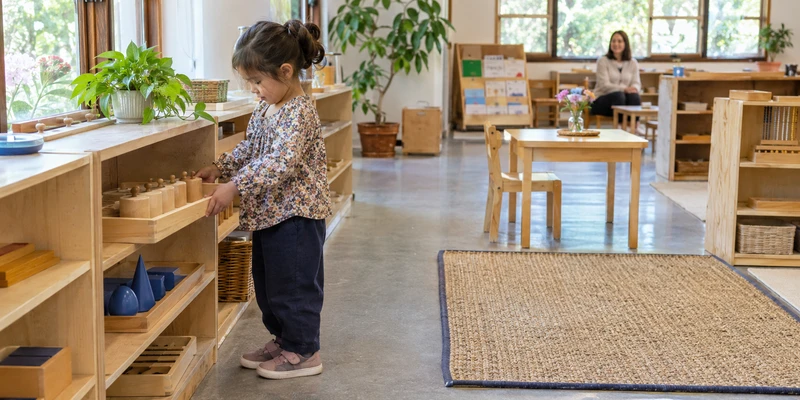
Practical Life gives children real tasks they can complete with increasing independence. A child may carry a tray, pour water, fasten clothing, wipe a table, arrange flowers, or prepare a simple snack. Each task has a visible purpose and a sequence that can be repeated.
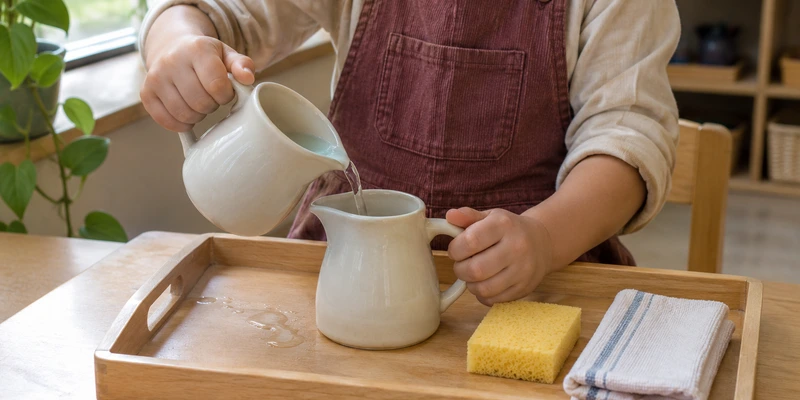
The direct skill may be pouring without spilling. The same activity also asks the child to remember steps, control hand movement, notice an error, clean the workspace, and return every item. This is why a well-prepared Practical Life area supports self-care, order, coordination, and responsibility at the same time.
For a school, accessibility is part of the lesson. Tools should be light enough for the intended child to handle, arranged in working order, and stored where the child can reach and return them. “Child-sized” is not one universal measurement. Check the actual dimensions and weight against the children who will use the item, the task, and the shelf position.
Concentration, Order, And Executive Function
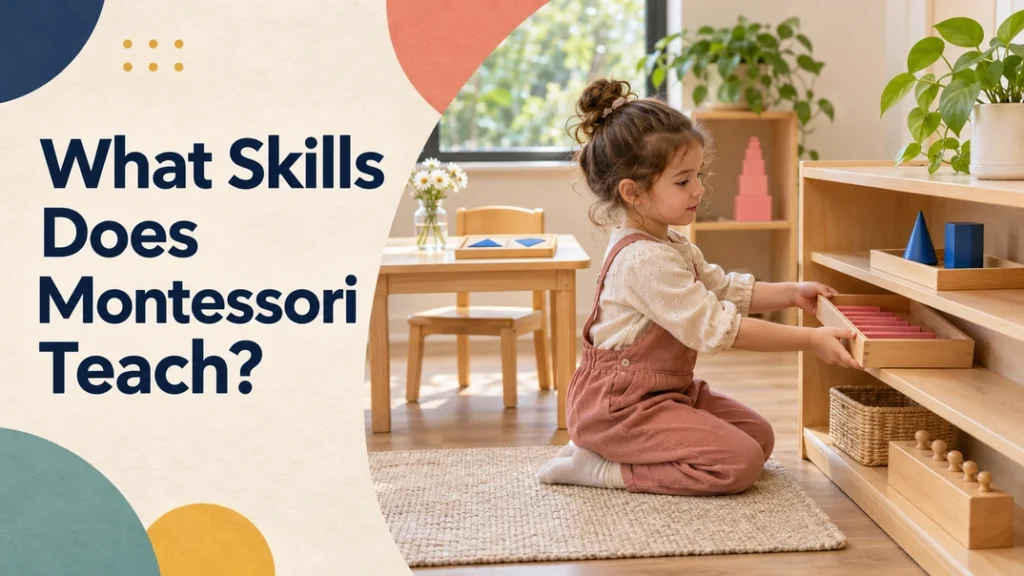
Montessori work asks a child to choose an available activity, carry it to a work area, follow a sequence, repeat it, notice the result, and restore the materials. That cycle exercises attention, working memory, planning, impulse control, and task completion.
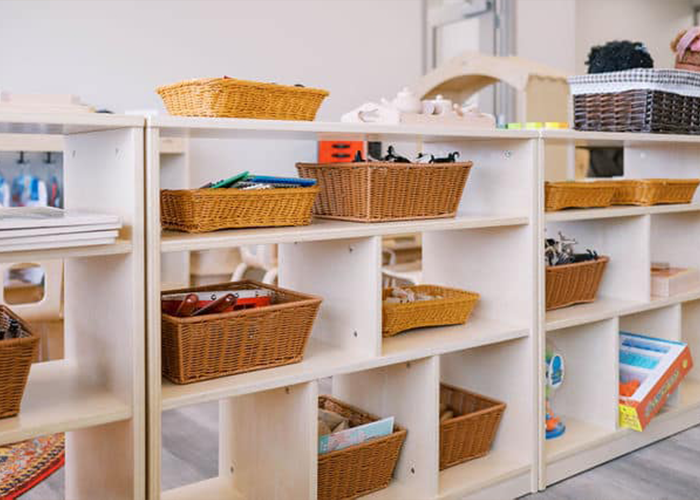
Choice works because it has clear limits. The teacher presents suitable lessons, observes readiness, and decides what is available. The child chooses from that prepared range. Shelves crowded with disconnected toys make selection and completion harder; a smaller, ordered set of lessons gives each item a clear purpose and home.
Research should be read with care because program quality and implementation vary. A 2025 national randomized study reported stronger end-of-kindergarten results in reading, short-term memory, executive function, and social understanding for children offered Montessori preschool. The study also had attrition, so it supports a promising connection, not a guarantee for every program or child.
Fine Motor, Gross Motor, And Coordination Skills
Movement is built into Montessori learning. Carrying a tray, rolling a mat, transferring objects, tracing a letter, fitting a cylinder, and walking carefully around another child all require controlled movement. Repetition refines grip, wrist rotation, hand-eye coordination, balance, and awareness of space.
Material and furniture choices can support or obstruct that practice. Handles that are difficult to grasp, trays that are too heavy, unstable work surfaces, and crowded paths add demands unrelated to the lesson. Before ordering, test how a child lifts, carries, places, uses, and returns each item. Keep enough clear floor and table space for the complete movement.
Language And Communication Skills
Montessori language work develops listening, vocabulary, sound awareness, handwriting preparation, word building, reading, and oral expression. A sequence may begin with naming real objects and playing sound games, then move through tactile letter forms, movable letters, written words, sentences, and reading.
Communication also appears in daily routines. Children practice how to wait, ask for help, join a conversation, listen without interrupting, and solve a disagreement. These Grace and Courtesy lessons give children specific words and actions for living in a group; they are taught and modeled, not left to chance.
Mathematical Thinking
Montessori math moves from quantities children can touch and compare toward symbols and abstract operations. Children connect number names to quantities, explore the decimal system and place value, and later work with addition, subtraction, multiplication, division, fractions, and geometry at an appropriate level.
The sequence matters as much as the individual material. Buying a few recognizable items may create an attractive shelf but leave gaps between lessons. When you plan a classroom, map each item to the skill that comes before it and the next presentation. Xiha Montessori’s Montessori materials collection is organized by curriculum area, which helps buyers compare individual materials with complete classroom sequences.
Sensory Discrimination And Scientific Thinking
Sensorial materials help children notice and name precise differences in size, shape, color, texture, sound, weight, and form. A material usually isolates one quality so the child can compare, match, grade, or classify without unrelated features hiding the concept.
Those habits carry into science and cultural work. Children observe carefully, sort evidence, learn accurate vocabulary, and look for relationships. Geography, botany, zoology, history, art, and music expand the same process from a controlled material to the wider world.
Social And Emotional Skills
Montessori classrooms provide structured practice in respect, patience, self-regulation, cooperation, and care for a shared environment. Mixed-age groups can create opportunities for younger children to observe experienced classmates and for older children to model routines or offer help.
Many lessons are individual, so social development does not depend on constant group work. It grows through shared space, small collaborations, peer teaching, conflict-resolution language, and the responsibility to use materials without disrupting another child’s work. The adult still observes, models behavior, and intervenes when safety or respect requires it.
Creativity And Problem-Solving
Many Montessori materials have a defined use and a way for the child to notice an error. This structure encourages careful reasoning: the child compares the result with the material, revisits the sequence, and tries again before asking an adult to supply the answer.
Creativity develops through language, art, music, cultural studies, construction, research, and extensions of mastered lessons. Accurate knowledge gives children material for original ideas. A balanced classroom therefore needs both sequenced Montessori work and suitable opportunities to express, combine, and apply what children know.
How The Classroom Setup Supports These Skills
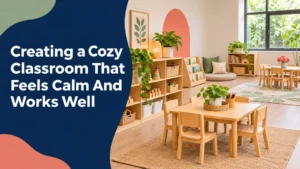
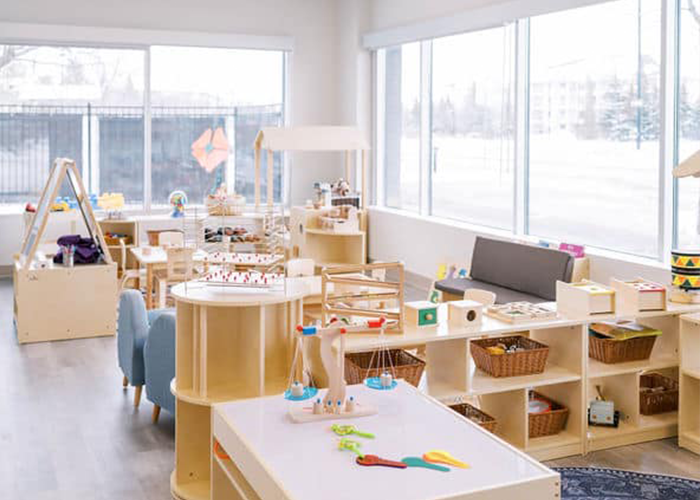
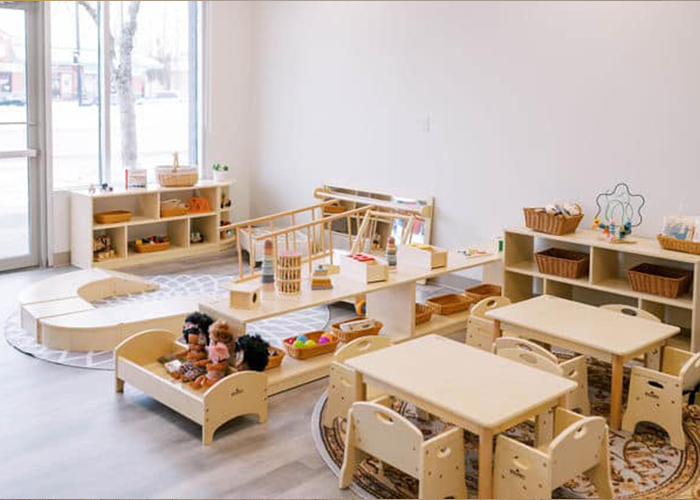
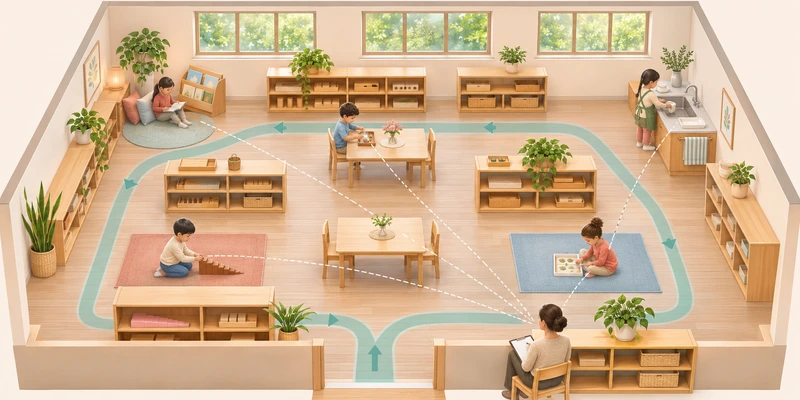
A prepared Montessori environment uses accessible furniture, varied workspaces, ordered materials, and careful adult observation to support independent activity. The room should make the intended behavior possible without the teacher fixing the setup throughout the day.
| Setup Decision | Skill It Supports | What To Check |
|---|---|---|
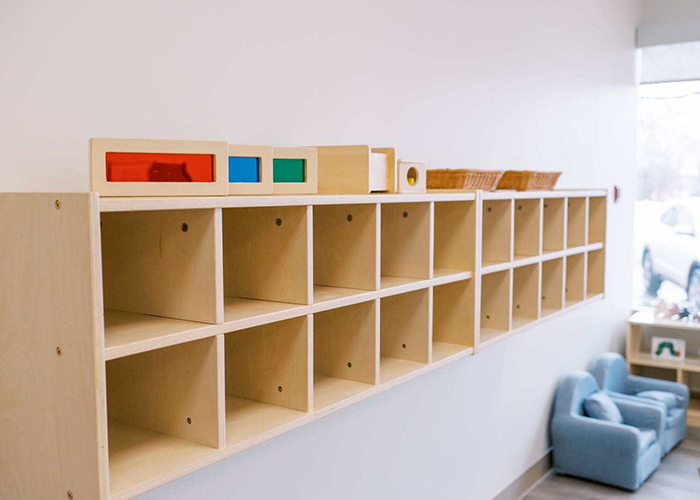
| Open, stable storage within reach | Choice, independence, and returning work | Actual child reach, shelf position, product stability, and teacher sightlines |
| One clear home for each complete activity | Order, memory, and task completion | Tray size, complete pieces, labels where useful, and space for the full sequence |
| Tables, floor mats, and quiet work areas | Concentration and controlled movement | Fit for the activity, room circulation, and separation from busy routes |
| Clear paths between shelves and work areas | Balance, coordination, and respect for others | Real movement patterns, door swings, supervision, and local access requirements |
| Documented inspection and replacement routines | Self-correction and lesson continuity | Missing parts, damage, cleaning guidance, spare pieces, and supplier support |
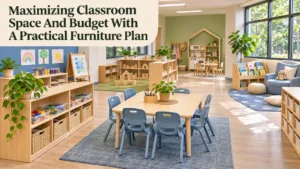
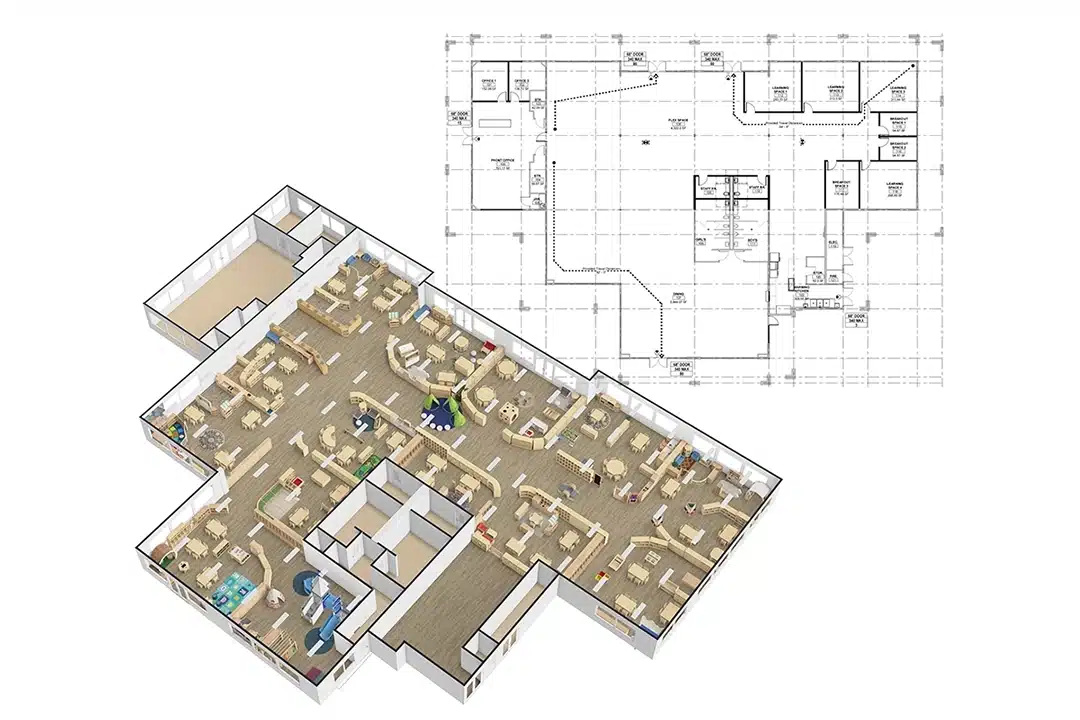
Shelf height alone cannot guarantee independence or an unobstructed view. Choose Montessori furniture after comparing children’s reach, the materials to be stored, room layout, stability, and the teacher’s observation points. A floor plan test is more reliable than applying one dimension to every age group and classroom.
What School Leaders Should Check Before Ordering
Start with the skills and lesson sequence, then build the product list. Confirm these points before approving a classroom order:
- Curriculum coverage: Identify the Practical Life, Sensorial, Language, Math, and Cultural lessons required for the age group.
- Progression: Check that foundational, intermediate, and later materials connect without major gaps.
- Complete contents: Record every component in multi-piece materials and confirm how missing pieces can be replaced.
- Child use: Verify dimensions, weight, grip, work surface, and carrying route with the intended age group.
- Storage footprint: Compare the full set with available shelf width, depth, and room layout before ordering.
- Daily maintenance: Confirm cleaning guidance, inspection needs, finish compatibility, and whether parts can be replenished.
- Project evidence: Request current specifications and any required test or compliance documents for the exact product and destination market.
This process prevents a common purchasing problem: a long material list that looks complete on a quotation but cannot be displayed, carried, maintained, or taught as a usable sequence. If you are planning a new room, test the list against a classroom design before production and packing are finalized.
Common Misunderstandings About Montessori Skills
Does Choice Mean Children Can Do Anything?
No. Children choose from lessons they are ready to use and follow limits that protect people, materials, and the work of others. Freedom depends on preparation, presentation, observation, and consistent classroom routines.
Does Independence Mean Adults Stop Helping?
No. The adult prepares the environment, demonstrates each lesson, observes closely, and gives the minimum useful help. Support changes as the child gains control; it does not disappear.
Can Any Wooden Toy Teach Montessori Skills?
No. Material, color, and appearance do not define the lesson. A useful Montessori material has a clear developmental purpose, a suitable sequence, accurate construction, and a presentation the teacher understands. Buyers should ask what skill the material isolates and where it belongs in the progression.
FAQ About Montessori Skills
Does Montessori Teach Academic Skills?
Yes. Montessori teaches language, reading, writing, mathematics, science, geography, history, art, and music through developmentally sequenced lessons. The hands-on materials help children connect concrete experience with abstract ideas.
Does Montessori Teach Teamwork?
Yes. Children collaborate in selected lessons, cultural projects, classroom care, peer teaching, and daily social routines. They also learn how to work independently beside others without interrupting them.
At What Age Do Montessori Skills Begin?
They begin in infancy with movement, communication, order, and participation in daily care. The activities and level of independence change with development. Schools should select materials and furniture for the specific age range and observed readiness of the children.
How Can A School Tell If Its Material List Is Balanced?
Map every item to a curriculum area, lesson level, prerequisite, and next step. Then check whether the room has enough suitable storage and work space. Repeated items, progression gaps, incomplete sets, and materials with no clear presentation should be resolved before ordering.
Plan Materials And Furniture Around The Skills
Montessori develops practical, academic, physical, social, and self-management skills through a connected system of lessons and classroom routines. Define the skills for each age group, map the material sequence, and test how children will access, use, return, and maintain every item. Xiha Montessori can help you turn that plan into a room-by-room material and furniture list.