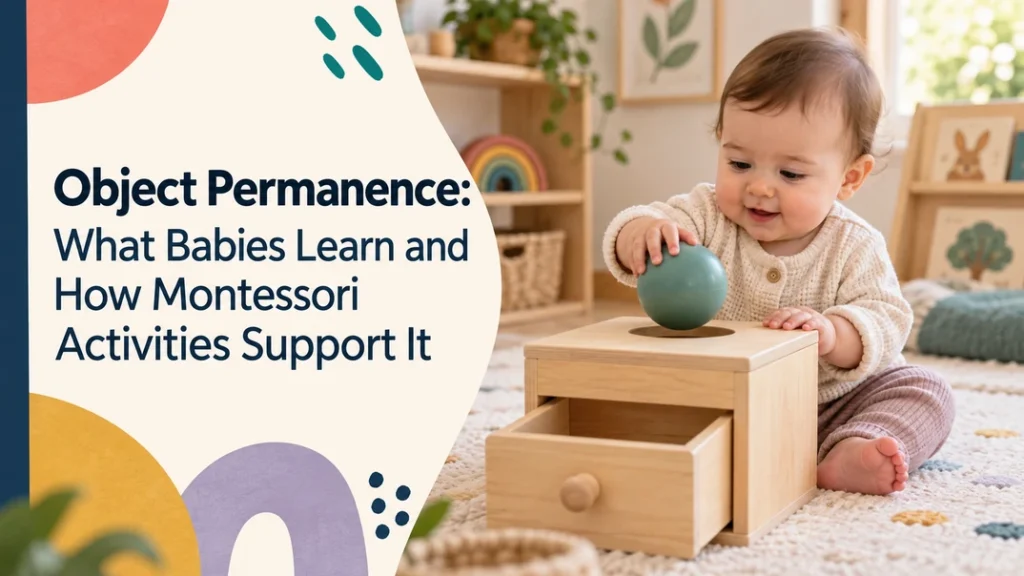
If your baby watches a toy disappear but does not immediately search for it, that does not mean learning has stopped. Object permanence develops gradually through repeated, reassuring experiences: you help your baby watch something disappear, find it again, and eventually take over the search. This guide shows you what to look for and how to prepare safe Montessori experiences at home or in an infant classroom.
What Does Object Permanence Mean?
Object permanence means that you understand a person or object continues to exist even when you cannot see it. For your baby, a ball hidden under a cloth has not simply vanished; your baby is gradually learning that the ball can still be found.
You may see this understanding develop through small changes rather than one dramatic milestone. Your baby may first watch the object disappear, then look toward the place where it went, and later reach, pull, open, or search to retrieve it. It is a developing understanding, not a skill that appears on one exact birthday.
If you are reviewing the sensorimotor period more broadly, a guide to Piaget’s stages of cognitive development gives you related background. Use that background to understand development, not to turn your baby’s play into a pass-or-fail test.
When Can You Expect to See Object Permanence?
Object permanence develops gradually, so one rigid age should not become a deadline. The American Academy of Pediatrics explains that babies begin to understand that objects continue to exist when out of sight during the early months, while active searching becomes easier as attention, memory, and movement develop. Its cognitive development guide for 4- to 7-month-olds also connects peekaboo with this learning.
When you observe your baby, look for the strategy rather than only the final result:
| What you may see | What it may suggest | What you can do next |
|---|---|---|
| Your baby watches a ball roll behind a low barrier | Your baby notices that the object has changed position | Roll it slowly again and leave time for your baby to look |
| Your baby looks toward the place where the ball disappeared | Your baby may expect the ball to still be there | Keep the hiding place simple and predictable |
| Your baby reaches for a partly covered object | Your baby is combining attention with a physical search | Expose part of a large, easy-to-grasp object |
| Your baby pulls away a cloth or opens a drawer | Your baby is using a purposeful retrieval strategy | Let your baby repeat the movement without rushing |
| Your baby watches but does not reach | Your baby may be building attention before showing the skill through movement | Reduce distractions and try again when your baby is rested |
Your baby’s response can change with fatigue, hunger, temperament, familiarity, and motor ability. A baby who cannot yet crawl or pull a drawer may understand more than the baby can demonstrate through movement.
Why Should You Include Object Permanence in an Infant Montessori Environment?
The material is useful when the action and result are easy for your baby to connect. A well-matched activity lets your baby place or drop an object, watch it disappear, and find it again. That sequence gives your baby a reason to focus, repeat an action, and notice what changes when the same movement is made again.
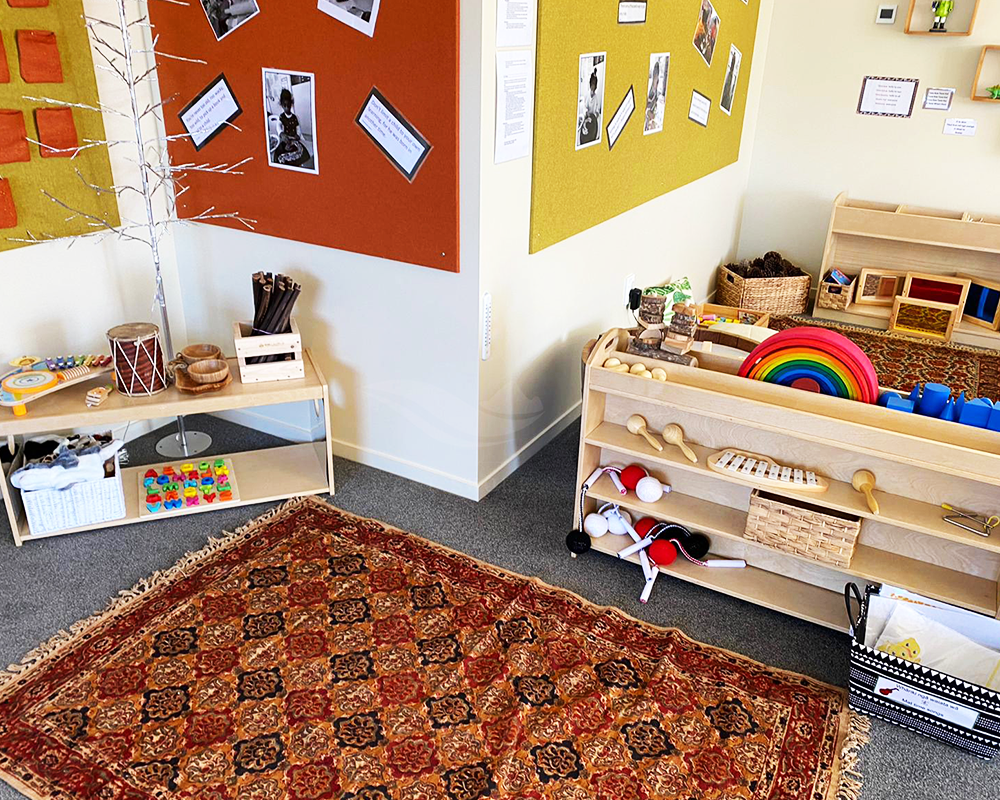
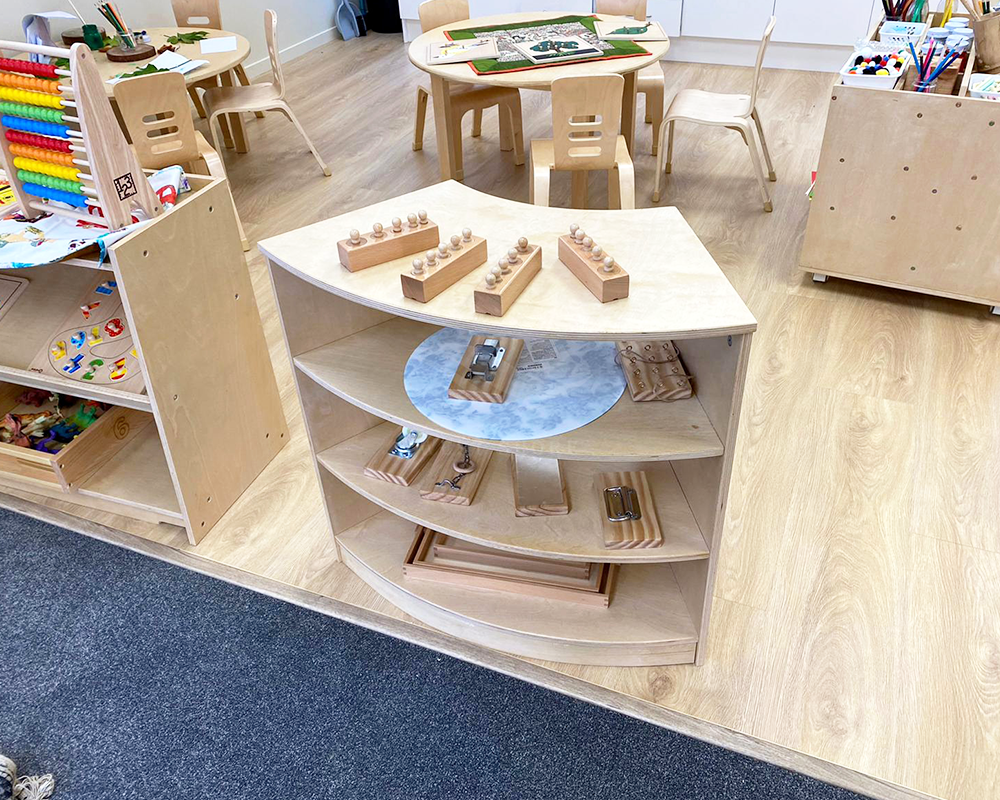
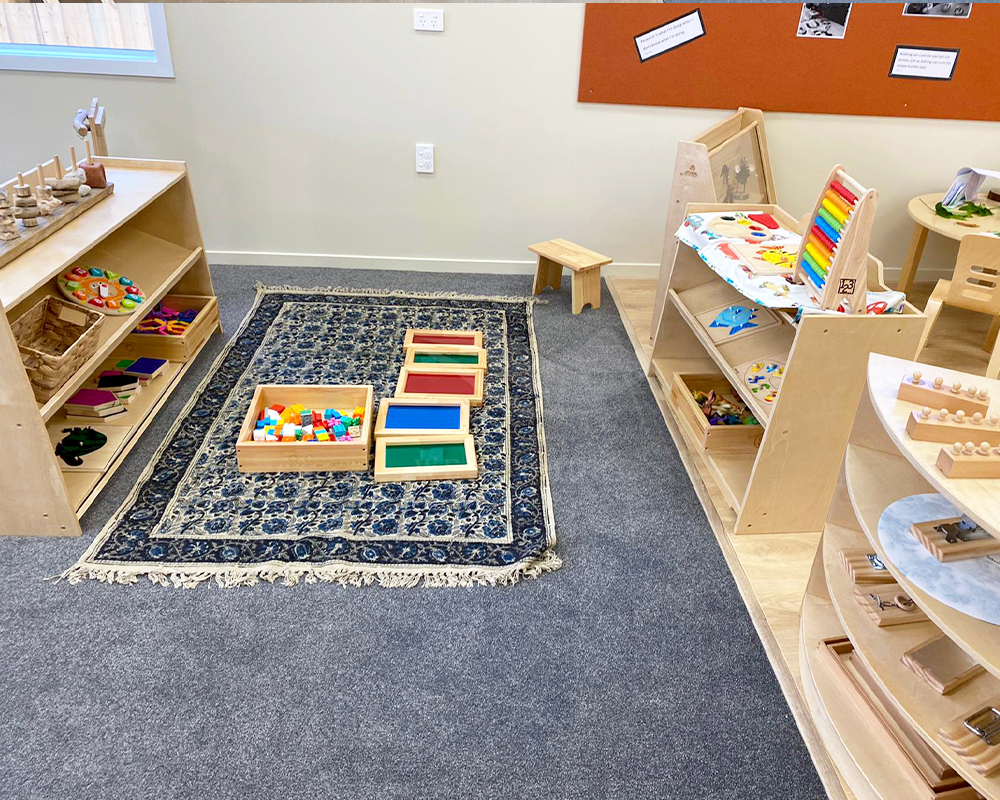
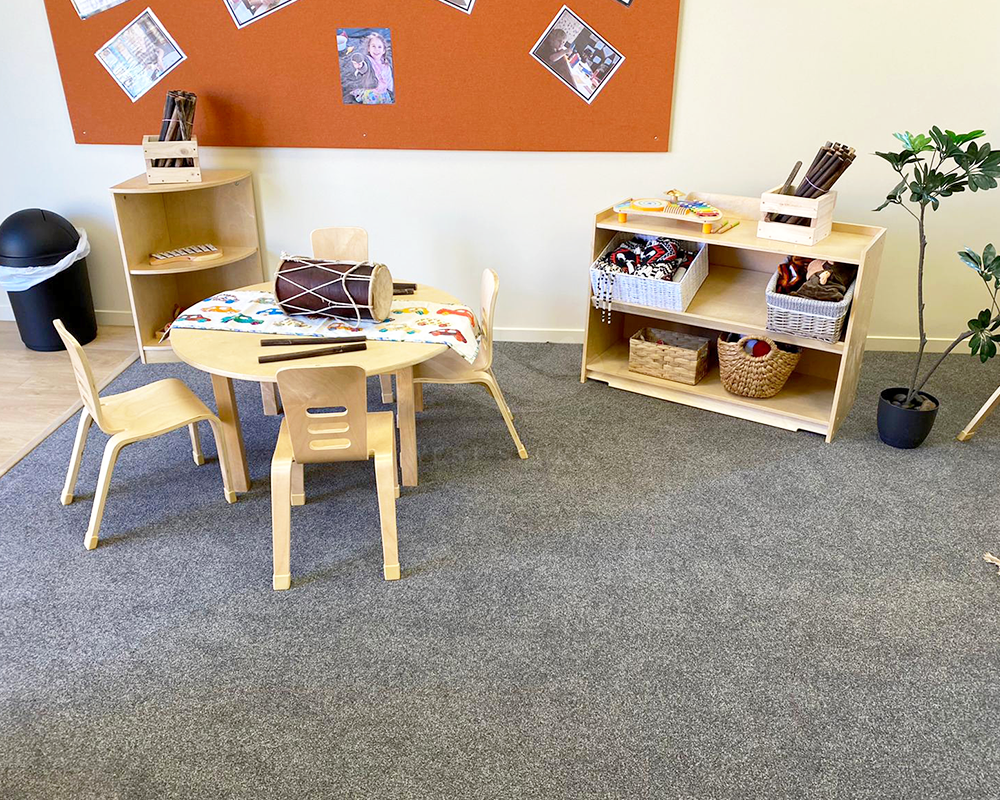
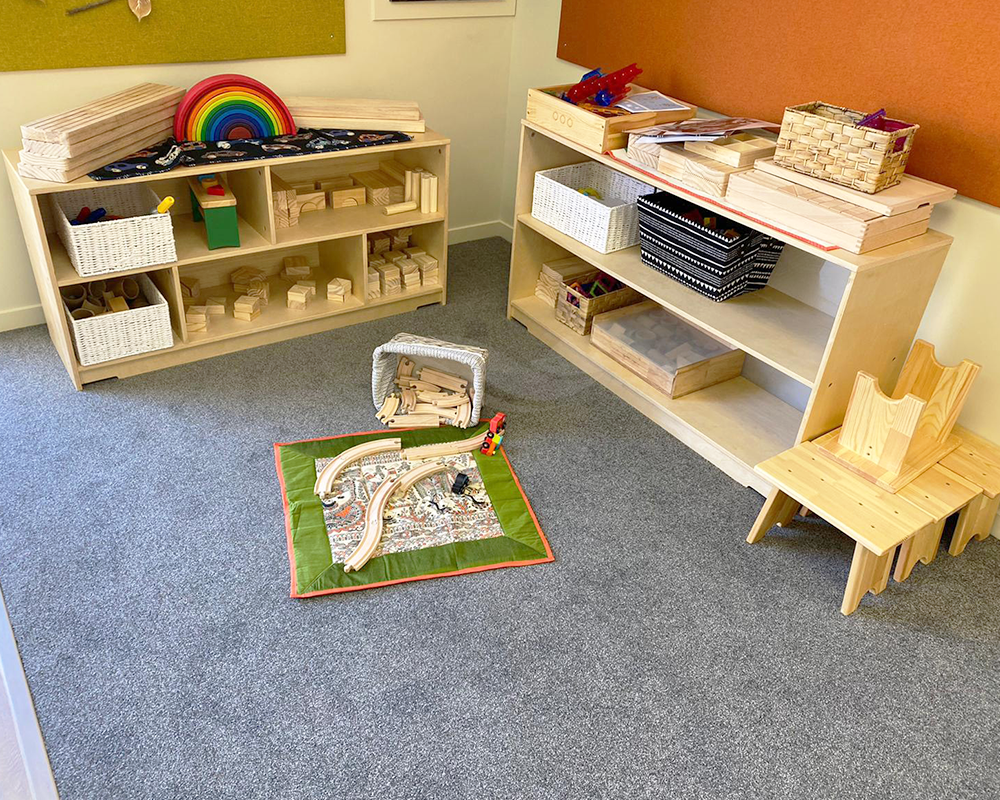
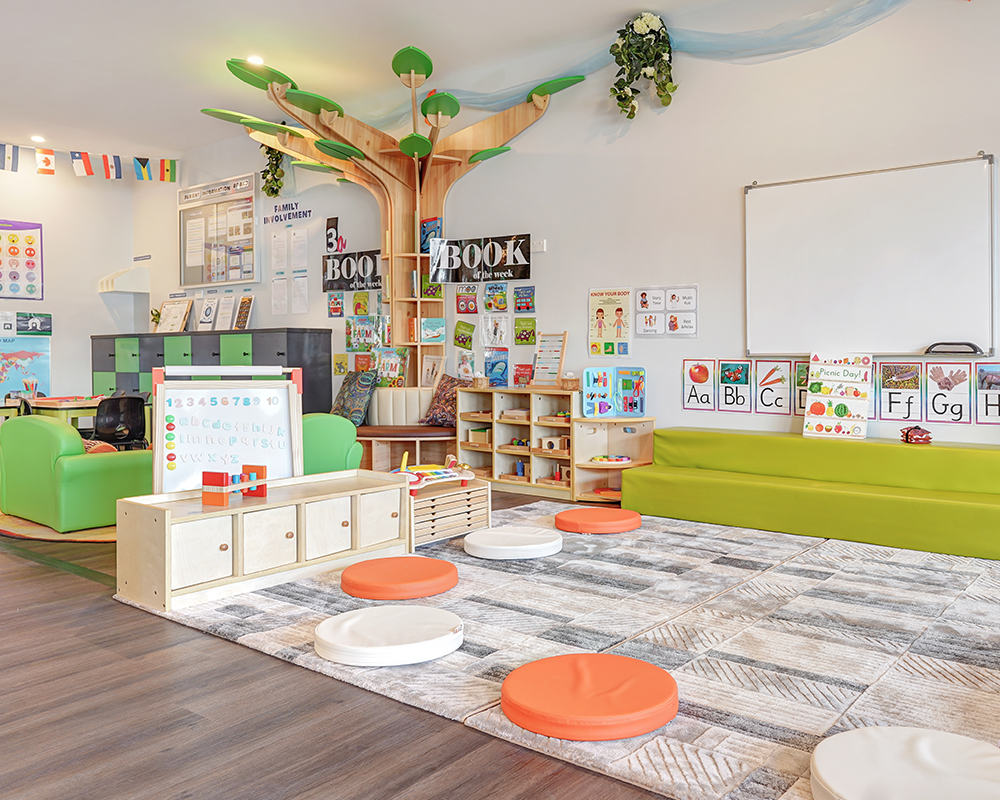
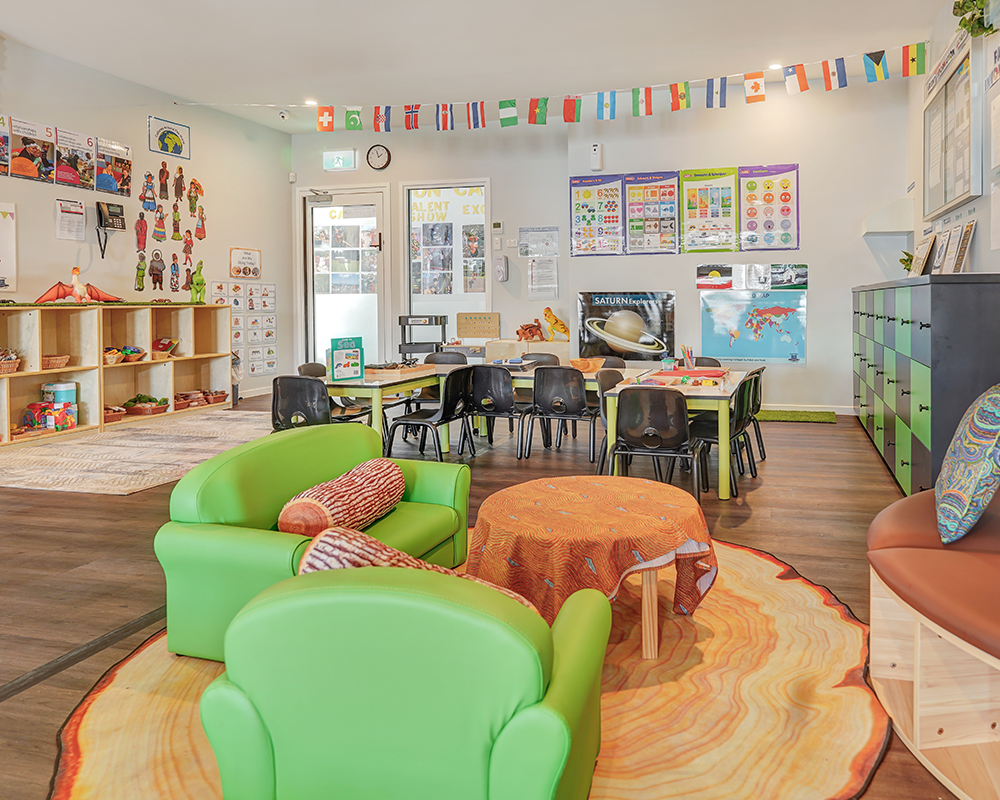
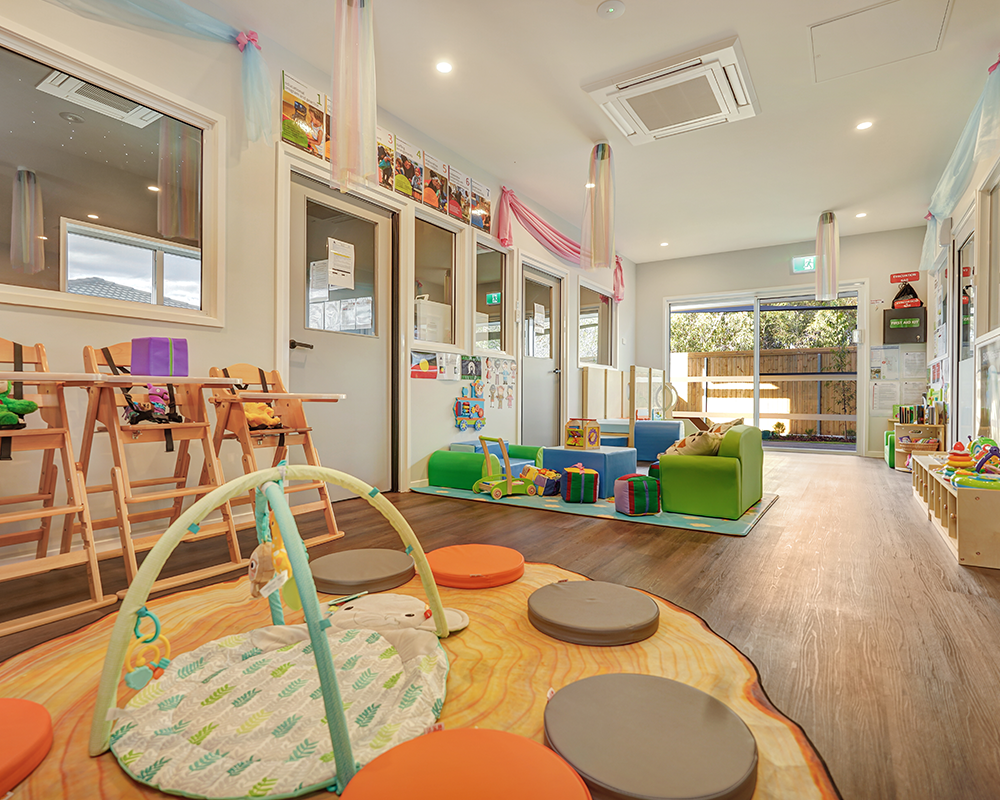
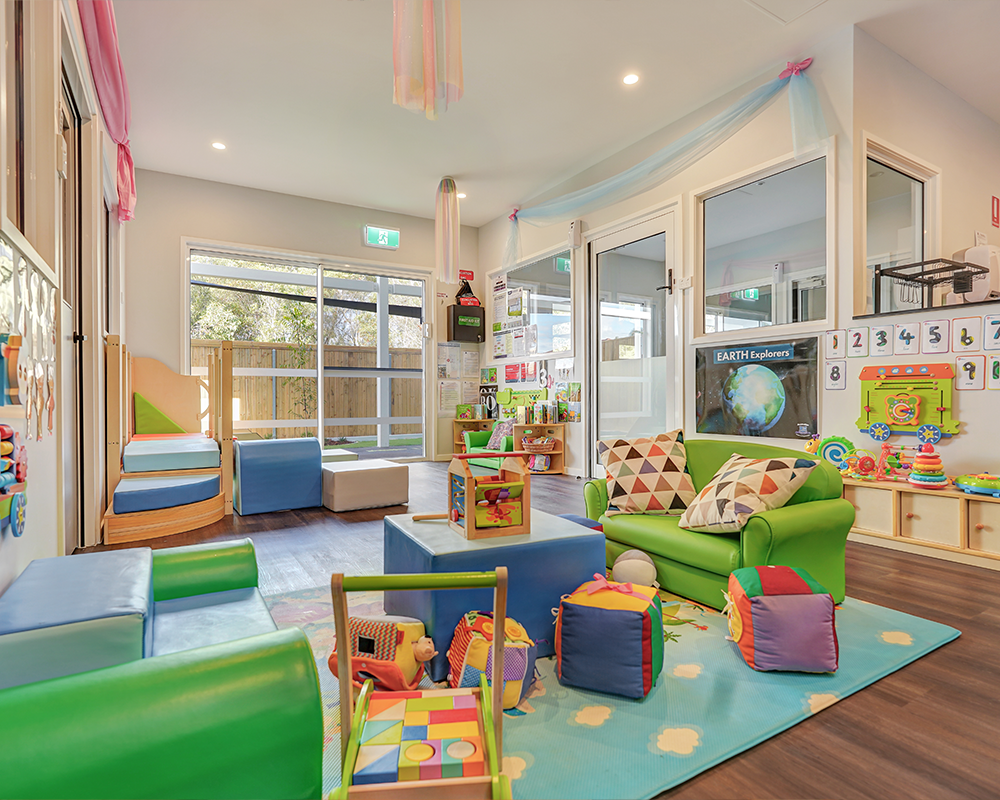
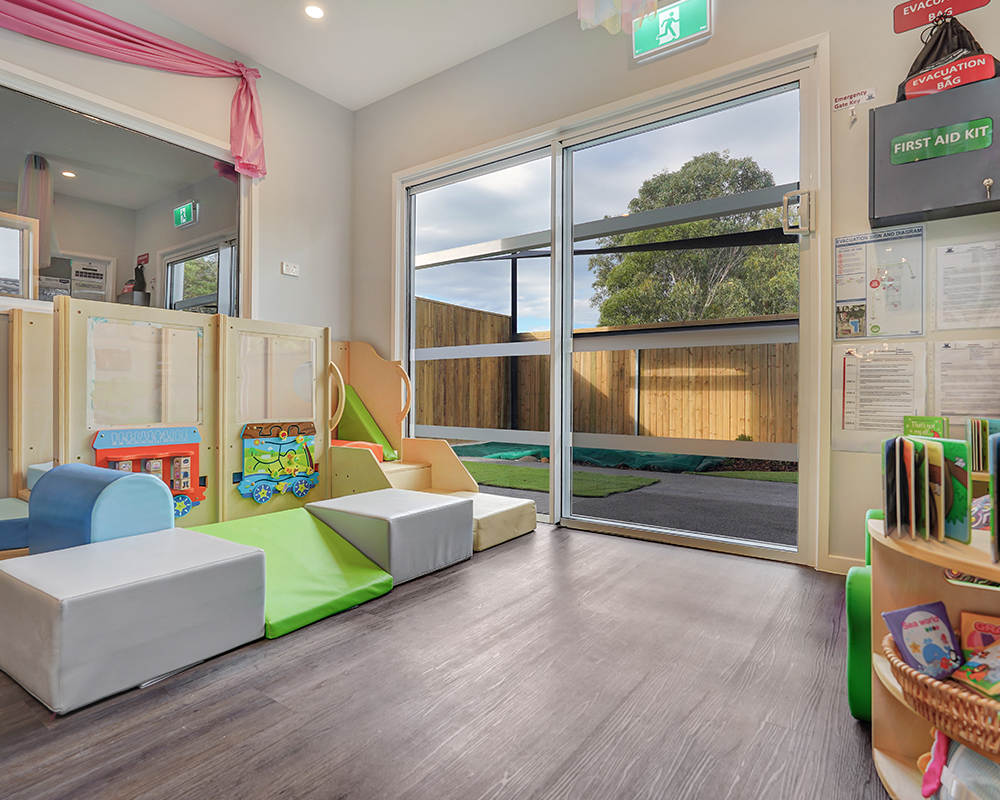
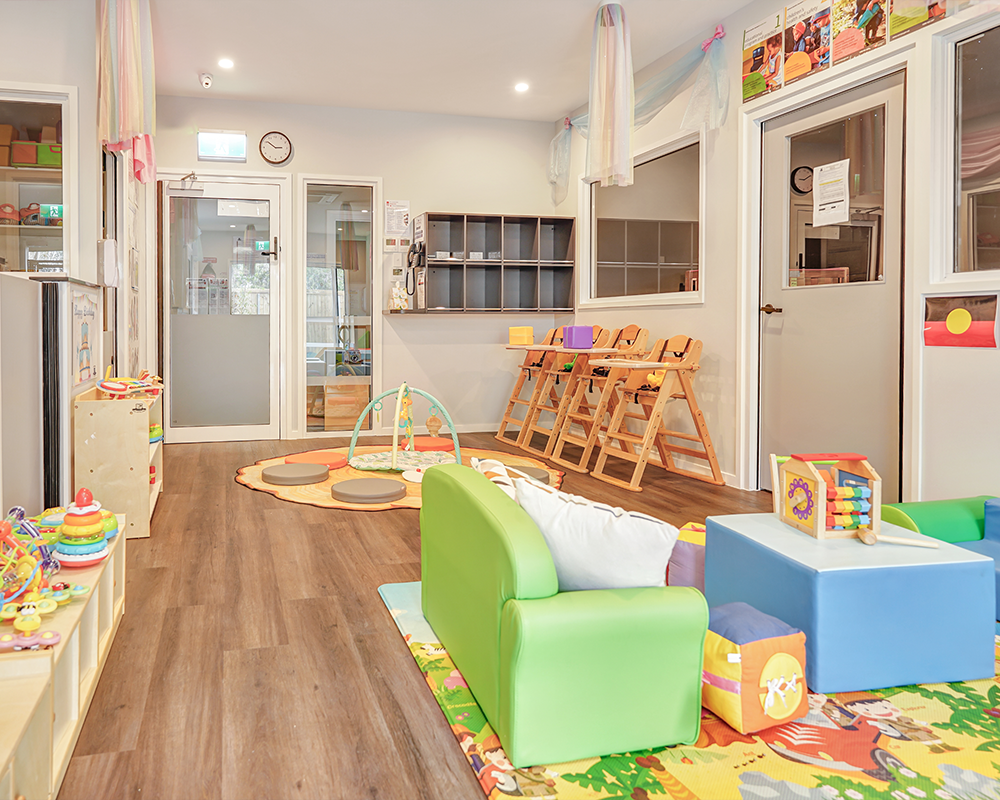
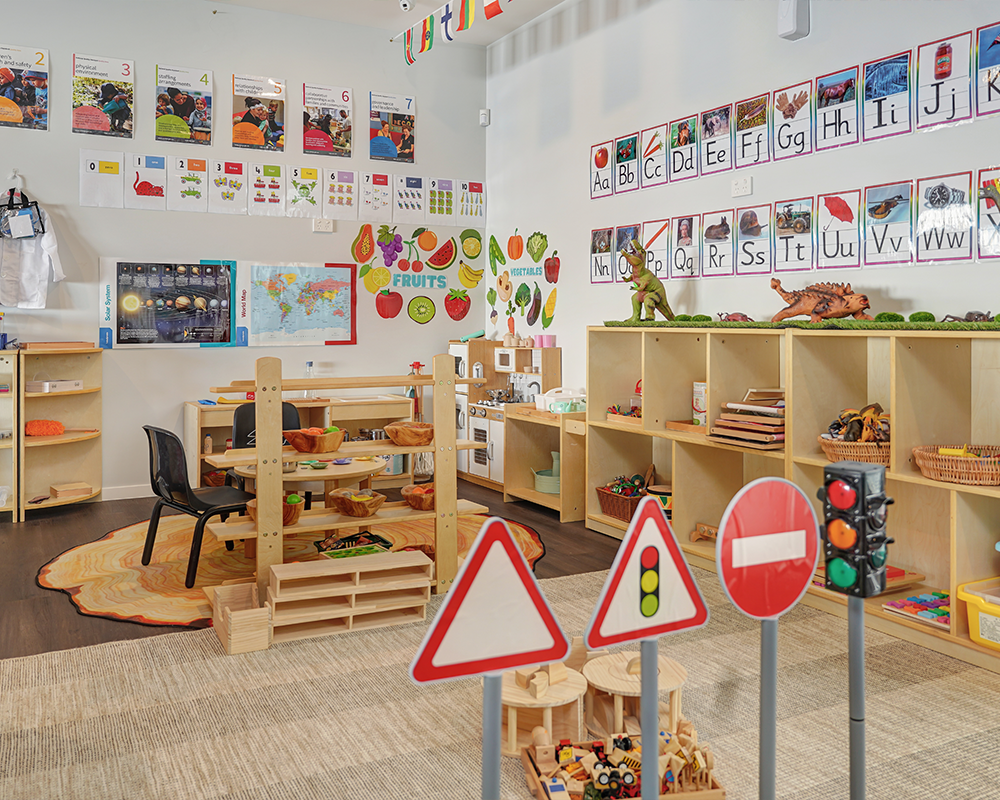
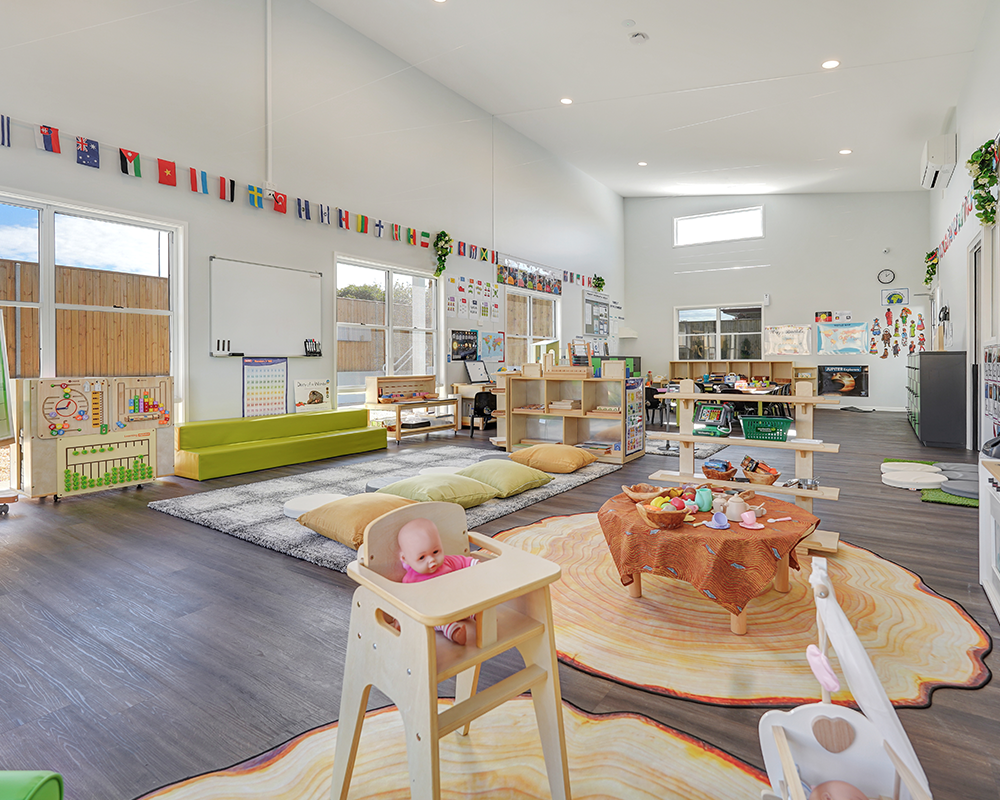
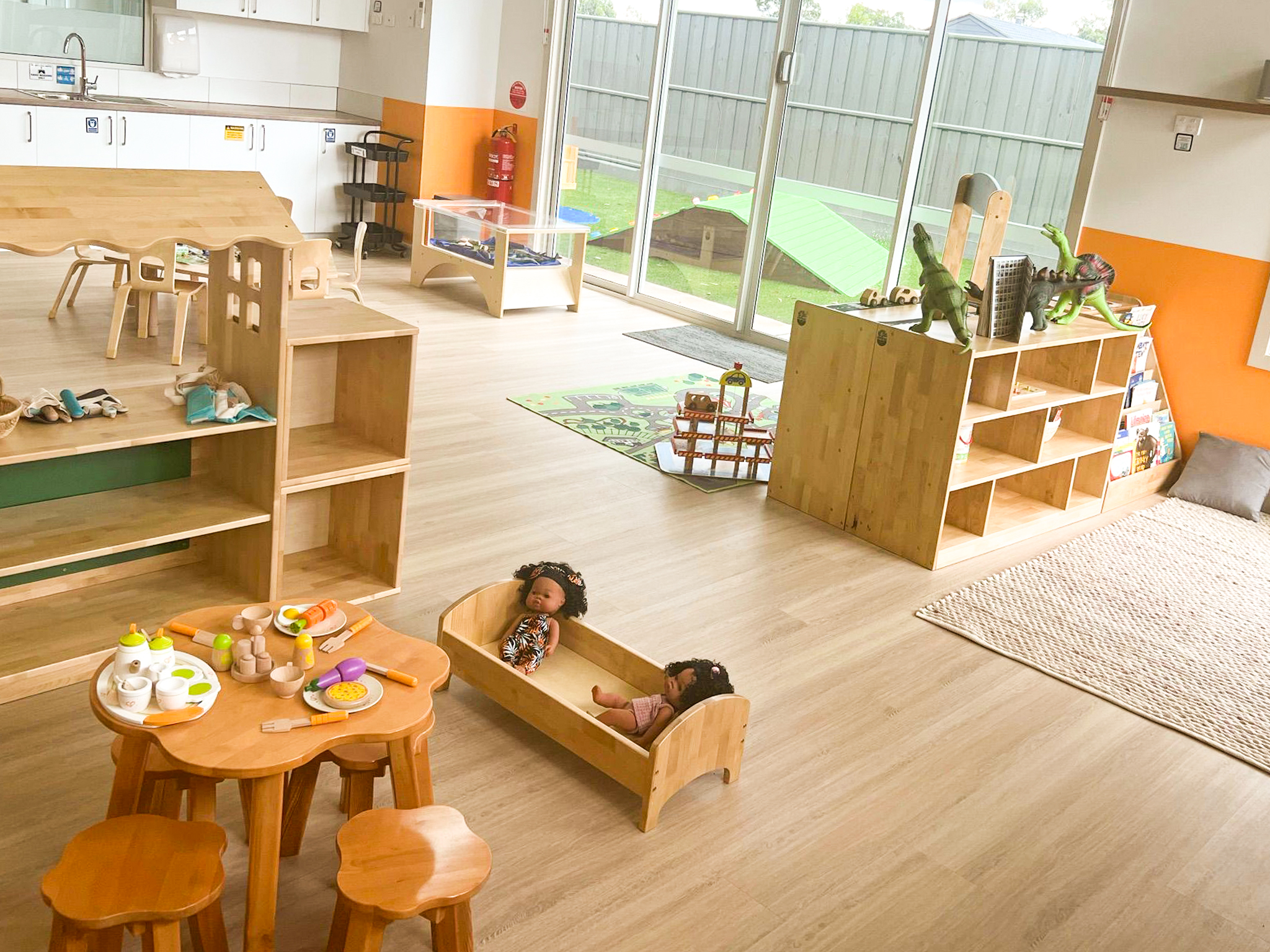
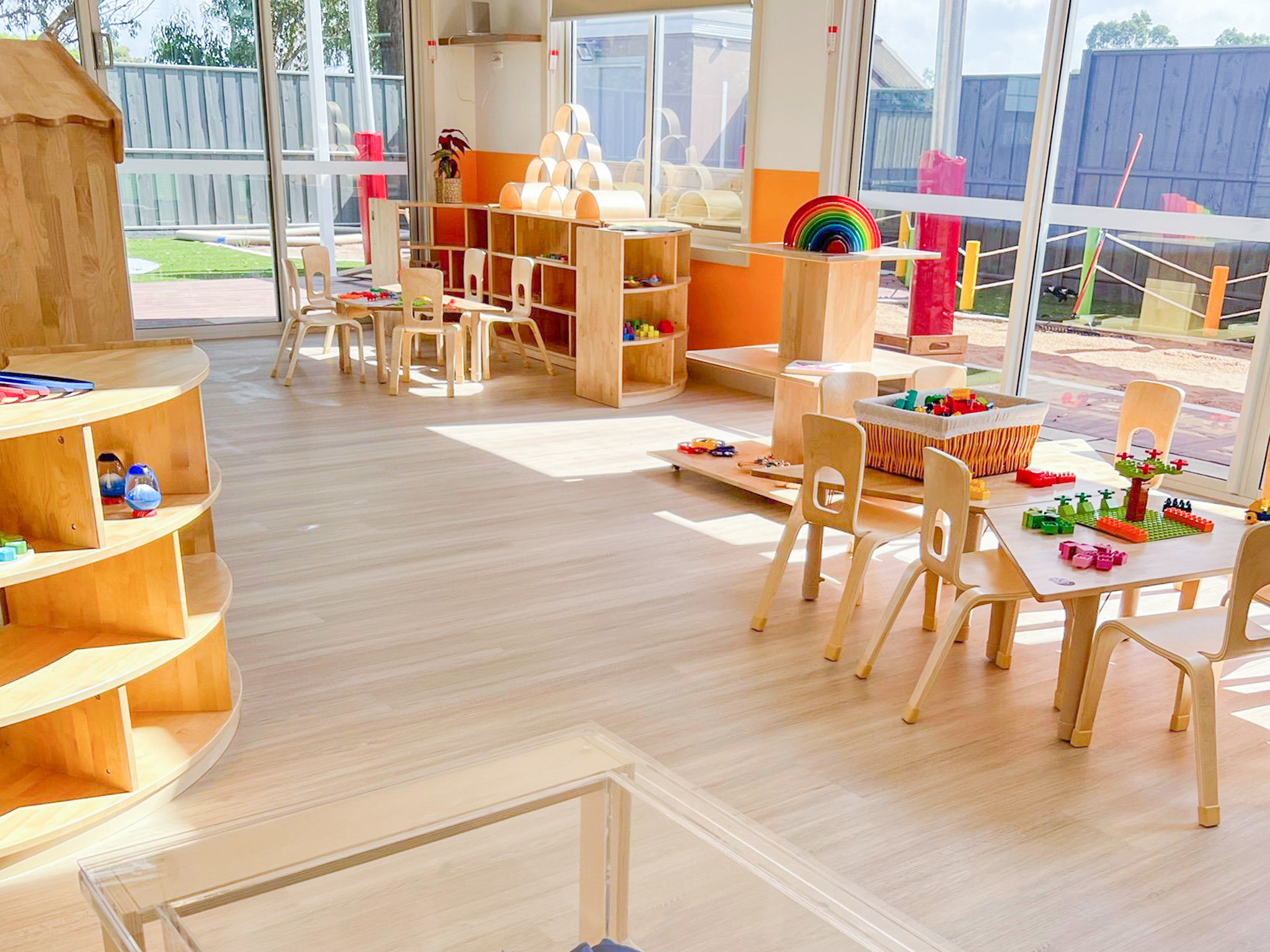
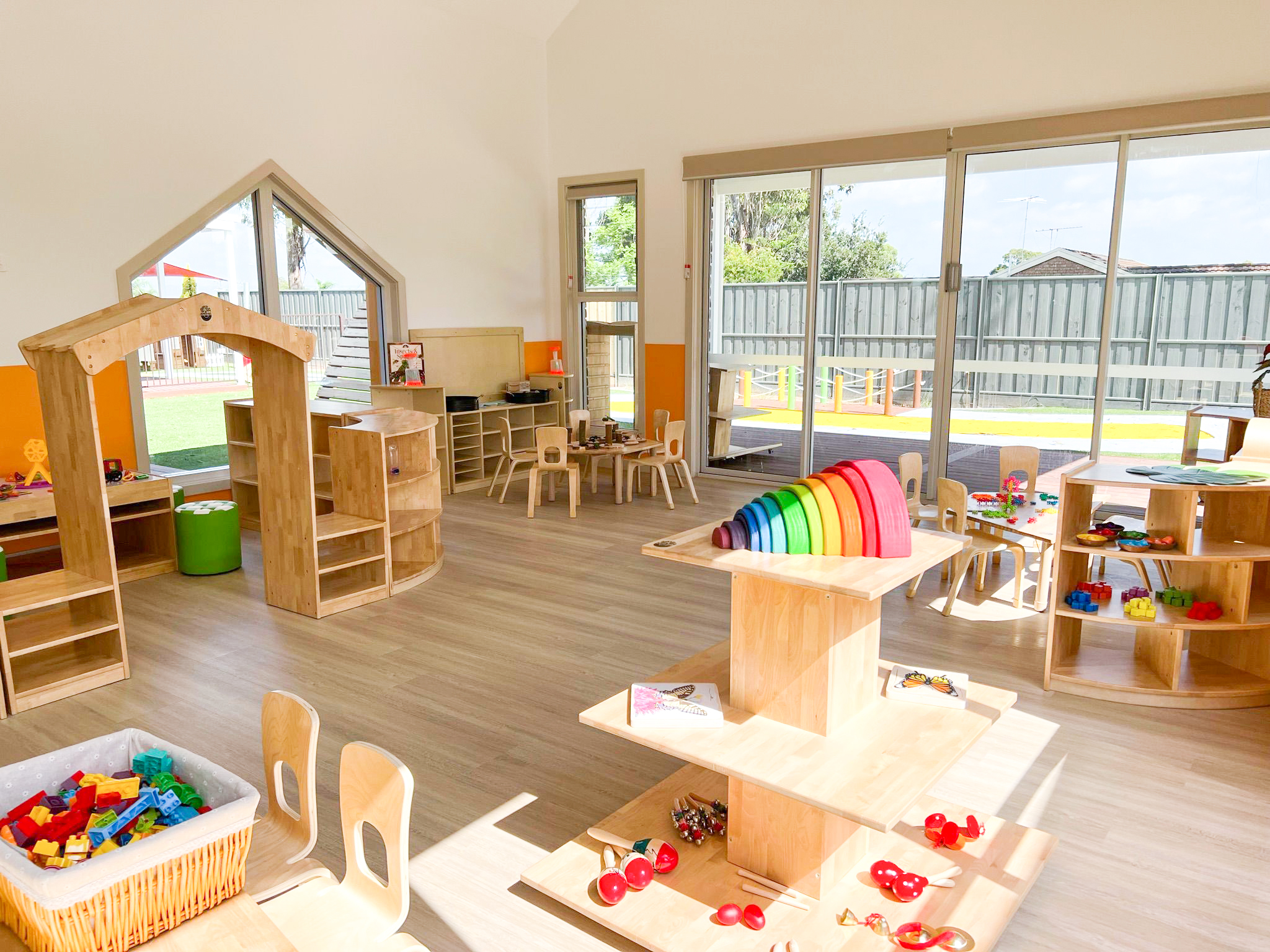
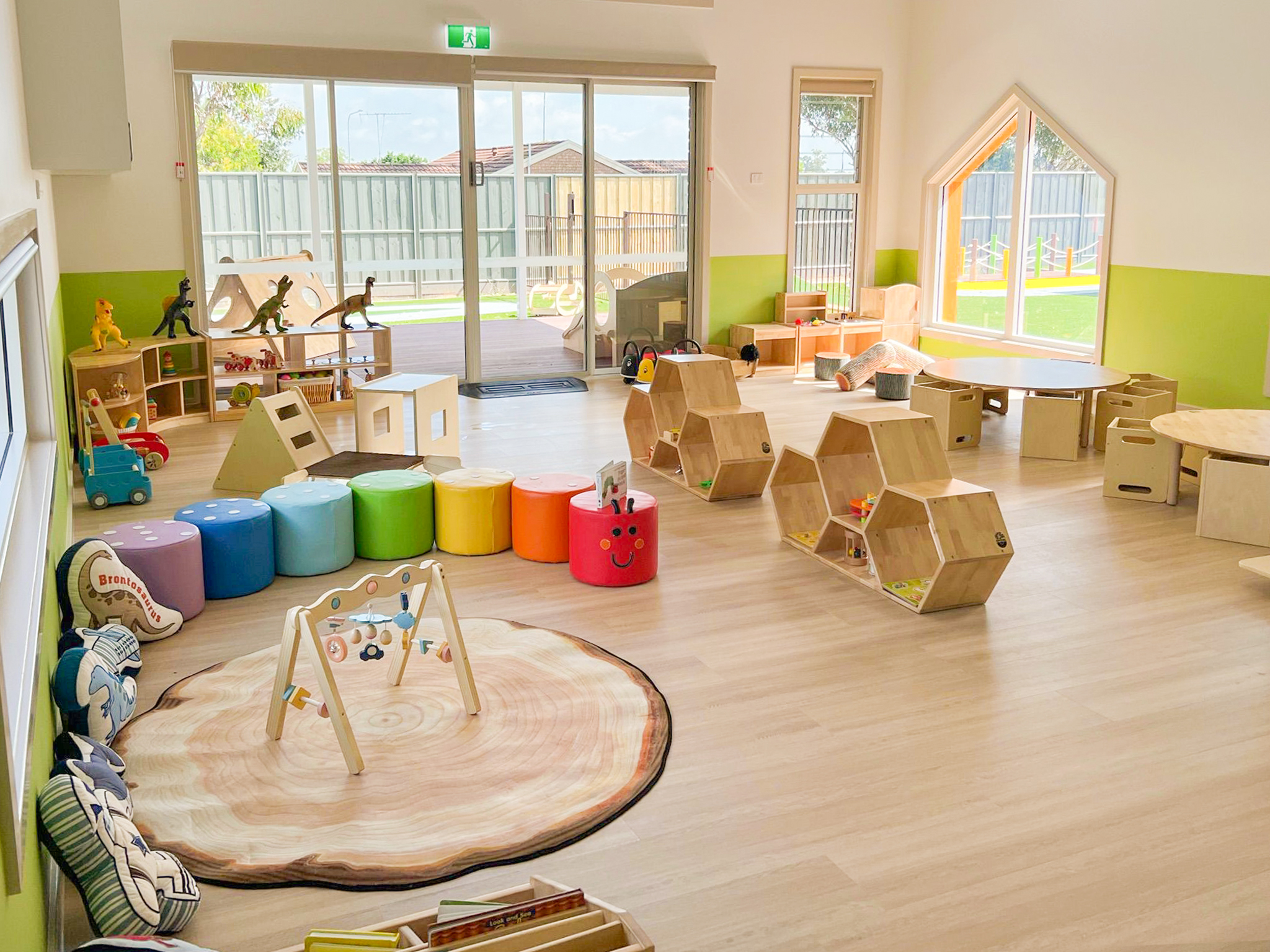
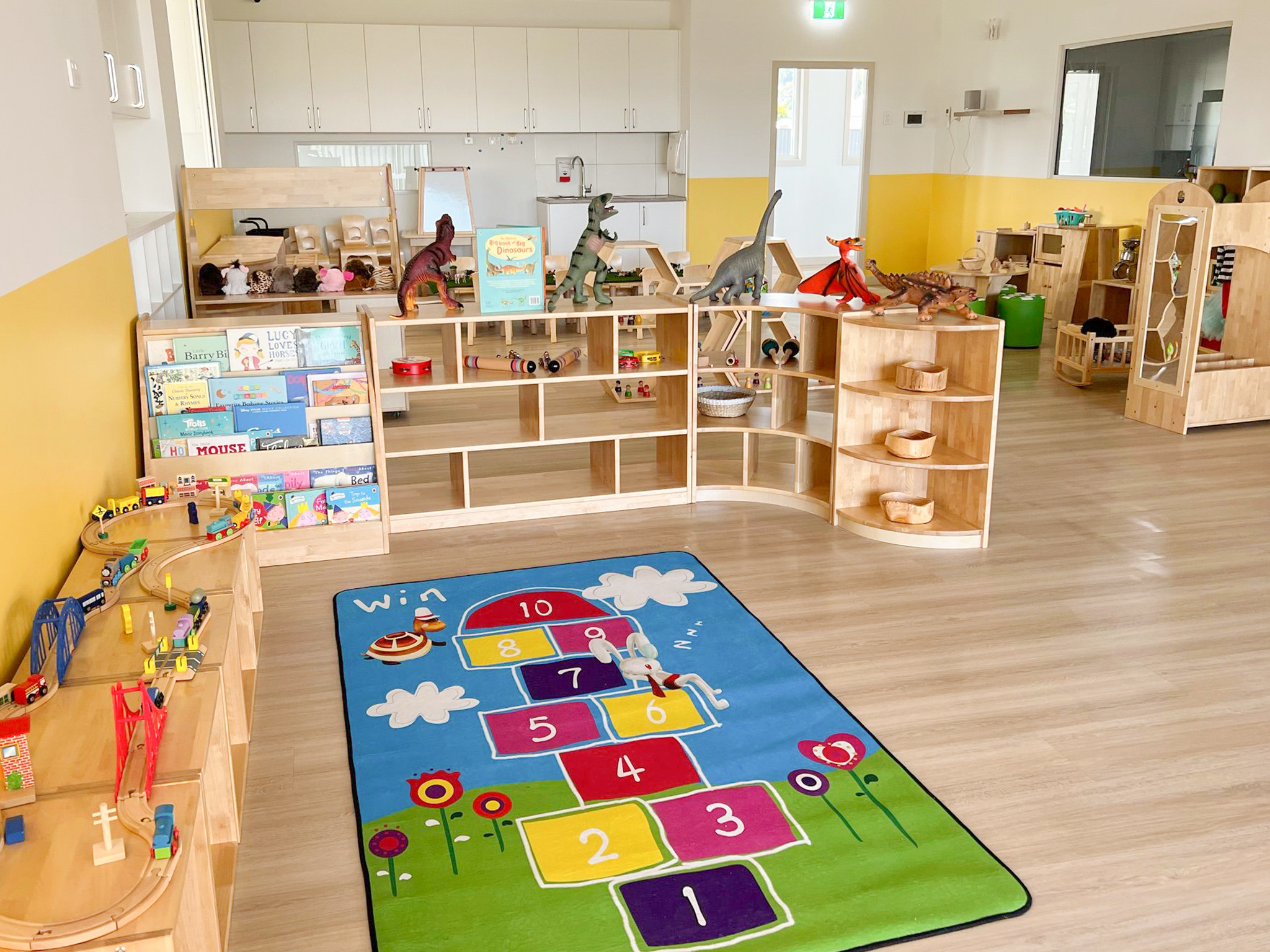
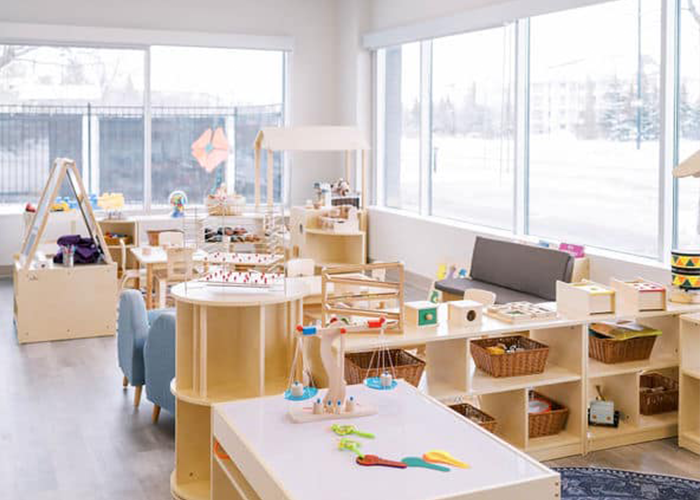
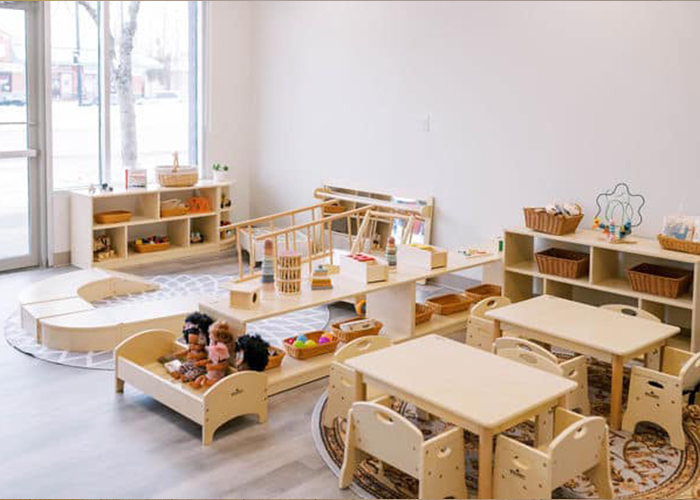
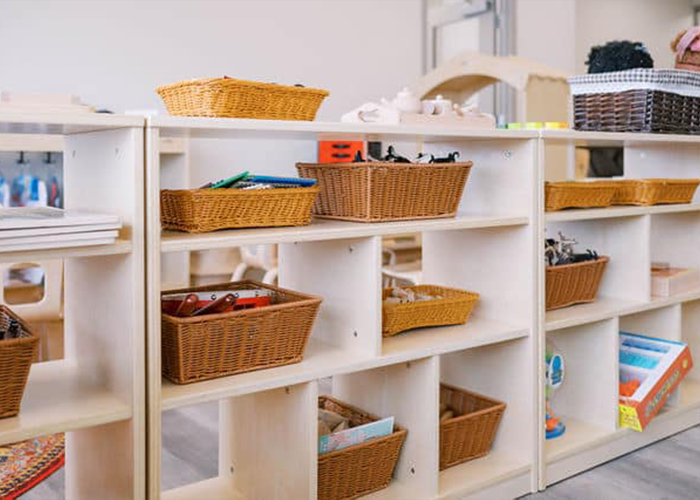
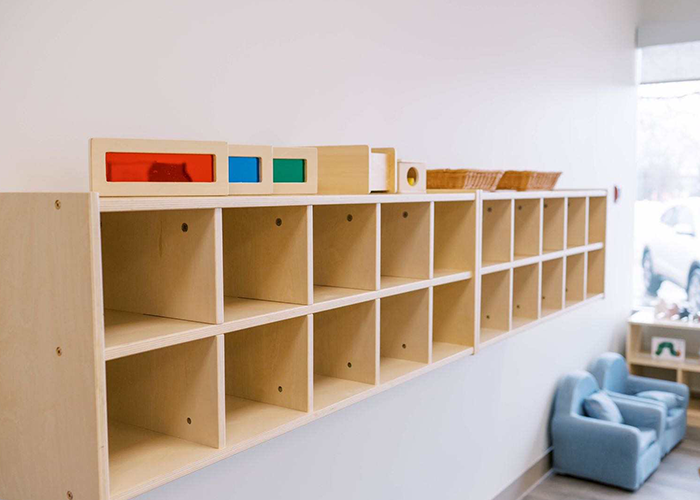
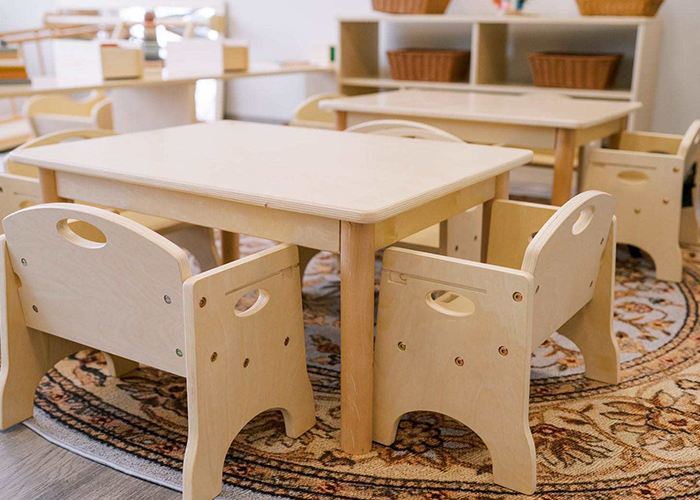
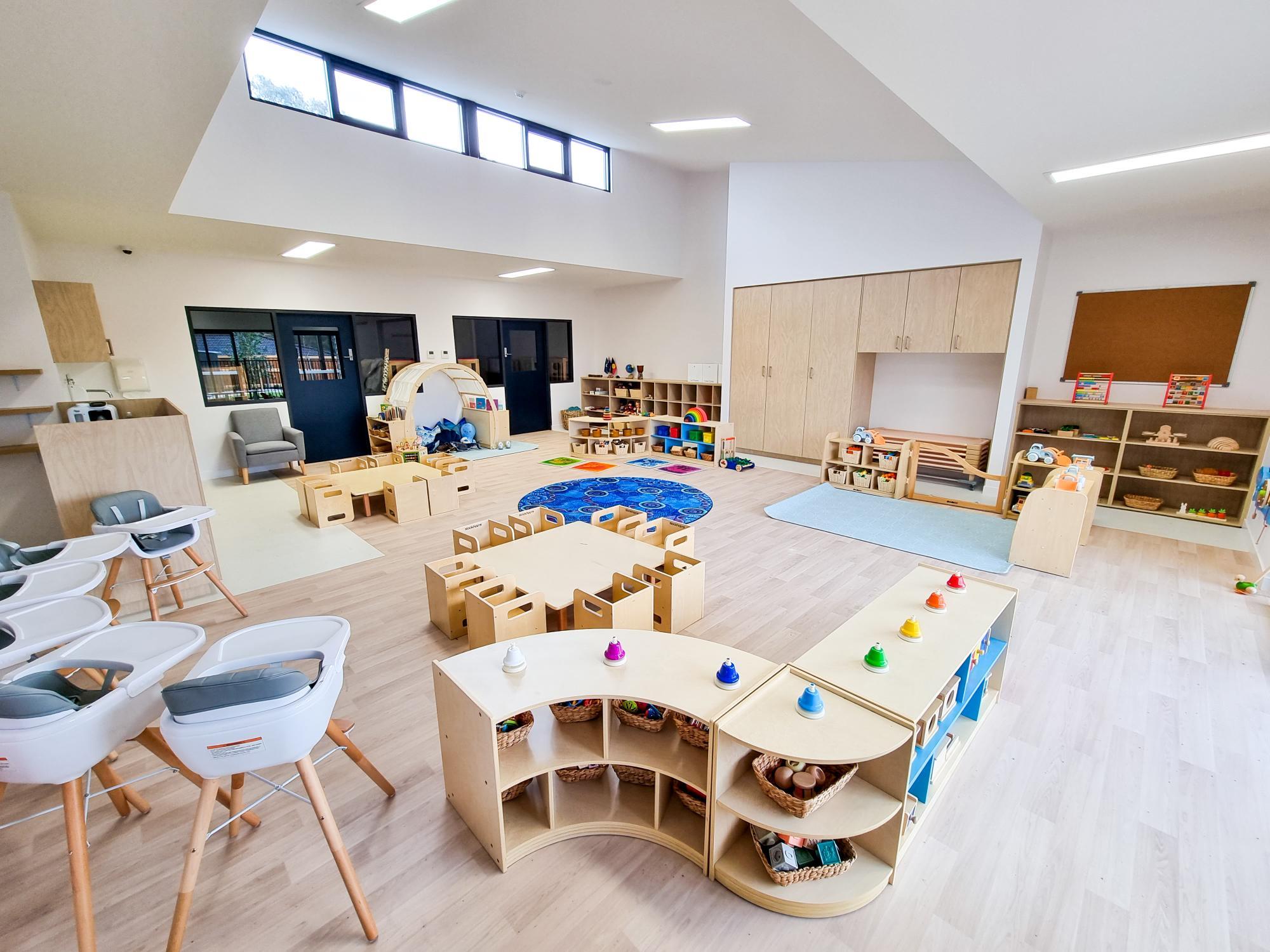
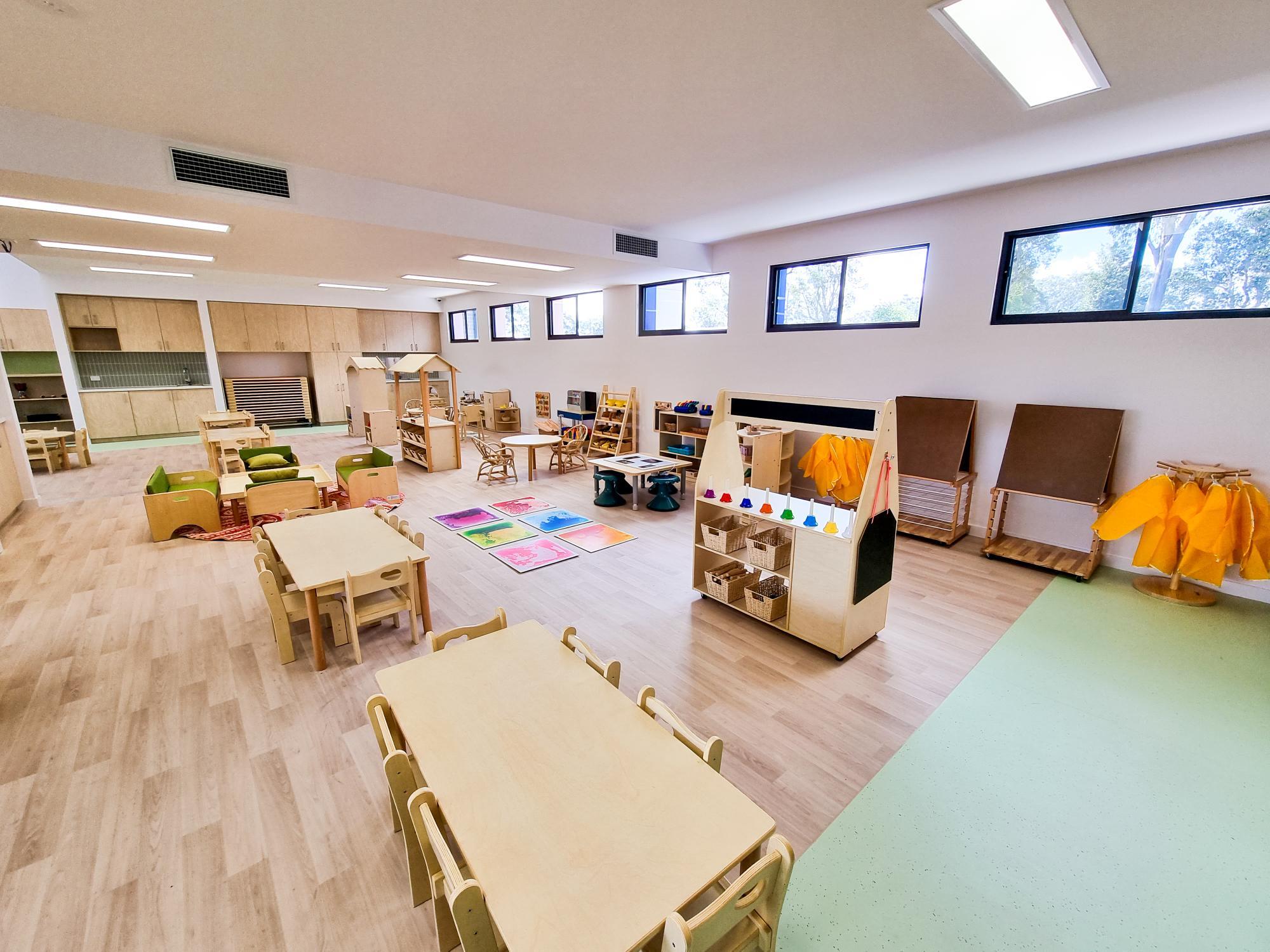
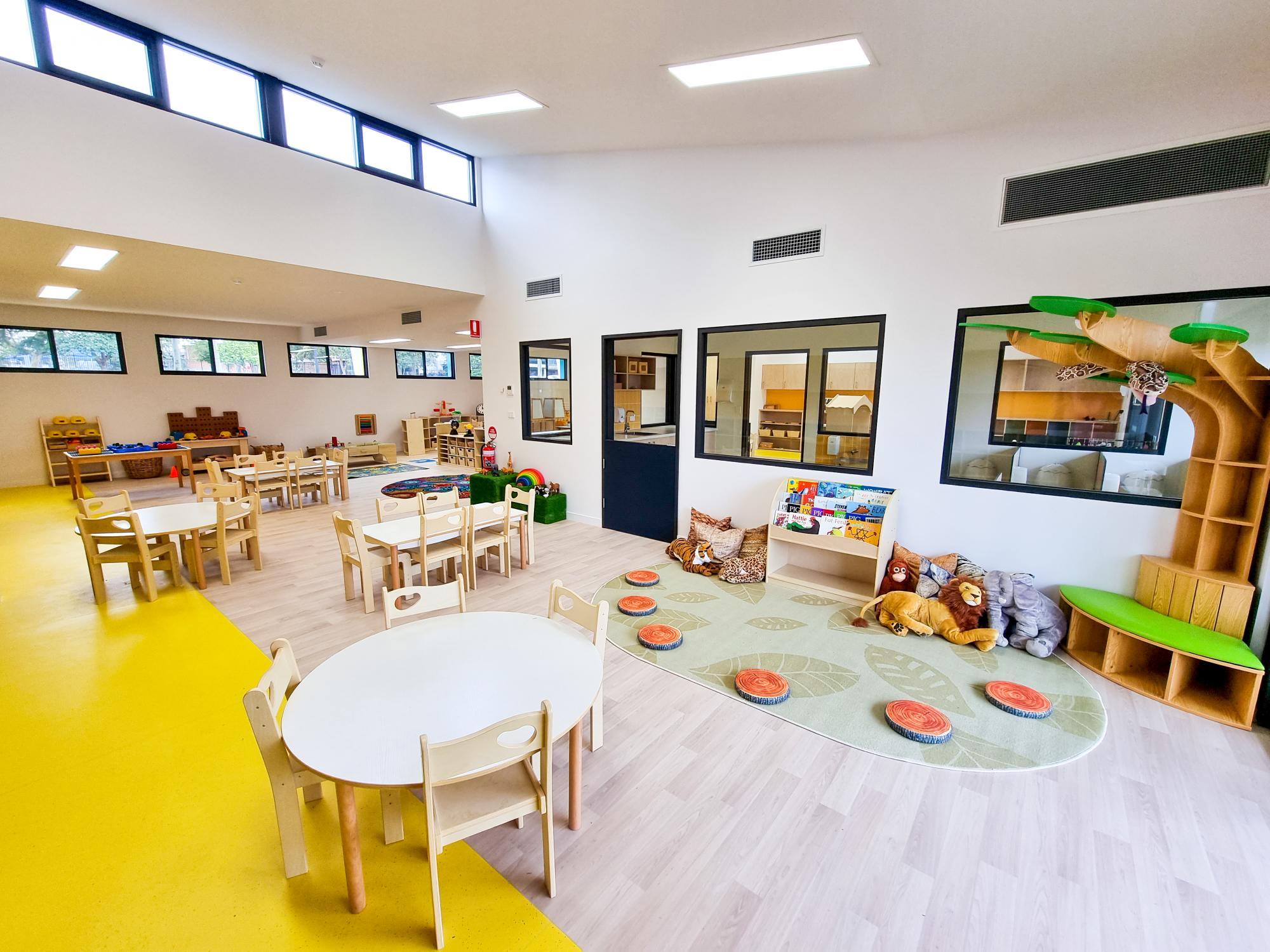
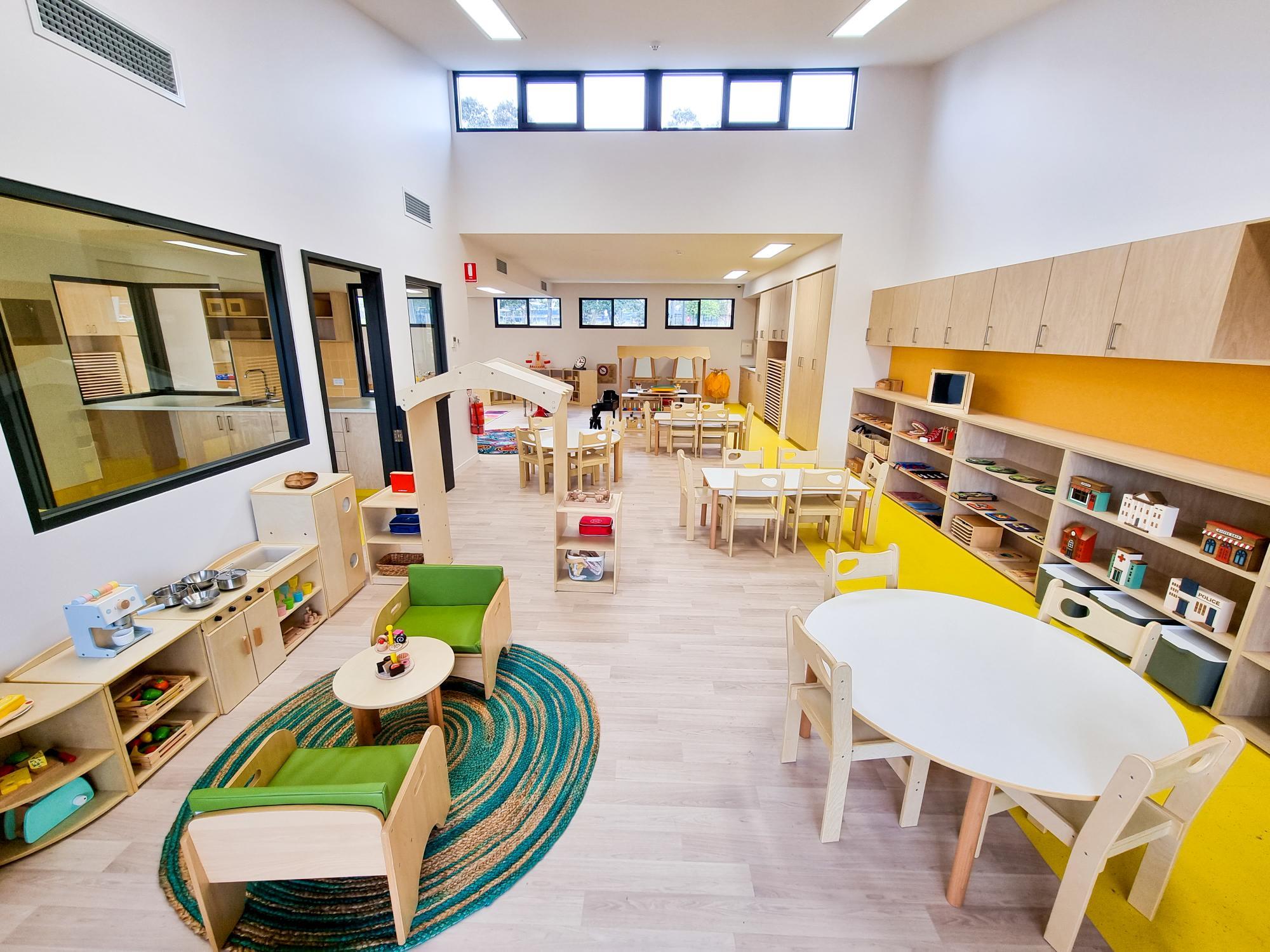
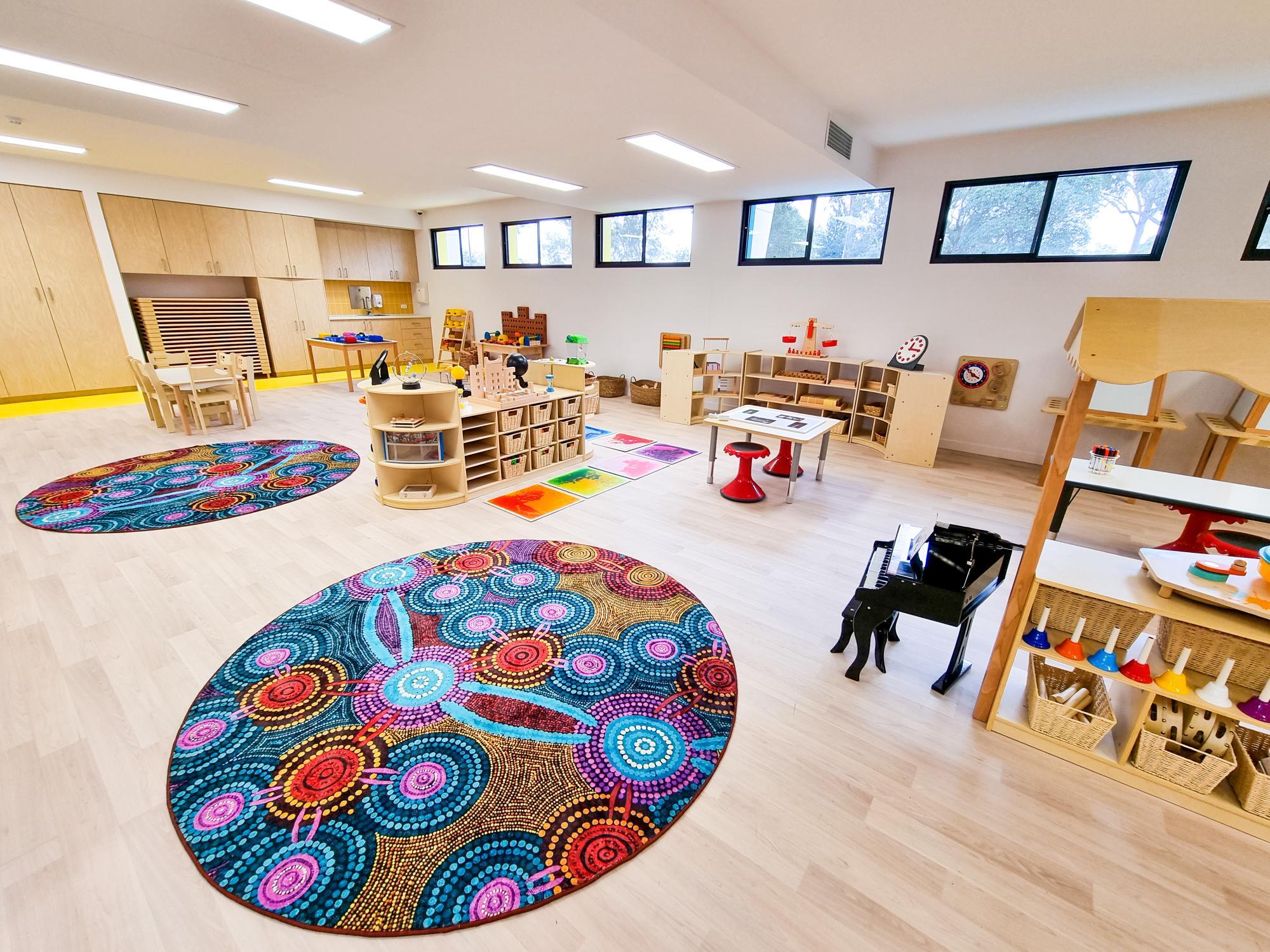
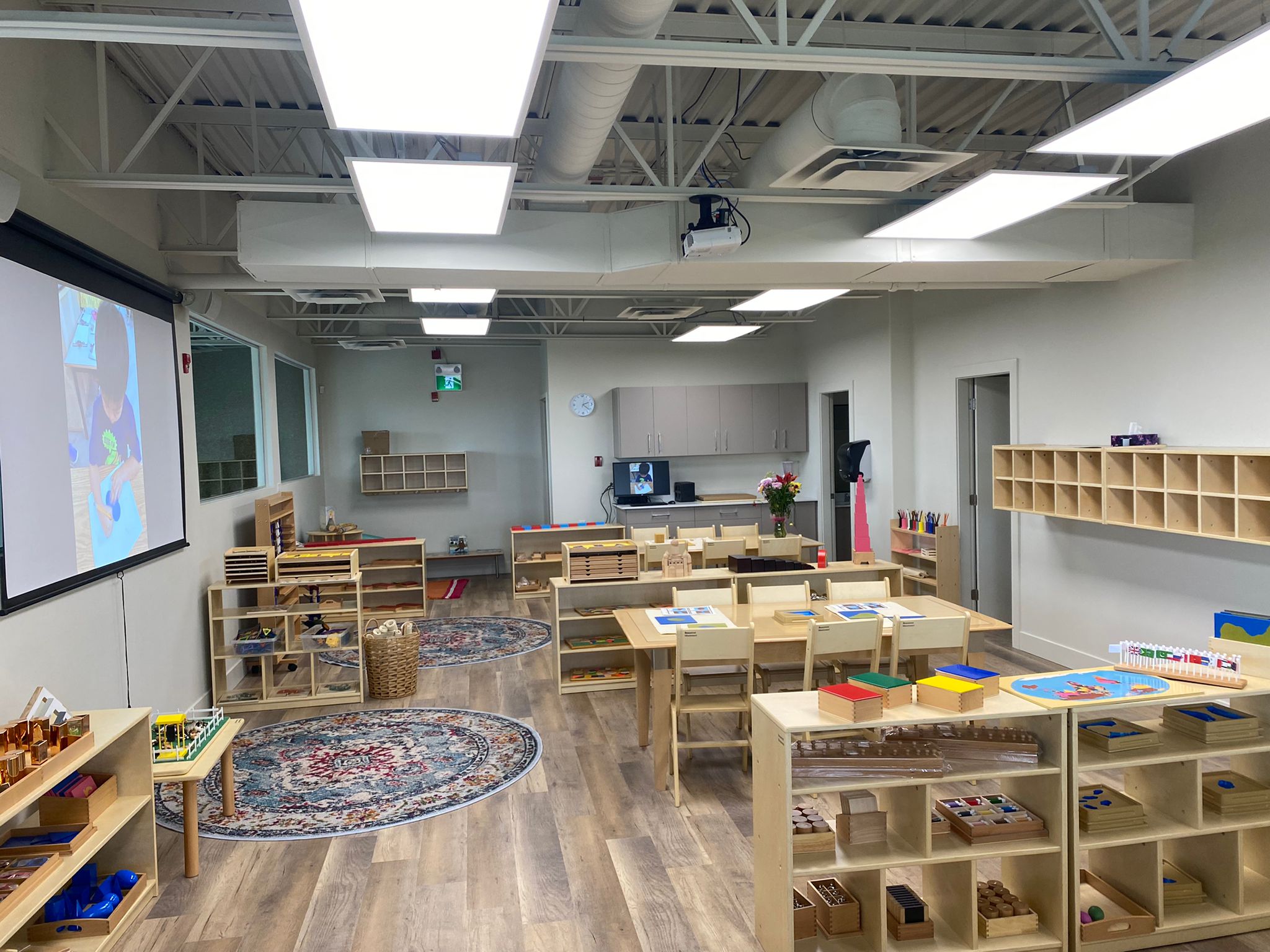
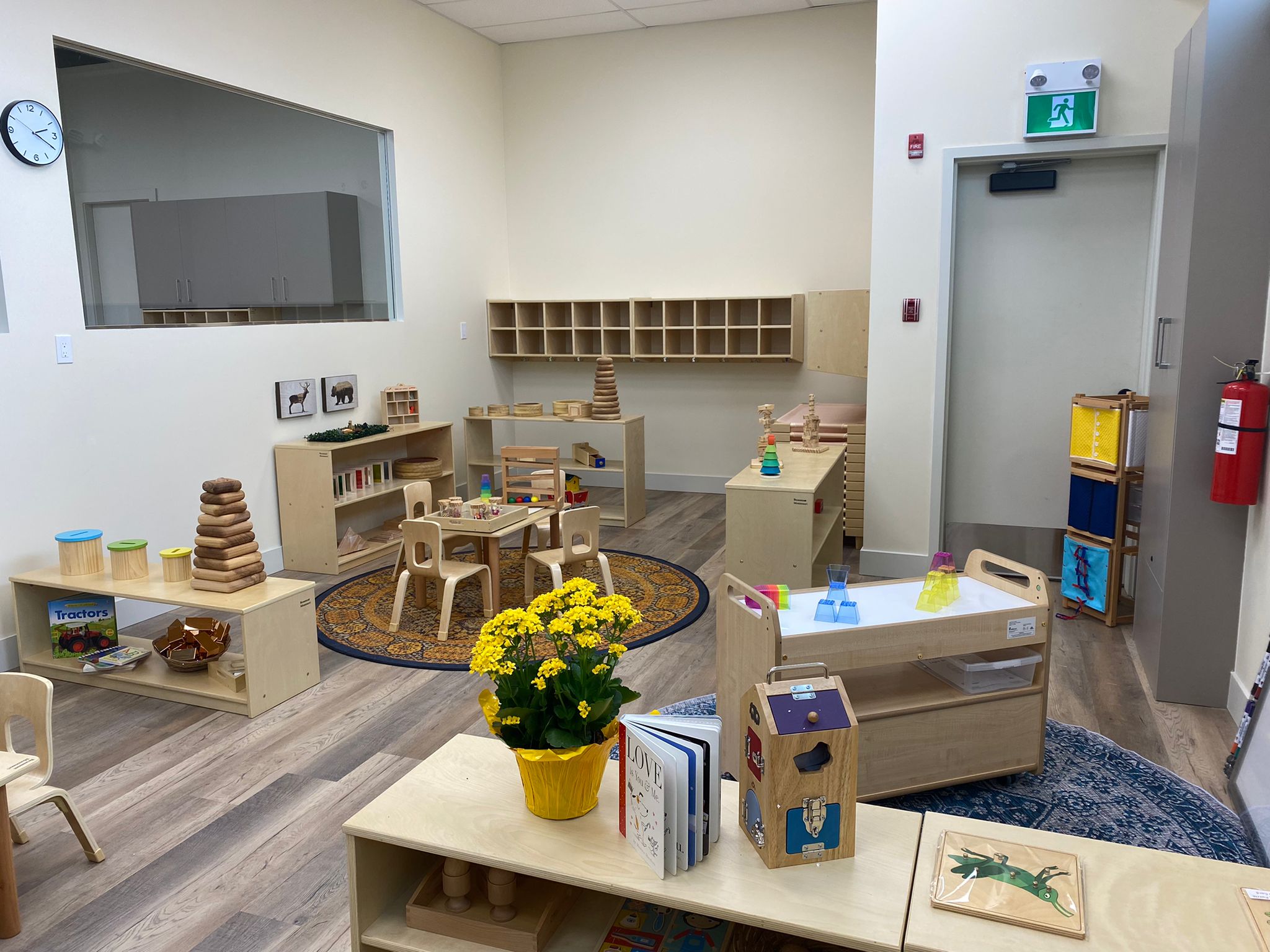
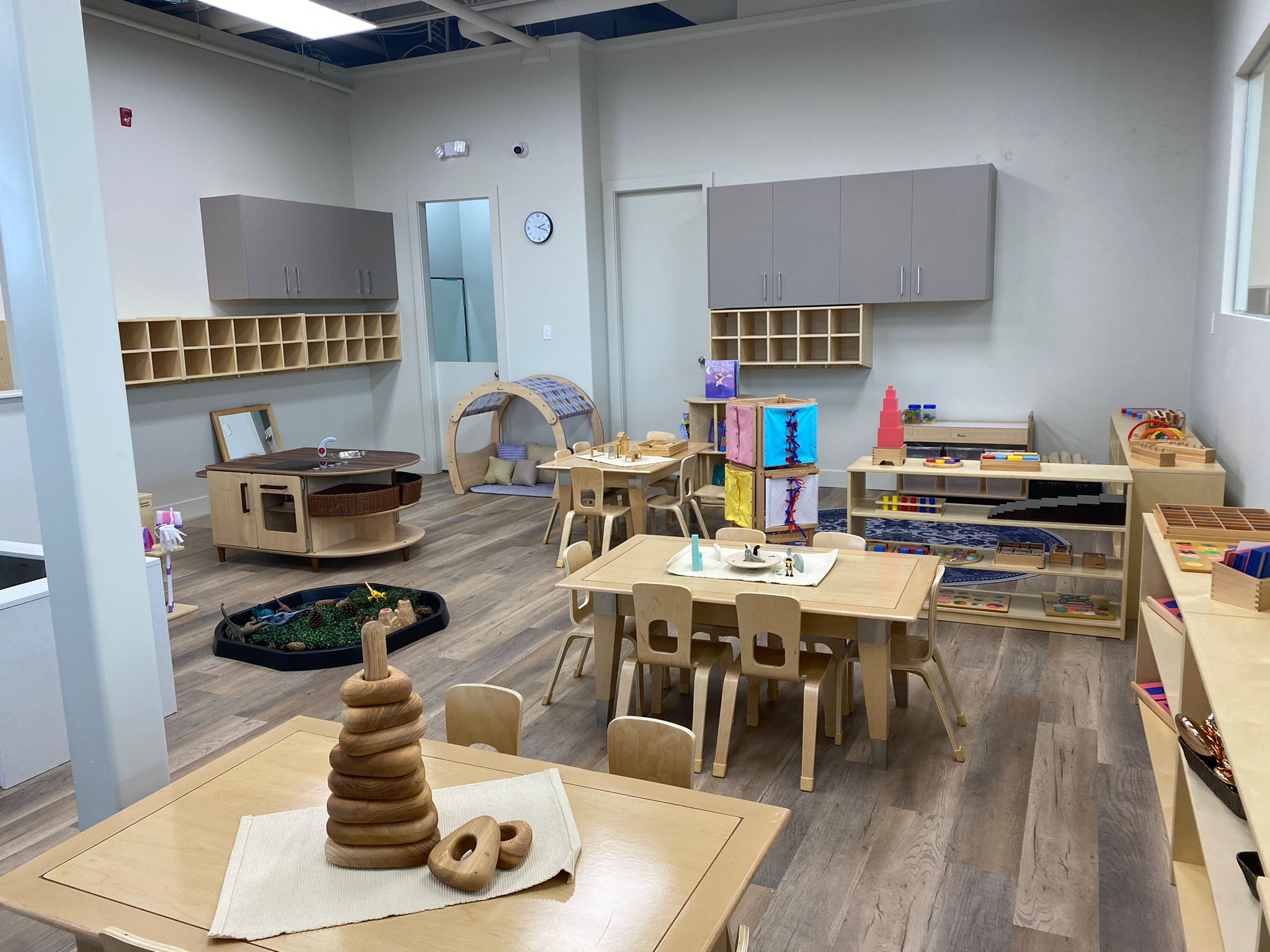
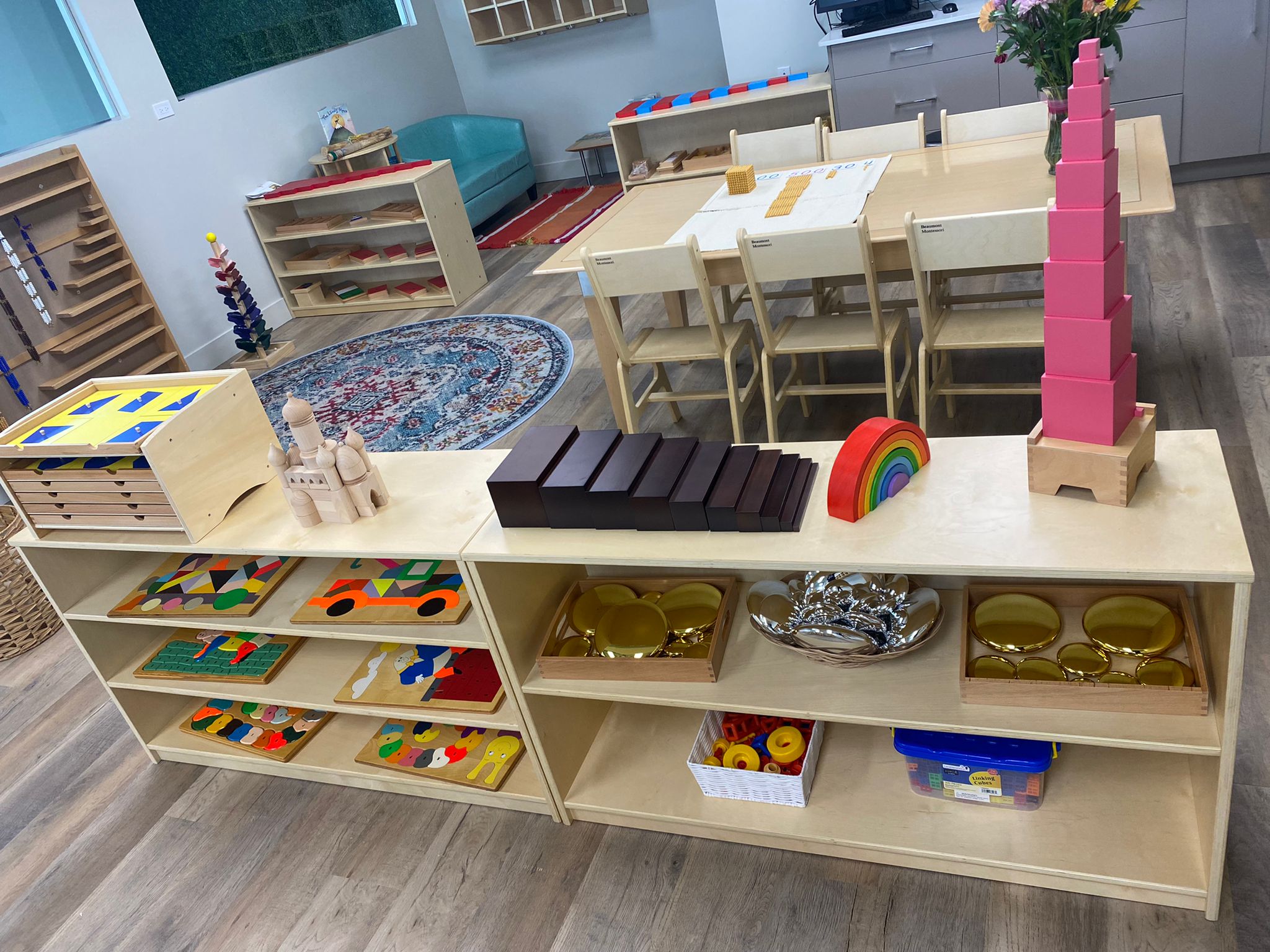
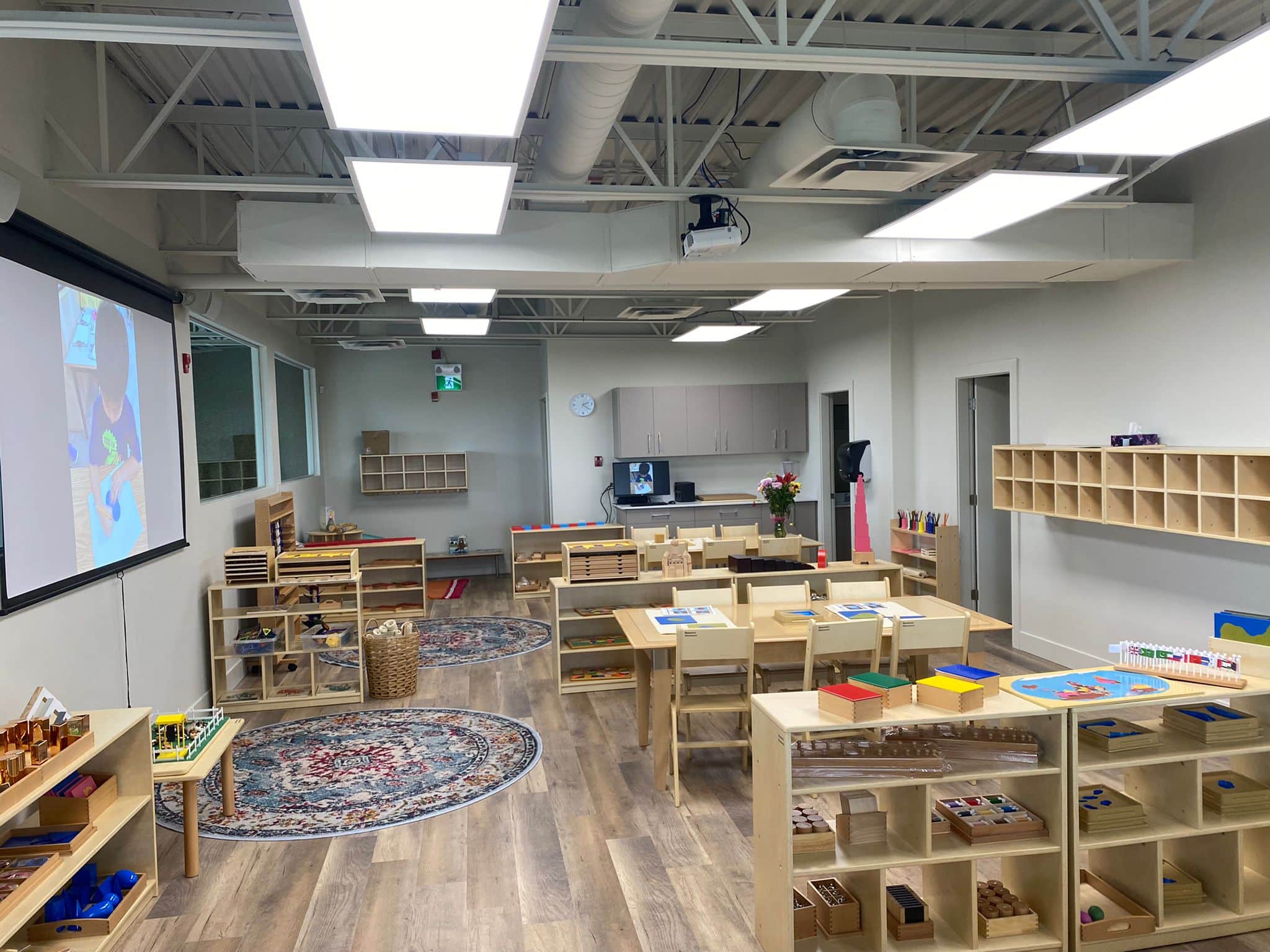
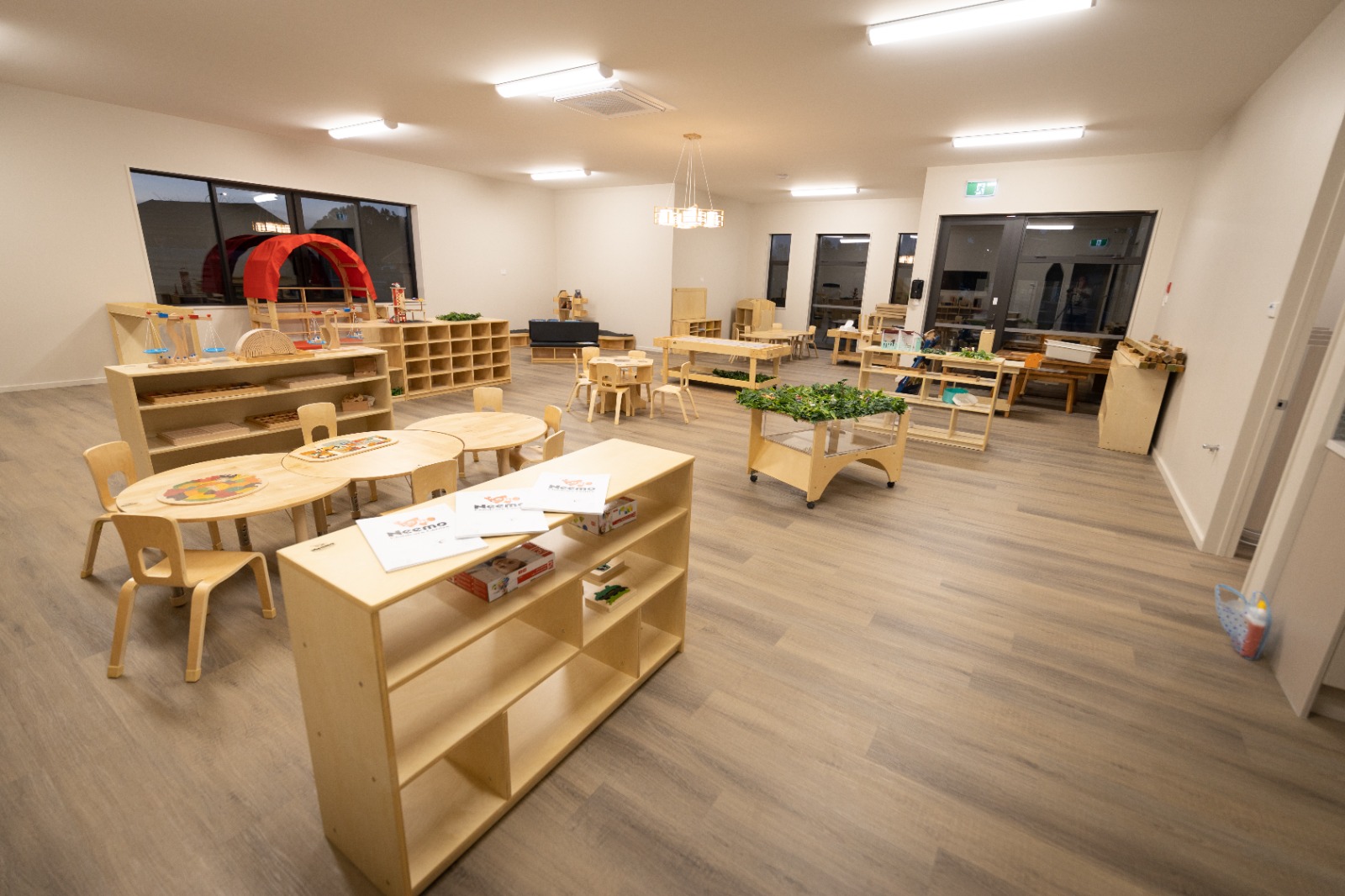
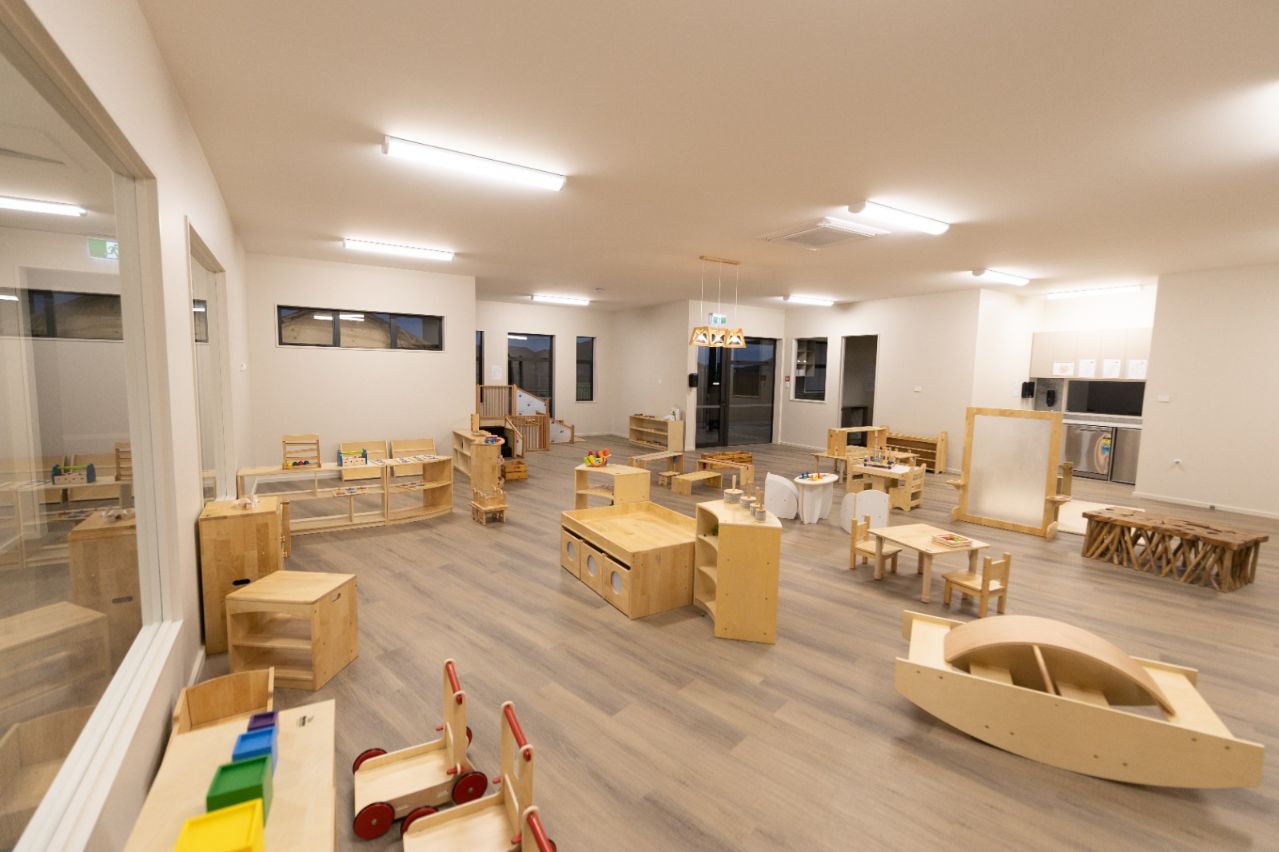
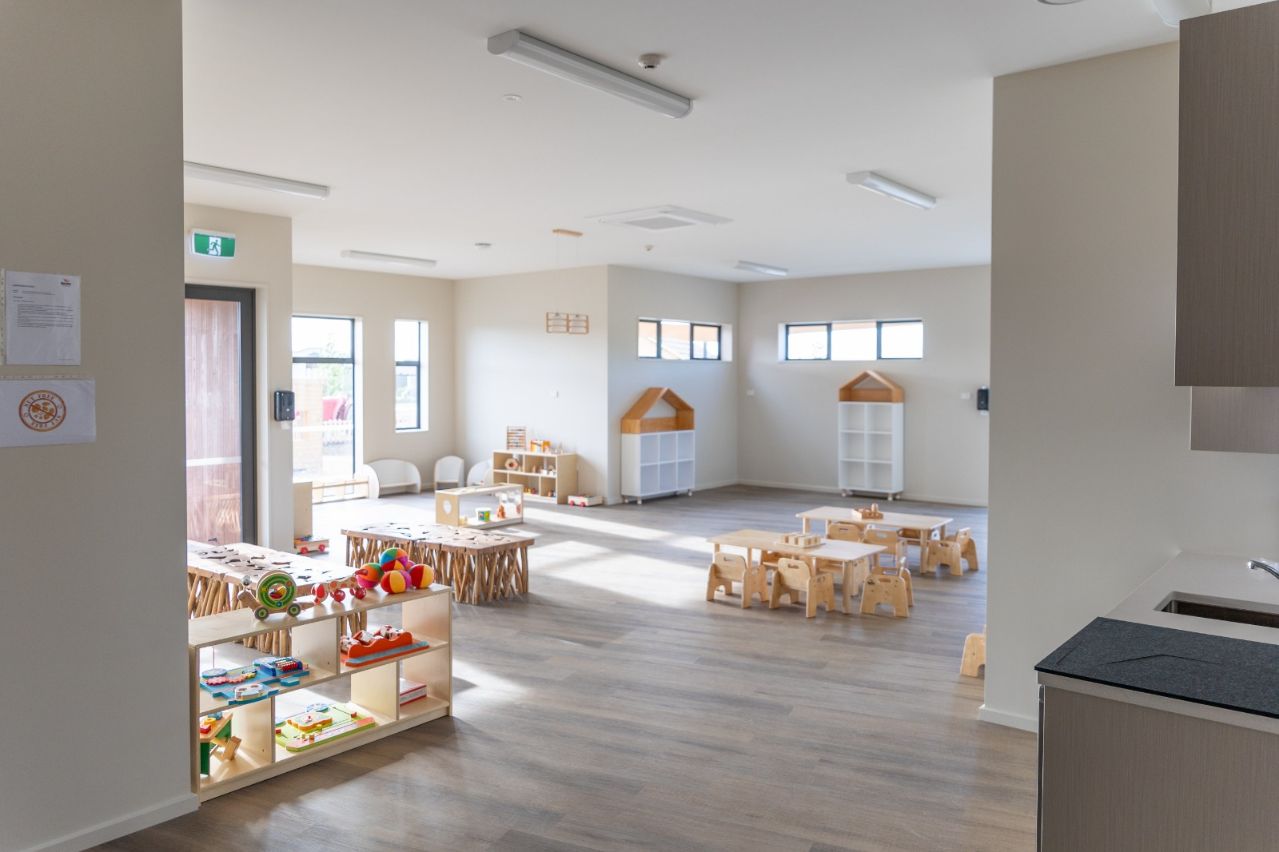
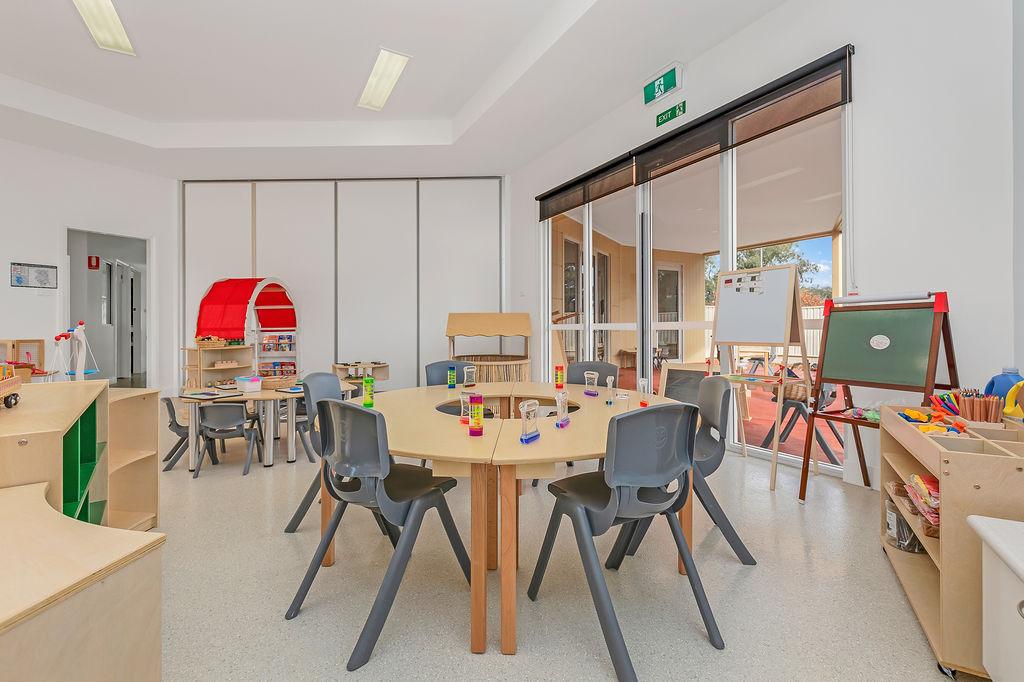
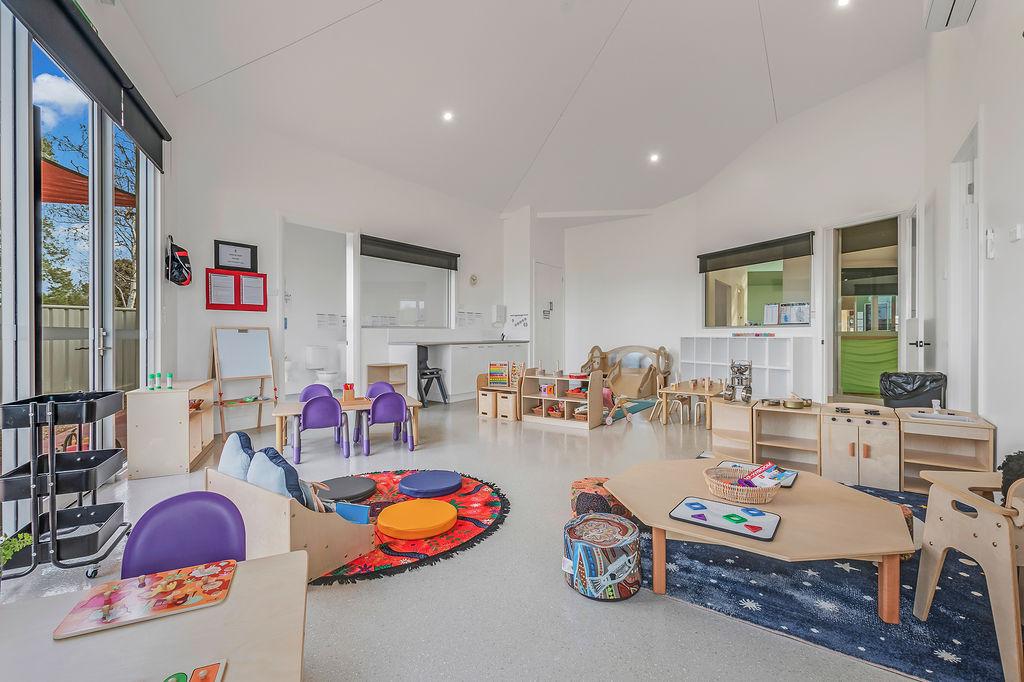
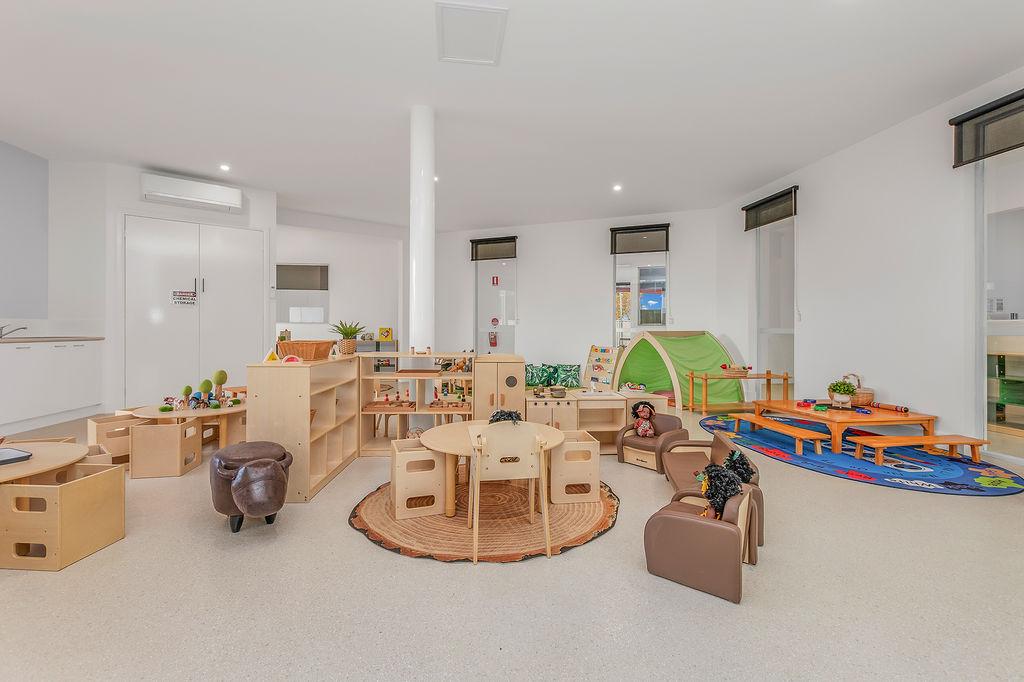
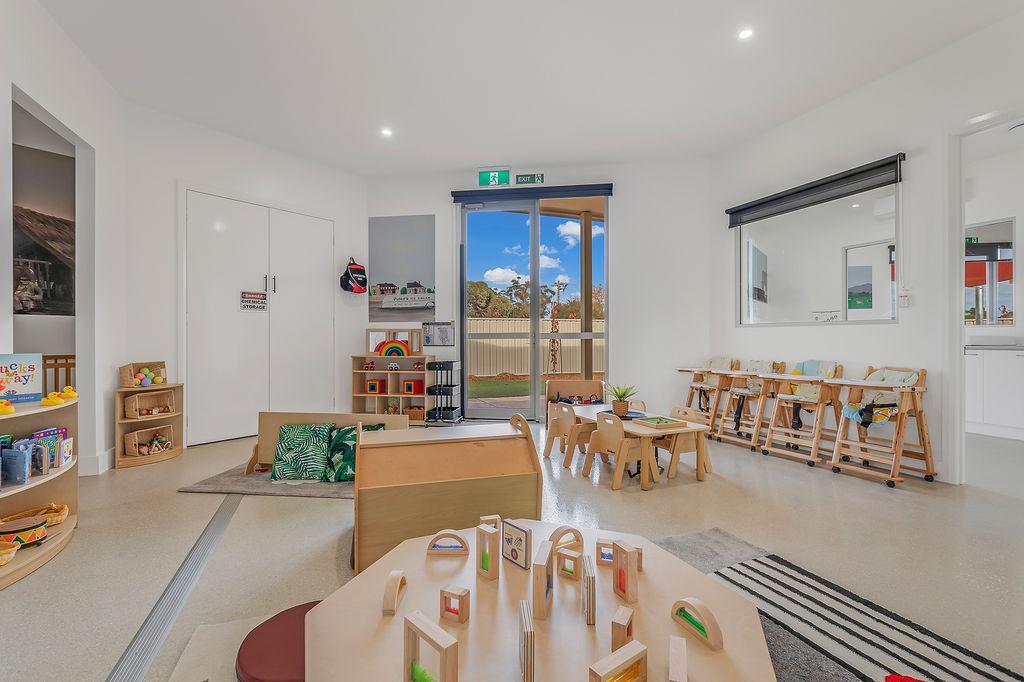
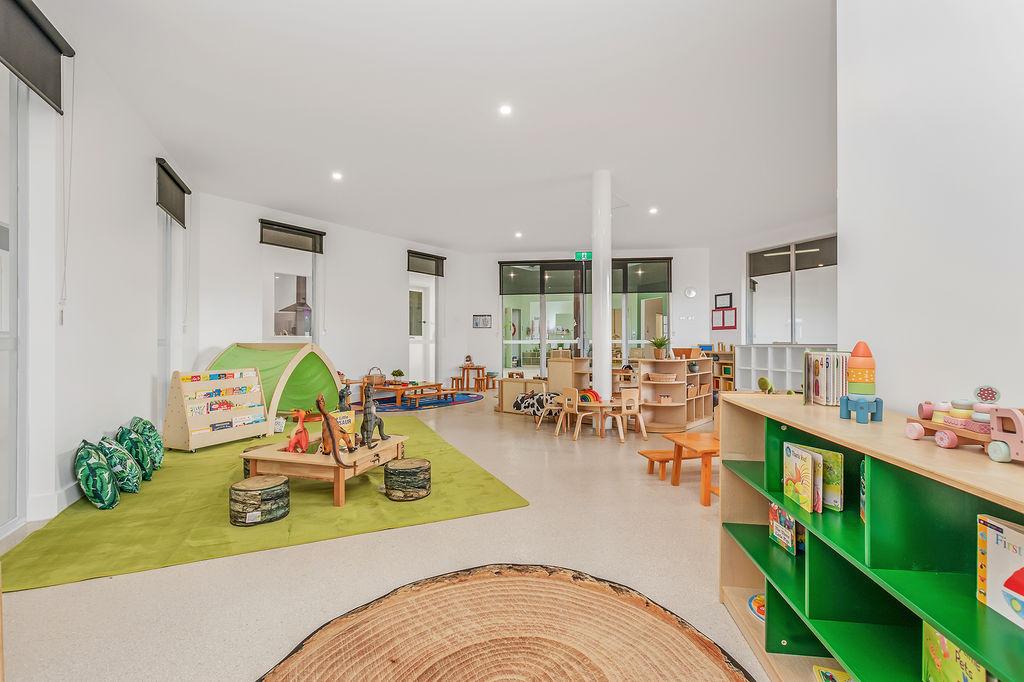
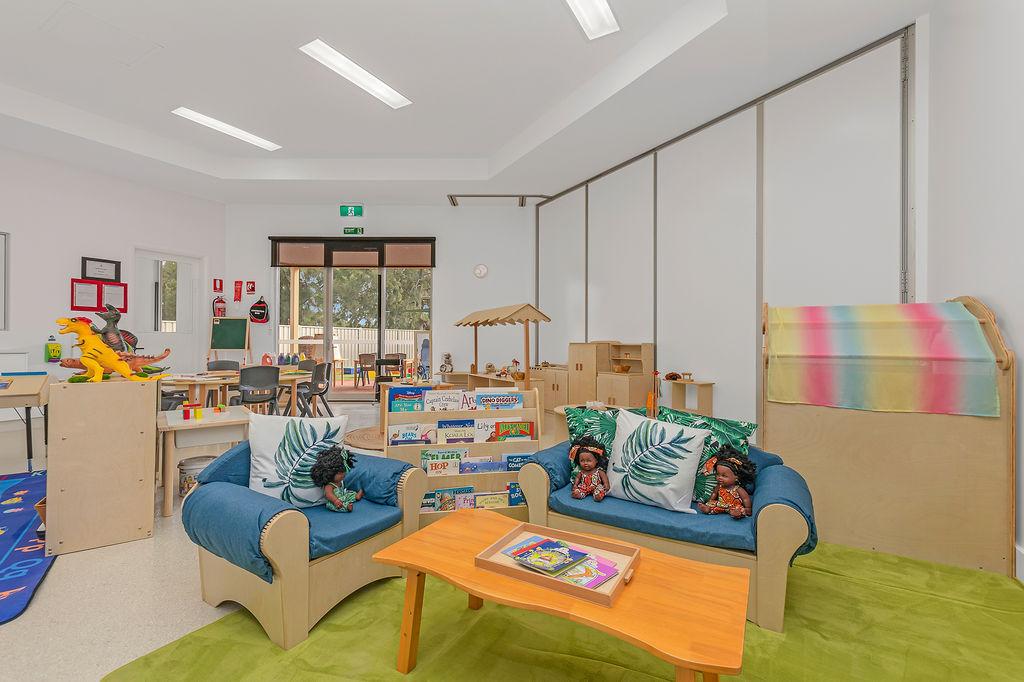
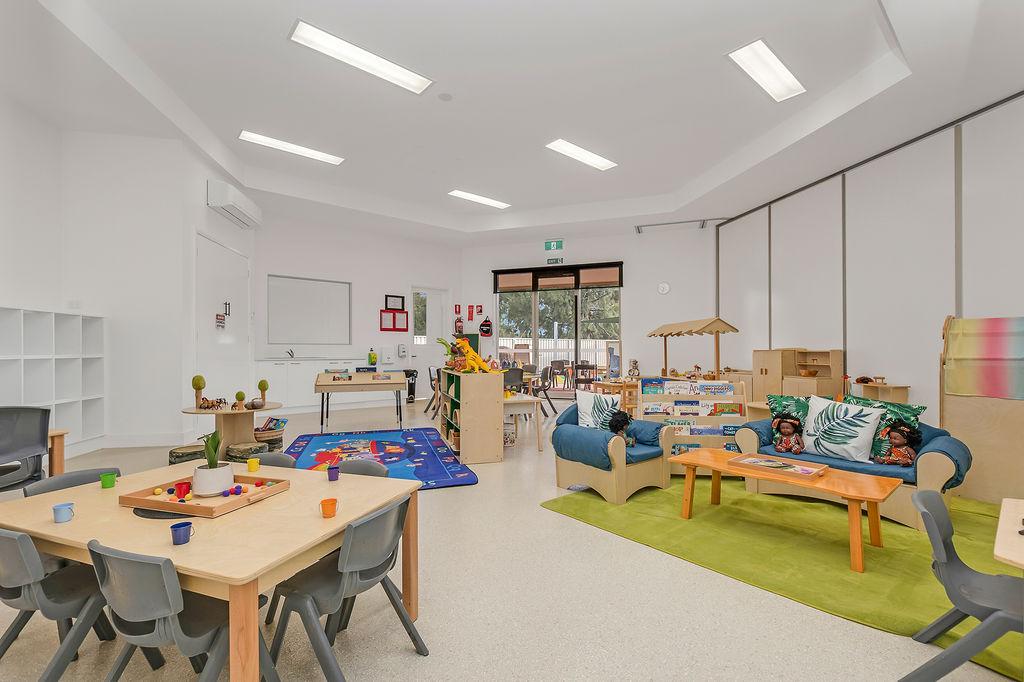
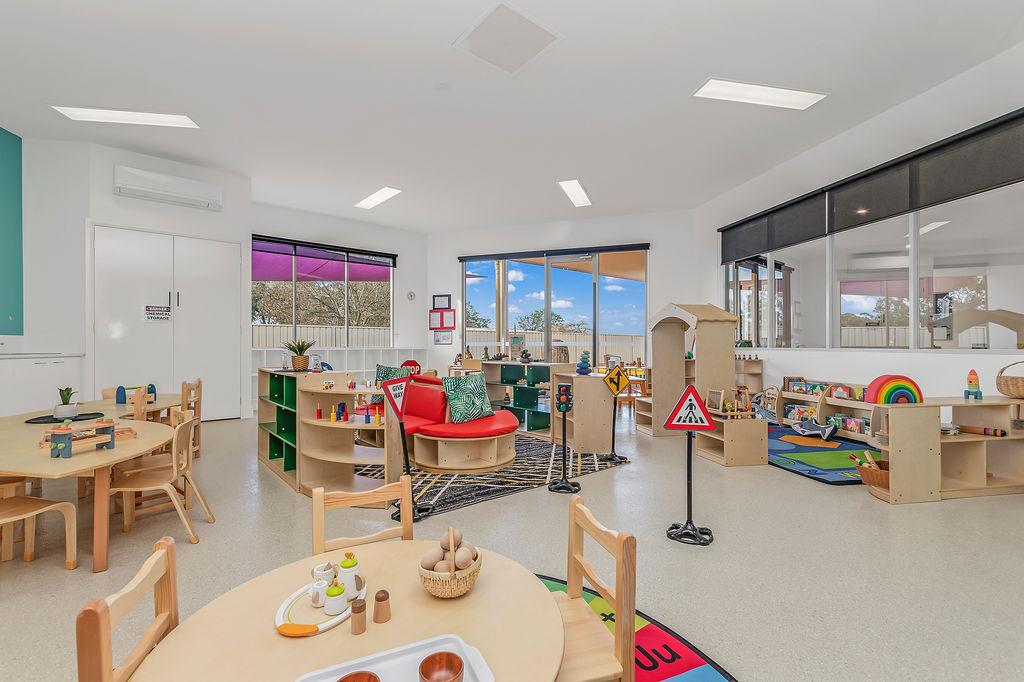
You are not using the material to force a cognitive milestone. You are preparing an environment that makes exploration possible. In an infant classroom, that means you need a low, stable work area, a limited number of materials, enough floor space, and a shelf arrangement that lets each baby work without another child reaching across the activity.
Tray and drawer boxes give you two related retrieval experiences: one emphasizes returning an object to a visible tray, while the other adds a pulling movement. When you select this material for a classroom, consider the hand movement, the visibility of the result, the effort required, and how easily you can inspect and clean it.
Which Montessori Activities Can You Offer?
Start with a short, reassuring disappearance and reappearance. Move to a box only when your baby is ready to control more of the search. The right starting point depends on the action your baby can manage, not on a fixed age printed next to the product.
Peekaboo and hide-and-reveal
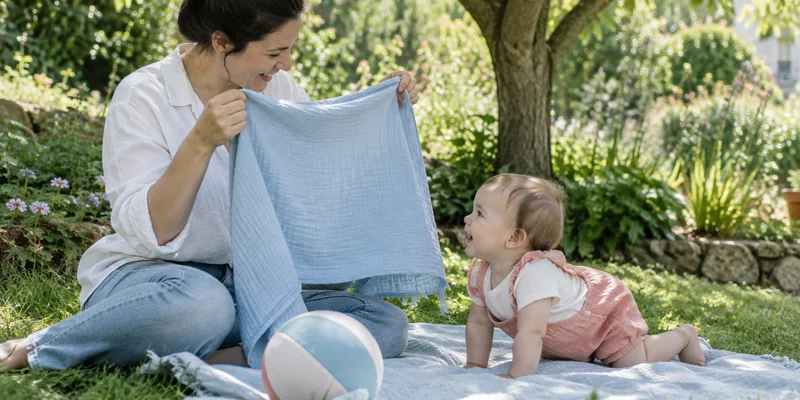
Begin with your face because your baby already knows and trusts it. Cover your face briefly with your hands or use a light cloth, pause for a moment, and reveal yourself with a calm smile. When your baby is comfortable with that exchange, hide one large safe object under a cloth and invite your baby to look or reach.
Keep the pause short when you first offer the activity. If your baby becomes upset, reveal yourself or the object immediately. You want your baby to experience disappearance as predictable and safe, not as a source of unnecessary frustration.
Object permanence box with a tray
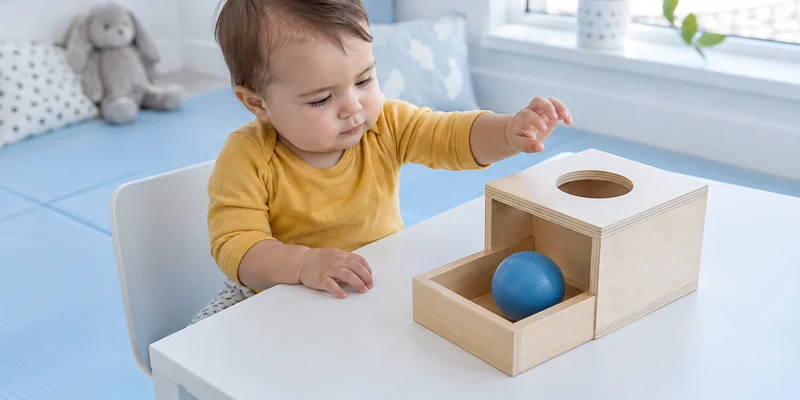
Choose a tray box when your baby is beginning to release or push a large object deliberately and benefits from seeing the result immediately. Your baby drops or pushes the ball through the opening, watches it disappear, and sees it reappear on the tray. The tray keeps the ball within reach, so the connection between action, disappearance, and retrieval remains clear.
Place the box on a clear mat or low work surface. Show one slow movement, then wait. If your baby is not ready to place the ball into the opening, let your baby hold and explore the ball while you demonstrate once. Choose a stable box with smooth edges and a ball that is large enough for the intended age group.
Object permanence box with a drawer
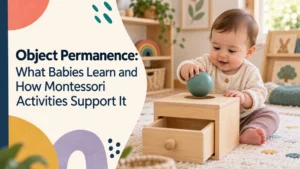
Choose a drawer box when your baby can reach for a handle and is ready to add a purposeful pulling movement. Your baby watches the ball disappear and then pulls the drawer to find it. The activity adds grasping, pulling, and hand-eye coordination without hiding the result behind a complicated mechanism.
If the drawer is difficult to operate, leave it slightly open for the first presentation. Once your baby understands the movement, allow your baby to close and reopen it independently. Before you place the box on the shelf, check that the drawer moves smoothly, does not pinch fingers, and does not require excessive force.
When you compare supplier options, the Xiha Montessori educational toys collection can help you review age-specific infant materials such as object permanence boxes with a drawer and with a tray. You can also review the Montessori materials collection when you are planning a complete shelf, classroom package, or product assortment.
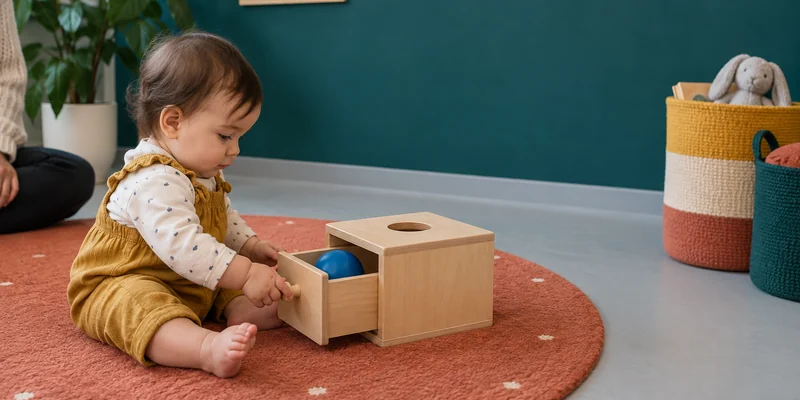
How Can You Present the Material Without Turning It Into a Test?
Keep the presentation simple. Prepare a calm space, show one action slowly, pause, and let your baby decide whether to repeat it. Put the material on a stable mat or low shelf area with no unnecessary pieces nearby. Name the box or ball if language is useful, but avoid adding a long explanation that competes with the movement.
After you demonstrate, keep your hands still and watch what your baby does. Your baby may look, reach, miss the opening, push the box, mouth the ball, or move away. Each response tells you whether the activity is appropriate at that moment. If the task is too difficult, make one change: partly open the drawer, reveal part of the object, reduce background noise, or return to peekaboo. If your baby succeeds easily and stays interested, let your baby repeat the action before you offer a new challenge.
When you work in a group classroom, present the material to one baby at a time whenever possible. Keep the box on a low shelf, define a small work area, and leave enough space for the baby’s hands and body. If several babies need the same material, plan rotation or duplicate the most frequently chosen items rather than allowing children to compete for one box.
How Should You Choose Safe Materials for Home or Classroom Use?
Choose the material by intended age, object size, construction, supervision needs, and local requirements rather than by appearance alone. The most useful purchasing decision is not whether the box looks attractive; it is whether the child can use the intended movement and whether your team can inspect, clean, and document the material consistently.
Start with the ball or other object. It should be too large to swallow for the intended age group, and its construction and dimensions should match the requirements that apply to your market. A small or detachable object can change the risk profile of an otherwise simple activity, so do not select the box first and treat the object as an afterthought.
Then inspect the box itself. A stable base, smooth edges, secure joints, and a drawer that moves without pinching fingers matter more than decorative details. The finish should tolerate your cleaning routine, and the surface should remain easy to inspect after repeated handling.
Finally, decide how the material will be supervised and documented. Follow the product’s age guidance, inspect it for cracks, splinters, loose parts, and rough edges, and record the intended age, materials, dimensions, packaging information, cleaning method, and any test reports required for your market. Requirements vary by jurisdiction. If you purchase for the United States, review the current CPSC toy-safety requirements. Toys for children 12 and under may require third-party testing and a Children’s Product Certificate, and the specific requirements depend on the product and applicable standard. You should confirm current requirements with your local licensing or regulatory authority.
How Can You Plan an Infant Classroom Around This Material?
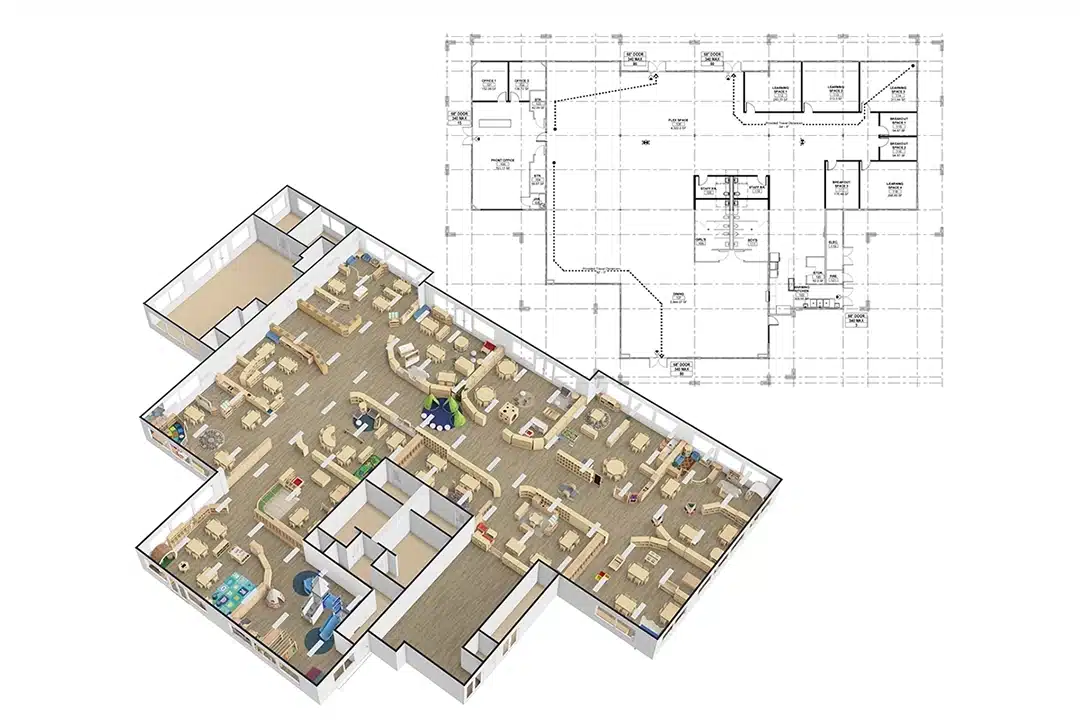
Plan the material as one focused shelf choice within a broader infant environment, not as a standalone program. Before you place an order, resolve the practical questions below. They determine whether the material will be used well after it arrives.
| Your planning question | The decision you need to make |
|---|---|
| What age range will use the shelf? | Select a level of opening, drawer resistance, object size, and challenge that matches the youngest users. |
| How many babies may choose work at the same time? | Decide whether you need one box, a rotation plan, or duplicate materials to avoid competition. |
| Where will the activity be used? | Reserve a stable low shelf, defined floor mat, and clear teacher sightline. |
| How will you clean and inspect it? | Add the box and ball to your daily or scheduled material-check routine. |
| What will you buy with it? | Balance object permanence work with grasping, movement, sensory, language, and practical-care materials. |
| What will your purchasing team need? | Request dimensions, age guidance, material details, packaging information, and applicable compliance documents. |
For a distributor or wholesaler, use the same questions to build an age-labeled assortment. Avoid describing every object permanence box as interchangeable. A tray box is usually easier to reset and observe, while a drawer box adds a retrieval movement and needs enough clearance for the handle and the child’s hand. Those differences affect shelf space, packaging, supervision, and the information your sales team should give the buyer.
If you are planning an infant classroom or product assortment and want help matching a tray or drawer box to your age range and available space, share those details through the form below.
What Mistakes Should You Avoid?
The most common mistake is making the disappearance too difficult. If you cover the object completely, place it too far away, or use a drawer your baby cannot move, you may be testing motor ability more than object permanence. Start with a partly visible object or an easy reveal, then increase the challenge only when your baby remains engaged.
Another mistake is turning the material into an assessment. Repeatedly asking “Where did it go?” or completing the action before your baby can try reduces the time available for observation and problem-solving. Demonstrate once, wait, and accept looking or reaching as meaningful participation. A quiet, incomplete attempt often tells you more than a prompted success.
Finally, do not let the shelf or the product condition undermine the lesson. Several balls, noisy toys, or complex materials beside the box can blur the connection between action and result. If a material moves from an adult-led presentation to an open shelf, review the ball size, box stability, drawer movement, surface condition, and supervision plan again. If your baby watches but does not retrieve, check attention, movement, familiarity, and timing before treating the response as a developmental problem.
Frequently Asked Questions About Object Permanence
Is object permanence the same as separation anxiety?
No. Object permanence is your baby’s developing understanding that a person or object still exists when out of sight. Separation anxiety is an emotional response to being apart from a familiar caregiver. The two may appear during a similar period, but they describe different parts of development.
Does an object permanence box teach the milestone by itself?
No. The box gives your baby a repeatable opportunity to explore disappearance, reappearance, and retrieval. It does not replace responsive interaction, floor movement, language, or everyday search experiences, and it should not be used as a developmental test.
How often should you rotate an object permanence box?
Rotate it when your baby no longer chooses it, when the challenge no longer matches the current ability, or when inspection shows that it needs cleaning or repair. Keep it available longer if your baby returns to it with concentration; repeated work can be useful even when the material looks simple to you.
What should you do if your baby mouths the ball?
Stop the activity if the object is not safe for mouthing or if you cannot maintain close supervision. Check the product’s age guidance and size, replace any damaged part, and choose a larger age-appropriate object when you offer the activity again.
Conclusion: Help Your Baby Explore What Is Out of Sight
You can support object permanence by making disappearance understandable and retrieval possible. Begin with a calm hide-and-reveal exchange, then choose a tray or drawer material that matches your baby’s current movement and attention. Your observation, the material’s safety, and the classroom setup matter as much as the box itself.
If you are planning an infant classroom, distributor assortment, or Montessori materials package, share your age range, class size, shelf space, and room plan with Xiha Montessori. You can use that information to review a practical materials list and choose products that fit the children, space, and purchasing requirements you need to manage.