Most suppliers spread their attention across a catalogue. Buyers who order one product line for three years see the opposite: a factory that keeps improving the same product because the same buyer keeps testing it. Mendel, a US buyer, has done exactly that — 12 orders of Gym Frame, and nothing else, across about nine quarters from April 2023 to March 2026.
The client
Mendel buys Gym Frame products for the US market. The account record shows 12 orders across roughly nine quarters (2023.04 to 2026.03), flagged as a repeat customer, with Gym Frame as the main product line. One line, one market, twelve orders. When a buyer stays that narrow for that long, the relationship is really a standing quality review: every new production run gets compared against the last one in daily use.
Why single-line depth works differently
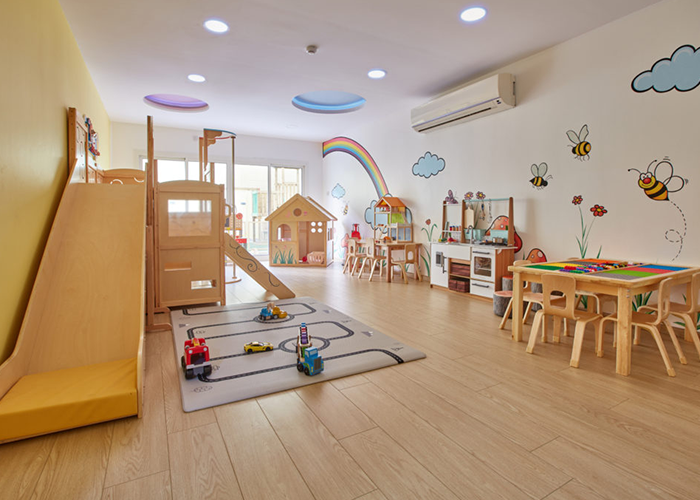
A Gym Frame — the baby gym and climbing combinations in this line — is a simple product with nowhere to hide. Two side frames, a set of rungs, a finish that a baby will eventually put in their mouth. If a rung sits 2 mm off, or the finish smells wrong, or the frame wobbles on a flat floor, the buyer knows by the second delivery. Single-line buyers accumulate this knowledge faster than anyone. What they buy from a factory, after the first order, is the confidence that the twelfth frame came off the same standard as the third.
That is also why certification on this line is not a formality. Baby Gym units in our range carry CE conformity against EN71-1:2014+A1:2018, EN71-2:2020 and EN71-3:2019+A1:2021 under certificate GC21093001, report HG210827221, issued by Ningbo GIG Testing in September 2021. EN71-1 covers mechanical and physical properties, EN71-2 covers flammability, and EN71-3 covers migration of certain elements — the part that matters when the product ends up in a baby’s mouth. For a US buyer, the corresponding file is the CPC route: our climbing products carry CPC documentation from Shenzhen BCTC Testing (CPSC Lab ID 1602), and ASTM F963-17 reports for that line record a pass on section 4.15, the stability and over-load requirement.
What the line actually is
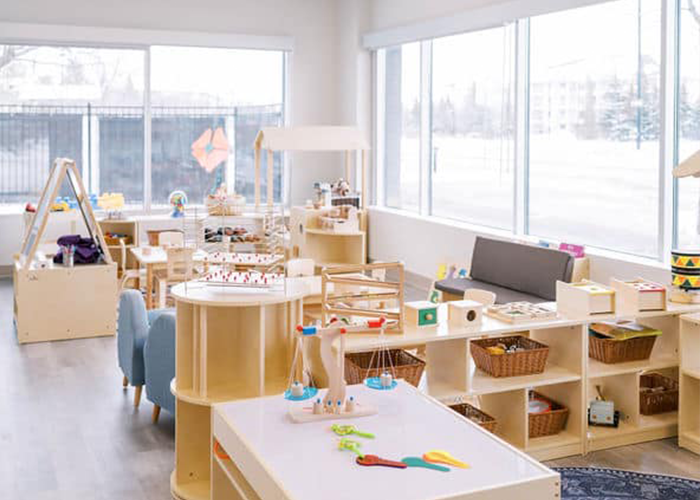
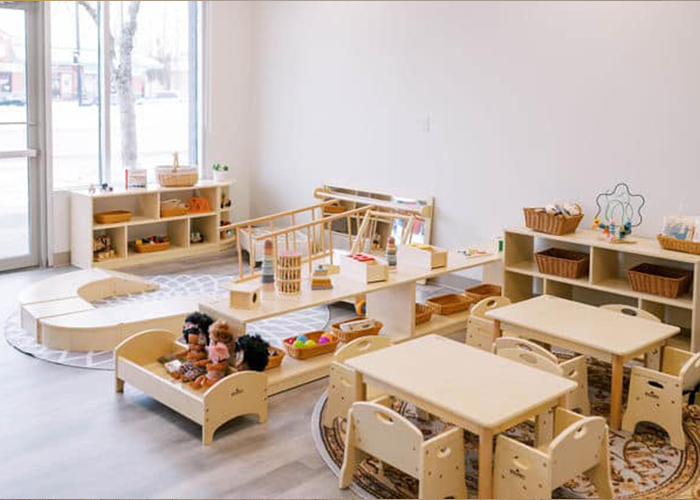
Gym Frame work runs on the same material base as our climbing products: birch wood multilayer panel, the material named on the CPC certificate covering the climbing frame, ramp, play cube and chair-slide components. The standard finishes seen in our test records include natural wood with clear varnish, and the tested samples themselves came through in eleven wood tones, from white and natural through green, orange, purple, blue, red and yellow to a silver metal fitting — which is a way of saying the finish range is a production fact, not a catalogue drawing.
Customisation is where a single-line buyer can shape the product. A custom Baby Gym produced to one buyer’s specification — 73 × 47 × 50 cm, beech, unfinished, no screws, with a logo engraved into the frame — shows what the line can be made to. Unfinished beech is a deliberate choice for buyers who want zero coating contact, and the no-screw construction removes the hardware a small child could work loose. On paint, our production practice for coated pieces runs two primer coats and two topcoats, which is the kind of process detail worth asking any factory to state in writing.
What three years of one product line teaches
Twelve orders across nine quarters works out to about one order a quarter, with gaps short enough that the buyer was clearly running stock down and replenishing on a cycle. Three things follow from that pattern:
- Consistency beats novelty. The buyer is not asking for new models every season; the ask is that the current model stays identical.
- Small process changes need to be flagged. A finish or hardware change that a fashion buyer would never notice shows up immediately when the same product is reordered quarterly.
- Certification files must survive the reorders. The report that covered the first shipment has to still describe the twelfth one, which is why we keep report numbers like GC21093001 and HG210827221 attached to the products they cover.
What you can copy from this account
- If one product line is your business, source it from a factory that treats that line as a standing production item, not a project. Ask how many reorders of the same model they have shipped.
- Ask for the coating schedule in writing. Two primers and two topcoats is our practice for coated pieces; get your supplier’s version in the contract.
- For baby products, look at EN71-3 specifically. It is the migration-of-elements test, and it is the one parents are really asking about.
- Consider unfinished beech if coating contact is a concern for your market. It removes the finish question from the conversation entirely.
Next step
Send the model and finish you are looking for, with your target age group and market. We come back with an itemized list, the matching test reports for the line, and sample options in a few working days.
Factory-direct supply, E0-grade birch plywood and non-toxic paint
Certified: EN71-1/2/3, CE, CPC, EN 1729 (report numbers available on request)
No minimum order · We accept PayPal