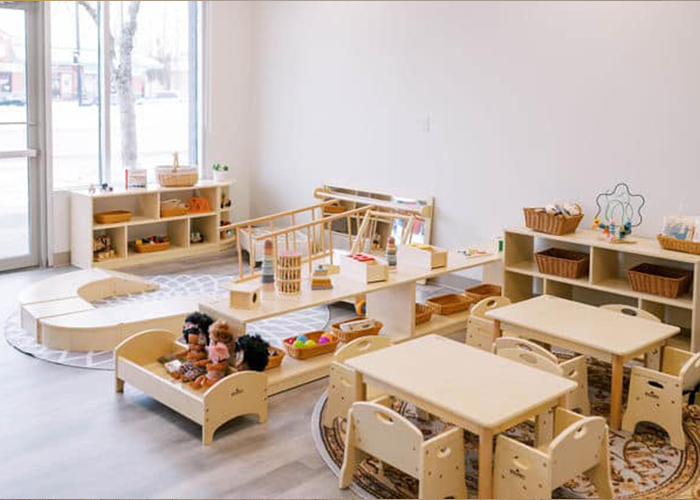
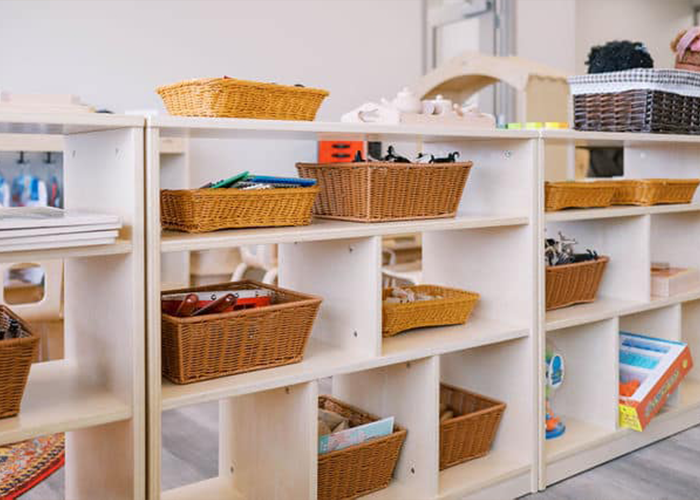
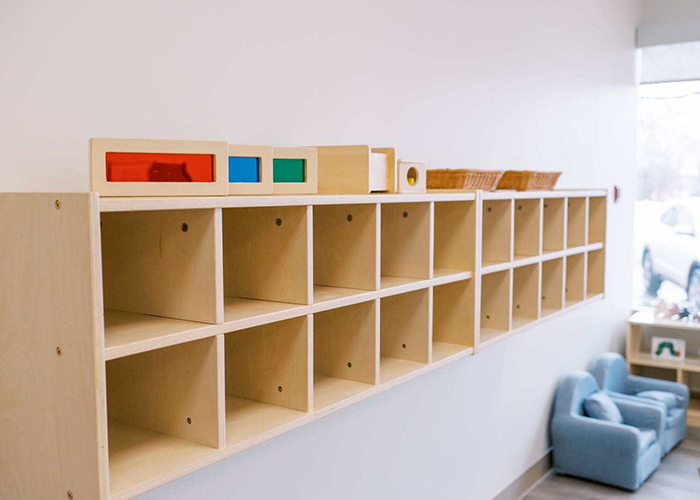
FSC Wood and E0-Grade Birch Plywood often appear together on kids’ furniture quotes, yet the labels describe different parts of the product. FSC addresses the source and traceability of forest-based material. E0 addresses formaldehyde emissions under a named panel standard and test method. You need both claims tied to the quoted furniture, plus separate checks for construction, finish, hardware, and the rules in your target market.
What FSC And E0 Tell You
FSC and E0 answer two separate purchasing questions.
| Label Or Term | Main Question It Answers | Evidence You Should Request |
|---|---|---|
| FSC | Where did the forest-based material come from, and was it tracked through a certified supply chain? | The FSC label or claim, licence code, valid certificate scope, and order documents carrying the applicable claim |
| E0 | How much formaldehyde did the tested wood-based panel release under a stated standard and method? | A test report that names the standard, method, panel type, sample, result, unit, and issuing laboratory |
| Birch plywood | What panel construction is being quoted? | Panel thickness, face and core species, ply construction, face grade, bond type, finish, and approved sample or specification |
FSC addresses material sourcing. E0 addresses a panel emission result. Neither label replaces a finished-furniture safety and quality review.
If you are comparing wood with plastic or metal before choosing a specification, use this daycare furniture materials guide to narrow the material family first.
What An FSC Label Means
An FSC label shows that forest-based material has moved through a certified chain of custody. It does not describe formaldehyde emissions, furniture strength, surface durability, or child-use safety.
The three FSC on-product labels describe different material inputs:
| FSC Label | What It Means |
|---|---|
| FSC 100% | The virgin forest material comes from FSC-certified forests. |
| FSC Mix | The product uses a mix of FSC-certified virgin material, recycled material, and/or controlled virgin material. |
| FSC Recycled | The forest-based material is recycled. |
The exact label matters. “FSC wood” in a sales message is too broad for an order specification because it does not tell you which claim applies to the product.
How To Verify The FSC Claim
Start with the licence code shown on the label or sales material, usually in the form FSC-CXXXXXX. Use the public FSC certificate search to confirm the certificate holder, status, dates, and scope.
Then match the certified company to your transaction. A panel mill’s certificate does not automatically prove that every finished item sold by another company carries an FSC claim. Ask the supplier how the claim will appear on the quotation, sales document, packing document, product, or packaging, as applicable.
Check three points before you approve the wording:
- The certificate is active and covers the relevant product group.
- The company making the claim is within the certified supply chain.
- Your order documents identify the furniture or material covered by that claim.
What E0-Grade Birch Plywood Means
E0 describes a formaldehyde-emission grade under a stated standard. The “0” is part of the grade name; it does not mean zero formaldehyde emissions.
Under GB/T 39600-2021, the E0 limit is 0.050 mg/m³ using the standard’s specified approach. The same standard sets limits of 0.124 mg/m³ for E1 and 0.025 mg/m³ for ENF. These figures are useful only when the report actually cites this standard and uses the corresponding method and unit.
“Birch plywood” also needs a complete specification. One supplier may mean birch face veneers over another wood core, while another may quote an all-birch construction. Ask for the face species, core composition, thickness, ply count or construction, surface grade, bond type, and finish. Those details affect exposed edges, screw holding, machining, appearance, and cost.
An E0 report should let you identify:
- The panel manufacturer and report number.
- The tested product and sample description.
- The cited standard, test method, result, and unit.
- The report date and laboratory.
- The thickness, finish, or other sample details needed to match the material in your order.
If the report says only “wood-based panel” while your quote says “birch plywood,” ask the supplier to show how the sample and quoted material match.
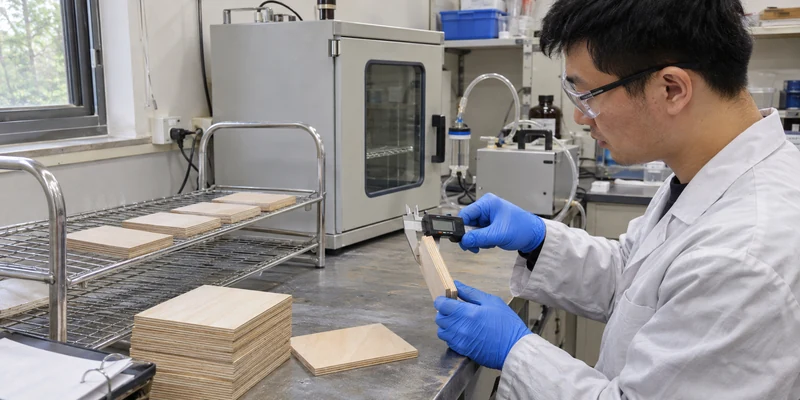
Why The Standard And Test Method Matter
You cannot compare formaldehyde numbers until the standard, method, unit, and product scope match. A chamber result in mg/m³ and a result in ppm are not interchangeable figures, even when both documents use a low-emission label.
For furniture manufactured in or imported into the United States, the applicable TSCA Title VI composite wood requirements cover hardwood plywood, MDF, thin MDF, and particleboard. The federal emission limit for hardwood plywood is 0.05 ppm. Regulated panels require third-party certification, and covered finished goods have labeling and record requirements. An E0 report prepared under another standard can support your material review, but it does not replace the evidence required for U.S. compliance.
Use the destination market to set the document list before requesting prices. A supplier can then include the correct panel, testing, labels, and records in the production plan.
Requirements vary by jurisdiction. Confirm the current rules for your product, destination, and role with the relevant regulator or qualified compliance professional.
What These Labels Do Not Cover
FSC and E0 are useful evidence with limited scope. Your finished furniture still needs checks that match how children and staff will use it.
| Issue | Covered By FSC? | Covered By E0? | What You Still Need To Check |
|---|---|---|---|
| Forest source and chain of custody | Yes, within the certified claim | No | Licence code, certificate scope, and transaction claim |
| Panel formaldehyde emissions | No | Yes, under the cited standard and tested sample | Report scope, result, method, unit, and target-market requirements |
| Panel structure and edge quality | No | No | Core composition, voids, bonding, thickness, machining, and edge finish |
| Coating and cleaning compatibility | No | Usually no | Finish specification and evidence for the planned cleaner and routine |
| Furniture stability and hardware | No | No | Drawings, fasteners, joint design, stability, load or safety tests where applicable |
| Whole finished product compliance | No | No | Product-specific standards, labels, records, and local requirements |
This separation matters in a busy classroom. A low-emission panel can still have rough edges, weak fastener points, or a finish that does not tolerate the center’s cleaning routine. FSC-certified material can still be used in a poorly built item. You need the label evidence and the furniture specification to agree.
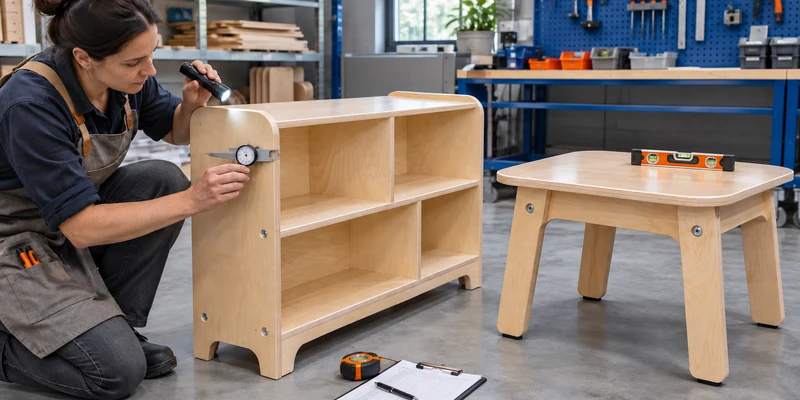
How To Check A Supplier’s Documents
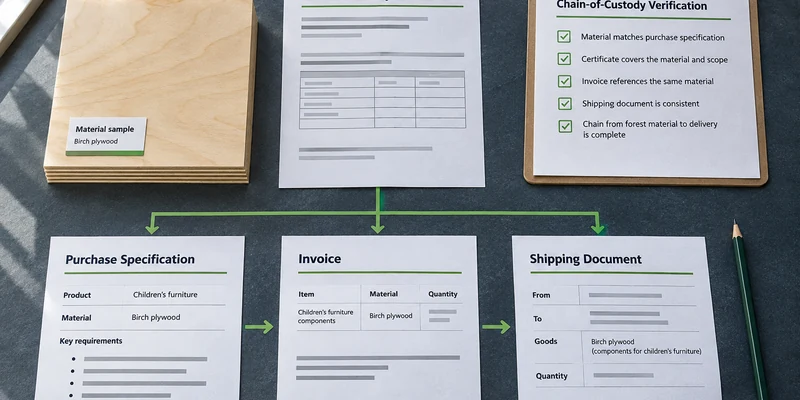
Put the quote, material schedule, certificates, test reports, and product drawing side by side. This simple review exposes gaps faster than reading each file on its own.
Lock The Product Specification
Give each item a SKU or drawing reference. Record the panel type, thickness, face and core composition, finish, color, dimensions, hardware, and intended market. If a cabinet uses different panels for its body, back, doors, and shelves, list them separately.
Match The FSC Evidence
Check the licence code, certificate holder, status, scope, and claim type. Confirm that the company making the claim and the furniture on your order are connected through the applicable sales documents.
Match The E0 Report
Compare the quoted panel with the report’s product description, manufacturer, thickness, finish, standard, method, and date. A report for particleboard does not support a birch plywood claim. A report for an unfinished panel may not describe a finished or laminated construction.
Add The Destination-Market Documents
Write the destination and required standard into the request. For a U.S. order containing regulated composite wood, ask for the TSCA Title VI information that applies to the panel and finished good. Other markets may require different evidence.
Check The Finished Furniture
Review the panel edges, surface finish, joints, fasteners, stability, exposed hardware, labeling, and packing against the approved drawing or sample. If frequent cleaning is expected, document the cleaner and contact time that the finish is meant to tolerate. The wooden preschool furniture care guide explains how the substrate, finish, edges, and hardware change the care routine after delivery.
At Xiha Montessori, we treat material-source evidence, emission evidence, and finished-furniture checks as separate approval lines. This prevents one certificate from being used to answer questions it was never designed to cover.
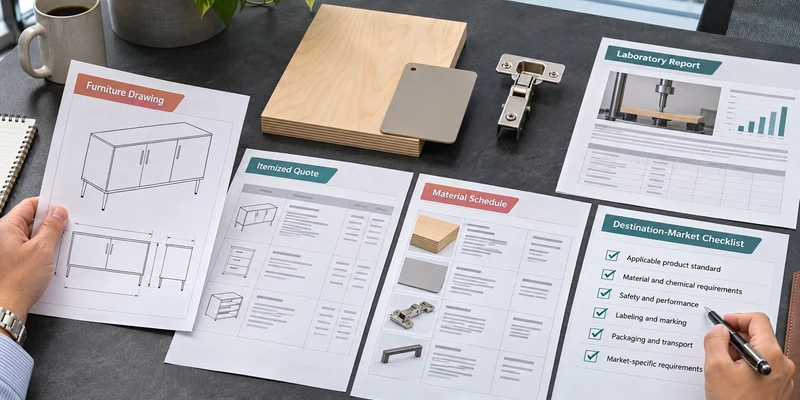
If you are preparing a project list, send the product schedule, destination market, age group, room plan, and required documents with your inquiry. You can then compare the same specification across every supplier and avoid late material substitutions.
How To Compare Two Furniture Quotes
Compare evidence and scope before comparing price. A lower quote may use the same material words while leaving the panel construction, certification claim, finish, or compliance documents undefined.
| Quote Detail | Clearer Offer | Riskier Offer |
|---|---|---|
| Material | Identifies birch face and core composition, thickness, finish, and component use | Says only “birch plywood” |
| FSC | States the claim type and provides a verifiable licence code and order-document process | Shows a certificate image with no link to the quoted item |
| E0 | Names the standard, report, tested panel, result, and unit | Uses “E0 eco board” as a marketing phrase |
| Target market | Lists the required U.S., Canadian, Australian, European, or local documents for the order | Says “international standard” without naming one |
| Finished furniture | Defines edges, hardware, joints, inspection, packing, and approved sample | Relies on material labels as proof of overall quality |
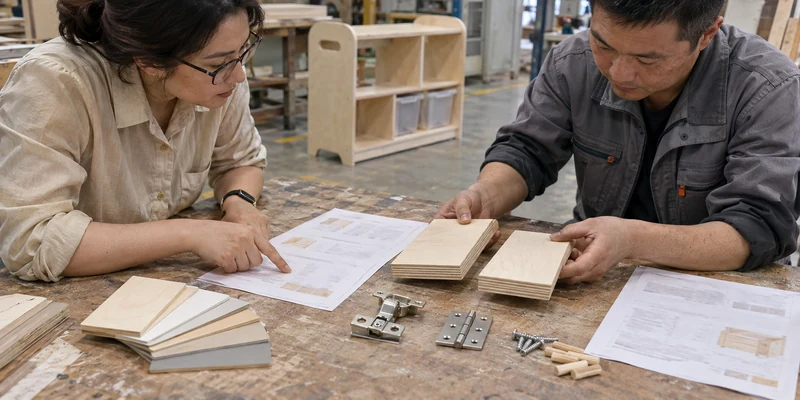
Before ordering from a preschool furniture collection, turn your material requirements into line items. This makes substitutions visible and gives your inspection team a clear reference.
Common Buying Mistakes
Treating FSC As An Indoor-Air Label
FSC verifies responsible forest sourcing and chain of custody within the claim. Ask for separate formaldehyde and target-market evidence.
Reading E0 As Zero Emissions
Read the standard, method, result, and unit. The grade name alone cannot tell you what was tested or whether the report applies to your order.
Accepting A Company Certificate For Every Product
A valid company certificate has a defined scope. Match the product, claim, and transaction to that scope before you describe the furniture as certified.
Checking Only The Visible Plywood
Back panels, drawer bottoms, shelves, laminated parts, and other composite wood components may use different materials. Ask for a component-level material schedule when the project or market requires it.
Ignoring Finish, Hardware, And Packing
Labels do not show whether an edge is smooth, a fastener is secure, a coating matches your cleaner, or a product will arrive without damage. Keep these checks in the purchase specification and final inspection.
FAQ
Is FSC Wood Free From Formaldehyde?
FSC certification does not set a formaldehyde-emission grade for the furniture. Request the applicable panel test and target-market compliance documents separately.
Is E0 Birch Plywood Formaldehyde-Free?
No. E0 is an emission class under a named standard. Under GB/T 39600-2021, it means a result at or below the E0 limit measured by the specified method; it does not mean absolute zero emissions.
Is An E0 Report Enough For Furniture Sold In The United States?
No. If the furniture contains composite wood regulated by TSCA Title VI, the relevant U.S. certification, labeling, and record requirements still apply. Confirm the product scope and your role in the supply chain.
Does Birch Plywood Always Mean An All-Birch Core?
No. Supplier wording varies. Specify the face species and core composition in the quote and approved material schedule so the delivered panel matches your expectation.
Does Every FSC Furniture Item Need The Same Label?
The applicable FSC claim depends on the material input and certified supply chain. Ask the final supplier which claim covers the item and how it will appear on approved product, packaging, or sales documents.
Check The Evidence Behind The Labels
Read FSC and E0 as two separate evidence tracks. Verify the forest-material claim, match the emission report to the actual plywood, add the documents required in your destination market, and inspect the finished furniture specification. This process gives you a defensible purchase decision without asking one label to prove everything.
If you want help matching material options, furniture specifications, and project documents, Xiha Montessori can review your product list and classroom requirements before quotation.