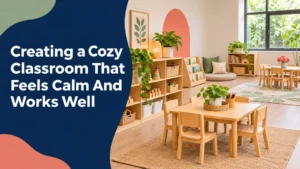
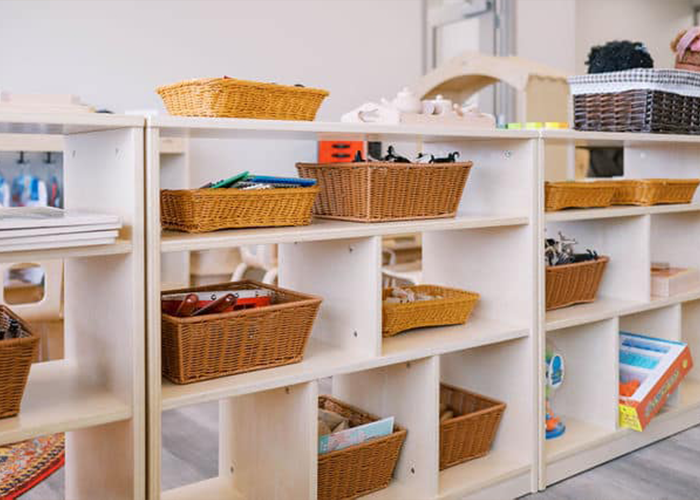
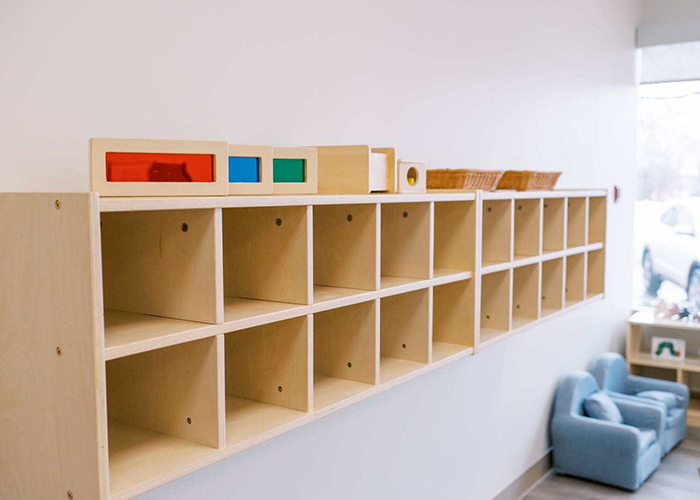
A cozy classroom should help children settle, move with confidence, and understand where each activity belongs. You can create that feeling without filling the room with soft furnishings or decorations. Start with the floor plan, then control light, noise, displays, furniture, and storage. This guide shows you how to make those choices work during arrival, play, cleanup, rest, and every transition in between.
Decide What Cozy Should Do
“Cozy” is useful when you can see its effect on the classroom. Children can find a place to join an activity, move between areas without collisions, reach familiar materials, and step away from stimulation while remaining within supervision. Teachers can scan the room, sit near children, and reset the space quickly.
Set three goals before you choose colors or furniture:
- Calm: Reduce unnecessary noise, glare, movement, and visual clutter.
- Clear: Make each area easy to recognize and every main route easy to follow.
- Connected: Give children smaller places to work while preserving teacher sight and sound supervision.
These goals help you judge each purchase. A rug is useful when it defines an area or reduces sound. A shelf is useful when children can reach its contents and the unit does not create a hidden zone. A display is useful when children can see and understand it.
Start With The Room Layout
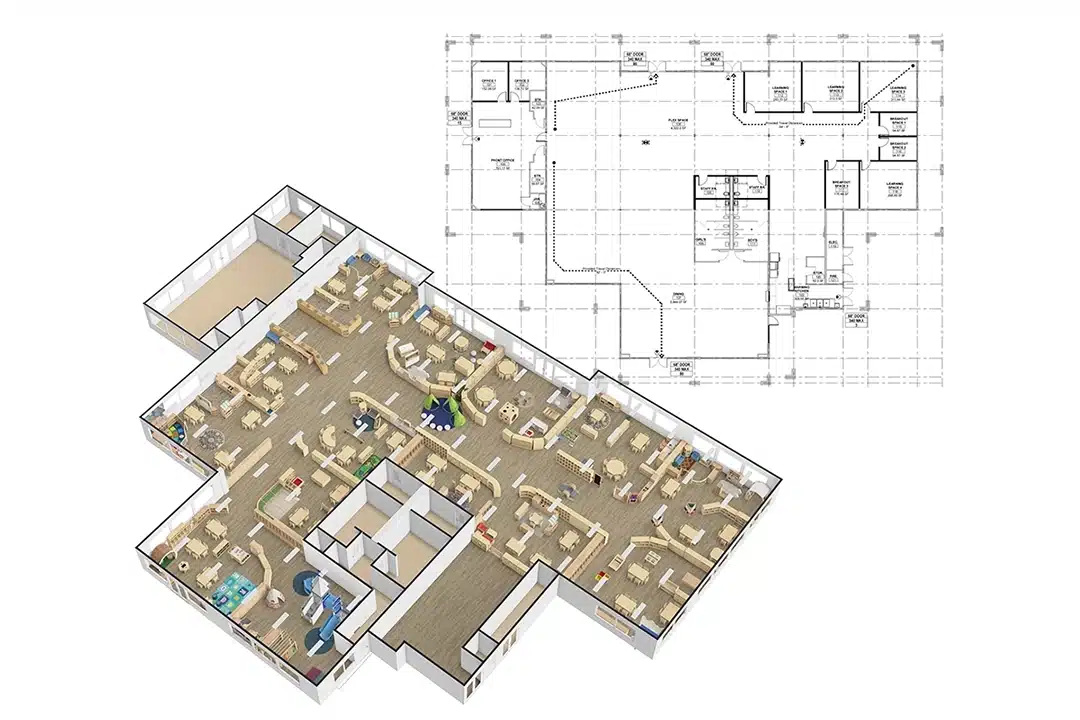
Begin with an accurate floor plan. Mark doors, windows, fixed sinks, columns, outlets, heating or cooling equipment, and storage that cannot move. Add the children's age range, group size, daily activities, and the places where teachers usually stand or sit.
In our classroom plan reviews, this information comes before the product list. A room can contain attractive furniture and still feel unsettled when active play crosses the reading area, a shelf narrows a transition route, or a teacher loses sight of a corner. We arrange the routines first and use furniture to support them.
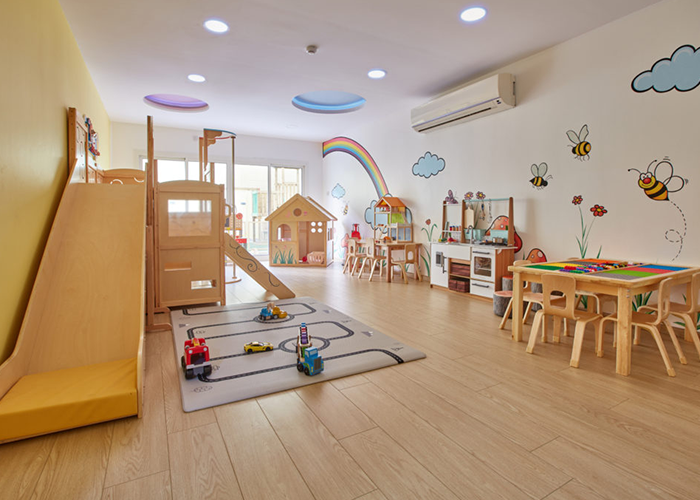
Place active areas near compatible activities. Blocks and dramatic play can share a livelier side of the room. Reading, listening, and individual work need distance from the busiest path. Keep arrival storage close to the entrance when the room allows it, so bags and coats do not travel through learning areas.
Use low shelves, rugs, and changes in furniture orientation to define zones. Keep the main routes open and avoid long, straight paths that invite running. Check every boundary from a teacher's normal position. Current early-childhood classroom guidance also recommends child-sized, accessible furniture and an unobstructed view across the room.
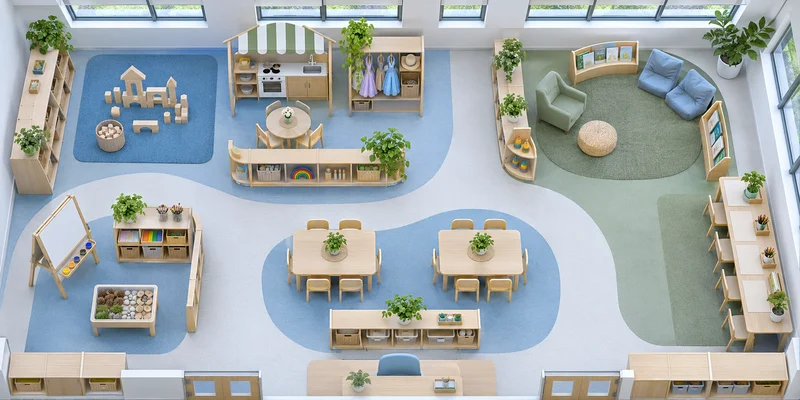
If you are planning a new room or changing several zones, a classroom design plan can help you test circulation, storage, and furniture placement before you order.
Use Light, Color, And Displays With Restraint
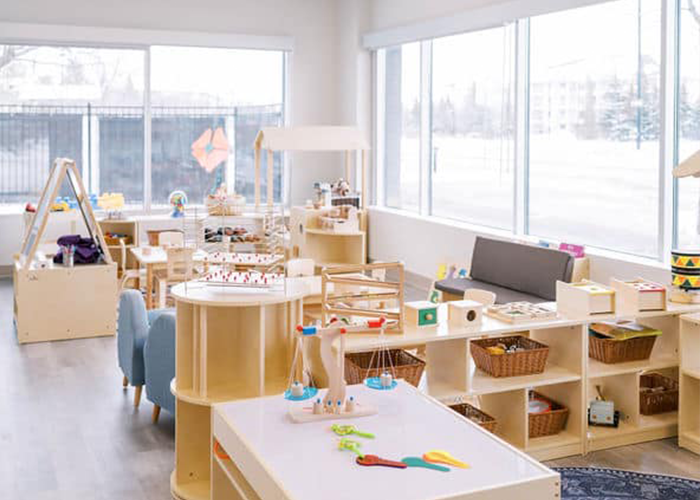
Natural light can make a classroom feel open and comfortable, but direct glare makes tables, books, and screens harder to use. Observe the room at different times of day. Move focused work away from strong glare, add approved window treatments where needed, and check whether shelving blocks useful daylight.
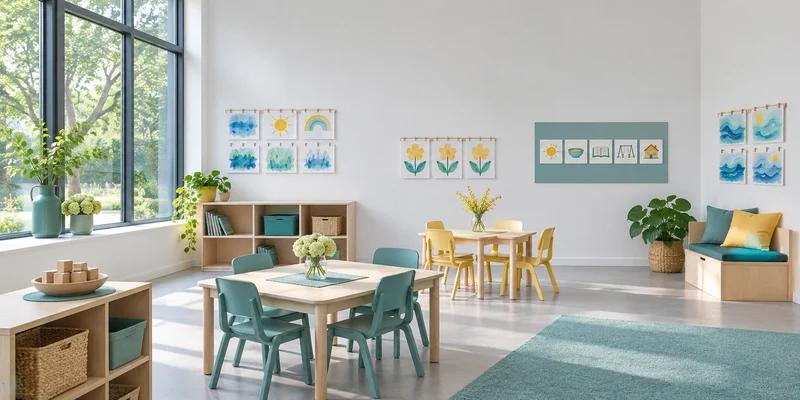
Use a limited base palette for large surfaces and furniture. Add stronger colors through materials, cushions, artwork, or one defined zone. This gives you flexibility when themes and learning materials change. It also makes important labels and children's work easier to notice.
Plan wall displays by purpose:
- Put children's work at a height where children can revisit and discuss it.
- Keep routine cues near the place where children need them.
- Use real photographs and clear picture labels where they support independent use.
- Leave open wall space between display groups.
- Rotate work on a clear schedule so the display stays current.
Check the room from the doorway and from a child's seated height. If the eye has no place to rest, remove repeated borders, duplicate signs, and materials that no longer support the current work.
Control Noise Without Blocking Sightlines
Sound changes how a classroom feels. Hard floors, bare walls, chair movement, and several active centers can make ordinary play feel tiring. Identify the source before adding products. A rug may soften block noise, felt glides may reduce chair scraping, and soft seating may absorb sound in a reading area. Each item still needs to meet your cleaning, fire-safety, and local licensing requirements.
Furniture can separate activity zones, but height and placement matter. A solid tall unit may reduce visual movement while creating a supervision problem. Low open shelves usually provide a clearer boundary and keep materials accessible. Where stronger acoustic separation is necessary, treat it as a room-design decision and confirm the applicable building, fire, and accessibility requirements.
For infant and toddler spaces, noise, light, movement, traffic, and supervision should be considered together. This is a useful check for preschool rooms as well: an acoustic improvement should not create a tight route or a hidden area.
Choose Furniture For Children And Daily Routines
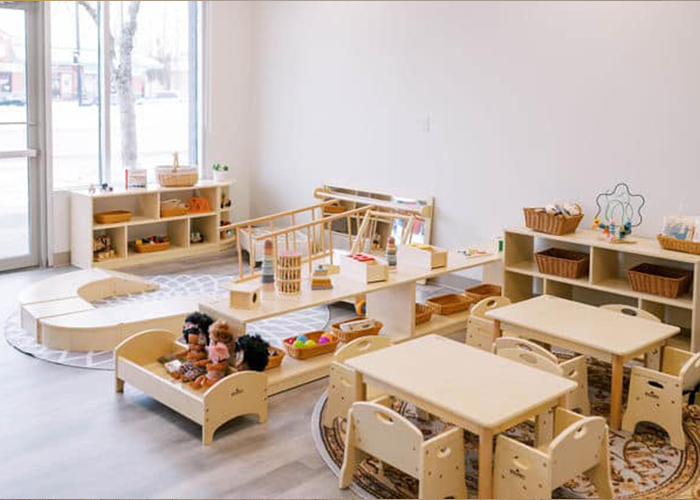
Child-sized furniture supports comfort only when it fits the children who will use it. Compare seat height, tabletop height, shelf reach, and handle position with the age group and activity. A low table may work for floor-based materials but may not support longer art or meal routines. A shelf may be reachable from the front while its top becomes an unsafe place for heavy storage.
Review furniture as part of a routine:
| Classroom Need | Practical Check | What To Confirm Before Buying |
|---|---|---|
| Independent access | Can children see, reach, carry, and return the intended materials? | Usable shelf height, compartment size, stability, and any restraint requirements |
| Comfortable seated work | Do children's feet and arms have stable support during the activity? | Seat and table dimensions for the intended age group |
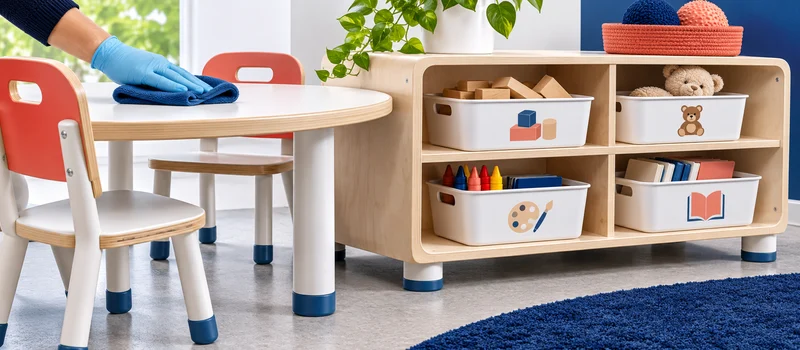
| Quick cleaning | Can staff reach the surface, edge, underside, and floor around the item? | Component materials, finish, edge treatment, and approved care method |
| Flexible room changes | Can the unit move safely and remain stable in use? | Item weight, glides or casters, locking method, and moving instructions |
| Long-term replacement | Can a damaged part be identified and reordered? | Product code, hardware list, spare-part options, and finish reference |
Ask for material and finish information for each main component. “Wooden furniture” does not tell you how a tabletop, shelf edge, painted panel, or caster plate will respond to daily cleaning. A useful specification connects the material and finish to your actual cleaning method and maintenance plan.
When comparing preschool furniture, look at complete activity zones and room routines. This makes it easier to catch missing storage, mismatched table and chair sizes, or a finish that staff cannot maintain consistently.
Create One Quiet Place Children Can Choose
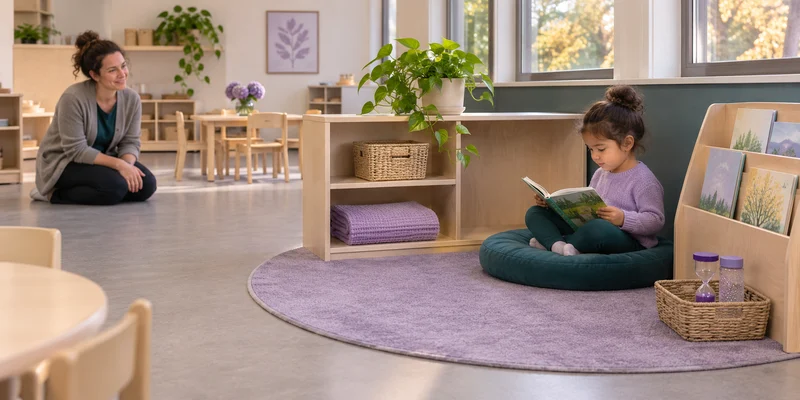
A classroom-wide plan still needs a small place for one or two children to pause, look at a book, or settle before returning to the group. Place it away from the main traffic route and keep it visible to the teacher. Use a rug, low shelf, or furniture orientation to show the boundary.
Choose a small number of items that match the purpose: a firm floor cushion or child-sized seat, a few familiar books, and one or two simple sensory tools. Too many objects create another busy center. Keep the rules clear, including how many children can use the area and how materials return to storage.
The space should remain available by choice. Using it as a punishment changes how children understand it. Teachers can introduce the area, model how to use it, and help children identify when a short pause may help.
For shelf height, book display, seating, and location decisions, use the detailed classroom reading corner guide.
Add Belonging Without Adding Clutter
Children feel more secure when the room reflects people and experiences they recognize. Use family photographs with permission, children's current work, home-language labels where appropriate, and images that represent the families in your program. Keep these elements close to the routines or learning areas they support.
Let children contribute to the room. They can choose work for display, help label storage, care for a suitable classroom plant, or reset the reading area. These small responsibilities make the environment familiar and understandable.
Use décor that staff can maintain. Fabric can soften a room, but it also needs a defined cleaning schedule and safe placement. Plants need a stable location, a non-toxic species, and a plan for soil, water, allergies, and holiday care. Personal items should never cover required safety signs, inspection labels, or teacher sightlines.
Test The Classroom During A Real Day
A floor plan is a starting point. Test the room through the routines that put the most pressure on it. Walk the arrival route with bags and coats. Move a small group from tables to the sink. Carry a tray from a shelf to a work area. Check the line of sight while one teacher supports a child. Simulate cleanup when several children return materials at once.
Use a short review at four moments:
| Moment | What To Watch | Useful Adjustment |
|---|---|---|
| Arrival | Congestion, loose belongings, blocked doors | Move or divide personal storage and clarify the entry path |
| Choice time | Children crossing active work, materials carried too far | Relocate a center or duplicate a frequently used tool |
| Cleanup | Crowding at shelves, unclear labels, items without a home | Reassign compartments and simplify the material set |
| Rest or quiet time | Glare, noise transfer, furniture moves, supervision gaps | Adjust lighting, boundaries, or the sequence of setup |
Ask a teacher who did not help with the layout to walk through the room. If that person cannot understand where materials belong or how a transition should work, children will need extra verbal direction too.
If you want us to review your floor plan, age group, capacity, and activity zones before you select furniture, use the project form below:
Plan Purchases As One Classroom System
Buying by individual product can create a room with repeated functions and missing connections. Build a room schedule by zone. List the children served, activity, required furniture, material storage, teacher support, cleaning method, and any fixed condition such as a window or outlet.
For multi-room projects, group the schedule by room and age level. Use consistent product names, finish references, and labels so receiving and installation teams can identify where each item belongs. Keep the approved floor plan, product list, assembly information, and replacement-part details together.
This is where our project experience changes the purchase decision. A warm-looking chair or shelf still has to fit the room dimensions, age group, cleaning routine, delivery sequence, and future maintenance. We review those relationships before treating an item as suitable for the project.
Ask suppliers to confirm:
- dimensions for the exact model and age group;
- materials and finishes by component;
- cleaning and care limitations;
- stability, anchoring, and assembly requirements;
- replacement hardware or component availability;
- packaging labels for room-by-room receiving;
- the documents required by your location and project.
Local licensing, building, fire, and accessibility requirements vary. Confirm the rules that apply to your location before approving route widths, partitions, wall restraints, fabrics, rugs, or electrical changes.
To turn these requirements into one furniture and room schedule, send your floor plan and purchasing priorities:
Avoid Common Cozy Classroom Mistakes
Buying Soft Items Before Checking Care Requirements
Cushions, rugs, canopies, and fabric panels need a cleaning method, storage location, and replacement plan. Confirm fire-safety and licensing requirements before ordering. Choose only the pieces that solve a clear comfort or sound problem.
Using Tall Furniture To Create Privacy
Tall units can hide clutter and create stronger boundaries, but they can also block supervision and light. Use low furniture where possible and check every planned height on an elevation or in the actual room.
Filling Every Wall And Shelf
Dense displays and crowded storage raise the room's visual load. Keep current materials visible, store the rest, and rotate with a purpose. Empty space helps children see choices and return items correctly.
Copying A Photo Without Testing Traffic
A photographed classroom captures one angle and one moment. It does not show arrival, cleanup, rest setup, accessibility, or the teacher's full view. Use inspiration for color or atmosphere, then test the plan against your own room and routines.
Choosing A Finish From A Small Screen Image
Color, grain, gloss, and texture can change under classroom lighting. Review a physical sample when the finish matters across several items. Check it near the floor, wall, and existing materials, and confirm how it should be cleaned.
FAQs
Can You Use Bright Colors In A Cozy Classroom?
Yes. Use bright color where it helps children identify a zone, material group, or important cue. Keep large background surfaces and repeated furniture finishes more consistent so the room stays easy to read.
How Do You Make A Small Classroom Feel Cozy?
Reduce the number of materials available at one time, keep the main path clear, use low storage, and define each activity with a compact boundary such as a rug or furniture orientation. Measure the room before buying; oversized soft furniture can remove useful activity space.
What Should Go In A Classroom Cozy Corner?
Use a comfortable seat or floor cushion, a few familiar books, and a small number of calming tools suited to the children. Keep the area visible, limit its capacity, and store each item in a clear place.
How Often Should You Change Classroom Displays?
Change a display when it no longer supports current learning, children stop using it, or new work needs the space. A planned rotation is easier to manage than adding items continuously.
What Should You Ask A Classroom Furniture Supplier?
Ask for exact dimensions, intended age range, component materials, finish and care guidance, stability or anchoring requirements, assembly information, spare parts, packaging details, and the compliance documents required for your project.
Do Classroom Plants Make A Room Cozier?
They can add color and a care routine when you choose a non-toxic plant and place it securely. Check allergies, soil access, water spills, light, and maintenance before bringing a plant into the room.
Build Warmth Into Everyday Use
Creating a cozy classroom starts with decisions that make the day easier to understand. Plan clear zones, protect sightlines, control visual and acoustic load, choose furniture that fits the children, and test the room during real transitions. When light, storage, materials, and routines work together, the classroom can feel warm without becoming crowded or difficult to maintain.