Maximizing Classroom Space and Budget starts with planning the room before selecting furniture. A limited floor plan and a fixed budget often expose the same problem: products were chosen before routines and priorities were mapped. You can protect both by working from usable space, funding daily-use items first, and comparing the full delivered scope of each option. This guide connects layout, storage, furniture priorities, purchasing, and delivery costs in one practical plan.
Start With A Room Plan
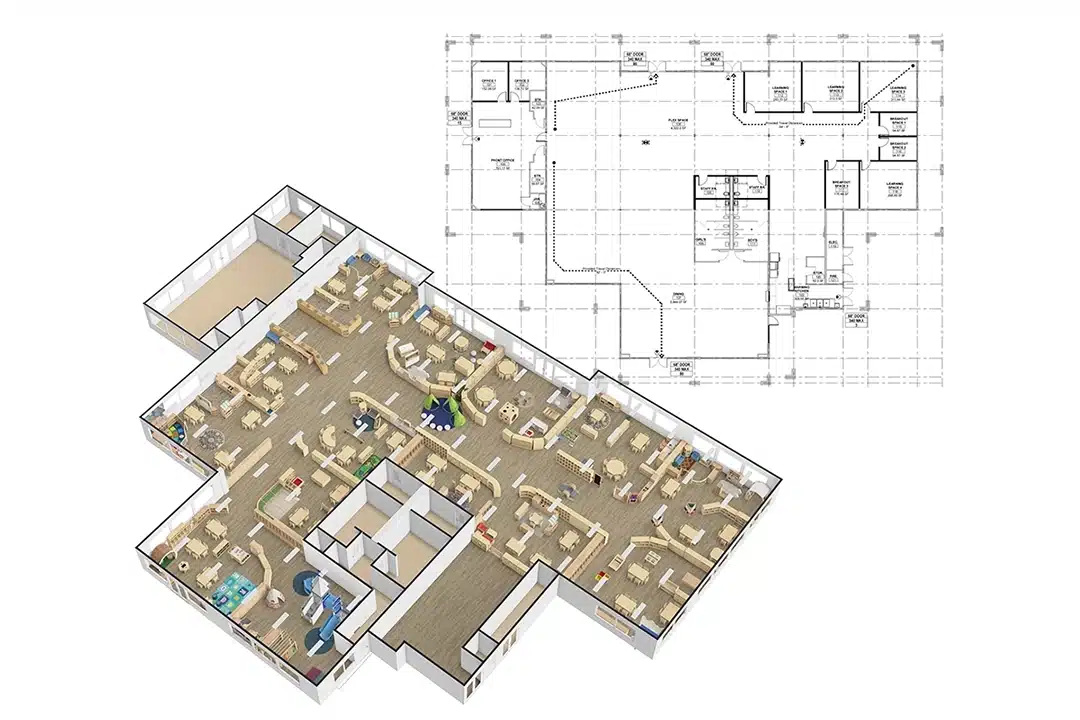
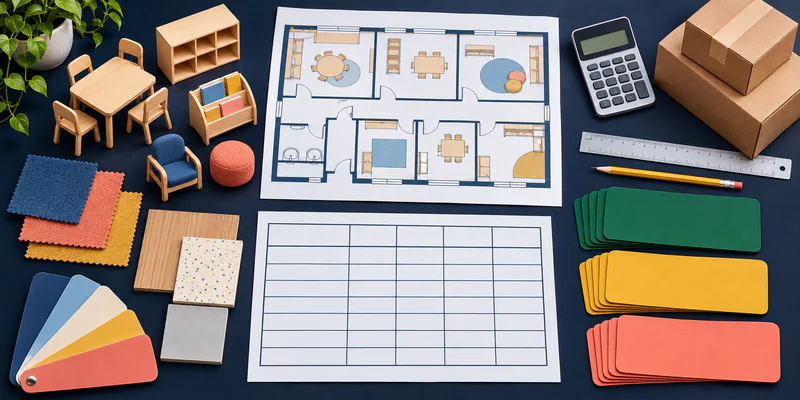
Build a scaled floor plan and a room inventory before you compare products. Record:
- Room dimensions and clear wall lengths
- Doors, windows, columns, sinks, outlets, radiators, and fixed cabinets
- Age group, planned enrollment, staffing, rest, meals, and learning areas
- Daily routes for arrival, activities, cleanup, rest, and evacuation
- Existing furniture, including its dimensions, condition, and intended room
A room’s total area is different from the floor area you can furnish. Measure open activity space, door swings, staff work points, and every route that must remain clear.
The age group and routine determine what the room needs. An infant room may require feeding, diapering, sleep, and floor play. A preschool room may need work tables, low storage, a group area, and several activity zones.
Check what you can reuse before adding new furniture. An inventory often reveals mismatched heights, damaged finishes, missing parts, or products that no longer suit the age group.
Capacity, accessibility, fire, and childcare requirements depend on the location, building, room use, and age group. Confirm the applicable requirements with local authorities before approving the layout.
Our planning process starts with this room data because individual products can fit on paper and still compete for the same working space. The preschool classroom design guide provides a useful starting point.
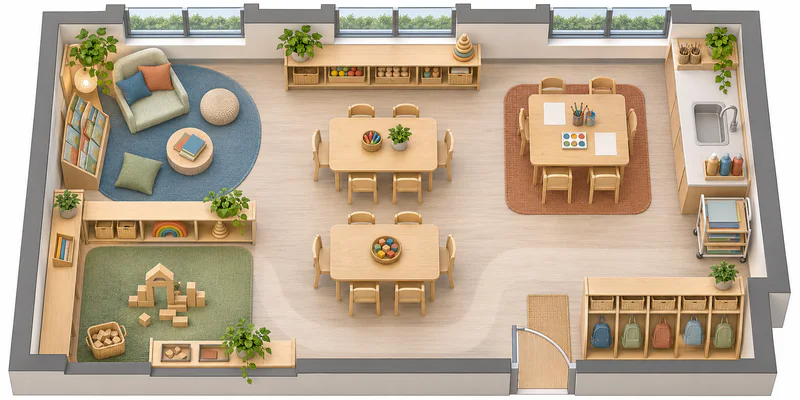
Approve the floor plan and room-by-room furniture schedule together. If one changes, update the other before ordering.
Use Classroom Space Well
Plan Around Daily Routines
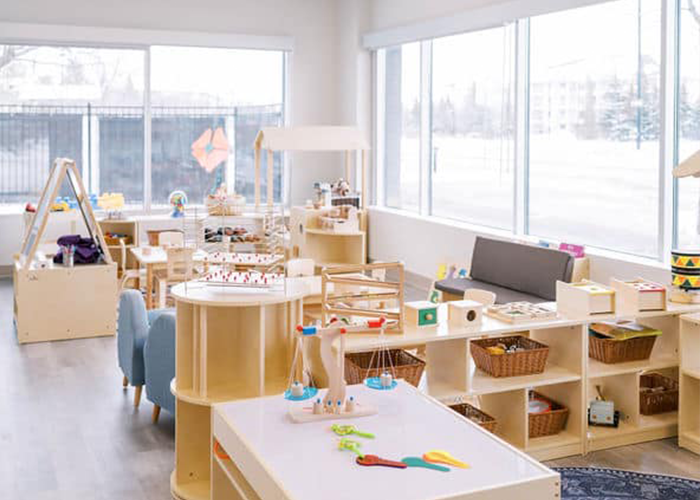
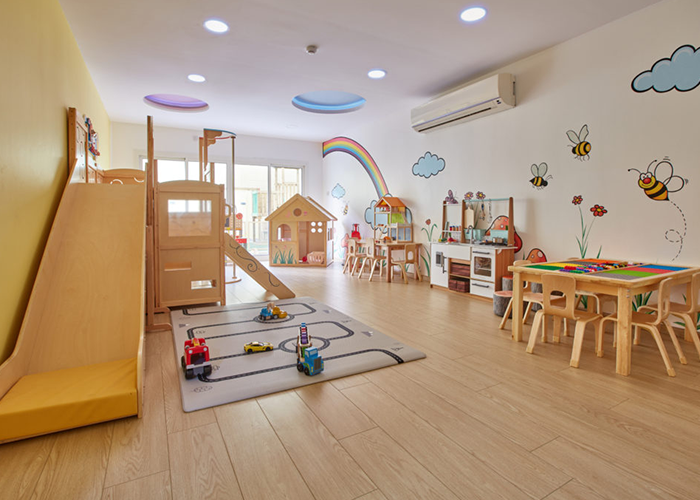
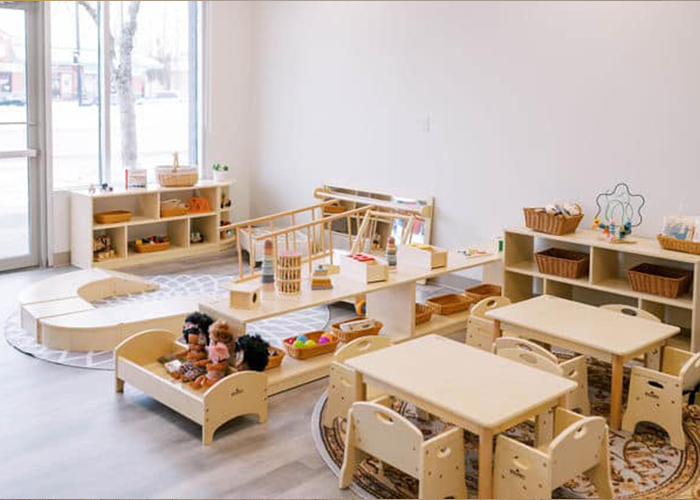
A compact classroom works best when each area has a clear purpose and related activities sit near each other. Place art storage near the art table, books near the quiet area, and personal storage near arrival and departure routes. Keep active areas away from spaces used for reading or rest.
Official guidance for early childhood classrooms supports clear sightlines, logical traffic patterns, and child-sized accessible furniture. These choices also protect your budget. A low shelf can store materials, define a learning zone, and preserve staff visibility when its height and placement are checked on the actual plan.
Leave enough open floor for children to use materials, move between activities, and gather when needed. Filling every wall and corner with furniture can reduce the room’s usable capacity even when the pieces technically fit.
Use Multi-Purpose Furniture
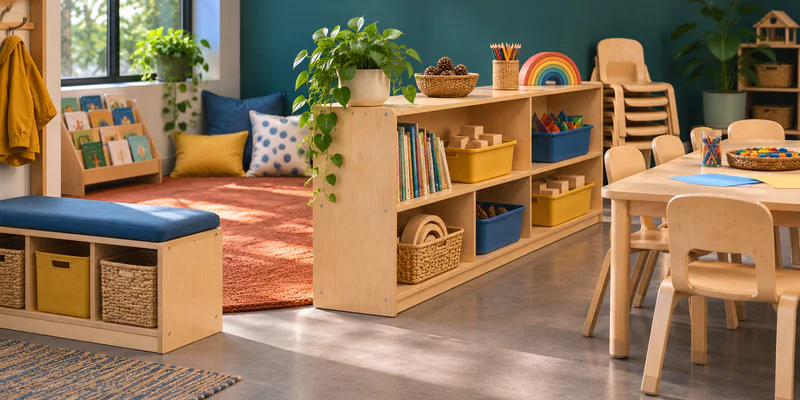
Furniture earns its footprint when it supports two real classroom needs. A low shelf can hold materials and separate a quiet zone. A table can support meals, art, and small-group work if its size, surface, and cleanup requirements fit those routines. A bench with storage may work in an entry area when the compartments, seat height, and traffic flow are suitable.
The second function must be useful every week. Built-in storage has little value if compartments are too small for the materials you use. Folding or mobile furniture does not save space if staff have nowhere to store it, if it interrupts transitions, or if its hardware is unsuitable for the children and setting.
Before choosing a multi-use product, ask:
- Which two routines will it support?
- Can staff change the setup quickly and safely?
- Where will loose materials go during the change?
- Does the product remain stable in each use?
- Will the surface tolerate the planned cleaning method?
Organize Storage By Use
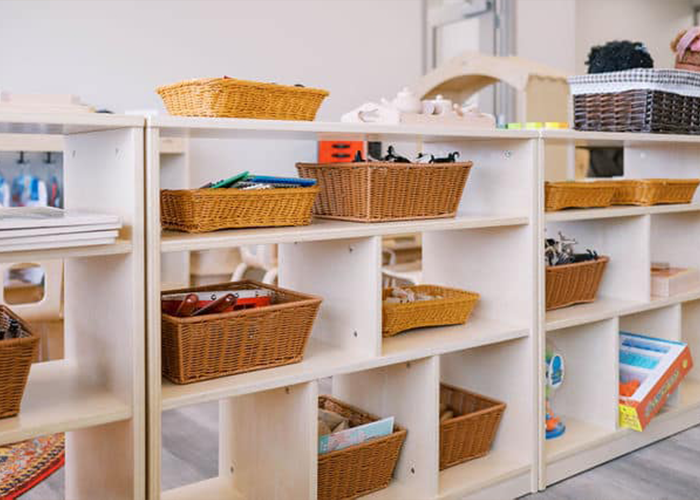
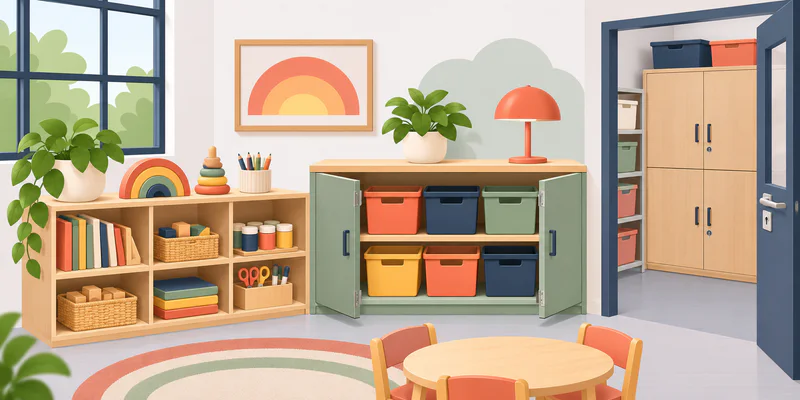
Keep daily materials close to the activity and within the intended user’s reach. Put rotating materials and back stock in a secure storeroom or staff cabinet when one is available. Restricted supplies need controlled storage.
This system reduces duplicate purchases because staff can see what is available and children can return materials to a consistent place. Intentional rotation also supports functional, accessible space with age-appropriate equipment.
| Storage Type | Best Use | Check Before Buying |
|---|---|---|
| Open Shelves | Daily materials and visible choices | Child reach, shelf depth, sightlines, and placement |
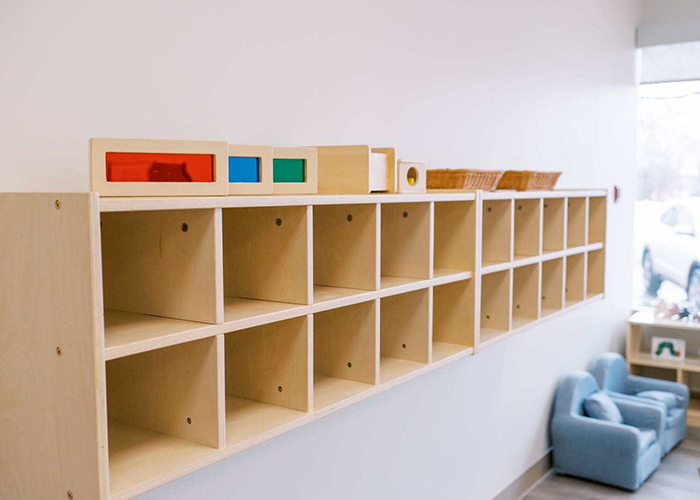
| Enclosed Cabinets | Back stock, visual clutter, or restricted supplies | Locks, staff access, internal dimensions, and door clearance |
| Mobile Units | Activities that move between areas | Caster locks, stability, travel route, and parking space |
Compare classroom storage options by routine and location. Storage volume alone does not show whether a unit will work in the room.
Test The Layout
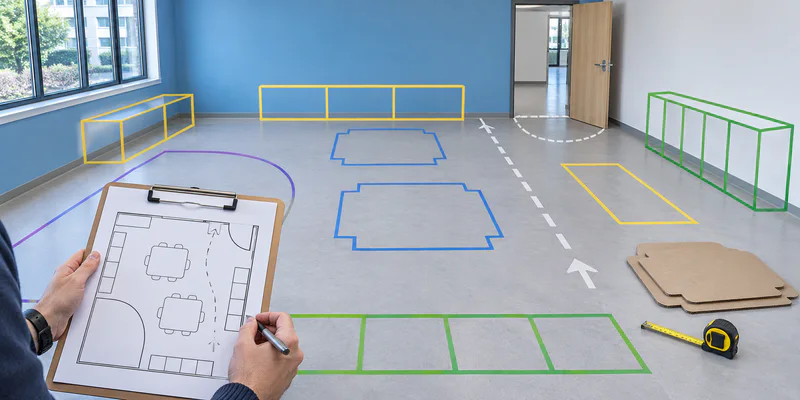
Place every proposed item on a scaled plan. Then test the layout against a normal day. Follow the path from entry to cubbies, from tables to the sink, from activity areas to cleanup storage, and from rest setup to cot storage. Check whether staff can observe several areas without tall furniture or deep corners blocking the view.
Use masking tape or cardboard footprints in the actual room for uncertain pieces. A product can look compact on a screen but feel too deep beside a doorway or too wide once chairs are pulled out. This low-cost check is especially useful for tables, cubbies, room dividers, reading units, and mobile storage.
Review the plan with teachers, operations staff, and the person responsible for compliance. Staff often identify transition bottlenecks that are easy to miss on a product list. Record each approved revision so the floor plan, furniture schedule, and quote remain aligned.
Keep The Budget Under Control
Buy Essential Furniture First
Divide the purchase list into opening-day items, near-term additions, and optional items. This keeps essential routines funded before decorative or specialized pieces absorb the budget.
| Purchase Group | Typical Items | Decision Test |
|---|---|---|
| Opening Day | Age-appropriate tables and chairs, accessible storage, personal storage, required care or rest furniture | The room cannot operate safely or complete a daily routine without it |
| Near Term | Additional learning-center storage, book displays, activity carts, extra seating | The room can open, but the item improves a routine that staff use often |
| Optional | Theme furniture, duplicate specialty pieces, decorative units | The item adds interest but does not solve a current operating problem |
Licensing, accessibility, sleep, diapering, and safety requirements stay in the opening-day scope where applicable. Budget pressure is not a reason to remove a required item. It is a reason to review quantities, standard models, finishes, delivery phases, and other specifications that can change without weakening the required function.
Compare Total Project Costs
Unit price gives you one part of the purchasing decision. The useful comparison is the full scope required to place the furniture in service.
| Cost Area | What To Compare | Why It Matters |
|---|---|---|
| Product | Model, dimensions, material, finish, quantity, included parts | Similar product names can hide different specifications |
| Packaging | Carton count, protection method, assembly state, room labels | Packaging affects freight, handling, installation, and damage risk |
| Delivery | Trade term, freight scope, destination service, taxes or duties where applicable | Two quotes may assign different responsibilities to you |
| Setup | Assembly, installation hardware, labor, access limits | A lower product price may create extra work on arrival |
| Use And Care | Cleaning compatibility, replacement parts, repair options | Maintenance affects how long the item remains practical |
Ask every supplier to quote the same room schedule and specifications. Each line should identify the product or SKU, dimensions, material, finish, quantity, packaging, and included components. Freight, trade terms, lead time, and quote validity should be visible as separate fields.
This comparison method comes directly from classroom project work. A single total can hide missing pieces, mixed room quantities, or a different delivery scope. A room-by-room schedule makes gaps easier to find before the order is approved. The preschool furniture buying guide gives you additional checks for size, construction, cleaning, and supplier documents.
Choose Standard Or Custom Furniture
Standard products can protect your budget when their dimensions and functions fit the room. They are usually easier to compare, reorder, and use across several classrooms. Repeating a practical table, chair, shelf, or finish can also simplify spare parts, staff familiarity, and future expansion.
Customization makes sense when a real constraint remains. A narrow wall, an unusual corner, a specific cubby count, a mixed-age need, or a required finish may justify a revised dimension or configuration. Confirm the drawing, material, finish, quantity, hardware, packaging, and production version before approval.
Avoid customizing a product only to fill every available inch. A wall-to-wall cabinet may increase storage but reduce layout flexibility, complicate installation, or become difficult to reuse if the room changes. Custom work should solve a documented space or operating problem.
Plan Purchases By Room
For several classrooms, keep quantities separated by room and age group. A project total is useful for finance, but it is not enough for ordering, packing, delivery, or installation.
Your schedule should show:
- Room name and age group
- Product or SKU
- Dimensions and finish
- Quantity for that room
- Purchase phase
- Packaging or room-label requirement
- Approval status and revision date
This structure helps you find accidental duplicates and missing items. It also supports phased purchasing. You can fund all opening-day needs across the building first, then add lower-priority items room by room. For delivery, room labels on cartons reduce sorting time and lower the risk of moving the wrong furniture through the building.
Balance Space And Budget
Check space and cost together before you approve an item. A useful choice fits the room, supports a frequent routine, and makes sense within the complete delivered cost.
| Decision | Space Check | Budget Check |
|---|---|---|
| Low Shelf | Does it preserve sightlines and define a useful activity area? | Can it provide storage and replace a separate divider? |
| Mobile Storage | Is there a clear travel route and parking location? | Are the hardware, maintenance, and handling needs justified? |
| Custom Unit | Does it solve a measured wall, corner, or capacity problem? | Is the added design, production, packing, and installation cost justified? |
| Phased Purchase | Does the final layout reserve space for later items? | Are all opening-day and required items funded first? |
This is why the layout and quote should use the same product dimensions, quantities, and revision date. A substitution can change floor space, packaging, freight, assembly, and the final cost at the same time.
If you want help turning your floor plan into a room-by-room product schedule, submit the room dimensions, age group, capacity, and project timeline.
Common Mistakes
- Buying Before The Layout Is Approved: Confirm the floor plan, dimensions, and room quantities before placing the order.
- Choosing By Price Alone: Check the exact material, finish, size, cleaning instructions, assembly, and available verification.
- Buying Duplicate Furniture: Let suitable tables support different activities at different times when hygiene, age, and supervision allow it.
- Keeping All Stock In The Classroom: Move back stock outside the learning area when secure storage is available.
- Ignoring Packaging And Freight: Compare assembled and flat-packed options using the actual destination, handling, and installation conditions.
- Changing A Product Without Updating The Plan: Update the drawing, room schedule, and quote whenever dimensions, materials, packaging, or lead time change.
Frequently Asked Questions
How Can You Furnish A Small Classroom On A Limited Budget?
Start with a scaled plan and an inventory of usable furniture. Fund required care, seating, work surfaces, accessible storage, and personal storage first. Choose products that support two genuine routines, and phase optional learning-center or decorative pieces after the room opens.
Which Classroom Furniture Should You Buy First?
Buy the items needed for safety, care, meals, rest, storage, and the activities used every day. The exact order depends on the age group and program. A preschool room and an infant room should not share the same priority list.
Does Multi-Use Furniture Always Save Space?
No. It saves space only when both functions fit your routine and staff can change the setup safely. Check stability, storage, cleaning, movement, and the time required to switch uses.
Is Custom Furniture Worth The Cost In A Small Classroom?
It can be useful when standard sizes leave a documented problem, such as a narrow wall, unusual corner, required cubby count, or mixed-age need. Compare the custom drawing and full delivered cost with a standard option before deciding.
How Should You Compare Classroom Furniture Quotes?
Give each supplier the same room schedule and specifications. Compare product dimensions, materials, finishes, quantities, included parts, packaging, freight scope, trade terms, lead time, and quote validity. A lower total may reflect a different scope.
Should You Buy Everything At Once?
You can phase the project when the opening-day scope is complete and later items do not affect compliance or essential routines. Mark each item by purchase phase and keep the room plan ready for the final configuration so later additions still fit.
Plan Space And Budget Together
Maximizing Classroom Space and Budget starts with clear room data and a purchase sequence. Measure usable space, map routines, fund essential furniture first, and make each item solve a defined problem. Then compare complete supplier scopes and keep quantities separated by room.
This process gives you a layout teachers can use and a budget your team can explain. If you want support turning a floor plan into a furniture schedule, Xiha Montessori can provide classroom planning support based on the age group, room dimensions, capacity, routines, destination, and project timeline.