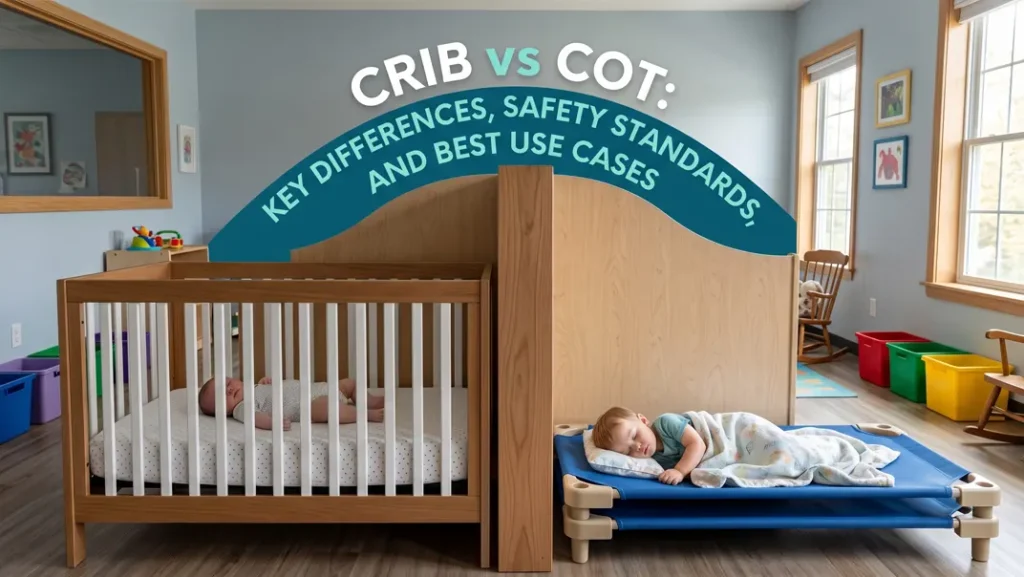
When comparing crib vs cot the primary distinctions lie in their design, safety standards, and regional usage conventions. The term “crib” is predominantly used in North America, where it is subject to strict local safety regulations; conversely, the meaning of the word “cot” varies by country, referring variously to a standard infant bed or a portable, lightweight sleeping unit.
These distinctions can often be a source of confusion for school procurement officers, wholesalers, and parents alike—particularly when navigating international purchasing initiatives.
In this guide, we will provide a detailed breakdown of the key differences between cribs” and cots, clarify the relevant safety standards, and assist you in selecting the most suitable purchasing solution to meet your specific needs.
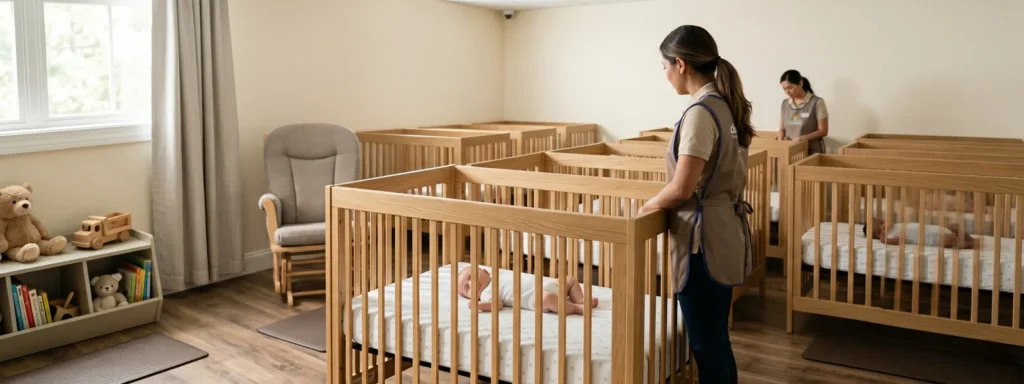
What is a Crib?
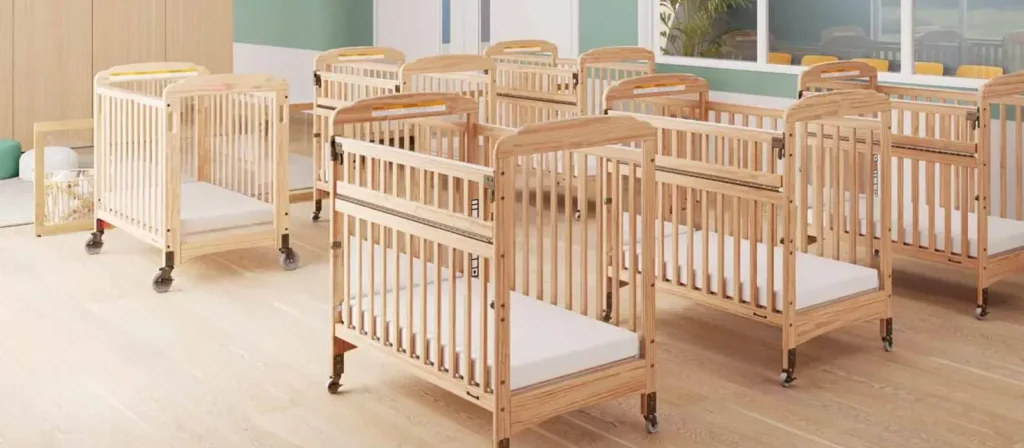
A crib is a fully enclosed bed designed specifically for infants. It typically features high sides with vertical slats to prevent babies from falling out.
In most countries, especially in the United States, a crib is the standard sleeping solution for newborns and infants up to around two years old. It is built to meet strict safety requirements, including spacing between slats, mattress fit, and overall structural stability.
Unlike portable sleeping options, cribs are usually stationary and form a permanent part of a nursery or infant room. In daycare environments, they are commonly used in dedicated infant areas where supervision is continuous and safety standards are tightly regulated.
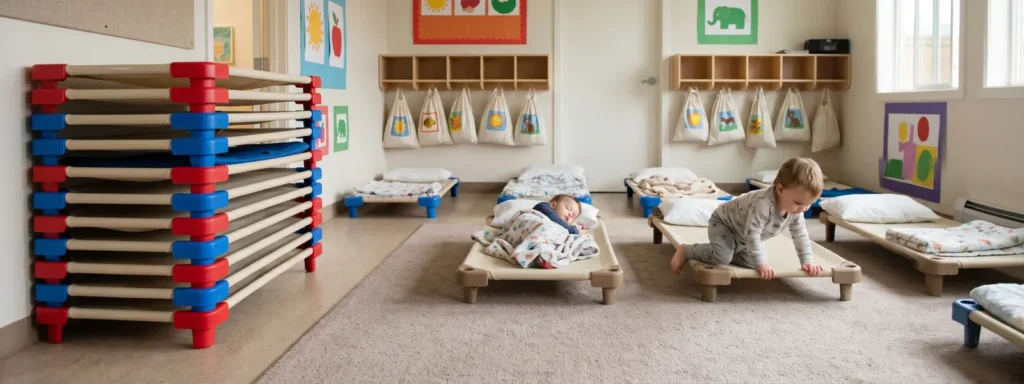
What is a Cot?
A cot, in the context of childcare, usually refers to a low, lightweight bed designed for temporary rest, especially in daycare and preschool settings. Unlike a crib, a cot is open on all sides and sits close to the ground, allowing children to get on and off independently.
In the United States, the term “cot” is most often used to describe daycare cots used during scheduled nap times. These are typically made with a durable fabric stretched over a frame, and many are designed to be stackable for easy storage.
In some countries, particularly in the UK and Australia, the word “cot” may still refer to what Americans call a crib. However, in most commercial childcare environments, a cot is understood as a portable, space-saving sleep solution for older children.
Crib vs Cot: Key Differences at a Glance
| Feature | Crib | Cot (Daycare Cot) |
|---|---|---|
| Designed For | Infants (0–2 years) | Toddlers & preschoolers |
| Structure | Enclosed with high sides | Open, low to the ground |
| Safety Level | Highest (unsupervised sleep) | Supervised rest time |
| Mobility | Stationary | Lightweight and portable |
| Storage | Requires dedicated space | Stackable or easy to store |
| Dimensions | Larger footprint, fixed size (typically 120–140 cm length) | Compact, low-profile (designed for space efficiency) |
| Lifespan | 2–3 years (until child outgrows or climbs out) | 3–5+ years (used across multiple age groups) |
| Convertibility | Some models convert to toddler beds | Not convertible, single-purpose use |
| Price | Higher unit cost due to structure and safety standards | More cost-effective, especially for bulk purchase |
| Typical Use | Nurseries, infant rooms | Daycare classrooms |
A crib is built for maximum safety and containment, while a cot is designed for flexibility and efficiency.
When You Should Use a Crib
It is typically used in situations involving:
- Cases where safety is the top priority
- Newborns and infants
- Overnight sleep or unsupervised rest
In daycare settings, cribs are the ideal choice, as young children are not yet able to safely climb out of the bed or regulate their movements while sleeping.
Consequently, cribs are designed with the following factors in mind:
- Fixed side rails
- Strict spacing standards
- A stable, tip-resistant structure
While they occupy a larger footprint and are not designed for frequent relocation, they offer the highest level of protection.
When a Cot Makes More Sense
They are most commonly used for:
- Settings with scheduled nap times
- Toddlers and preschoolers
- Classrooms where space needs to be repurposed repeatedly throughout the day
- Environments with limited space
Unlike cribs, cots are:
- Low-profile and close to the ground
- Easy for children to get in and out of independently
- Lightweight and typically stackable
In a typical preschool classroom, cots allow teachers to quickly set up and clear away the nap area without disrupting the normal use of other parts of the room. It is precisely this flexibility that makes cots so widely utilized in daycare facilities.

Crib vs Cot for Daycare Centers: What Actually Works
For daycare operators, this is not a decision between two options. Most centers opt to use a combination of cribs and cots, utilizing them in tandem to suit different age groups and purposes.
Cribs are typically used in infant rooms, where safety regulations are stringent and a higher level of supervision is required.
Cots are suitable for napping older children, as independence and space efficiency become more critical factors at this stage.
This combination enables classroom centers to:
- Meet licensing and safety requirements
- Manage larger groups of children
- Maintain tidy and flexible classroom environments
In practice, as children grow older, cots often prove to be the more efficient choice—particularly in larger classrooms where space and storage capacity are at a premium.
List of Common Crib and Cot Products
Understanding the various types of crib and cot available on the market helps make planning suitable sleeping arrangements much easier.
Below are some of the most commonly used options.
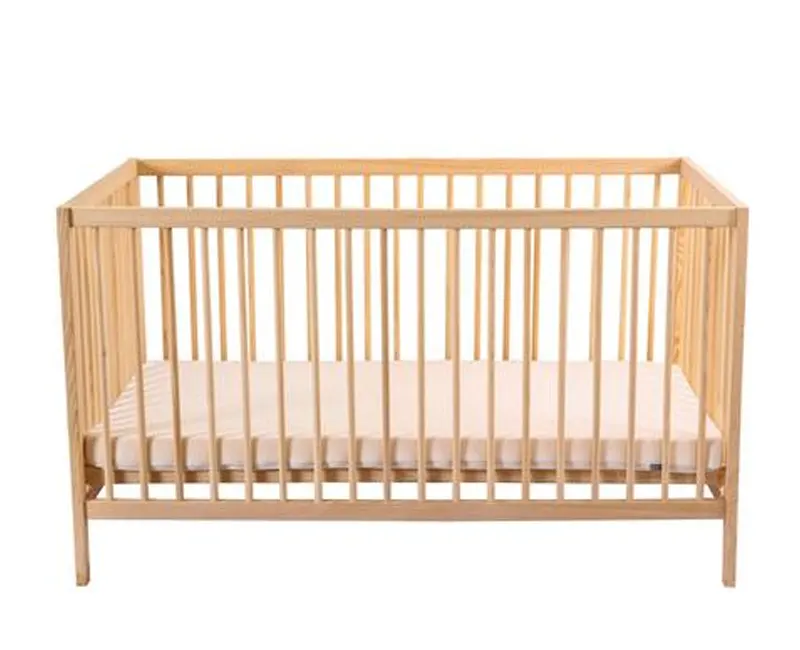
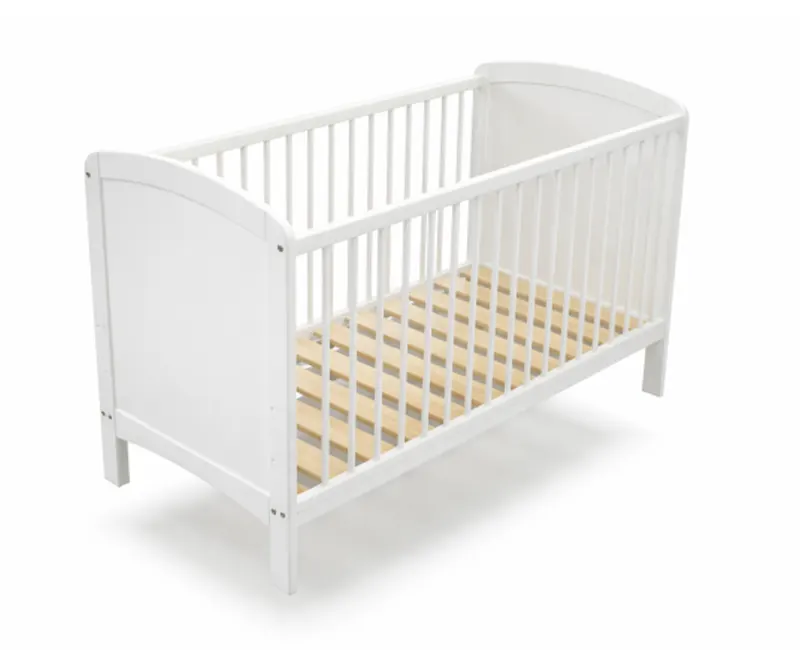
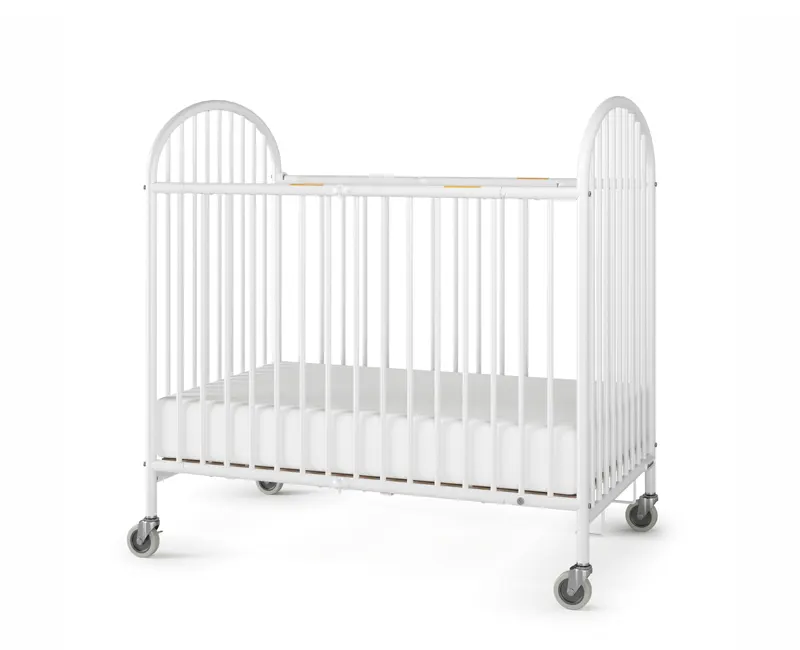
Standard Baby Cribs
Standard cribs are the most commonly chosen option for infants. They feature a fixed structure and enclosed sides, and are designed to meet rigorous safety standards. For schools requiring consistent, compliant solutions for young children, they represent a reliable choice.
Portable or Folding Cribs
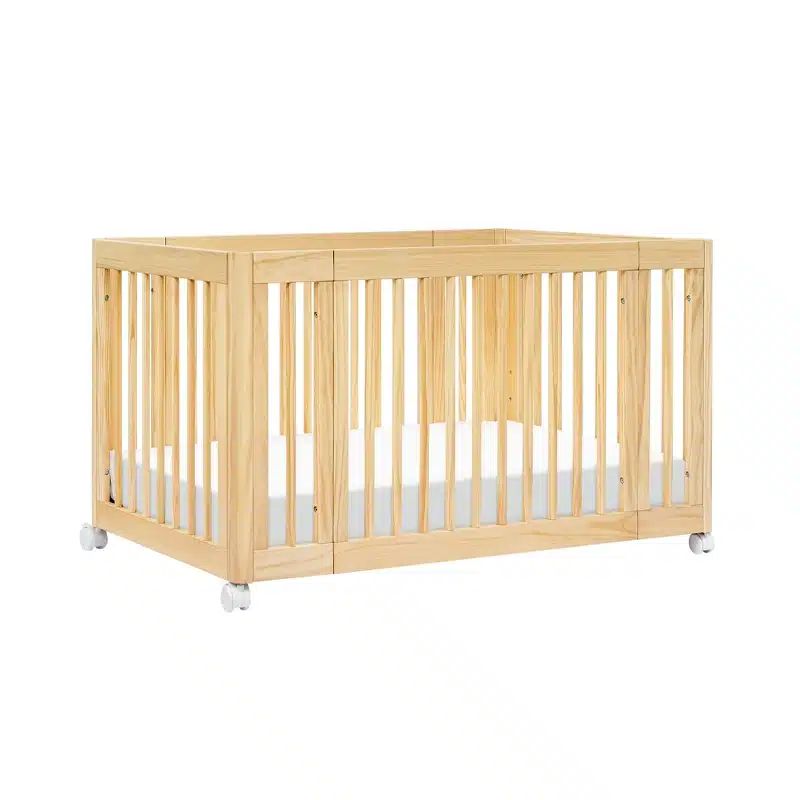
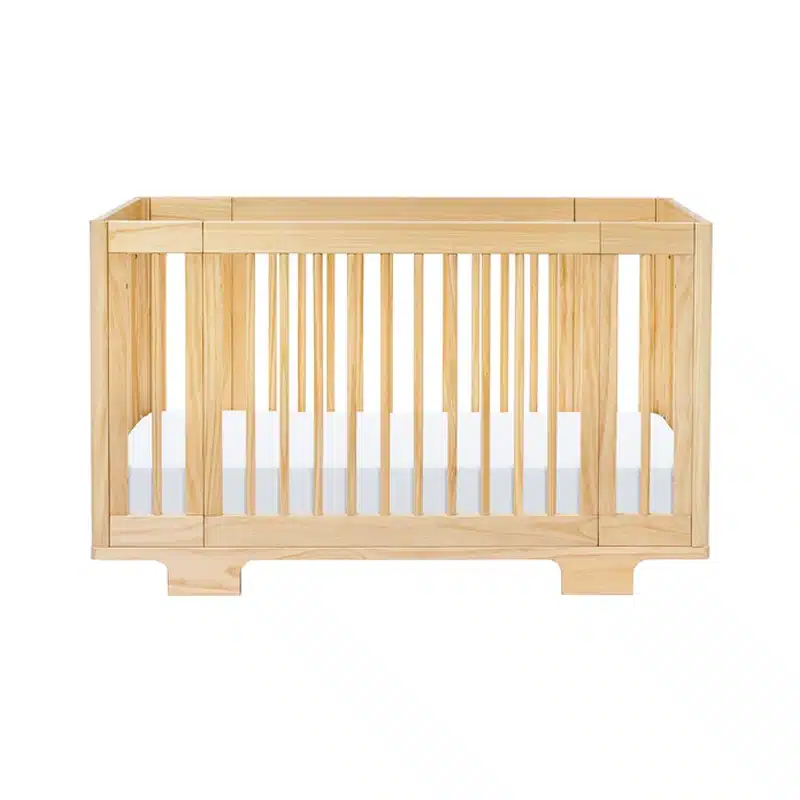
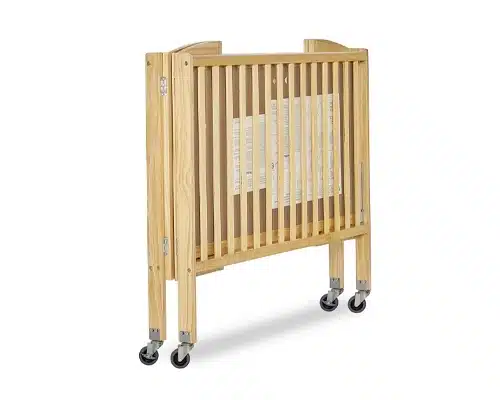
Portable cribs are lighter and easier to move compared to standard cribs. Some models can be folded or come with wheels for easier repositioning. They can be useful in spaces where layout needs to change occasionally.
Stackable Daycare Cots
Stackable cribs offer maximum space-saving efficiency. When not in use, they can be stacked vertically to free up floor space—making them ideal for classrooms that require frequent transitions between activities throughout the day.
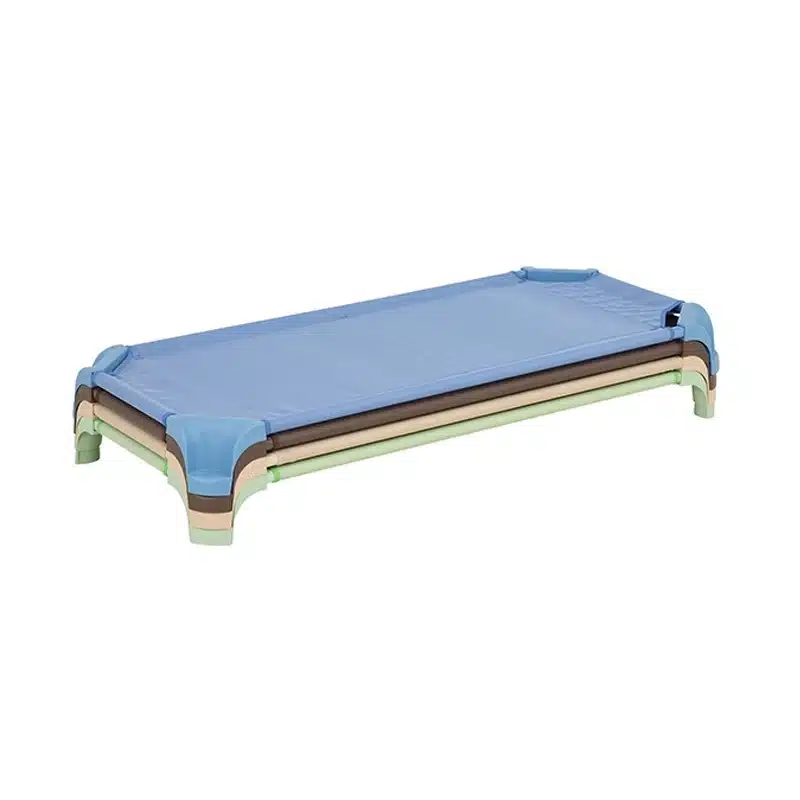
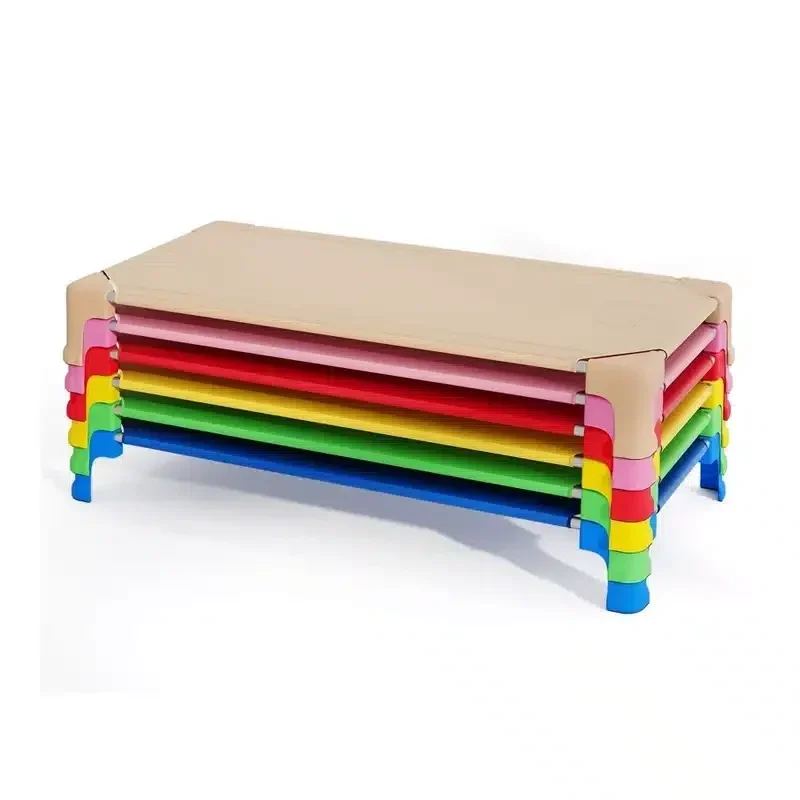
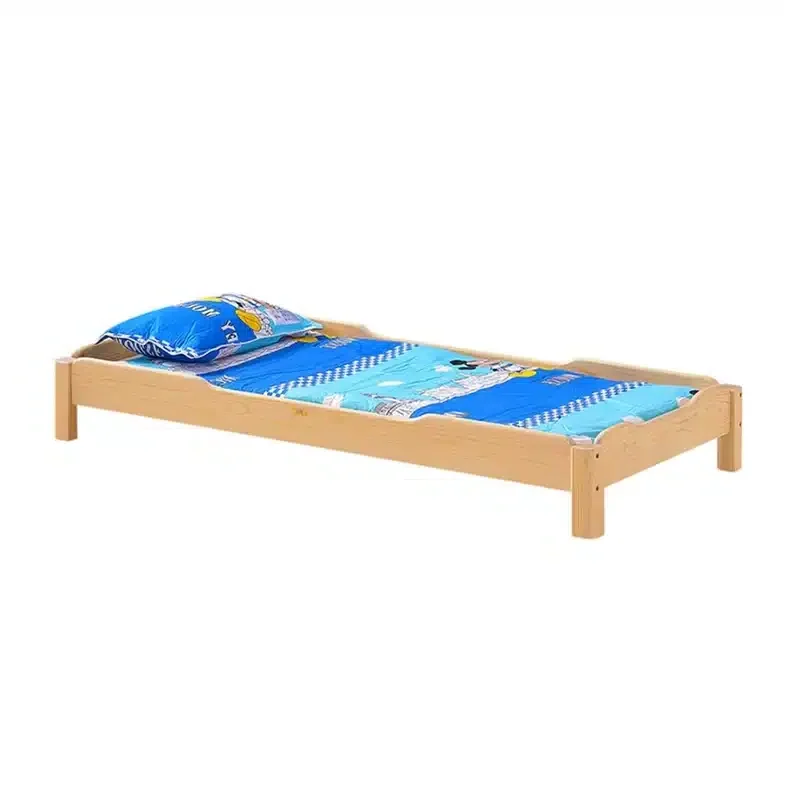
In most childcare settings, no single product can meet every need. Facilities typically utilize a combination of different types of cribs and toddler beds, tailored to specific age groups, classroom functions, and daily routines.
Xiha Montessori offer a comprehensive range of crib and cot solutions, featuring models designed to suit various age groups and classroom layouts. If you are seeking the right cribs for a specific project, comparing product specifications or discussing your layout requirements can help you identify a solution that is both practical and durable.

Prioritizing Safety
Whether you choose a crib or a toddler bed, safety should never be treated as an optional extra.
Regardless of whether it is a crib or a cot, it must comply with established safety standards.
- Safety Certification: ASTM (United States), EN standards (Europe)
- Structural Stability
- Non-toxic Materials
- Easy-to-Clean Surfaces
- Safe Spacing Between Units
In a childcare setting, hygiene and organization are equally critical. Products used daily by multiple children must be durable and easy to maintain.
How to Choose Cribs and Cots?
When selecting a crib or toddler bed, the most important factor is not the product name itself, but rather whether the sleep solution is appropriate for the child’s age, the specific environment in which it will be used, and daily operational needs.
Age Appropriateness
Consider whether the product is suitable for the child’s age and developmental stage. The design should align with the child’s sleeping patterns, activity levels, and habits regarding entering and exiting the bed—rather than simply adhering to the instructions listed on the product label.
Prioritizing Safety
Safety should always take precedence over aesthetics and price. The bed structure must be sturdy, edges should be smooth, and materials must comply with child safety standards. Any sleeping product intended for use in childcare facilities should be designed with the primary objective of minimizing risks during daily operation.
Considering Dimensions
Beyond checking the product’s overall dimensions, consider the amount of usable floor space that will remain in the room once the bed is installed. Sleeping furniture must integrate harmoniously with the classroom layout, as the same space is often utilized for children’s daytime learning, play, and activities.
Materials and Finishes
A crib or cot is likely to be used on a daily basis. The sleeping surface should be easy to wipe down and resistant to wear and tear. The choice of materials directly impacts the crib’s durability, safety, and maintenance requirements.
Daily Use and Practical Functionality
Consider whether it will remain stationary in one spot or require frequent relocation. Does it need to integrate seamlessly with classroom routines? Is it easy for staff members to operate? Practical details often prove far more critical than buyers initially anticipate.
Compliance and Regulatory Requirements
Different regions may have varying requirements regarding infant sleep furniture and resting equipment used in group care settings. Before purchasing, it is essential to ensure that the product complies with relevant standards and is suitable for the intended age group and care environment.
Look Beyond the Initial Price Tag
While price is undoubtedly important, it should not be the sole consideration. Low-cost products may present issues regarding durability, safety, and other factors. Instead of focusing solely on the product’s upfront cost, evaluate its true value from the perspective of its long-term utility and service life.
FAQs
- Do daycare centers use cribs or cots?
They use both. Cribs for infants, cots for older children. - Are daycare cots safe?
Yes, when used under supervision and made with commercial-grade materials. - Which is more space-efficient?
Cots are more space-saving due to stackable design. - Is a cot bed the same as a crib?
Not exactly. A cot bed is usually a larger product designed to convert for use beyond infancy. - What matters most when choosing between a crib and a cot?
Safety, mattress fit, product type, room size, and how well the setup matches your real daily routine. - What mattress type should be used for a crib or a cot?
Cribs typically require a firm, tightly fitted mattress that matches the exact internal dimensions to avoid gaps. For cots, especially in daycare settings, the sleeping surface is often built into the frame, and additional mats or covers may be used depending on comfort and hygiene requirements. - How many cots or cribs are needed per classroom?
This depends on the number of children, age grouping, and local regulations. In daycare environments, it is common for each child to have an individual sleeping space. Planning should also consider spacing between units and supervision visibility. - What spacing should be maintained between sleeping units in daycare settings?
Many childcare guidelines recommend leaving adequate space between each crib or cot to improve airflow, reduce disturbance between children, and allow easy access for caregivers. The exact distance may vary by region, so local regulations should always be checked. - Are there weight limits for cots and cribs?
Yes. Both cribs and cots are designed with specific weight capacities. Buyers should review manufacturer specifications to ensure the product is suitable for the intended age group and daily use conditions, especially in commercial environments. - How do you store cots efficiently when not in use?
Many daycare facilities use stackable designs to save space. Proper storage should ensure stability, easy access, and good airflow to maintain hygiene. Planning storage areas in advance can improve classroom organization. - Should each child have an assigned cot or crib?
In many childcare environments, each child is assigned a specific sleeping space to maintain hygiene and consistency. This also helps reduce confusion and supports better daily routines.
Final Thoughts
The difference between a crib and a cot is not just about terminology. It reflects two very different needs.
A crib is about safety and containment.
A cot is about flexibility and efficiency.
For parents, the choice depends on the child’s age and sleep habits.
For daycare centers, it is about creating a system that works across different age groups and daily routines.
Understanding that distinction makes it much easier to choose the right solution, and avoid costly mistakes later on.