If you’re a parent of a curious, active toddler, you’ve probably found yourself cooking in the kitchen while your little one tries to climb up a chair just to see what you’re doing. It’s exciting to see their eagerness—but it can also be nerve-wracking. You might be wondering: Is now the right time to introduce a standing tower? And more importantly, what’s the ideal age for learning tower use?
Imagine your child safely standing next to you at counter height, beaming with pride as they help stir pancake batter or wash vegetables. A learning tower not only promotes independence and confidence but also allows for safe interaction in spaces typically out of reach. When introduced at the right age, it can become one of the most enriching tools in your parenting toolkit.
In this guide, we’ll walk you through everything you need to know about the recommended age for learning tower usage, including signs of readiness, safety tips by age group, and how to choose the perfect model for your child. Let’s explore the ideal age for toddler tower use and help you make a confident, safe decision for your little explorer.

Why Learning Towers Are Gaining Popularity Among Parents?
In recent years, learning towers have surged in popularity among parents of toddlers and preschoolers—and it’s easy to see why. As modern parenting continues to embrace Montessori principles and hands-on learning, more families are seeking tools that promote independence, safety, and meaningful parent-child interaction. The toddler tower does exactly that.
Unlike traditional step stools or chairs, a toddler tower is designed specifically for young children to safely reach countertop height. Its enclosed structure and sturdy base prevent tipping and accidental falls, making it a far safer option for everyday kitchen or bathroom activities. But the benefits go far beyond just physical safety.
Moreover, learning towers are a fantastic tool for encouraging independence. Children can climb in and out on their own (with supervision), which gives them a sense of control and accomplishment. This aligns beautifully with Montessori-style education, where independence and self-directed activity are cornerstones of the philosophy.
When Is the Best Age for Learning Tower Use?
Understanding the ideal age for learning tower use is essential for both safety and developmental benefits. While learning towers are marketed for toddlers, not all children are ready at the same age. Readiness depends on physical development, motor skills, and emotional maturity. Below, we’ll break down age ranges to help you determine when your child may benefit most from a standing tower.
Toddlers (18 Months – 2 Years) → Early Explorers
- At this stage, children begin showing signs of independence and curiosity. Around 18 months, many toddlers can stand and walk confidently, making it a potential entry point for safe learning tower use.
- Toddlers in this age group enjoy mimicking adults, especially in the kitchen. A toddler tower allows them to observe, touch, and interact with their surroundings safely, rather than climbing on chairs or pulling at countertops.
- However, not all toddlers are physically ready at 18 months. It’s crucial to observe whether your child can climb up and down safely, balance while standing, and follow basic verbal instructions before introducing a tower.

Preschoolers (2 – 4 Years) → Active Helpers
- This is often considered the “golden age” for standing tower use. Children between 2 and 4 years old are eager to help, communicate more effectively, and have better control over their movements.
- They can be taught simple kitchen tasks like stirring batter, washing vegetables, or placing cutlery, turning the learning tower into a daily tool for learning and bonding.
- Most importantly, preschoolers thrive on routine and responsibility. Using the tower regularly at this age helps them build confidence, coordination, and a stronger sense of autonomy.

Older Kids (4 – 6 Years) → Independent Learners
By the time children reach four or older, they’re usually more agile, aware of safety rules, and capable of more complex tasks. While some may start to outgrow the need for a learning tower, others still find it useful for certain tasks.
At this stage, children can handle more responsibility, like helping cook simple meals or assisting with washing dishes. The standing tower can support their desire to be included in more “grown-up” activities.
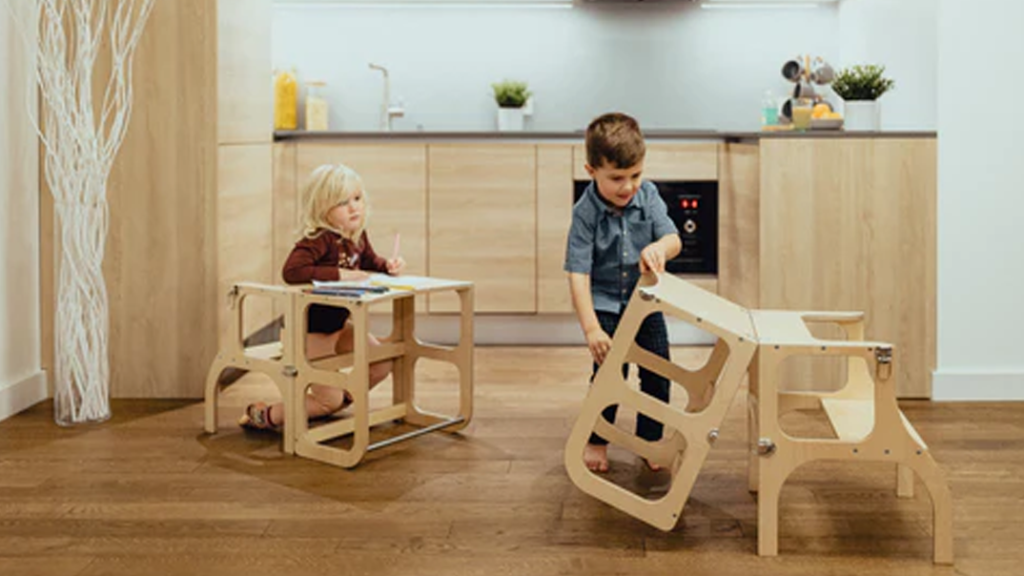
However, it’s also a time when parents might consider transitioning away from the learning tower to child-safe stools, especially if the child is tall or the tower feels restrictive.
Safety Considerations for Learning Towers
Learning towers are an excellent way to bring toddlers and young children into family activities, especially in the kitchen or playroom. They promote independence, encourage hands-on learning, and help children safely reach surfaces that would otherwise be out of reach. But before introducing this tool into your home, it’s important to think carefully about safety. The age for learning tower use is a key factor, but safety goes beyond numbers—it also involves the child’s readiness, environment, and consistent parental supervision.
Ensuring Physical Readiness
One of the first considerations is whether your child is physically prepared to use a toddler tower. Children should be able to stand and walk steadily on their own before stepping into the tower. Wobbly balance or weak coordination increases the risk of falls. Even when a child meets the typical age for learning tower introduction, usually around 18 months, parents should look for signs of stability rather than relying on age alone. A confident climber with steady footing is far safer than a younger toddler still finding their balance.
Choosing a Safe Design
Not all standing towers are created equal. Safety features vary, and parents should look for models with high guardrails, sturdy bases, and non-slip feet. Adjustable platforms are also valuable because they allow you to lower the standing surface when your child is smaller and raise it as they grow. This adaptability makes it easier to match the tower to your child’s height and developmental stage, regardless of the recommended age for learning tower use. Always avoid makeshift substitutes like chairs or stools, which lack the stability and protection of a properly designed tower.

Placement Matters
Where you place the learning tower plays a huge role in safety. Many families use it in the kitchen, but this area comes with hazards like hot stoves, sharp knives, and heavy cookware. Always position the tower away from active burners, boiling pots, or sharp tools. Flat, stable flooring is essential to prevent wobbling. A safe setup means your child can participate in family tasks without being exposed to unnecessary risks.
Teaching and Reinforcing Rules
Children thrive on structure, and safety rules should be part of every learning tower experience. From the beginning, teach your child to hold onto the rails, keep both feet on the platform, and never climb on the outside of the tower. Simple instructions repeated consistently will form habits that keep them safe. Even at the ideal age for learning tower use, most children lack full awareness of danger, so rules are essential to minimize risks.
Active Supervision
No matter how sturdy the tower or how responsible your child may seem, supervision is non-negotiable. A learning tower raises a child off the ground, and falls can happen quickly. Parents should remain nearby, especially during cooking sessions or messy play, to step in if needed. Supervision ensures the tower remains a safe tool for exploration instead of becoming a source of accidents.

Regular Maintenance and Checks
Finally, routine inspections are crucial. Over time, screws can loosen, wooden frames may wear, and platforms can shift. Make it a habit to check your toddler tower regularly for stability. A well-maintained tower supports safe use at any age for learning tower introduction and prevents unexpected mishaps. Parents should also clean the surfaces frequently to remove food residue, dust, or spills that could make the platform slippery. By combining upkeep with daily attention, you can extend the tower’s lifespan and ensure it remains a safe, reliable tool for your child’s growth.
General Safety Tips for Every Age
Regardless of the age for learning tower use, there are universal precautions to follow:
- Always supervise your child while the tower is in use—no exceptions.
- Avoid distractions. Cooking, texting, or multitasking while your child is elevated increases risk.
- Perform regular inspections of the tower for wear and tear.
- Remove hazards from the surrounding area, such as knives, hot pots, or electrical cords.
Conclusion
The decision about the right age for learning tower use goes beyond simply looking at a number. Safety, readiness, and the quality of supervision all play a critical role in making the tower a positive addition to your home. By ensuring your child has the physical stability, teaching clear rules, and keeping the tower in good condition, you create a safe environment where independence and learning can flourish. With thoughtful preparation and consistent guidance, a learning tower can become more than just a piece of furniture—it can be a valuable tool that supports your child’s growth, confidence, and family connection.