Have you ever watched a child repeatedly stack blocks, spin a toy wheel, or drop objects from their highchair? At first, these actions may seem like simple play. But could there be a deeper reason behind these repeated patterns? The answer lies in play schemas, the hidden frameworks that guide how children explore, experiment, and make sense of their world.
In the sections ahead, we will explain the meaning of schemas in psychology and education, outline different types of schematic play, and share practical ways for parents and educators to support children as they build knowledge through play.
What are Play Schemas?
A schema is a mental framework that helps organize knowledge, interpret experiences, and guide behavior. In psychology, schemas meaning refers to the patterns our brains use to process information and connect new events with what we already know. These structures allow learning to be efficient, giving people the ability to recognize familiar situations and adapt to new ones.
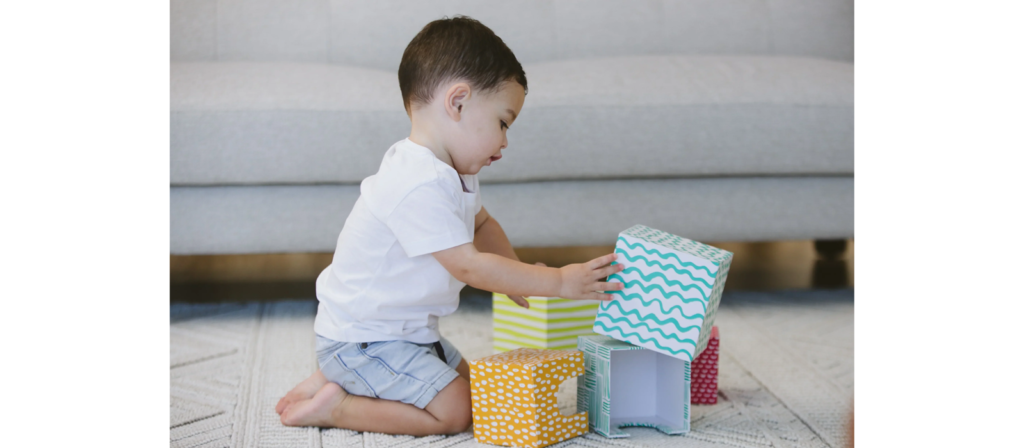
When applied to early childhood, schemas often appear in play. Known as play schemas, they take the form of repeated behaviors such as lining up toys, filling and emptying containers, or spinning wheels. These actions are not random but demonstrate how children experiment, test ideas, and build an understanding of their world. In education, such behaviors are described as schematic play, providing valuable clues about a child’s thinking and development.
What is Schema Play Theory?
Schema Play Theory views children’s play as visible cognition. It proposes that the mind builds and revises internal structures through recurring actions, and that these actions can be read as evidence of learning. Within schema theory in education, play becomes the primary context where ideas are formed, tested, and reorganized in real time.
Brought into focus by Piaget’s work, the theory treats recurring play patterns as signs that thinking is being updated. According to Piaget, schemas are flexible units of thought that change with experience through two processes. Children fold new events into what they already know, and when that no longer works they reshape the pattern to fit the new event. This reading of play is often called Piaget schema theory because it links observable behavior to how knowledge grows.
In everyday terms, a child who keeps pouring water between cups is exploring flow and quantity, a child who lines up blocks is exploring order, and a child who spins wheels is exploring rotation and cause. The repetition is not a habit to break but a clue to the idea being studied. When adults notice the pattern and offer matching materials with gentle challenges, they apply schema theory in education practice: they meet the child’s current line of inquiry and help it move one step further.
Understanding the 9 Key Types of Play Schemas
1. Trajectory Schema
The trajectory schema reflects a child’s fascination with movement in straight lines and arcs. It shows up as an interest in how objects travel through space, whether falling, flying, or rolling, and forms an early way of exploring concepts like force and gravity.
In everyday play, this can be seen when a toddler repeatedly drops toys from a highchair, throws balls across a room, or pushes cars down a ramp. Children may also spend time pouring water to watch it flow or sliding objects across a smooth surface. While these actions might seem like simple play, they represent focused experiments with motion and direction.
Through the trajectory schema, children build essential early scientific thinking. They practice predicting outcomes, learn cause and effect, and strengthen their motor coordination. When parents and educators recognize this pattern, they can support safe exploration by providing materials such as balls, ramps, and outdoor play opportunities, turning natural curiosity into meaningful growth.
2. Rotation Schema
The rotation schema describes a child’s strong interest in circular motion. It is a way of studying how objects turn, spin, and move in cycles. Through these patterns, children begin to understand rhythm, balance, and the continuity of movement, turning simple actions into early lessons about the world’s natural order.
This schema often appears when a child spins the wheels of a toy car, twirls themselves in circles, or turns handles again and again. Some may become captivated by watching washing machines or ceiling fans, while others enjoy swirling paint, stirring mixtures, or twisting ribbons through the air. These repeated actions show a deliberate focus, as children experiment with how circular patterns behave.
Rotation schemas provide valuable practice in coordination and balance, and they lay the groundwork for later understanding of cycles in science and math.
3. Transporting Schema
The transporting schema captures a child’s fascination with moving objects from one place to another. It reflects an interest in how items can be gathered, carried, and redistributed, whether by hand, basket, or vehicle. This schema signals a growing awareness of weight, distance, and capacity, and it often shows the child’s desire to organize and control their environment through movement.
Children express this schema in many ways. A toddler may fill a bucket with toys and carry it across the room, then empty it and start again. Another child might gather stones in their pockets during outdoor play or use a toy stroller to move dolls around the house. Some children focus on loading and unloading toy trucks, while others enjoy transferring sand, water, or blocks between containers. The repetition in these actions shows a deep engagement with the concepts of collecting and relocating.
Transporting schemas strengthen both physical coordination and problem-solving. By allowing children safe opportunities to carry and move objects, adults can transform this interest into meaningful practice in planning and persistence.
4. Enveloping Schema
The enveloping schema reflects a child’s desire to cover, hide, or wrap objects. It is linked to the early exploration of safety, containment, and permanence. When children engage in this type of play, they are learning about boundaries and the idea that something can remain present even when it is hidden from view. This schema also supports emotional security, as wrapping and covering can provide comfort and a sense of control.
In practice, children often show this schema by wrapping dolls in blankets, hiding toys under cushions, or covering themselves with fabric. Some may enjoy placing items into bags, boxes, or envelopes, while others take pleasure in wrapping gifts or tucking figures into small spaces. These repeated actions demonstrate a keen interest in layering, enclosing, and protecting, and they often appear in both solitary play and shared activities.
Enveloping schemas give children a safe way to explore ideas of hiding and revealing, while also strengthening fine motor skills.
5. Enclosing Schema
The enclosing schema reflects a child’s interest in creating and defining boundaries. Unlike enveloping, where objects are covered or hidden, enclosing involves drawing or building clear edges around spaces and items. This schema shows an emerging understanding of inside and outside, open and closed, and how limits shape the way objects relate to one another. It is an important step toward spatial awareness and early geometry.
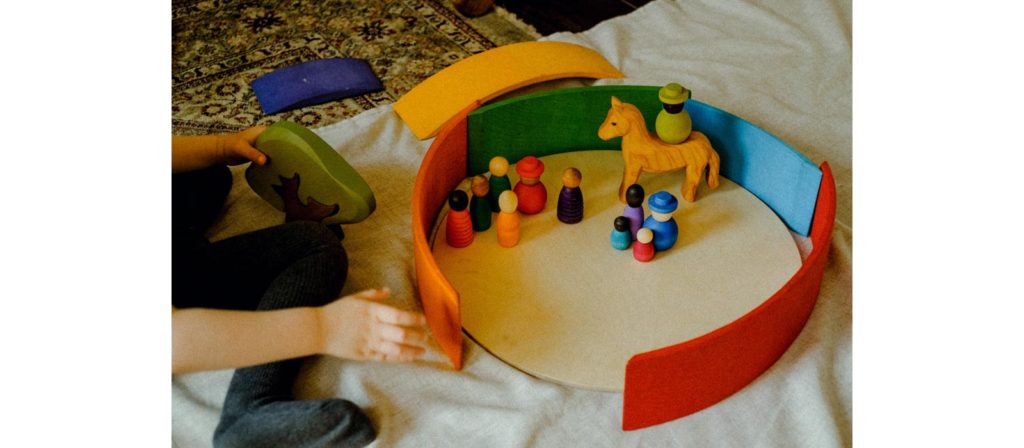
Children demonstrate this schema in many ways. They may draw circles or squares and then fill them with marks or colors. Some build fences with blocks around toy animals, set up boundaries with sticks in the garden, or sit inside cardboard boxes to claim a space as their own. Others line up string, tape, or tracks to create enclosed areas, then place toys or themselves inside. These behaviors reveal a focused interest in separating one space from another and defining areas of control.
Enclosing schemas encourage children to practice design, organization, and early mathematical concepts while also fostering creativity in how they shape and divide their surroundings.
6. Positioning Schema
The positioning schema centers on a child’s drive to arrange objects in deliberate patterns. It reflects a growing awareness of order, sequence, and symmetry, and it often reveals the beginnings of classification and logic. By placing items in specific positions, children experiment with relationships between objects and create visual or spatial balance that satisfies their sense of structure.
This schema is easy to notice in everyday play. A child might carefully line up toy cars in a straight row, place blocks side by side in neat formations, or sort crayons by color and arrange them in order. Others may position figures facing one another as if in conversation, or place stones in circles and spirals during outdoor play. The common thread is a deliberate effort to position objects with care, often repeated until the arrangement feels complete.
Positioning schemas give children practice in observation, sequencing, and problem-solving. They also encourage attention to detail, which supports both early mathematical thinking and the development of organizational skills.
7. Connecting Schema
The connecting schema reflects a child’s fascination with joining objects together. It reveals an interest in how separate parts can form a whole, laying the groundwork for later understanding of structure, relationships, and systems. This schema often appears as a strong motivation to link, fasten, or attach materials in ways that create stability or new forms.
Children demonstrate this schema in many ways. They may use tape, string, or glue to bind objects, or click interlocking blocks together to make larger constructions. Train tracks, magnetic tiles, and building sets are common outlets, as children work to create continuous lines or linked structures. Sometimes the process involves tying knots or fastening clips, showing persistence in keeping things joined. These repeated actions are less about the finished product and more about the satisfaction of creating connections.
Connecting schemas help children explore cooperation between parts and foster problem-solving as they test how things hold together. They strengthen fine motor skills and encourage perseverance, providing important practice for both creative expression and logical reasoning.
8. Disconnecting Schema
The disconnecting schema reflects a child’s curiosity about separating objects and taking structures apart. While connecting focuses on joining and building, disconnecting is about breaking things down, undoing bonds, and testing how strong connections really are. This schema shows an interest in reversibility, cause and effect, and the effort needed to dismantle what has been created.
Children often reveal this schema by pulling apart interlocking blocks, untying knots, or breaking down towers they have just built. Some take great interest in opening containers, removing lids, or dismantling toys with movable parts. Outdoors, a child may pull sticks out of the ground or separate items that were stuck together in play. These behaviors highlight a desire to see what happens when bonds are undone and to experience the satisfaction of undoing.
Disconnecting schemas give children valuable lessons in problem-solving, persistence, and resilience. They learn that deconstruction is as meaningful as construction, and that taking things apart can lead to a better understanding of how they work.
9. Transforming Schema
The transforming schema reflects a child’s interest in change. It shows how children explore the ways materials can shift from one state to another, whether through mixing, melting, or reshaping. This schema reveals an early curiosity about processes of transformation in the natural world, laying a foundation for scientific observation and creative experimentation.
Children often display this schema by mixing sand with water to create new textures, stirring paints together to form fresh colors, or watching ice melt in their hands. Some enjoy kneading dough, molding clay, or experimenting with food at the table. Others may be fascinated by cooking, where raw ingredients are changed by heat, or by outdoor play where mud, leaves, and water combine in endless variations. These actions are purposeful, giving children a sense of control over change and a chance to see immediate results.
Transforming schemas nurture flexible thinking and creativity while also encouraging scientific inquiry. By supporting this play with safe, open-ended materials, adults can help children build confidence in experimenting and adapting to change.
Why Are Play Schemas Important?
Brain Development
Schema play helps wire the brain by strengthening neural pathways. Each repeated action builds important cognitive structures and reinforces connections between neurons. This process supports memory, attention, and self-regulation, all of which are essential for long-term learning.
Cognitive Growth
Schemas act as the building blocks of thought. By repeating patterns of play, children begin to understand cause and effect, sequence, and classification. These experiences help them organize information and make sense of their environment, preparing them for higher-order reasoning.
Skill Development
Play schemas contribute to both fine and gross motor skills. Carrying objects, spinning wheels, or building enclosures all strengthen balance, coordination, and spatial awareness. These physical skills are not separate from learning but directly connected to how children explore and test their ideas.
Emotional and Social Learning
Engaging in schematic play allows children to practice focus, persistence, and problem-solving. It also supports body awareness and emotional regulation. When shared with peers, schemas encourage cooperation, imitation, and creative collaboration, which are crucial for social growth.
Personalized Learning
Recognizing a child’s dominant schema gives parents and educators a powerful tool for individualized support. By offering age-appropriate materials and activities that align with a child’s interests, adults can create learning experiences that feel natural and motivating.
How to Support Play Schemas in Young Children?
Provide the Right Materials
Children need safe and open-ended resources that match their current interests. For example, a child exploring the trajectory schema benefits from balls, ramps, and soft objects they can throw or roll. One fascinated by transporting may enjoy baskets, bags, or toy trucks to move items around. By noticing what captures a child’s focus, adults can choose materials that extend and enrich the play.
Create Time and Space
Schemas require repetition, and repetition requires freedom. When children are given uninterrupted time and a safe environment, they can repeat actions long enough to make sense of them. A toddler lining up blocks may look obsessive, but it is their way of building understanding. Instead of rushing or interrupting, allowing time helps them complete the cycle of learning.

Encourage, Don’t Restrict
Parents and educators sometimes see schematic play as messy or disruptive—throwing food, carrying objects from room to room, or covering everything with blankets. Instead of stopping these behaviors, adults can redirect them safely. For example, providing a water play station channels pouring and filling into a productive activity. Supporting schemas in this way acknowledges that the child’s behavior is purposeful, not random.
Adapt to Individual Needs
Not every child shows schemas in the same way, and some may focus on one type longer than others. Observing these preferences allows adults to personalize activities. A child immersed in positioning might enjoy puzzles, while another engaged in transformation might prefer cooking or art. Adapting to these interests helps children feel seen and supported in their unique learning journey.
Activities for all 9 play schemas
Trajectory Schema Activities
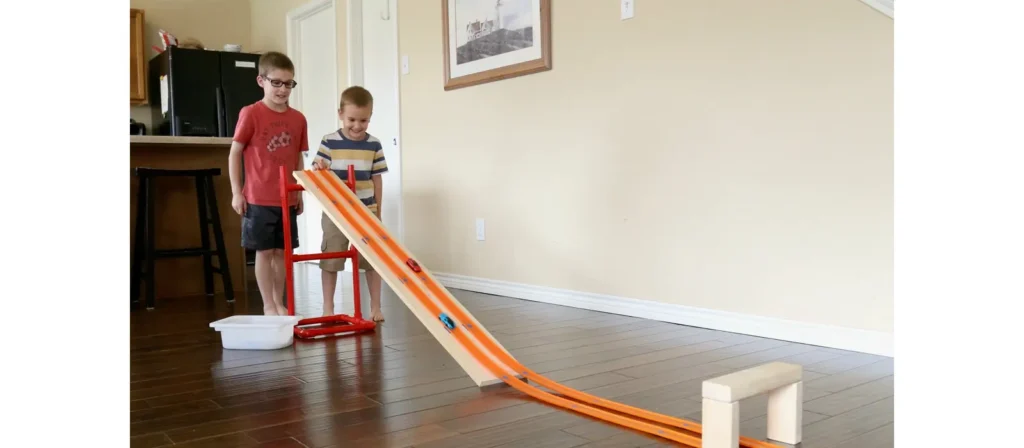
Rolling Ramp Racetrack
Introduction
Children build ramps and test how different objects roll down, comparing speed and distance.
How it connects to play schemas
The trajectory schema is about exploring straight-line motion and gravity. Rolling experiments let children see how slope and shape affect movement, deepening their understanding of cause and effect.
Materials
- Cardboard ramps or wooden planks
- Books or blocks to change ramp height
- Toy cars, balls of different sizes
- Stopwatch or tape measure
Steps
- Prop up a ramp using books or blocks.
- Choose an object and let it roll down.
- Compare how fast or far different objects travel.
- Adjust the ramp’s angle and test again.
- Record or draw the results for discussion.
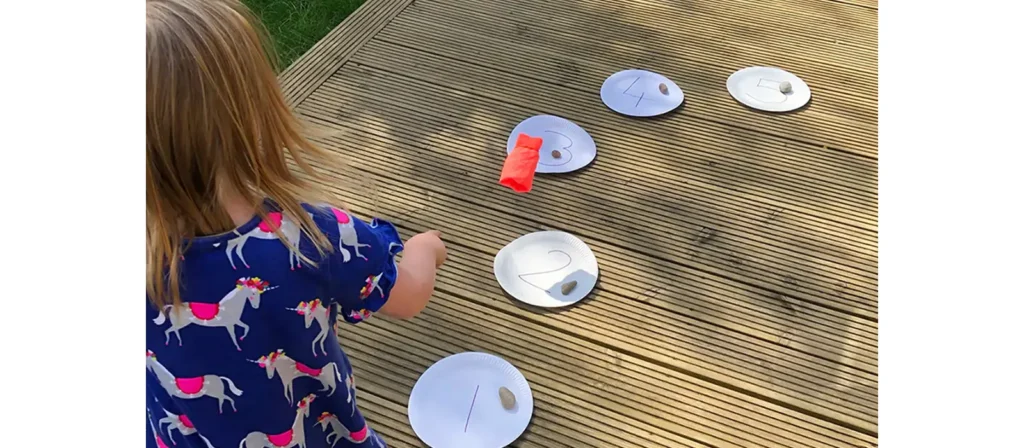
Beanbag Target Toss
Introduction
A safe throwing game where children aim beanbags or soft balls at set targets.
How it connects to play schemas
Throwing helps children practise force, angle, and trajectory. It strengthens gross motor skills and builds a foundation for later concepts of distance and precision.
Materials
- Beanbags or soft balls
- Baskets, buckets, or hoops as targets
- Floor tape for throwing lines
Steps
- Place baskets or hoops at different distances.
- Stand on the starting line and throw beanbags.
- Encourage adjustments to throw strength and angle.
- Move the targets farther away to increase challenge.
- Celebrate effort as well as success.
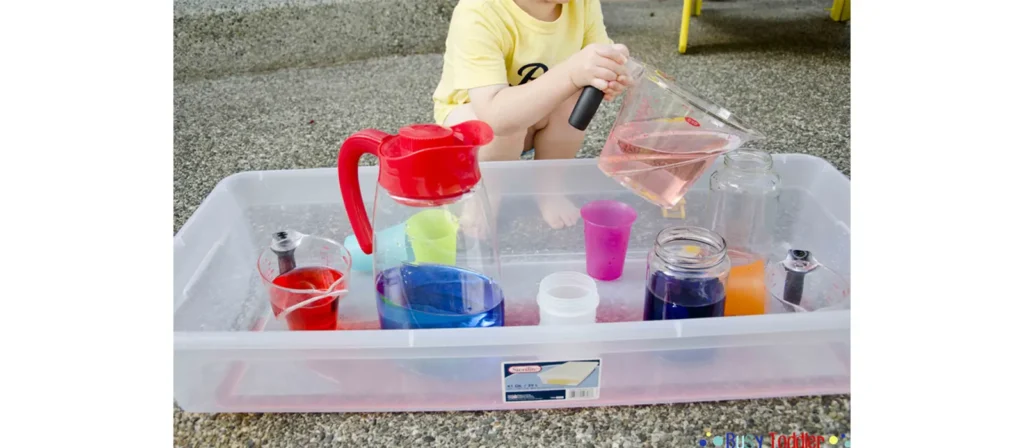
Waterfall Pouring Station
Introduction
Children pour water through funnels, tubes, and holes to observe how it flows and falls.
How it connects to play schemas
Trajectory schemas are not limited to solid objects. Watching water streams helps children visualize paths, arcs, and the effects of gravity on liquids.
Materials
- Funnels, plastic bottles with holes, tubing
- Pitchers or cups
- Large tub or water table
Steps
- Set up funnels and tubes over the water table.
- Give children pitchers to pour from different heights.
- Adjust angles of funnels or tubes to vary flow.
- Ask children to predict where the water will land.
- Let them freely experiment and repeat.
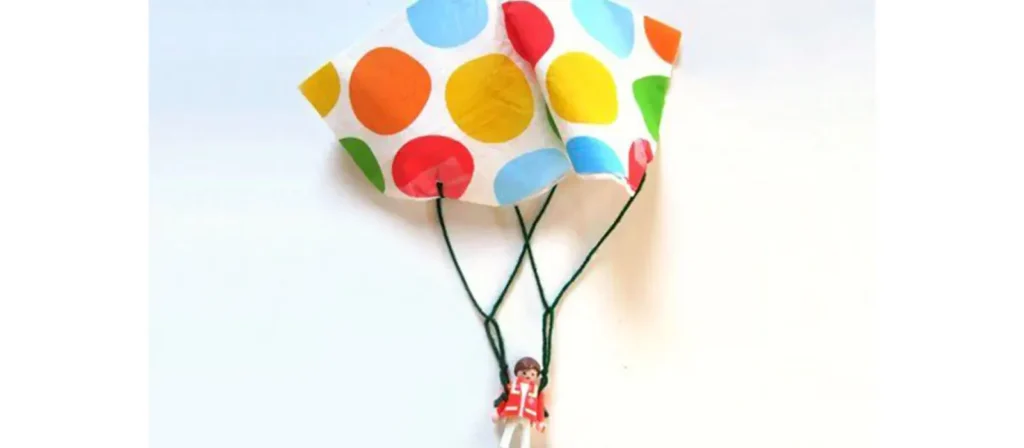
Parachute Drop Experiment
Introduction
Children drop lightweight objects or DIY parachutes to see how they fall.
How it connects to play schemas
This activity makes trajectories visible by showing how shape and air resistance affect falling speed. It helps children understand gravity and motion in a hands-on way.
Materials
- Lightweight scarves
- Coffee filters or paper parachutes
- Small toy figures
- Step stool (with adult supervision)
Steps
- Attach toy figures to parachutes.
- Drop them from a safe height.
- Compare how scarves and parachutes fall differently.
- Time how long each takes to reach the ground.
- Encourage children to design their own parachutes.
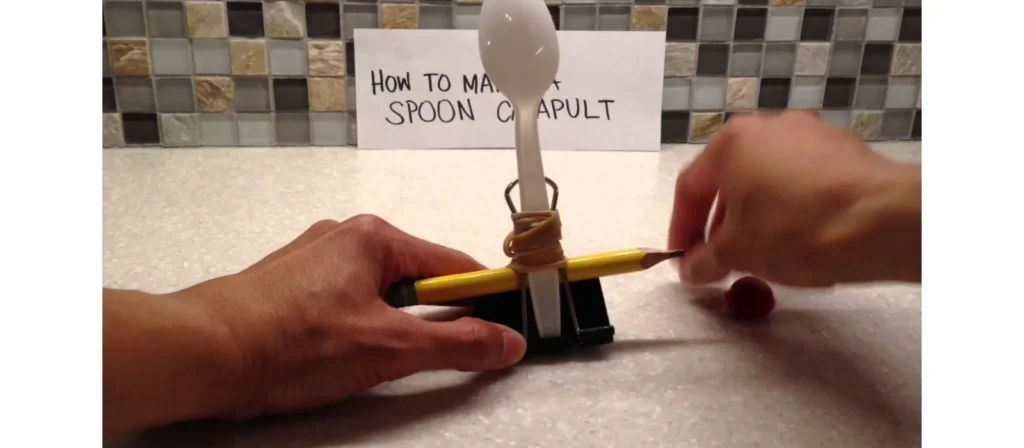
Spoon Catapult Challenge
Introduction
Children build simple catapults with spoons to launch soft items at targets.
How it connects to play schemas
Catapults show how stored energy creates flight paths. Children experiment with angles and force, seeing how changes alter trajectory.
Materials
- Plastic spoon
- Tape
- Pom-poms or marshmallows
- Table edge
- Target mat or bucket
Steps
- Tape the spoon handle firmly to a table edge.
- Place a pom-pom in the spoon.
- Press and release to launch.
- Try aiming at different targets.
- Adjust angle or force and repeat.
Rotation Schema Activities
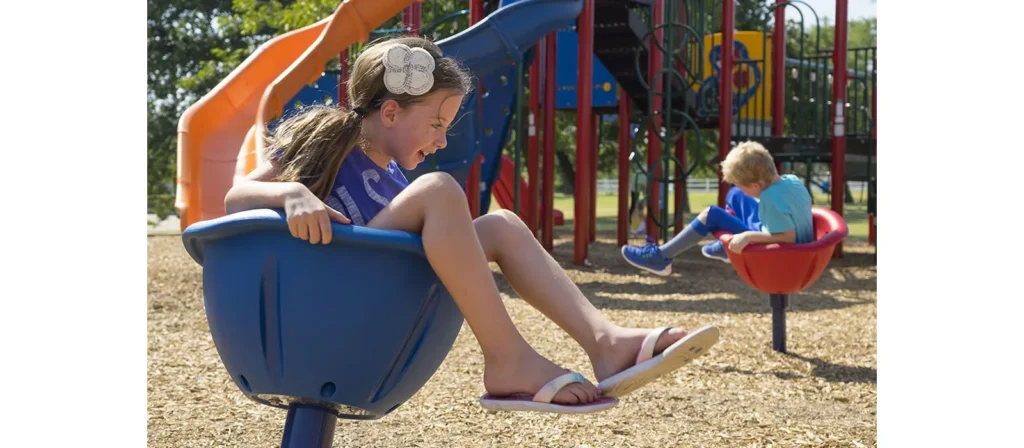
Spin Station with Tops
Introduction
Children experiment with spinning tops and compare how long each one spins before stopping.
How it connects to play schemas
The rotation schema is all about circular motion. By spinning tops, children explore balance, rhythm, and cycles, while observing how shape and surface affect rotation.
Materials
- A variety of tops or dreidels
- Flat surfaces (smooth table, carpet, tray)
- Stopwatch or timer
Steps
- Show children how to spin each top.
- Time how long each spin lasts.
- Try spinning on different surfaces.
- Compare which spins longer or faster.
- Encourage children to design their own top with paper or cardboard.
Wheel Workshop
Introduction
Children explore how wheels turn on axles and how rotation helps objects move.
How it connects to play schemas
This activity links the rotation schema to rolling motion. It demonstrates friction, movement, and the role of circular parts in making objects travel smoothly.
Materials
- Toy cars
- Loose wheels (safe for handling)
- Dowels or skewers (blunt ends only)
- Building blocks
Steps
- Roll toy cars and watch wheels turn.
- Build a simple axle with a dowel and wheels.
- Attach to blocks to create a rolling cart.
- Compare rolling on smooth vs. rough surfaces.
- Let children push cars down ramps and observe.
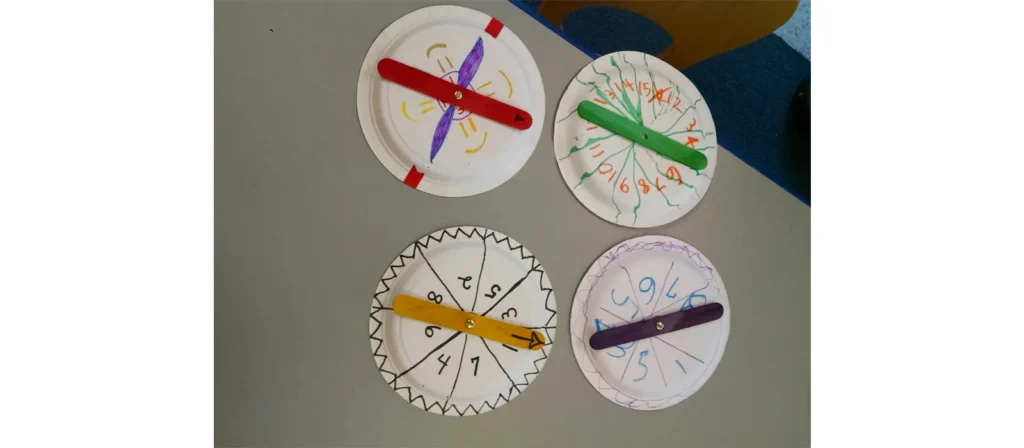
Swirl Art Painting
Introduction
Children create spiral and circular art by swirling paints with brushes or by spinning paper.
How it connects to play schemas
Swirl painting transforms circular motion into visible patterns. It helps children connect physical rotation with artistic expression.
Materials
- Thick paper
- Washable paints
- Brushes, cotton swabs, or droppers
- Lazy Susan or turntable (optional)
Steps
- Place paper flat or on a turntable.
- Drop paint onto the paper.
- Spin the surface or swirl with brushes.
- Watch patterns emerge as colors mix in circles.
- Display the finished spiral artworks.
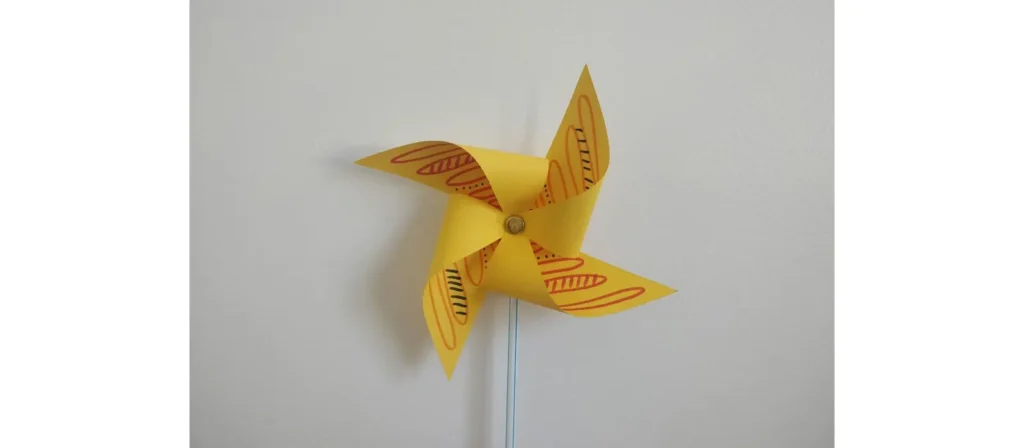
Pinwheel & Fan Fun
Introduction
Children use airflow to spin pinwheels and experiment with speed and angle.
How it connects to play schemas
Pinwheels connect circular motion with invisible forces like air. This helps children see that rotation can be powered by energy beyond their hands.
Materials
- Pinwheels
- Small electric fan
- Ribbons or streamers
Steps
- Place pinwheels near a fan.
- Adjust the distance and angle.
- Watch how ribbons or streamers spin differently.
- Encourage children to blow on pinwheels themselves.
- Discuss which angles made the fastest spin.
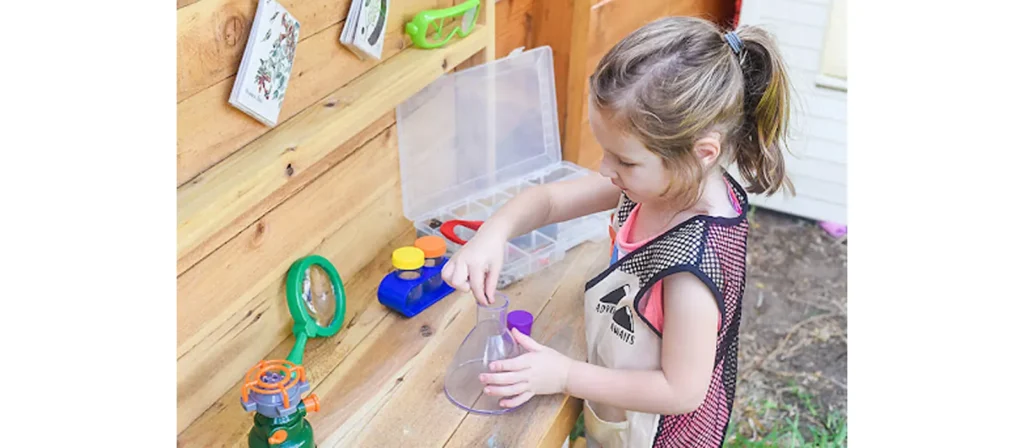
Twist & Turn Discovery Board
Introduction
Children play with a board filled with rotating items like knobs, jar lids, and bolts.
How it connects to play schemas
This activity allows repeated, controlled rotation. It supports fine motor skills, wrist strength, and coordination while satisfying the need to twist and turn.
Materials
- Old jar lids
- Large nuts and bolts
- Door knobs or handles
- Wooden board for mounting
Steps
- Mount lids, knobs, and bolts onto the board.
- Let children explore turning and twisting.
- Match lids to jars and practise opening/closing.
- Try tightening and loosening bolts.
- Encourage children to invent new “turning challenges.”
Transporting Schema Activities
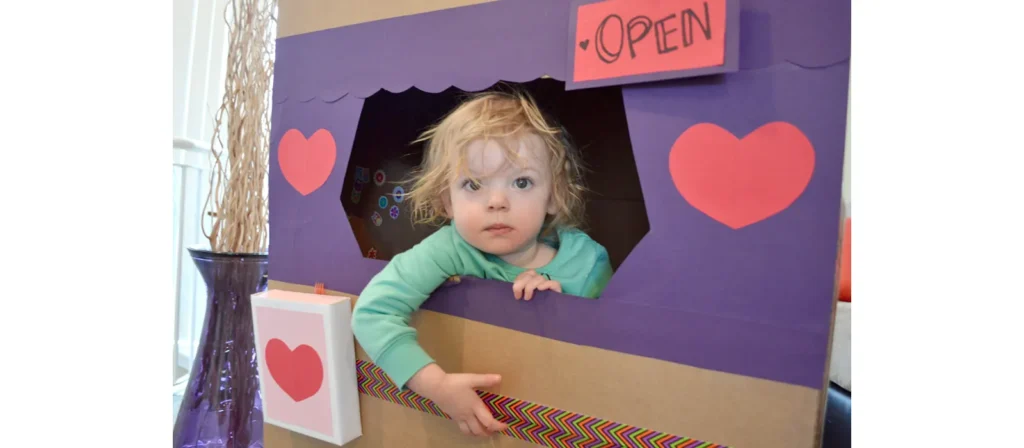
Little Post Office
Introduction
Children take on the role of postal workers, collecting “mail” and delivering it to different locations.
How it connects to play schemas
The transporting schema focuses on gathering and moving items from one place to another. This activity gives purpose to carrying, while also introducing ideas of sorting and responsibility.
Materials
- Envelopes or small boxes
- Stickers for stamps
- Baskets or bags for mail delivery
- Labeled baskets or bins as “mailboxes”
Steps
- Prepare envelopes or boxes with pretend stamps.
- Place the “mail” in a central basket.
- Give each child a bag to collect items.
- Ask them to deliver the mail to the correct basket.
- Rotate roles—collector, sorter, and deliverer.
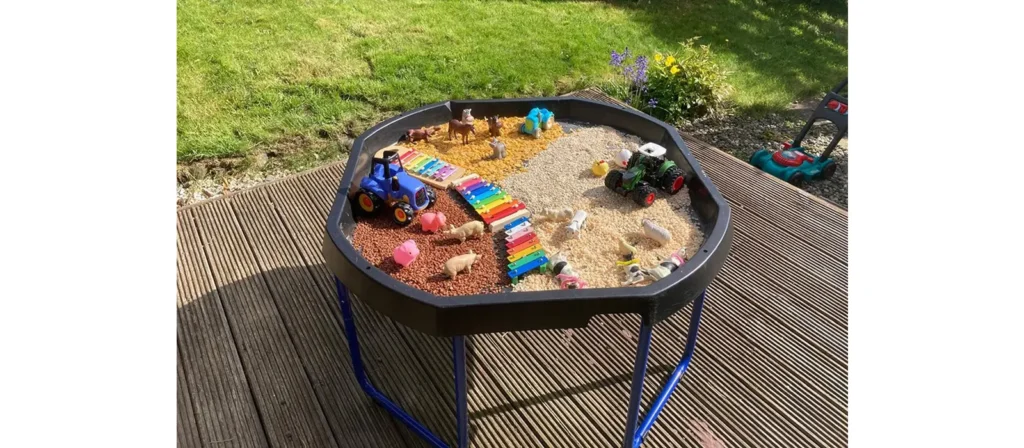
Builder’s Yard
Introduction
Children move building materials to a designated construction site before beginning their creations.
How it connects to play schemas
This activity emphasizes transporting as an essential step in larger projects. It allows children to plan loads, judge distance, and coordinate movement, all while satisfying their need to carry.
Materials
- Blocks, Lego, or wooden planks
- Wheelbarrow, baskets, or buckets
- Floor markers or cones for the “building site”
Steps
- Scatter blocks across one side of the room.
- Designate an area as the “construction site.”
- Children collect and carry blocks using baskets or wheelbarrows.
- Build a structure only with transported blocks.
- Repeat with new load challenges (e.g., heavier or lighter).
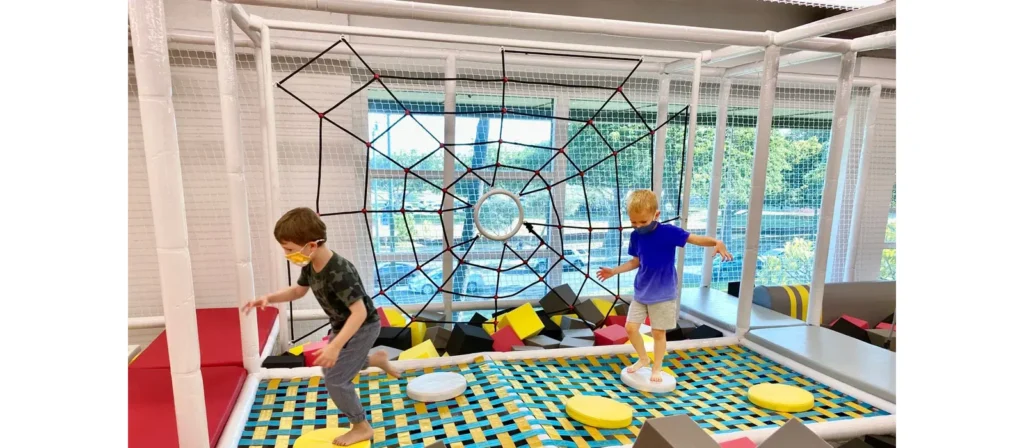
Shopping Adventure
Introduction
Children pretend to shop, selecting items, putting them in baskets, and moving them to a checkout or storage area.
How it connects to play schemas
Transporting gains meaning through role play. The schema is reinforced as children practice collecting, organizing, and carrying items with intention.
Materials
- Toy food or household items
- Baskets, bags, or carts
- Table with play money for checkout
Steps
- Set up a play shop with food items.
- Give each child a basket or cart.
- Ask them to “shop” for a list or by preference.
- Carry items to checkout, bag them, and transport them home.
- Restock the store and repeat.
Treasure Relocation Game
Introduction
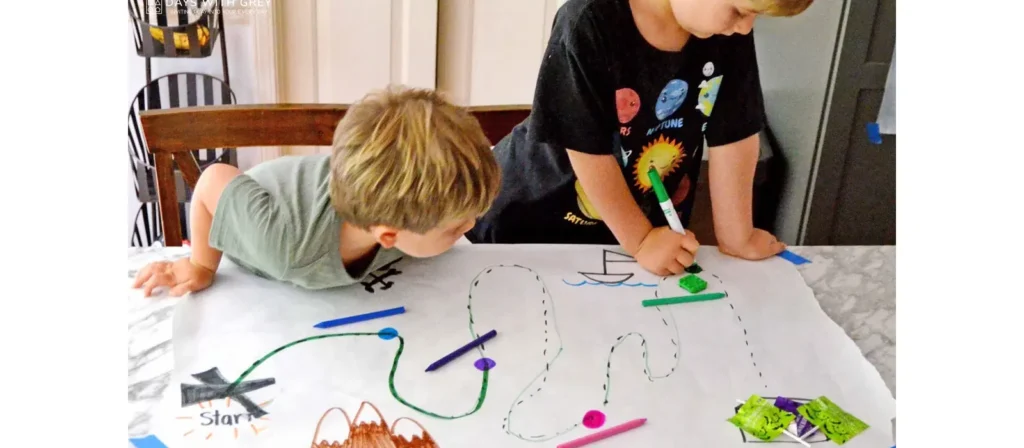
Children collect “treasures” from one place and carry them safely to another using different tools.
How it connects to play schemas
This activity develops transporting alongside problem-solving. Children explore efficiency and control as they move items in creative ways.
Materials
- Loose parts (shells, stones, lids)
- Cups, tongs, or spoons as carrying tools
- Two baskets or trays
Steps
- Place treasures in a starting basket.
- Challenge children to move them using a specific tool.
- Carry and deposit into the target basket.
- Repeat with new tools (hands, spoon, cup).
- Compare which tool worked best.
Laundry Helpers
Introduction
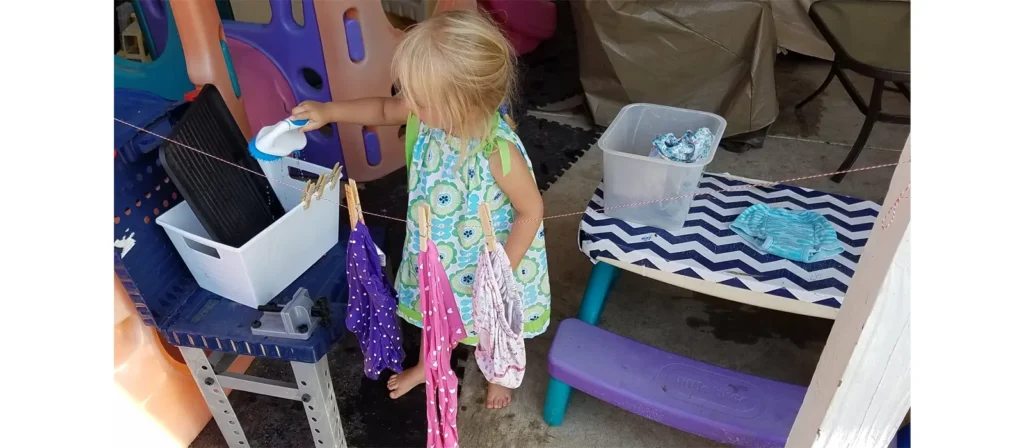
Children help sort and carry laundry items, moving them between different stations.
How it connects to play schemas
Everyday routines give transporting a natural context. Carrying laundry supports gross motor skills, sorting, and responsibility while honoring the schema.
Materials
- Basket of clean laundry
- Small baskets for carrying
- Folding station or storage bins
Steps
- Place laundry in a large central basket.
- Ask children to carry items to smaller baskets.
- Deliver baskets to the folding station.
- Sort items by type (shirts, socks, towels).
- Celebrate by folding or pretending to “deliver” to rooms.
Enveloping Schema Activities
Gift Wrap Workshop
Introduction
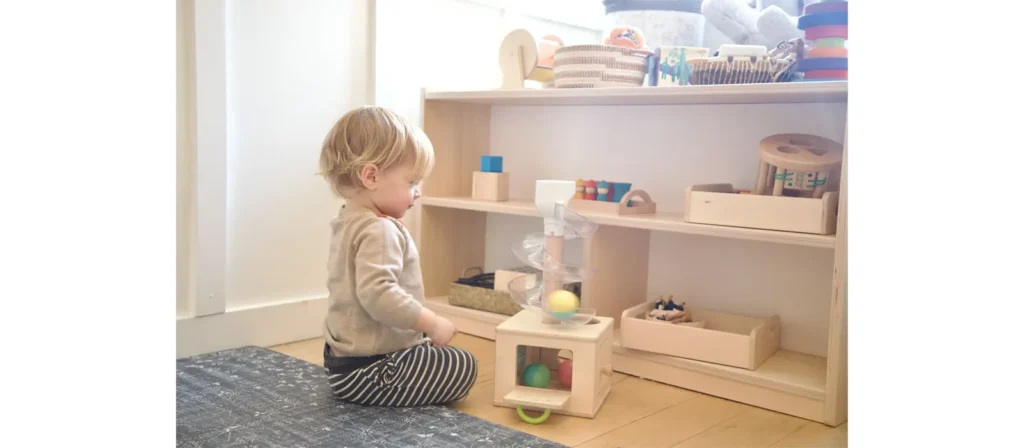
Children wrap small toys or boxes using paper, fabric, or tape, and later enjoy unwrapping them.
How it connects to play schemas
The enveloping schema centers on hiding and covering objects. Wrapping helps children explore the idea of containment and permanence—understanding that something still exists even when it is hidden.
Materials
- Small boxes or toys
- Scrap paper, tissue paper, or fabric squares
- Tape, ribbons, or stickers
Steps
- Provide children with a box or toy to wrap.
- Help them cover the item fully with paper or fabric.
- Seal with tape, ribbon, or stickers.
- Invite them to guess what’s inside.
- Unwrap and reveal, then repeat with different items.
Secret Pockets
Introduction
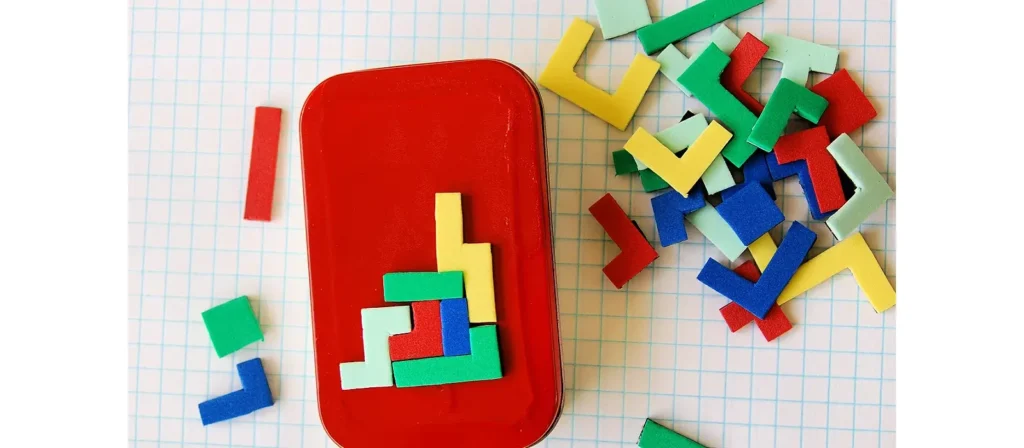
Children make envelopes or pockets and hide small treasures inside.
How it connects to play schemas
This activity strengthens the concept of “hidden but present.” By placing objects inside pockets, children gain a stronger sense of security and containment.
Materials
- Envelopes, folded paper, or felt pockets
- Crayons or stickers for decoration
- Small objects like buttons, coins, or beads
Steps
- Provide paper or ready-made envelopes.
- Decorate each pocket with drawings or stickers.
- Place a small treasure inside and seal.
- Label the pocket or exchange with a friend.
- Open later to check what’s inside.
Nesting Box Surprises

Introduction
Children place objects inside smaller boxes, then stack or nest them into larger boxes.
How it connects to play schemas
Layering objects reinforces enveloping concepts by showing how items can be repeatedly hidden and revealed.
Materials
- A set of nesting boxes or containers of different sizes
- Small toys or tokens
Steps
- Hide a toy in the smallest box.
- Place that box into the next larger one.
- Continue nesting until the largest box is closed.
- Open each box one by one to find the toy.
- Swap toys and repeat.
Blanket Hideaway
Introduction
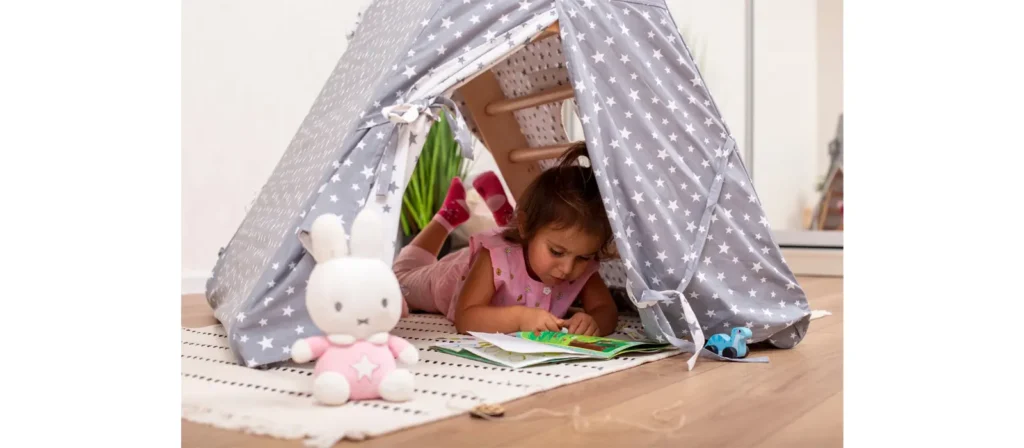
Children build covered spaces where they or their toys can be hidden.
How it connects to play schemas
The enveloping schema often includes the body itself. Creating covered spaces gives children comfort, privacy, and a sense of control.
Materials
- Blankets, sheets, or large scarves
- Chairs or cushions for support
- Toys, books, or pillows for the inside
Steps
- Drape blankets over chairs or cushions to form a tent.
- Invite children to bring toys or books inside.
- Play peek-a-boo by covering and revealing toys.
- Let them rest, read, or play inside the hideaway.
- Pack up and rebuild in a new way.
Parcel Play
Introduction
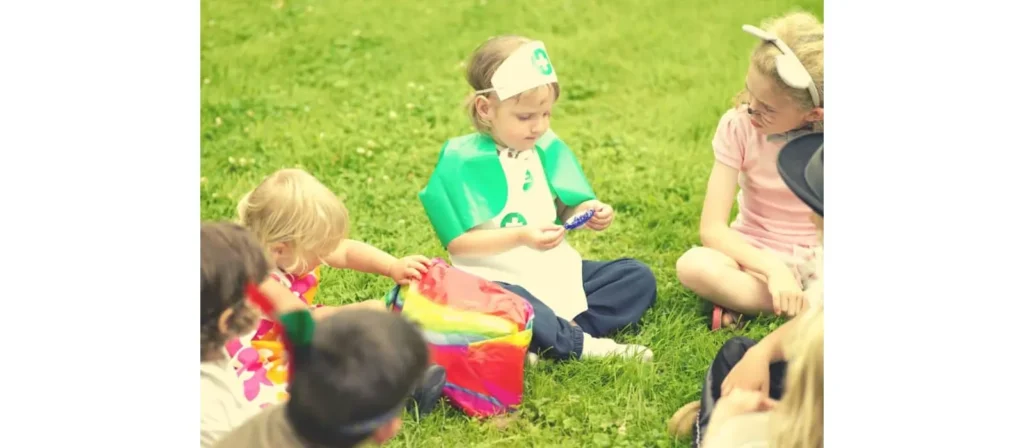
Children create and deliver pretend parcels by wrapping and transporting them.
How it connects to play schemas
This combines enveloping with role play, reinforcing covering and containing while adding purpose through delivery.
Materials
- Scrap paper, fabric, or small bags
- Tape or string
- Lightweight objects (blocks, stuffed toys)
- Baskets or bins for “delivery stations”
Steps
- Wrap objects to make pretend parcels.
- Place parcels in a basket.
- Assign destinations (labeled baskets or bins).
- Children carry and deliver parcels to the right spot.
- Open parcels to check delivery success.
Enclosing Schema Activities
Animal Enclosure Builder
Introduction
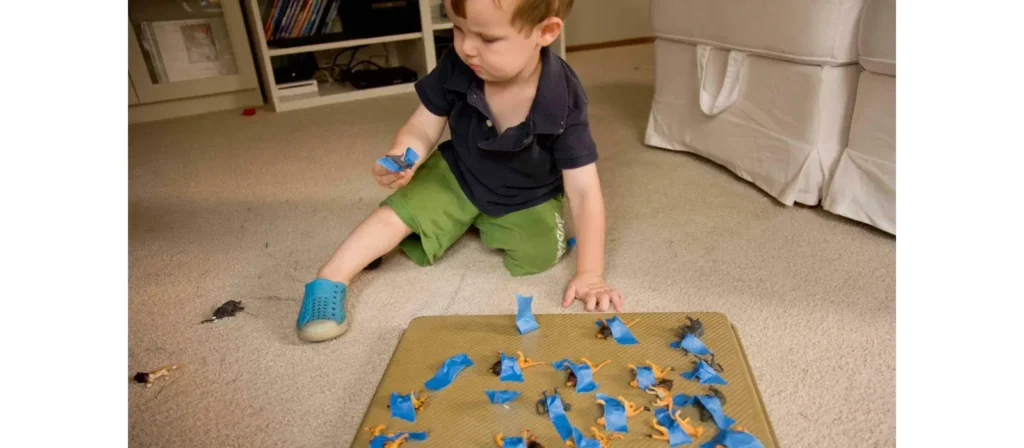
Children build pens or fences around toy animals using blocks, tiles, or sticks.
How it connects to play schemas
The enclosing schema is about creating boundaries and understanding “inside” versus “outside.” This activity helps children explore spatial limits, containment, and organization.
Materials
- Toy animals or figures
- Wooden blocks, magnetic tiles, or craft sticks
- A flat surface or play mat
Steps
- Place toy animals in the center of a play mat.
- Encourage children to build fences around them.
- Add gates or doors that open and close.
- Test if the animals “escape” or stay inside.
- Rebuild the enclosure in different shapes.
Tape Shape Zones
Introduction
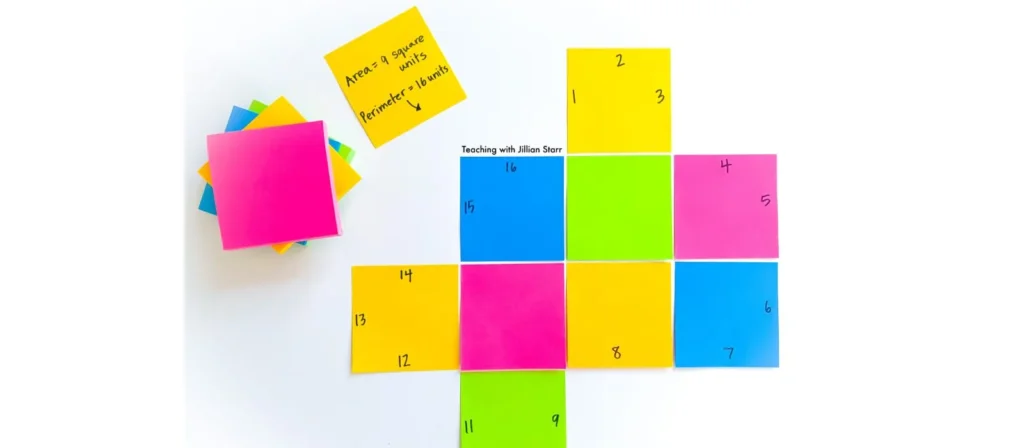
Children use tape to create enclosed areas on the floor, then fill them with toys.
How it connects to play schemas
Drawing or creating borders reinforces the idea of boundaries. Children see how spaces can be defined and used in specific ways.
Materials
- Painter’s tape or masking tape
- Floor space
- Toy cars, blocks, or dolls
Steps
- Use tape to outline squares, circles, or triangles on the floor.
- Invite children to choose toys and place them inside the shapes.
- Label each shape (e.g., car park, zoo, house).
- Rearrange toys into new shapes.
- Peel off tape and design fresh layouts.
Box City Walls
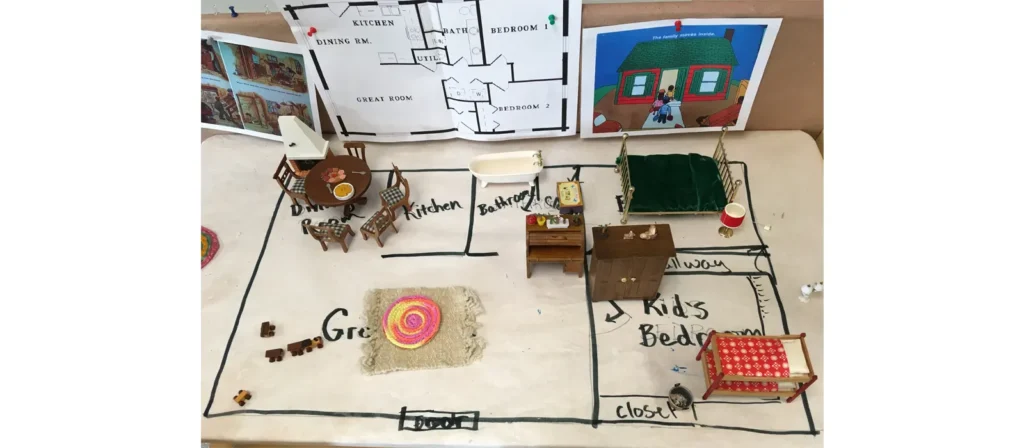
Introduction
Children use cardboard boxes to create enclosed spaces for a pretend city.
How it connects to play schemas
This large-scale activity encourages spatial planning and enclosure building. It highlights the role of boundaries in structuring communities and spaces.
Materials
- Cardboard boxes of various sizes
- Tape or glue
- Toy people, cars, or animals
Steps
- Arrange boxes to create walls or “streets.”
- Add openings for doors or gates.
- Place toy figures or cars inside the city.
- Expand the city with more enclosed areas.
- Role-play daily life within the city walls.
Chalk Corrals
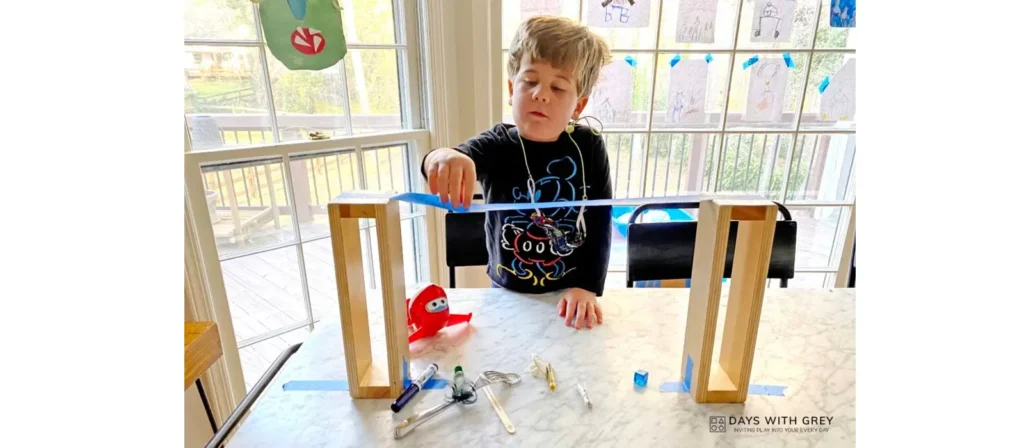
Introduction
Children draw enclosed shapes outdoors and use them as play pens or zones.
How it connects to play schemas
Chalk drawings give children freedom to create enclosures on a larger scale. They experiment with shape, space, and ownership.
Materials
- Sidewalk chalk
- Outdoor pavement
- Toy cars, dolls, or animals
Steps
- Draw large circles, squares, or spirals.
- Assign each shape a purpose (e.g., garage, pen, house).
- Place toys inside and move them between zones.
- Compare large and small enclosures.
- Wipe away chalk and draw new shapes.
Hula-Hoop Sorting Zones
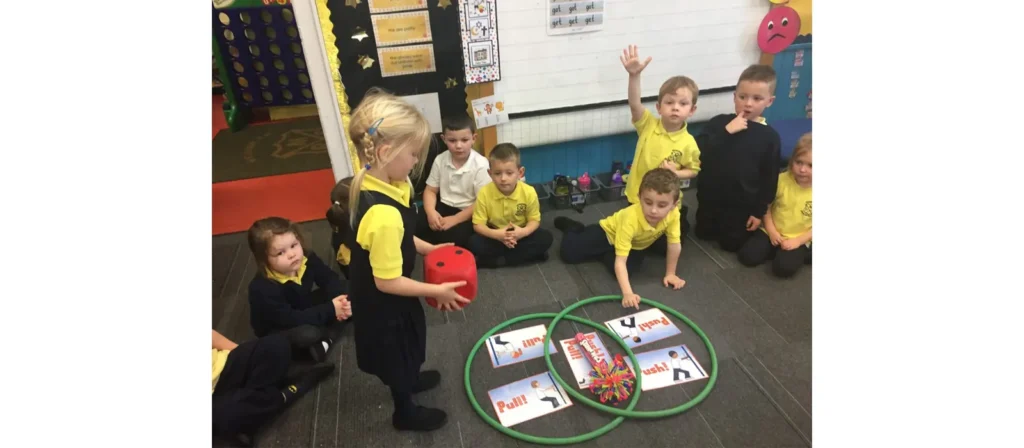
Introduction
Children use hula hoops as boundaries for sorting and grouping objects.
How it connects to play schemas
Using physical hoops to define space makes enclosures tangible. This links containment with classification and sorting.
Materials
- Hula hoops
- Mixed loose parts (buttons, blocks, toy cars)
- Floor space
Steps
- Place hula hoops on the floor.
- Invite children to sort items into hoops by type or color.
- Redefine hoops as “houses” or “garages.”
- Overlap hoops to create Venn diagrams for sorting.
- Rearrange hoops into new patterns and repeat.
Positioning Schema Activities
Pattern Lines
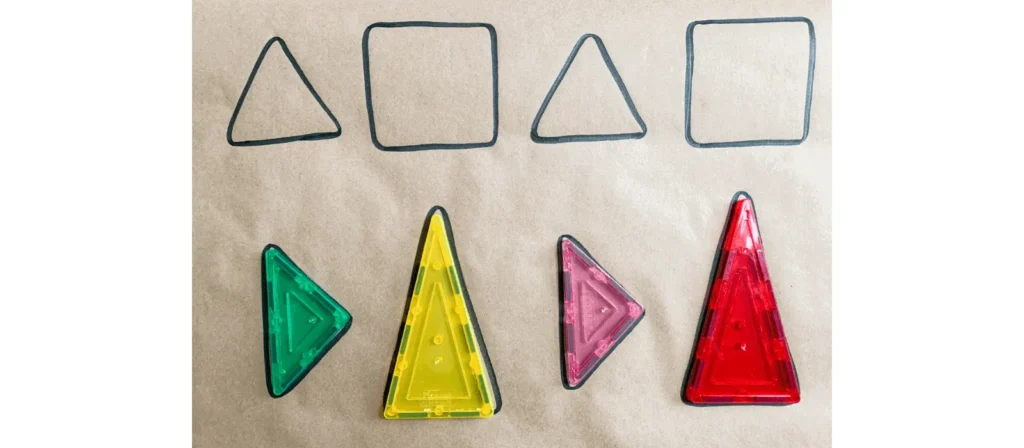
Introduction
Children arrange objects in straight lines or repeating sequences, experimenting with order and spacing.
How it connects to play schemas
The positioning schema is about arranging items deliberately. This activity supports sequencing, early math skills, and visual organization.
Materials
- Toy cars, blocks, or buttons
- Painter’s tape to mark a line
- A flat surface
Steps
- Place a tape line across the floor or table.
- Invite children to line up toys along the line.
- Encourage them to create repeating patterns (e.g., red–blue–red–blue).
- Add new items to extend the sequence.
- Photograph the finished line before tidying up.
Symmetry Studio
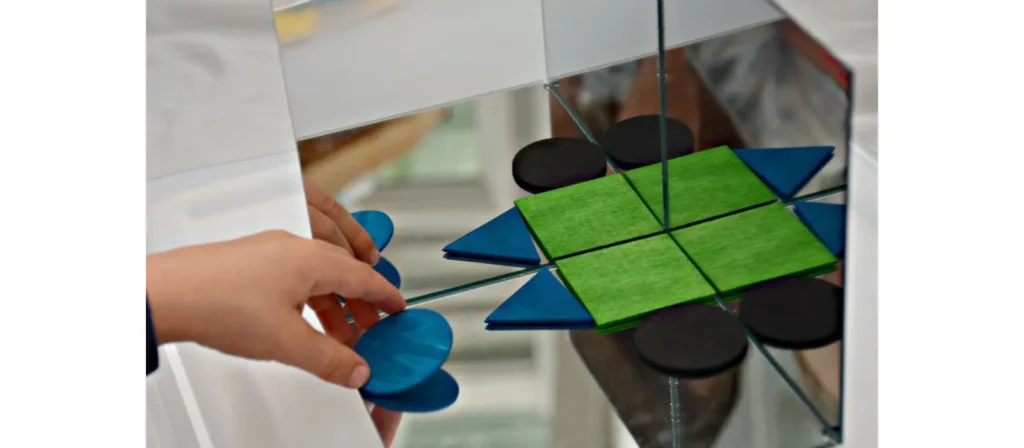
Introduction
Children build mirrored patterns using a mirror or reflective surface.
How it connects to play schemas
Positioning schemas often involve balance and symmetry. This activity helps children connect placement with visual harmony.
Materials
- Small building tiles, gems, or beads
- Mirror tray or standing mirror
- Flat surface
Steps
- Place a mirror on a table.
- Encourage children to place objects on one side.
- Observe how the reflection completes the pattern.
- Add more items to extend the design.
- Photograph the mirrored results.
Mini Museum Display
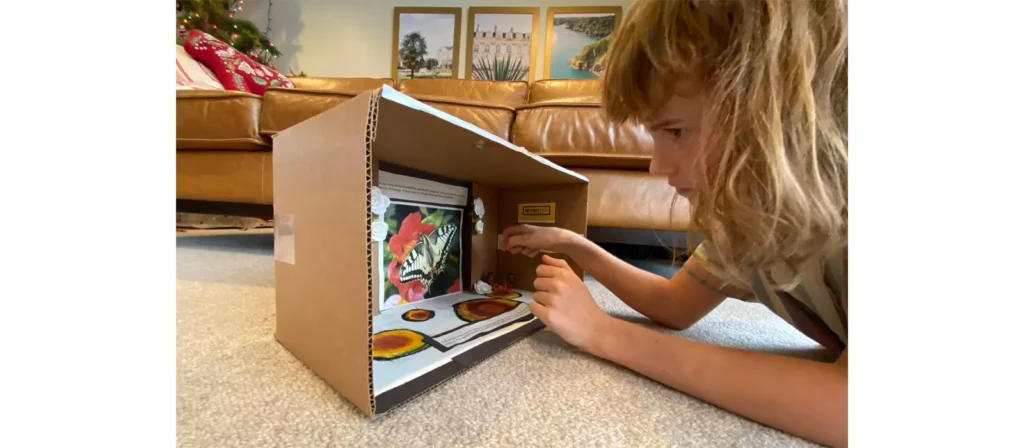
Introduction
Children curate objects and position them neatly on a shelf or table for display.
How it connects to play schemas
Arranging items with care encourages classification and order. It connects play with real-world skills like organizing and presenting.
Materials
- A small shelf or tray
- A selection of small objects (toys, stones, shells)
- Labels or index cards
Steps
- Choose a theme (e.g., toy animals, colorful stones).
- Place items neatly in rows or groups.
- Label the groups if desired.
- Encourage children to “tour” their display.
- Rearrange objects for a new exhibition.
Grid Mapping
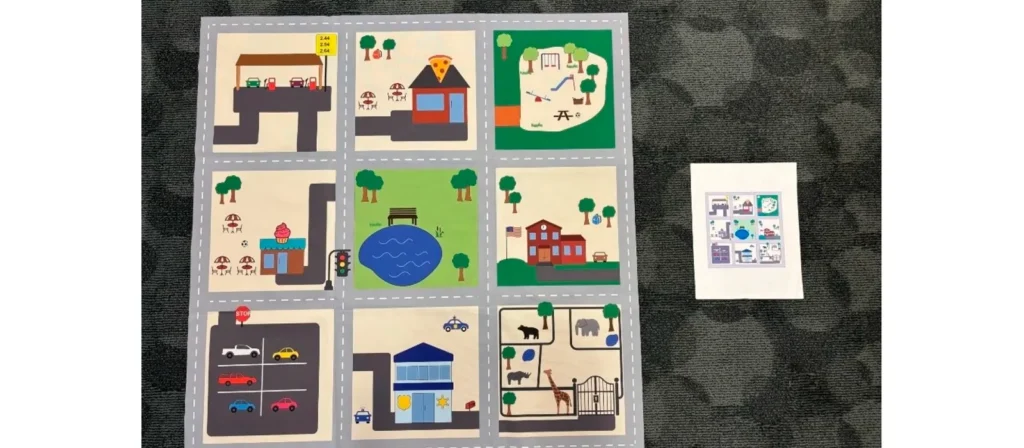
Introduction
Children place objects onto a grid, following coordinates or creating designs.
How it connects to play schemas
This activity connects positioning to early geometry. It introduces coordinates, order, and visual mapping.
Materials
- Printed or taped grid
- Counters, buttons, or Lego pieces
- Marker for labeling axes (optional)
Steps
- Create a grid on paper or the floor.
- Invite children to place items in each square.
- Call out coordinates and ask them to place objects there.
- Create pictures by filling certain squares.
- Erase or clear and repeat with new designs.
Nature Mandalas
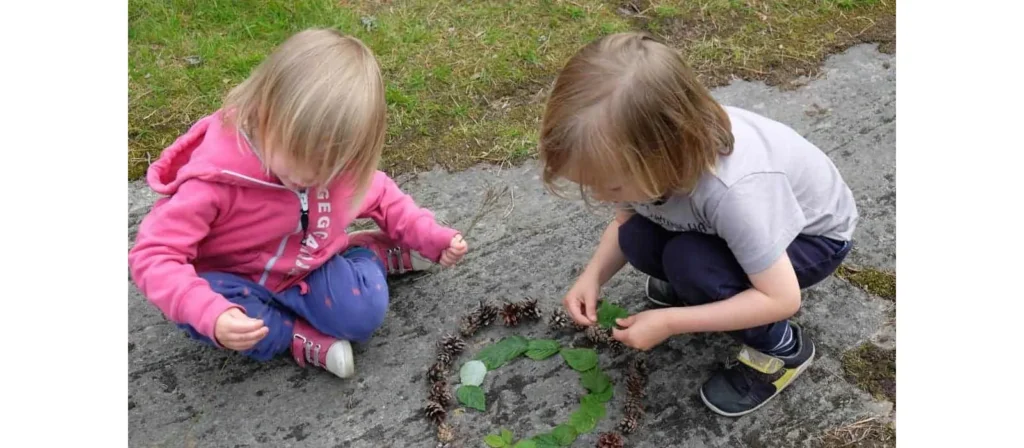
Introduction
Children collect natural materials and arrange them in circular, symmetrical patterns.
How it connects to play schemas
This combines positioning with creativity. It strengthens spatial awareness, symmetry, and pattern recognition.
Materials
- Leaves, flowers, stones, or shells
- A mat or large sheet of paper as a base
- Camera to record the designs
Steps
- Collect natural materials outdoors.
- Start by placing one item in the center.
- Add more items in rings around the center.
- Continue until a full mandala is created.
- Take a photo before dismantling.
Connecting Schema Activities
Train Track Architect
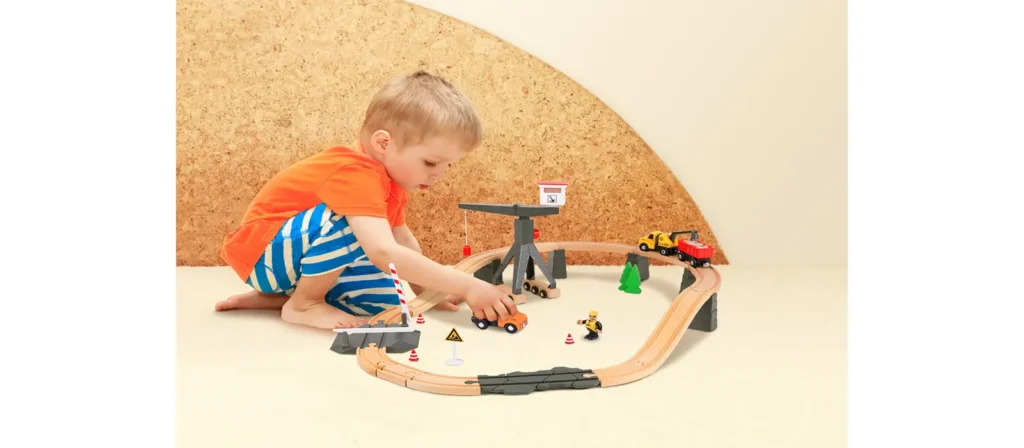
Introduction
Children design and assemble continuous train tracks, experimenting with different layouts and connections.
How it connects to play schemas
The connecting schema is about joining parts into larger systems. Train tracks show how small pieces link together to form a whole, encouraging problem-solving and spatial reasoning.
Materials
- Wooden or plastic train tracks
- Bridges, junctions, and trains
- Flat floor or play mat
Steps
- Lay out individual track pieces.
- Encourage children to connect them into a loop.
- Add bridges, junctions, or tunnels for complexity.
- Test the train’s journey around the track.
- Rearrange into new layouts and repeat.
Bridge Builder
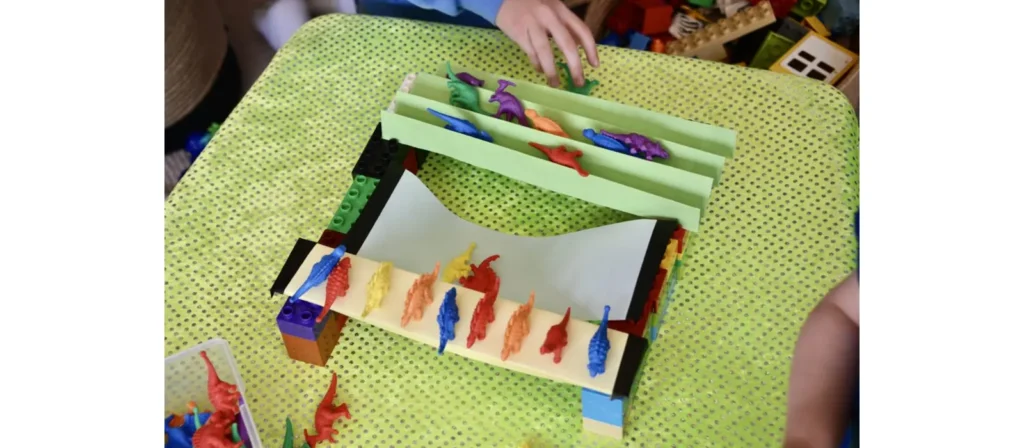
Introduction
Children join materials to create bridges that span gaps between two points.
How it connects to play schemas
This activity reinforces the concept of structural connections. It helps children see how stability depends on how parts are joined.
Materials
- Craft sticks, straws, or Lego bricks
- Tape or connectors
- Two chairs or boxes to act as riverbanks
Steps
- Set up a gap between two chairs or boxes.
- Provide materials for bridge construction.
- Build and test a simple bridge with small toys.
- Reinforce weak areas and retest.
- Compare which designs hold best.
Bead Threading
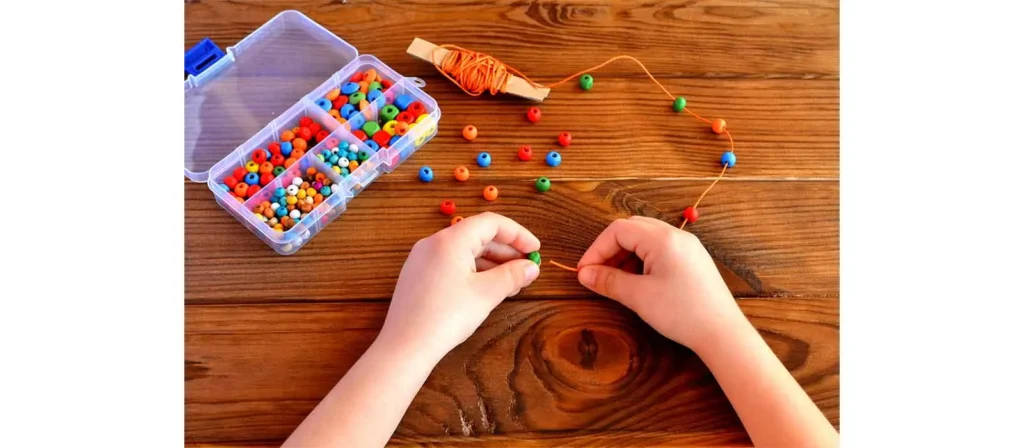
Introduction
Children string beads to make necklaces or patterns.
How it connects to play schemas
Threading beads gives children repeated practice in joining small items. It also develops fine motor skills and sequencing.
Materials
- Large beads
- String, shoelaces, or pipe cleaners
- Bowls for sorting beads
Steps
- Sort beads by color or size.
- Choose a pattern (e.g., red–blue–red–blue).
- Thread beads onto string in order.
- Tie ends securely.
- Display or wear the finished creation.
Straw and Tape Structures
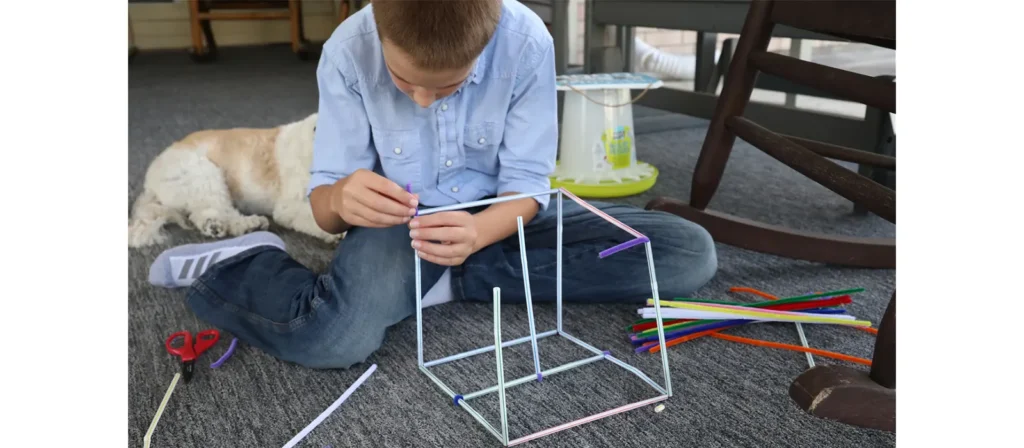
Introduction
Children connect straws into shapes, testing how different joints create stability.
How it connects to play schemas
This activity encourages exploration of geometry and strength in connected structures, combining engineering concepts with play.
Materials
- Drinking straws
- Tape, pipe cleaners, or connectors
- Scissors (child-safe)
Steps
- Show how to connect two straws with tape.
- Create simple 2D shapes (squares, triangles).
- Build up into 3D forms like cubes or pyramids.
- Test stability with gentle pressure.
- Rebuild stronger designs.
Paper Chain Factory
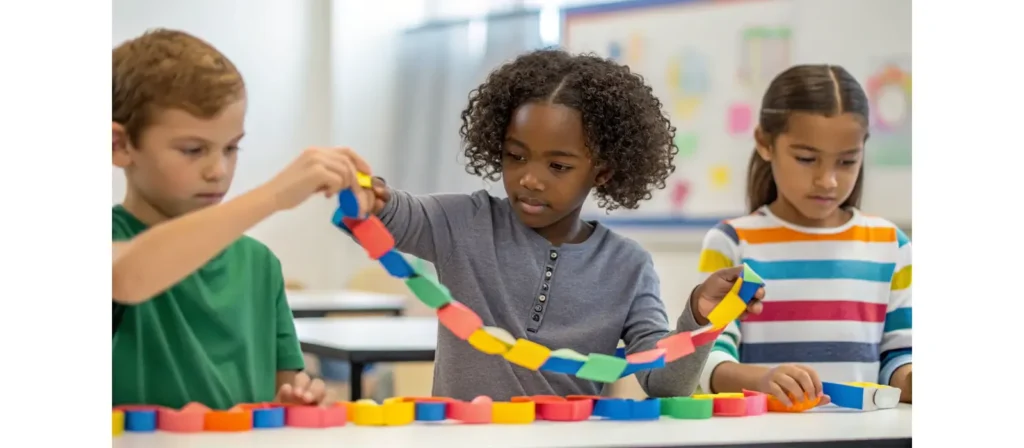
Introduction
Children make long chains by looping and attaching paper strips.
How it connects to play schemas
The repetitive linking of loops shows how small pieces can grow into something continuous, reinforcing the connecting schema.
Materials
- Strips of colored paper
- Glue sticks or staplers
- Table surface
Steps
- Make the first loop and secure it.
- Thread the next strip through and secure.
- Continue until the chain is long.
- Use the chain to decorate the room.
- Compare lengths of different chains.
Disconnecting Schema Activities
Deconstruction Bin
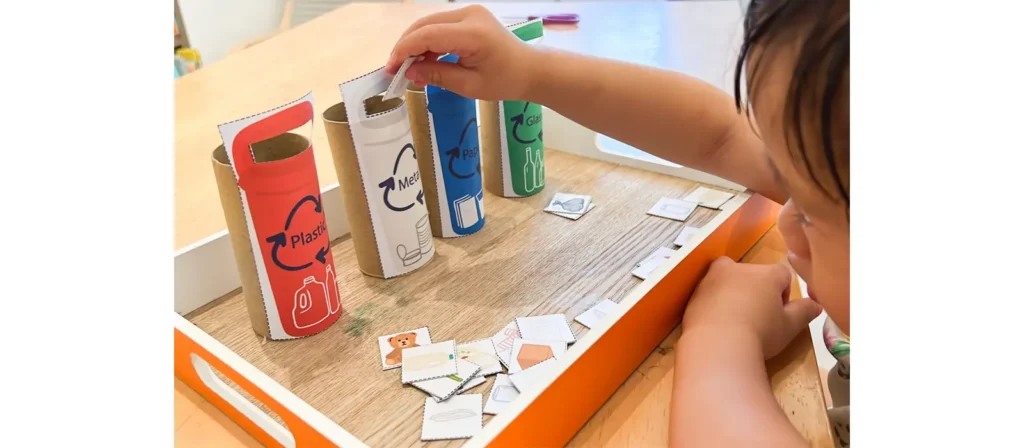
Introduction
Children take apart old or broken items, exploring how they are built and how pieces come apart.
How it connects to play schemas
The disconnecting schema is about undoing bonds and testing how connections can be reversed. Deconstruction teaches cause and effect, problem-solving, and persistence.
Materials
- Old keyboards, phones, or toys (safe, no sharp edges or batteries)
- Child-safe screwdrivers and pliers
- Trays for sorting parts
Steps
- Place one object in the bin for each child.
- Show how to safely use screwdrivers or pull-apart pieces.
- Encourage sorting parts into trays by size or type.
- Discuss what each part might have done.
- Tidy up and safely store reusable materials.
Velcro Wall
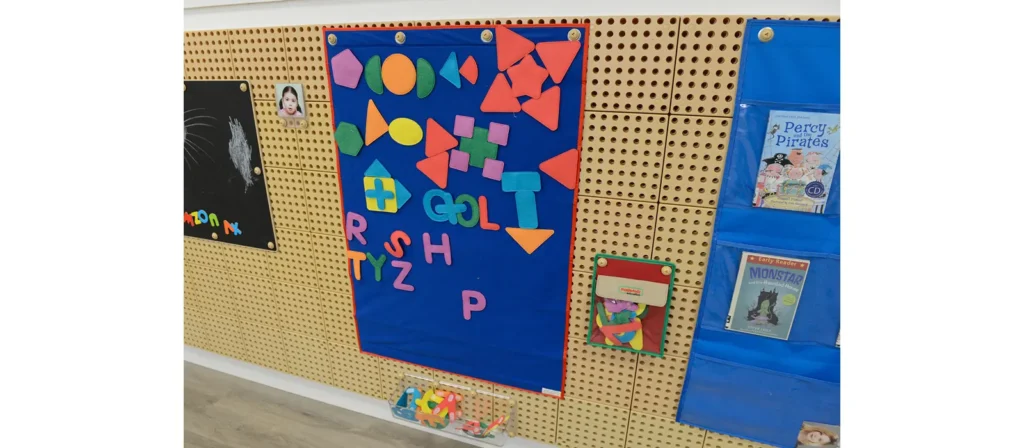
Introduction
Children attach and detach Velcro-backed shapes on a felt or flannel board.
How it connects to play schemas
Velcro offers immediate feedback—stick, pull, and release. This repetition strengthens the disconnecting schema while supporting fine motor skills.
Materials
- Felt or flannel board
- Shapes with Velcro backing
- Labels or pictures for matching
Steps
- Stick shapes onto the board.
- Invite children to peel them off and reattach.
- Create simple matching games (e.g., shape to outline).
- Encourage making pictures, then dismantling.
- Race to see who can unstick the fastest.
Block Tower Teardown
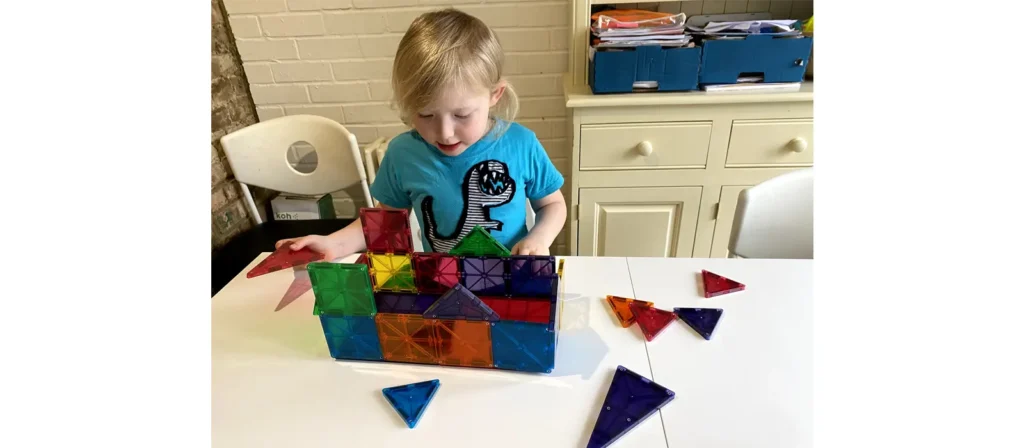
Introduction
Children build tall towers with snap-together blocks, then take them apart piece by piece.
How it connects to play schemas
This activity shows children that breaking down structures is just as important as building them. It emphasizes effort, sequence, and cause–effect.
Materials
- Large interlocking blocks (Duplo, Mega Bloks)
- Flat play surface
- Timer (optional)
Steps
- Build a tall block tower with children.
- Let them knock it down once for fun.
- Rebuild and then dismantle carefully, block by block.
- Time how long the teardown takes.
- Compare different tower shapes for ease of dismantling.
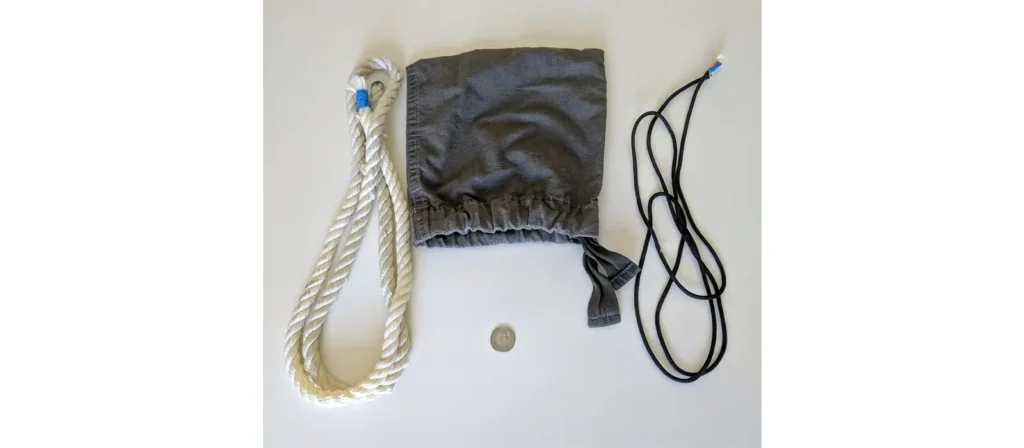
Knot and Untie Lab
Introduction
Children practise tying and untying simple knots with ropes or scarves.
How it connects to play schemas
Disconnecting schemas involve undoing links. Knot play gives children hands-on experience with tension, strength, and release.
Materials
- Thick cords, ropes, or scarves
- Large rings or dowels (optional)
- Tray to keep cords tidy
Steps
- Show how to tie a simple knot.
- Invite children to copy and tie knots themselves.
- Practise untying the knots safely.
- Create challenges like tying around a ring.
- Celebrate when knots are undone.
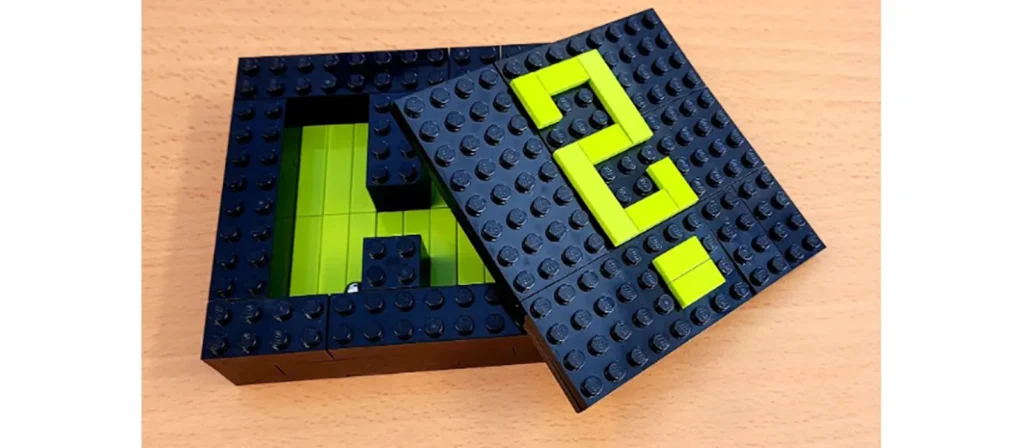
Mystery Lock Boxes
Introduction
Children open boxes closed in different ways—zippers, clips, or bands—to find surprises inside.
How it connects to play schemas
This activity allows repeated practise with undoing fasteners. It develops patience, coordination, and logical thinking.
Materials
- Small boxes, tins, or containers
- Clothespins, rubber bands, or child-safe locks
- Small toys or tokens for surprises
Steps
- Place a toy inside a closed box.
- Secure the box with a clip, band, or zipper.
- Give the child time to open it.
- Reveal the surprise inside.
- Reset with new closures and repeat.
Transforming Schema Activities
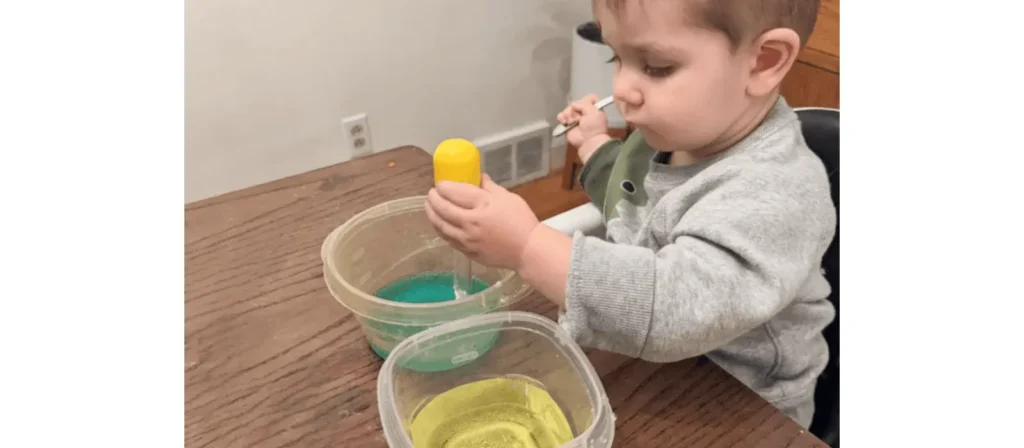
Color Mixing Lab
Introduction
Children blend primary colors to create new shades using paints, droppers, or water.
How it connects to play schemas
The transforming schema focuses on change. Mixing colors makes transformation visible, showing how two things can combine into something entirely new.
Materials
- Washable paints (red, blue, yellow)
- Small bowls or palettes
- Brushes, droppers, or cotton swabs
- Thick paper
Steps
- Set out the three primary colors.
- Let children mix two colors together.
- Record the result by painting on paper.
- Experiment with different ratios (more red, less blue).
- Display the color charts for reference.
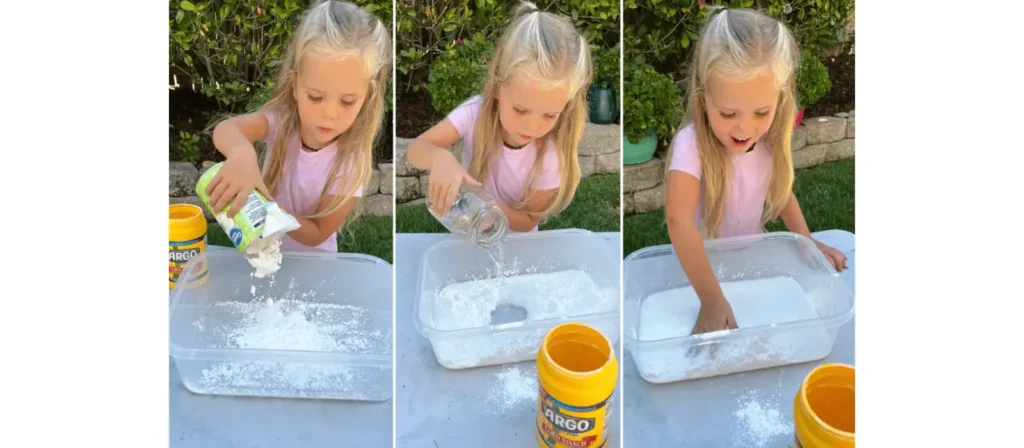
Oobleck Play
Introduction
Children make a gooey mixture that behaves like both a liquid and a solid.
How it connects to play schemas
Oobleck is an ideal example of transformation—it shifts states depending on force. This activity deepens children’s curiosity about materials and change.
Materials
- Cornstarch
- Water
- Bowl and spoon
- Food coloring (optional)
Steps
- Mix 2 parts cornstarch with 1 part water.
- Stir until the mixture thickens.
- Invite children to squeeze it in their hands (solid).
- Let it drip through fingers (liquid).
- Add color for visual fun.
Ice Melting Challenge
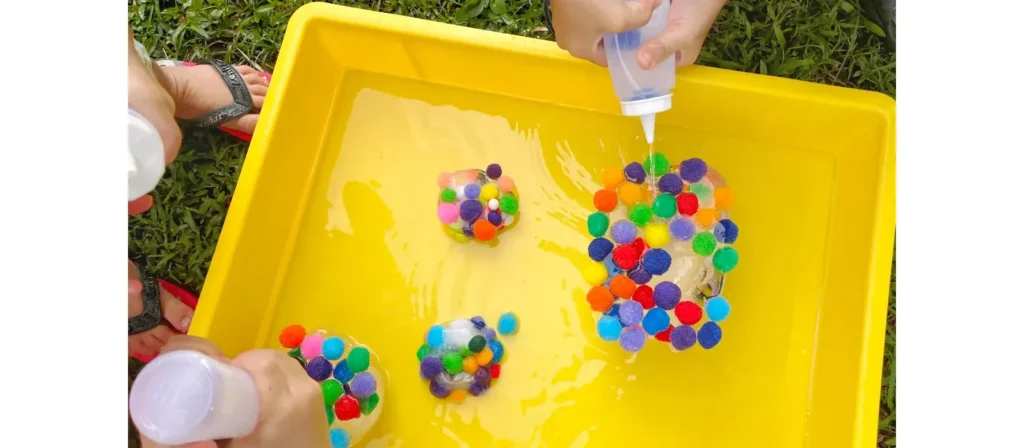
Introduction
Children experiment with ice cubes, watching them melt in different conditions.
How it connects to play schemas
This shows transformation through temperature change. Children observe how a solid becomes liquid, reinforcing ideas of cause and effect.
Materials
- Ice cubes
- Salt
- Warm water droppers
- Tray or shallow bowl
Steps
- Place ice cubes on a tray.
- Sprinkle salt on some cubes, leaving others plain.
- Use droppers to add warm water.
- Watch which cubes melt faster.
- Discuss how salt and heat affect the process.
Dough Bakery
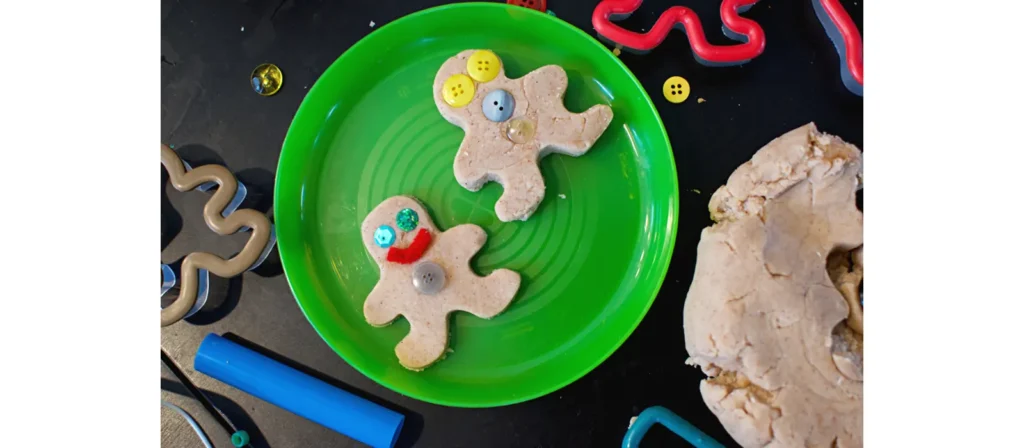
Introduction
Children mix ingredients, knead dough, and shape it into forms before baking or air-drying.
How it connects to play schemas
Making dough shows transformation from powdery ingredients to elastic dough, and then to a hardened or baked form.
Materials
- Flour, water, yeast (optional)
- Bowl and spoon
- Rolling pin and cookie cutters
- Oven (with adult help) or playdough for safe practice
Steps
- Mix flour and water to form dough.
- Knead until smooth and stretchy.
- Shape into balls, animals, or cookies.
- Bake with supervision or air-dry.
- Compare before and after textures.
Sun Prints
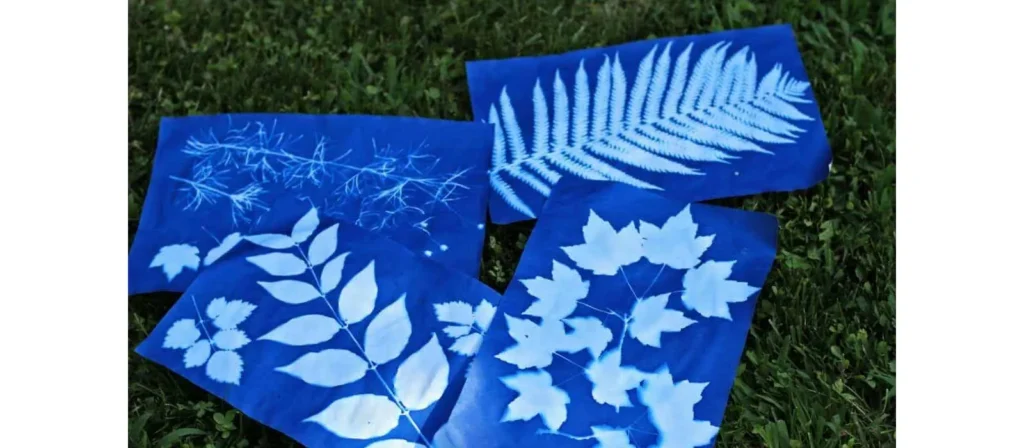
Introduction
Children use sunlight to change paper, creating patterns with shadows and light.
How it connects to play schemas
This activity highlights transformation through natural energy. Sunlight changes the material, making invisible processes visible.
Materials
- Sun-sensitive paper (or dark paper)
- Leaves, stencils, or small toys
- Clear tray or glass to hold items flat
Steps
- Place paper on a tray.
- Arrange leaves or stencils on top.
- Leave in sunlight for a few minutes.
- Remove items and observe the new pattern.
- Compare which shapes created the clearest prints.
Conclusion
Play schemas may look like simple or even repetitive behaviors, but they are powerful tools that drive children’s learning and development. From dropping toys to mixing colors, each schema reflects a child’s way of exploring the world, testing ideas, and making sense of new experiences. When parents and educators recognize these patterns, they can provide the right support, turning everyday play into meaningful opportunities for growth. By understanding play schemas, we not only reduce frustration over behaviors that seem messy or repetitive but also help children build the cognitive, social, and emotional skills they will carry for life.
FAQs About Play Schemas
1. What are play schemas in child development?
Play schemas are repeated patterns of behavior, such as throwing, lining up, or wrapping objects, that show how children are exploring and learning about the world.
2. Do children grow out of play schemas?
Specific behaviors may fade as children master a concept, but schemas do not disappear. They evolve into more complex learning and can influence play and problem-solving even into adulthood.
3. Can children have more than one schema at the same time?
Yes. A child may transport blocks, line them up, and then build an enclosure, all within a single play session.
4. Why are play schemas important for learning?
Schemas build the foundation for cognitive skills like problem-solving and sequencing, physical skills like coordination, and social skills like cooperation and role play.