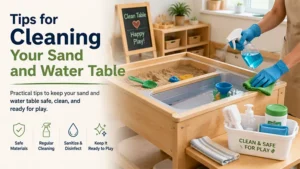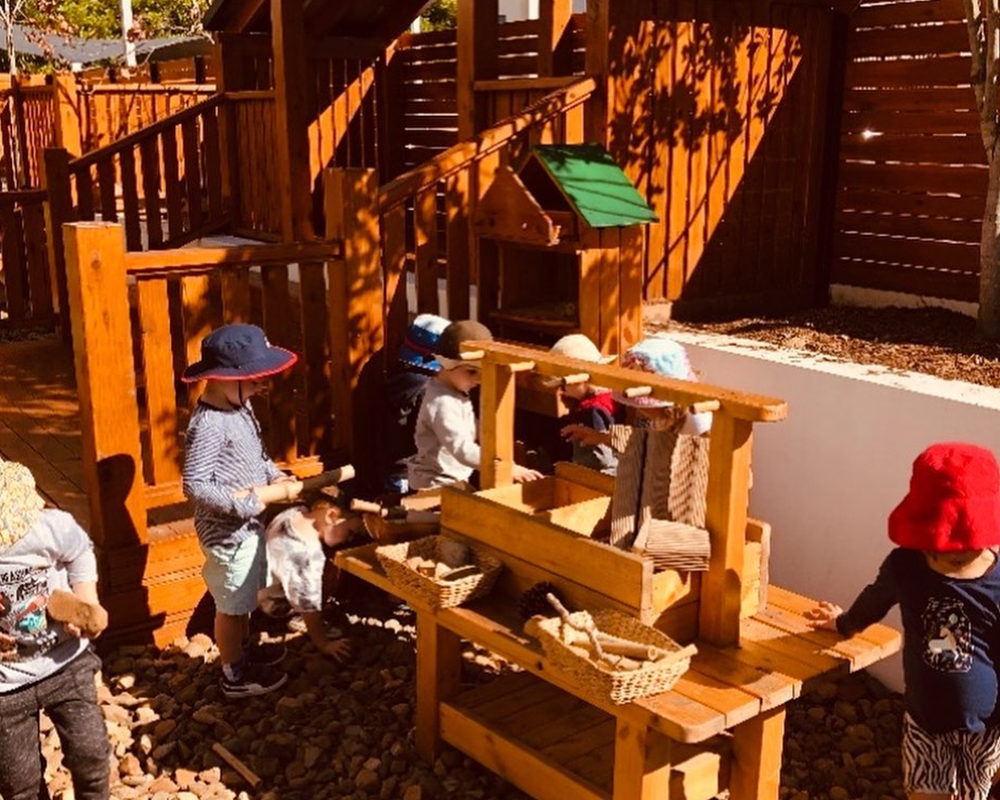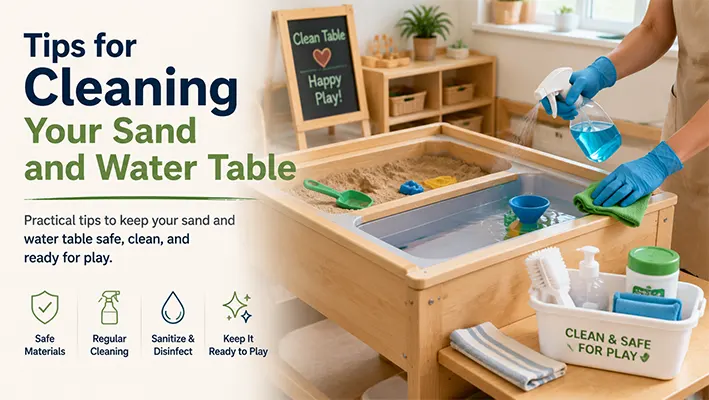
Sand and water tables are used frequently, easily accumulating sand, water, food scraps, and bacteria. Kindergarten sand and water tables come into contact with dozens of children daily—cleaning them is not only a matter of hygiene but also directly affects the lifespan of the equipment and your return on investment. Below is a standard cleaning procedure for commercial environments.
Complete Sand and Water Table Cleaning Procedures Suitable for Kindergartens
What do you need to prepare for cleaning a sand and water table?
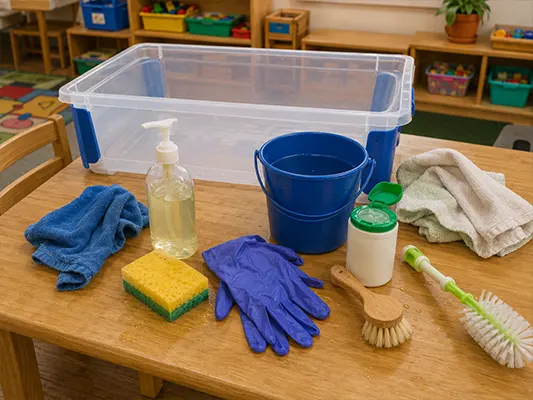
- Warm water
- Mild detergent
- Soft rag or sponge
- soft bristle brush
- Hygiene products suitable for kindergarten environments
- clean towels
- small bucket
- protective gloves
- Drainage cleaning brush
Note: However, steel wool, strong acid or alkali cleaners, and rough tools must be avoided on sand and water play tables to prevent damage to the tabletop.
Quick cleaning after each use
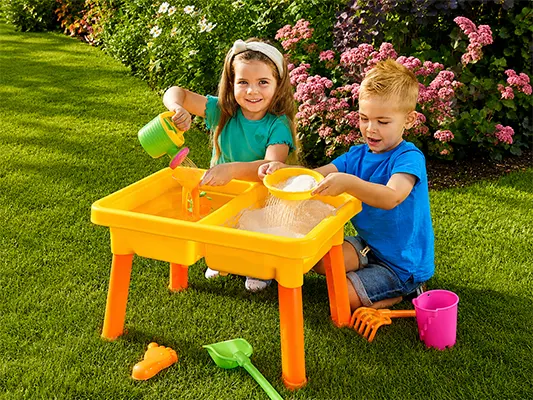
- It is recommended that you complete the following steps after each activity:
- Remove shovels, water cups, funnels, and activity toys
- Drain the water from the sink
- Remove paper scraps, food, and visible debris from the sand
- Wipe table edges, handles, and high-touch areas
- Check for clogged drains
- Separate and allow the cleaned items to air dry.
You should make quick cleaning a standard procedure, rather than waiting until the desktop is obviously dirty before dealing with it.
Weekly deep cleaning
Empty all materials and accessories from the sand tray, such as plastic shovels and cups, funnels and hoses, sand molds, measuring cups and containers, and waterproof toys.
It is recommended to choose accessories with smooth surfaces, easy drainage, and simple structures. Replace any cracked, damaged, or difficult-to-dry toys. Remove any residue from corners, seams, and drains. Clean the sand table with warm water and a mild detergent; stubborn stains can be gently wiped with a soft cloth or soft-bristled brush. Rinse thoroughly with clean water and disinfect if necessary. Before long-term storage, completely empty, clean, and dry the sand table to prevent mold, odors, or material damage during storage.
How to properly handle sand
- The sand doesn’t necessarily need to be replaced all the time, but inspection standards must be established:
- Remove visible foreign objects daily.
- Regularly sift out clumps and small debris.
- Avoid prolonged sealing with damp sand.
- When using outdoors, check for insect, rainwater, and animal contamination.
- Replace immediately if odor, mold, discoloration, or severe contamination appears.
Different kindergartens have different numbers of users, usage frequency, and environmental conditions, so we recommend that you change your kindergarten regularly according to your own needs.
How to clean the sink and moving parts
- Key areas to focus on after using the water table:
- Drain outlets and drain plugs
- Inner corners and seams of trays
- Inside funnels and clear hoses
- Measuring cups, water bottles, and water toys
- Inside table lids and storage areas
Accessories that cannot drain completely or are difficult to dry internally are more prone to developing odors and sticky residues, requiring regular inspection and replacement.
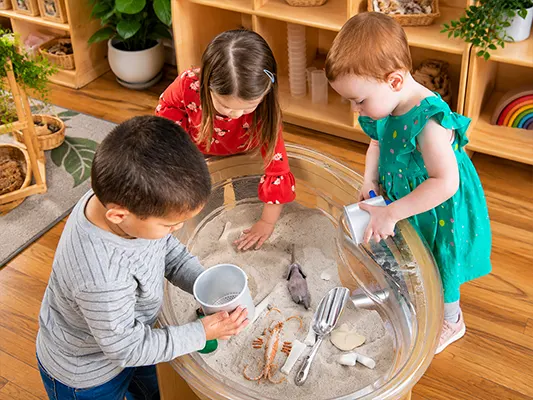
How to deal with stains, odors, mold, and severe contamination.
Common stains
First, use warm water and a mild detergent to treat the surface. Avoid using hard scrapers and high-abrasion tools to prevent scratching the plastic surface or damaging the wood protective layer.
Persistent odor
If an odor persists after cleaning, focus on checking for material residue at the drain outlet, water accumulation at the seams, whether the toys and hoses are not dry, whether the sand is contaminated, and whether the wooden surface is cracked or absorbs water.
Visible mold
Upon discovering mold, immediately stop using the sand and water table and remove the contaminated sand, water, and moving materials.
If mold has penetrated unsealed wood, cracks, or internal structures that cannot be cleaned, simply wiping the surface usually will not completely solve the problem, and repair or replacement of parts should be considered.
Severe pollution
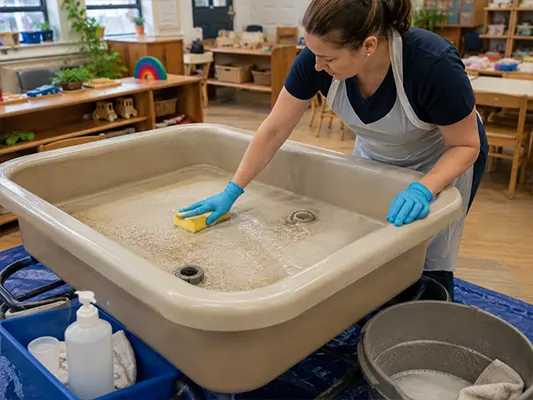
When sand or water is contaminated with food, bodily fluids, animal feces, or other visible contaminants, it should not be judged solely by whether it “looks clean.” Instead, the type of contaminant, the degree of contamination, the absorbency of the material, and whether the contaminated area can be thoroughly cleaned and dried should be examined.
If the tabletop has come into contact with blood, urine, or visibly contaminated toys and accessories, and multiple children have touched the tabletop, posing a risk of cross-infection, staff should wear gloves, first remove visible contaminants, then wash the tabletop using a disinfectant product suitable for children’s activity environments and the corresponding materials.
If mold or odors repeatedly appear after cleaning, or if wooden parts swell or crack due to water absorption, or if drain holes are clogged or leaking, it is recommended to immediately stop using the entire sand table. After stopping use, it is recommended to clearly mark the sand table area to prevent other teachers from continuing to use the area. The sand table should only be reused after thorough cleaning, complete drying, and confirmation that its structure and surface are in good condition.
How do the materials and structure of a sand and water table affect the difficulty of cleaning?
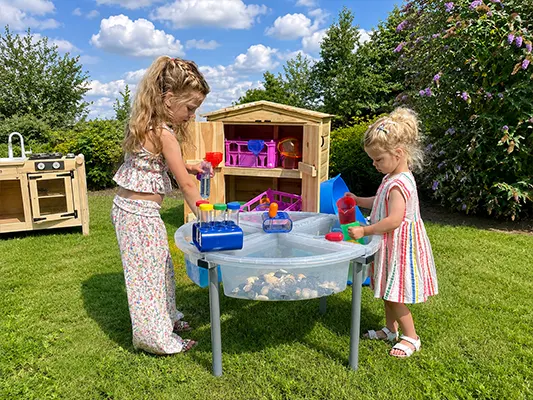
Plastic sand table
Plastic surfaces typically do not absorb water easily, making them convenient to clean and disinfect, suitable for high-frequency use in kindergartens and childcare centers.
However, the following checks are required:
- Does the surface scratch easily?
- Are the drain outlets easy to disassemble and clean?
- Does it show signs of aging after long-term outdoor use?
- Does water easily accumulate at the corners of the table?
Wooden sand table
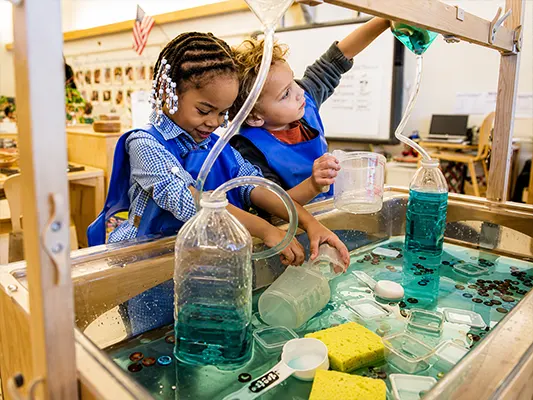
Wooden sand and water tables are more suitable for Montessori, Reggio Emilia, and nature-style classrooms, but require a higher level of surface treatment.
When purchasing and maintaining them, pay attention to:
Whether the wood has been waterproofed and sealed.
Whether the joints and cuts are completely sealed.
Whether the surface protective layer is easily worn.
Whether the table body allows water to remain for extended periods.
Commercial-grade wooden sand and water tables are not necessarily difficult to maintain; the key is whether the surface finish and structural design are suitable for high-frequency use.
Metal-framed sand and water table
Metal frames are generally sturdy, but require regular inspection.
- Are there water accumulations at weld points and screw locations?
- Does the surface have a rust-proof coating?
- Has rust appeared after outdoor use?
- Are the table legs and connectors easy to clean?
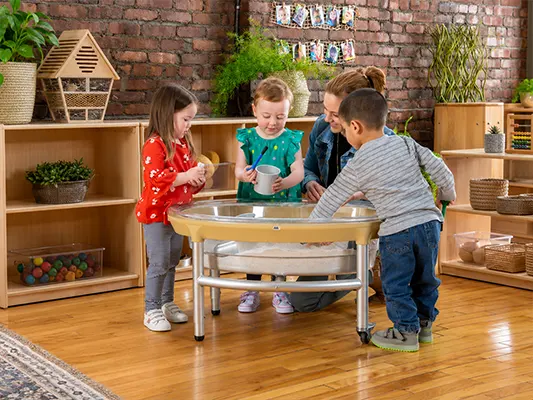
- when evaluating sand and water tables, prioritize these three design details: a removable sink, rounded inner walls, and a large-diameter drain. These three design features can reduce teachers’ daily cleaning time from 15 minutes to 5 minutes.
Easier product design
When purchasing a sand and water table, it is recommended to pay attention to the following:
- Removable tray
- Smooth drainage system
- Easy-to-access drain outlet
- Rounded interior corners
- Fewer narrow seams
- Removable and individually washable accessories
- Full-coverage tabletop lid
- Waterproof, stain-resistant, and disinfectant-resistant surface
The efficiency of cleaning staff depends not only on the operating procedures, but also on whether the sand and water table itself is designed for a commercial environment.
Common Cleaning Mistakes and Sand and Water Table Maintenance Tips
Leaving water in the table overnight.
Standing water increases the risk of odors, bacterial residue, and structural damage.
Covering the table with the lid before it’s dry.
A damp, enclosed environment easily breeds mold. The table should be completely dried after cleaning.
Using strong corrosive cleaners.
Unsuitable products can damage the surface coating, making the tabletop more prone to accumulating dirt and grime.
Cleaning only visible areas of the tabletop.
Drains, seams, the inside of the lid, and inside toys often accumulate dirt more easily.
Using different cleaning standards for different employees.
The campus should establish a unified cleaning SOP, clearly defining:
- Who is responsible after each use?
- Who is responsible for weekly deep cleaning?
- Which cleaning and disinfection products are used?
- When does the sand need to be replaced?
- How to report damage or mold?
Three long-term maintenance recommendations:
- Separate management of daily cleaning and weekly deep cleaning.
- Use the same cleaning products and operating procedures for different classrooms.
- Incorporate sand and water table maintenance into new employee training and daily inspections.
Conclution
Hygiene is a critical asset. A sand and water table designed for easy maintenance—featuring rounded edges and rapid drainage—slashes cleaning time and lowers operational costs. Focus on equipment that simplifies your staff’s routine to ensure long-term safety and higher ROI for your center.

FAQ
What are the hygiene compliance risks of inadequate cleaning of sand and water tables?
Standing water breeds bacteria like Pseudomonas within hours. Cross-contamination from unclean high-touch surfaces can trigger licensing inspection failures. Visible mold or persistent odors lead to parent complaints — and by that point, you’re managing a reputational problem, not a cleaning one.
What disinfectants are suitable for children’s furniture?
Quaternary ammonium compounds are the childcare standard — effective, low-odor, and surface-safe once dry. Hydrogen peroxide-based cleaners are another good option, breaking down into water and oxygen. Avoid phenolic or industrial-grade disinfectants — their residues irritate skin and eyes.
Wooden vs. plastic sand and water tables—which is easier to maintain?
Plastic. It is non-porous, so disinfectants work on contact, with no risk of moisture absorption. Wooden tables are fine while the sealant holds — but once it wears from daily use, water penetrates and mold becomes nearly impossible to remove. For a high-traffic facility, plastic saves 5–10 minutes of cleaning per table, per day.
Can bleach be used on sand and water tables?
Yes, at a 1:100 dilution. Apply, let it sit wet for at least 2 minutes, then rinse thoroughly and dry completely. Never use on unsealed wood, and never mix with other cleaners. A quaternary ammonium disinfectant is a safer, equally effective alternative for daily use.
How often should the sand be changed for a commercial daycare facility using the table for 6 hours a day?
Every 2–3 weeks minimum. Three triggers override any schedule: odor, discoloration, or pests — replace immediately regardless of the calendar. Sieve the sand weekly and train staff to do a 30-second visual check at the end of each day.
What are the differences in cleaning procedures between outdoor and indoor sand and water tables?
Outdoor equipment requires more frequent maintenance.Rain brings standing water and mold risk within hours; wind deposits debris into the sand; animals and insects are real variables. Always cover outdoor tables after every session, and expect to replace outdoor sand twice as often as indoor sand.
Can the accessories be washed in a dishwasher?
Most plastic accessories are dishwasher-safe on the top rack with a sanitizing cycle — skip heated dry and air-dry instead. Funnels and hoses are the exception: dishwashers can’t reach inside them, so hand-wash and dry disassembled. If any accessory has cracks or internal stains, replace it — no dishwasher cycle fixes that.