What does STEM vs STEAM really mean for today’s students? In the U.S., these terms pop up everywhere—from K-12 classrooms to college readiness programs and even in career pathway discussions. Parents often hear about STEM nights at school or STEAM labs popping up in local districts, yet the distinction between the two remains fuzzy.
STEM education focuses on science, technology, engineering, and mathematics, aiming to strengthen logical thinking, problem-solving, and technical expertise. STEAM expands this model by adding the arts, creating opportunities for students to explore creativity, design, and communication alongside technical disciplines. This broader perspective reflects the growing recognition that innovation often requires both analytical precision and imaginative insight.
In this article, we will take a closer look at STEM vs STEAM, break down their differences, and explore the value each approach brings to education. By the end, you will have a clearer understanding of how these two frameworks prepare students for both academic success and future careers.

What is STEM?
STEM stands for Science, Technology, Engineering, and Mathematics. It’s a curriculum based on the idea of educating students in an interdisciplinary and applied approach. Rather than teaching the four disciplines separately, STEM integrates them into a cohesive learning paradigm based on real-world applications.
Originating from a national push to improve the U.S. standing in global technology and innovation, STEM education aims to produce a future workforce equipped with logical thinking, technical skills, and problem-solving abilities.
The Advantages of STEM
The benefits of a STEM-focused education are clear, measurable, and highly valued by employers and universities alike.
- Strong Career Alignment
Prepares students for high-paying roles in technology, engineering, data science, and healthcare. - Improved Math and Science Proficiency
Reinforces problem-solving and numeracy, helping students excel in standardized tests and AP-level science courses. - Critical Thinking & Logical Reasoning
Trains students to approach complex problems with a structured, evidence-based mindset. - Innovation & Tech Readiness
Encourages experimentation and builds technical fluency, including coding, robotics, and systems thinking. - Economic Competitiveness
Equips students to contribute to innovation economies, increasing national competitiveness in tech, science, and infrastructure. - Structured, Measurable Learning
Focuses on clear outcomes and assessments, reinforcing academic discipline and goal-setting.

What is STEAM?
STEAM builds upon the STEM framework by adding an “A” for Arts—including liberal arts, language arts, social studies, music, design, and visual arts. The philosophy behind STEAM is to foster creative problem-solving, empathy, and interdisciplinary thinking by integrating artistic processes into the technical subjects.
While STEM is rooted in logic and analytical skills, STEAM advocates argue that innovation also demands imagination, which is nurtured through artistic expression.
The Advantages of STEAM
STEAM integrates creativity into traditional STEM, promoting a more holistic, inclusive educational approach. Its strengths include:
- Enhanced Creativity and Innovation
Blends arts with sciences to encourage original thinking and design-focused problem solving. - Real-World Application Through Design Thinking
Uses empathy and aesthetics to solve real user problems—ideal for fields like UX, marketing, and product design. - Stronger Communication and Collaboration Skills
Emphasizes storytelling, visual communication, and group work—skills highly valued in modern teams. - Inclusivity and Engagement
Appeals to a broader range of learners, particularly students who may feel disconnected from pure math or science. - Cognitive Flexibility
Encourages students to switch between analytical and creative tasks, building adaptive thinking skills. - Engages Diverse Learners
Appeals to students with strengths in storytelling, design, and collaboration—broadening participation in technical subjects.

The Differences Between STEM vs STEAM
Below is a comparative table summarizing key differences between STEM and STEAM across various dimensions. This table is drawn from educational research, case studies, and policy analyses in U.S. contexts.
| Dimension | STEM | STEAM |
|---|---|---|
| Core Disciplines | Science, Technology, Engineering, Mathematics | Science, Technology, Engineering, Mathematics + Art, Design, Humanities |
| Focus of Learning | Analytical, quantitative, evidence-based problem solving | Includes creativity, aesthetics, expression, cultural context |
| Skill Emphasis | Rigor, precision, logic, data, calculation | Design thinking, user experience, visual literacy, storytelling |
| Instructional Methods | Lab experiments, algorithms, lectures, structured problem-solving | Project-based, collaborative, interdisciplinary, open-ended tasks |
| Teacher Expertise | Requires strong foundation in STEM content, ability to explain scientific or mathematical concepts, manage experiments, safety. | Requires in addition training or comfort in art/design, aesthetic critique, guiding creative expression, integrating arts with technical content. |
| Assessment | Standardized tests, quantitative metrics, benchmarks | Portfolios, exhibitions, design reviews, qualitative feedback |
| Student Engagement | Appeals to students strong in math/science, logical reasoning | Broader engagement including those strong in arts, design, communication |
| Real-world Application | Engineering projects, scientific research, technology implementation | Products and services combining tech + design; socially responsive solutions |
| Soft Skills Development | Critical thinking, problem solving, perseverance | All those plus creativity, empathy, communication, adaptability |
| Resources Required | Science labs, technology tools, math manipulatives; teacher professional development focused on STEM content and pedagogy. | Additional materials for art design tools, spaces for creative display; teachers trained in art design as well as STEM. |
The Benefits of Integrating STEM and STEAM in Education
Integrating STEM and STEAM isn’t a zero-sum choice; combining both approaches yields substantial benefits. As someone who has worked with district leaders, school principals, and classroom teachers in several U.S. states, I’ve seen that when STEM and STEAM are fused thoughtfully, outcomes improve substantially.
Maximizing Learning Outcomes for Students
- Students often understand scientific and mathematical concepts more deeply because they need to think about not only how something works, but why and for whom. For example, when designing a water filtration system in a STEAM project, students must analyze flow rates, materials, cost (STEM), but also aesthetics, usability, signage and community context.
- Integration promotes transferable skills. Students are more capable of applying knowledge in new contexts: building something, writing about it, presenting it to diverse audiences.
- Motivation and retention increase. Students who might have disengaged from pure STEM find points of connection through design, storytelling, arts, which keeps them invested in broader learning.
- Learning becomes more personalized. Not every learner excels in math first; including arts allows multiple entry points: through art, music, design, creative writing—helping diverse learners shine.
Fostering Innovation and Entrepreneurship
Many successful U.S. companies and startups are founded by teams combining technical and creative individuals. When education mirrors that structure, students develop entrepreneurial mindsets: seeing opportunities, designing creative solutions, iterating prototypes, marketing, understanding user experience.
Equity, Inclusion, and Access
Integrating STEM and STEAM helps close gaps for underrepresented groups. Students of color, girls, neurodivergent learners often gravitate toward arts or design. If those paths are recognized as legitimate and essential parts of STEM+STEAM, it reduces stigma. It sends the message that one can be both scientifically minded and artistically inclined; both paths lead to meaningful outcomes.

Which is Better: STEM or STEAM?
The truth is, neither model is universally “better.” Each drives different priorities and outcomes. The right choice depends on your educational goals, the ages of your learners, the resources you can commit, and the skills you most want students to leave your classroom with.
So, “better” is situational:
• For measurable, standards-aligned skill development: STEM is often preferable.
• For innovation, engagement, and inclusive pathways into technical learning: STEAM has advantages.
• For durable, transferable competence that prepares children as thinkers and creators: integrate the two.
School leaders should view this as a strategic decision, not an either/or choice: Build capacity wherever possible, pilot programs that integrate the arts into STEM units, measure the impact on student engagement and capabilities, and then scale up effective programs for the community.

Why is STEAM Growing in Popularity in Schools?
STEAM is gaining momentum in schools around the world because it better reflects the realities of today’s world. Employers are no longer looking only for workers with strong technical skills; they want people who can think creatively, communicate clearly, and design solutions that connect with human needs. By blending the arts with science, technology, engineering, and math, STEAM offers a more balanced way to prepare students for modern careers.
Schools have also found that STEAM boosts engagement. Many students who feel disconnected from traditional math or science courses become more interested when creative elements like design, storytelling, or visual projects are added. This makes STEAM especially valuable in reaching diverse learners and supporting equity.

How Can Classroom Furniture and Materials Support STEAM?
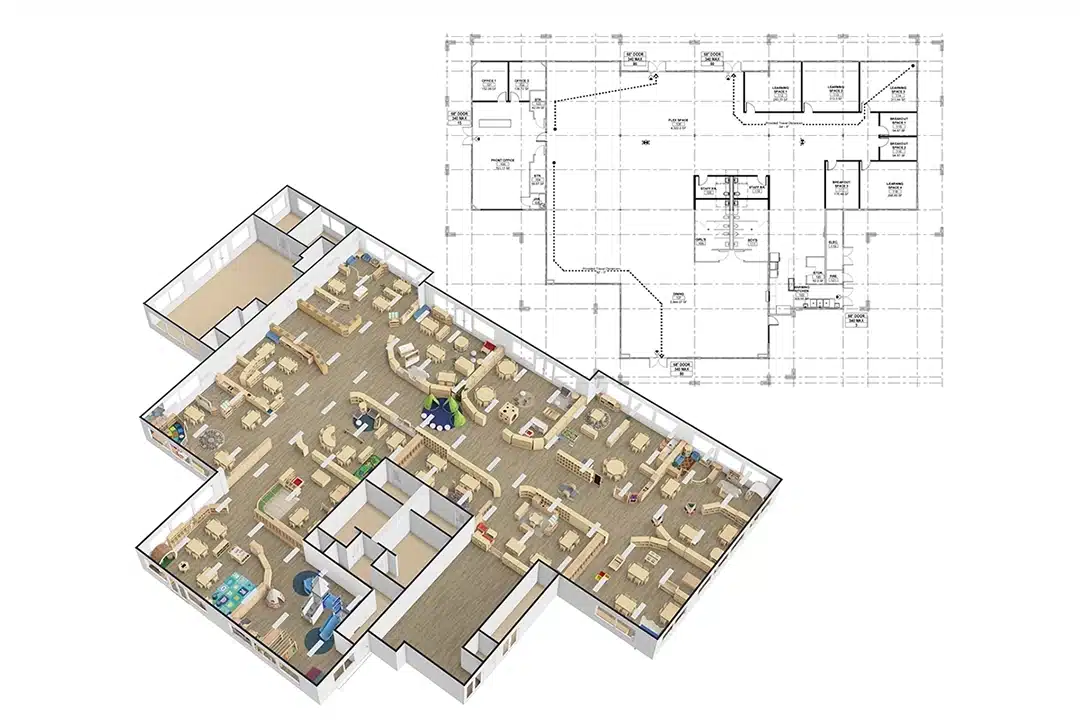
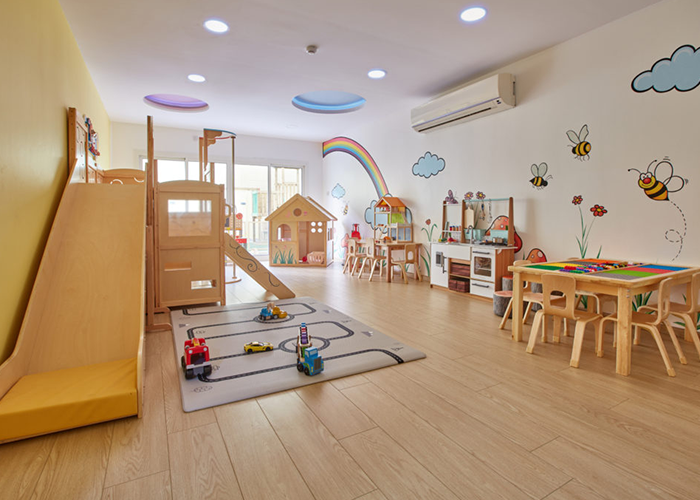
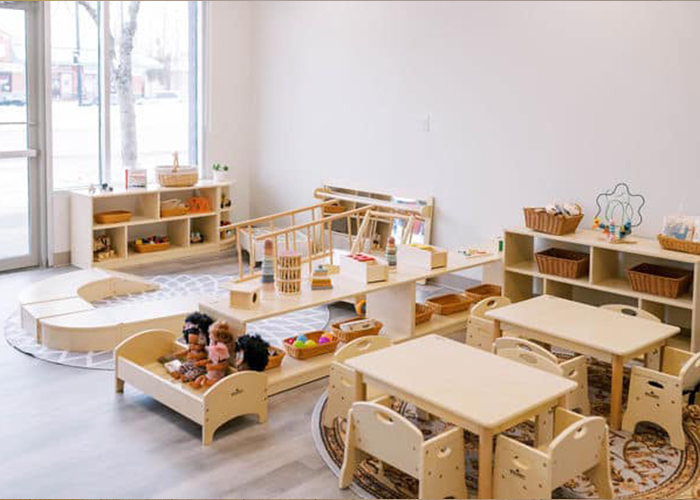
STEAM pedagogy demands more than curriculum: it requires physical spaces that enable collaboration, prototyping, iteration, and display. Furniture and material choices are often underestimated but are essential levers for effective STEAM learning.
Principles for Furniture and Space Design
- Flexibility. Movable tables, stackable chairs, and quick-reconfigure storage let teachers shift between small-group design sprints and full-class demonstrations. Mobility supports different modes of learning.
- Durability and safety. Makerspaces need robust surfaces and safe storage for tools like 3D printers, hand tools, and electronics. Materials should meet local safety codes.
- Zones for workflow. Establish zones: design, build, test, showcase. These zones help students understand process stages and support multiple projects running simultaneously.
- Accessible storage and organization. Transparent bins, labeled drawers, pegboards, and tool chests reduce friction in project-based learning. Quick access to consumables keeps momentum high.
- Power and connectivity. Reliable electrical outlets, charging stations, Wi-Fi, and secure computer access are non-negotiable for tech-enabled STEAM activities.
- Display and reflection spaces. Students need areas to display portfolios, post-mortems, and process journals. Reflection and critique are core to design thinking.
- Inclusive ergonomics. Adjustable-height tables, a mix of seating (stools, chairs), and spaces suitable for different body types and needs support universal access.
Recommended Furniture and Layout Options
- Modular tables with casters: Allow quick reconfiguration for brainstorming or building.
- High-top benches: Support stand-up prototyping and reduce clutter.
- Mobile tool carts: Keep tools portable and accessible to multiple groups.
- Soft seating and breakout nooks: Provide spaces for reflection, storyboarding, or group critique sessions.
- Projection/display area: For sharing student work, critique sessions, and digital storytelling.
- Floor-level storage cubes: Encourage student ownership of materials and tidy work habits.
Materials that Matter
Create material “stations” that students can draw from during project work:
- Maker station: hot glue guns, hand tools, cardboard, zip ties, basic power tools (with supervised access).
- Digital station: computers, tablets, coding kits, microcontrollers (Arduino, micro:bit), cameras.
- Fabrication station: 3D printers, vinyl cutters, laser cutters (in district labs or partner makerspaces).
- Art station: paints, brushes, markers, paper, textiles.
- Documentation station: cameras, microphones, project journals for reflection and assessment.
- Safety station: first aid, goggles, respirators, materials safety data sheets (MSDS) clearly available.


STEM and STEAM Education in the U.S.
In the United States, both STEM and STEAM education have become central to how schools prepare students for the future. STEM programs are widely supported through federal and state funding because they align with workforce needs in technology, science, and engineering. At the same time, STEAM initiatives are growing as schools recognize the importance of creativity and design in solving complex problems. Many districts are building makerspaces, integrating project-based learning, and forming partnerships with local industries and universities. The overall trend is clear: American education is moving toward a more integrated model where technical skills and creative thinking go hand in hand, ensuring students are ready for college, careers, and civic life.
FAQs
- Why was the ‘A’ added to STEM to create STEAM?
The “A” represents the Arts and was added to promote innovation, emotional intelligence, and design thinking in education. - Can STEAM students pursue STEM careers?
Absolutely. STEAM students learn the same core concepts and are well-prepared for technical careers with added creative skills. - Is STEAM suitable for all students?
Yes. STEAM provides a more inclusive, engaging approach that appeals to both logical and creative learners. - How can schools transition from STEM to STEAM?
Schools can start by integrating arts into existing projects, offering interdisciplinary courses, and training teachers in STEAM methodologies.
Conclusion
Understanding the STEM vs STEAM education difference is more than a curriculum decision—it’s about preparing students for a world where creativity meets technology. While STEM builds the framework for tomorrow’s infrastructure, STEAM ensures that it serves people meaningfully and beautifully.
Both models are powerful. When fused thoughtfully, they can produce not just great professionals, but great humans—capable of solving tomorrow’s challenges with both logic and heart.