Montessori can work well, but its results depend heavily on teacher preparation, program quality, and the child’s needs. If you are comparing schools or planning a Montessori classroom, focus on six practical risks: uneven implementation, demanding teacher preparation, different progress reporting, transition planning, support fit, and higher setup requirements. This guide shows you how to evaluate each risk without relying on stereotypes.
The Main Disadvantages at a Glance
The biggest disadvantage is variation. Two schools can use the Montessori name while offering very different daily experiences. The term itself does not confirm that teachers are trained, the work cycle is protected, materials are complete, or children’s progress is documented.
| Potential disadvantage | When it becomes a real problem | What you should check |
|---|---|---|
| Uneven program quality | The school uses the name but follows only part of the model | Teacher credentials, mixed-age groups, work cycle, materials, and observation records |
| High demands on teachers | Adults supervise choice without guiding progress | How teachers plan presentations, record observations, and intervene |
| Different assessment methods | Families or receiving schools need comparable benchmarks | Written progress reports, portfolios, curriculum mapping, and test preparation when required |
| Transition challenges | A child moves to a more teacher-led, test-driven setting without preparation | Homework, deadlines, group lessons, testing, and transition support |
| Fit varies by child | A child needs support the school cannot provide consistently | Intervention process, specialist access, routines, and communication |
| Higher setup and operating demands | The room has incomplete materials, poor storage, or no replacement plan | Full room schedule, material sequence, shelf capacity, maintenance, and budget priorities |
These are management and fit risks. They do not mean that Montessori education is ineffective. A 2023 meta-analysis of 33 experimental and quasi-experimental studies reported positive overall effects across several areas of development and learning. The practical question is whether the specific school can deliver the model well.
Quality Varies Between Montessori Schools
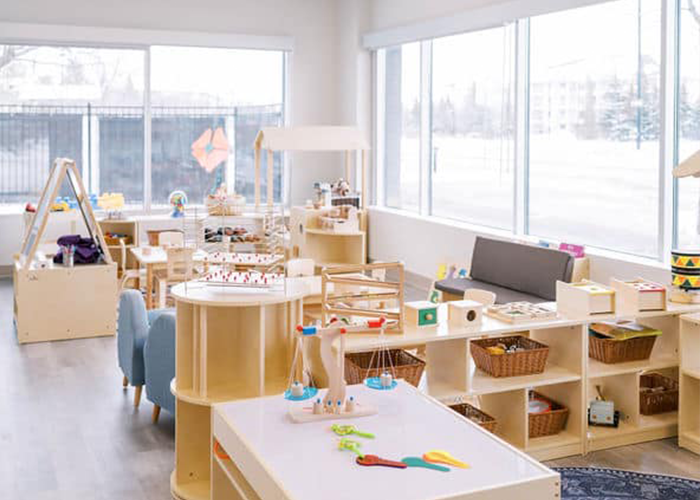
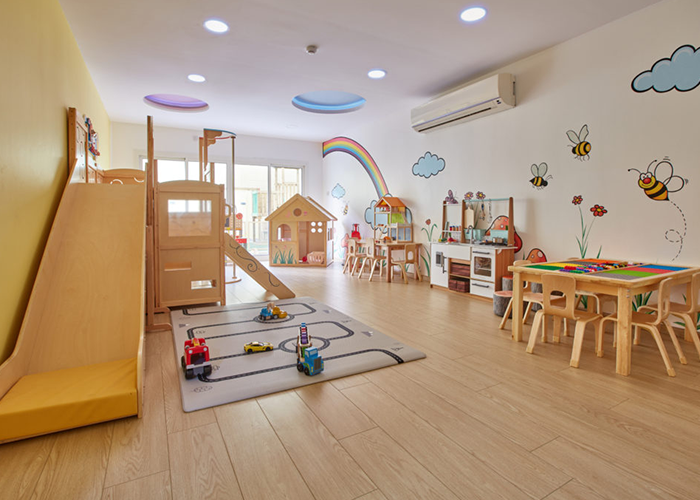
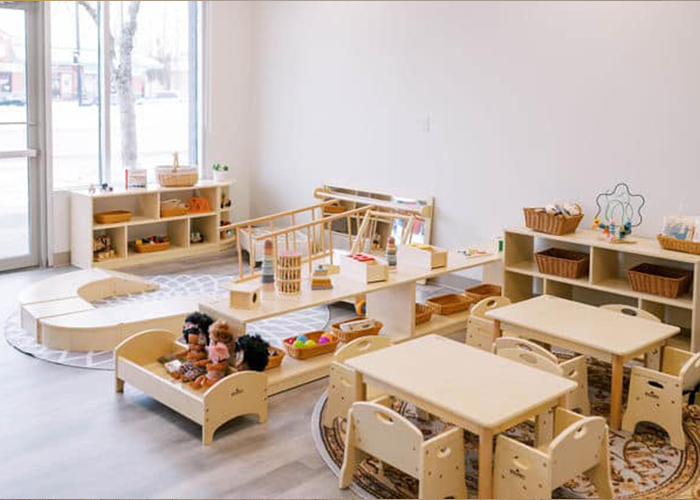
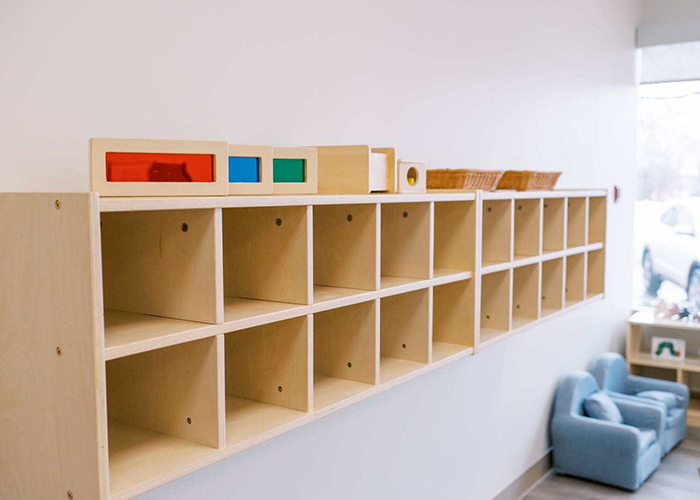
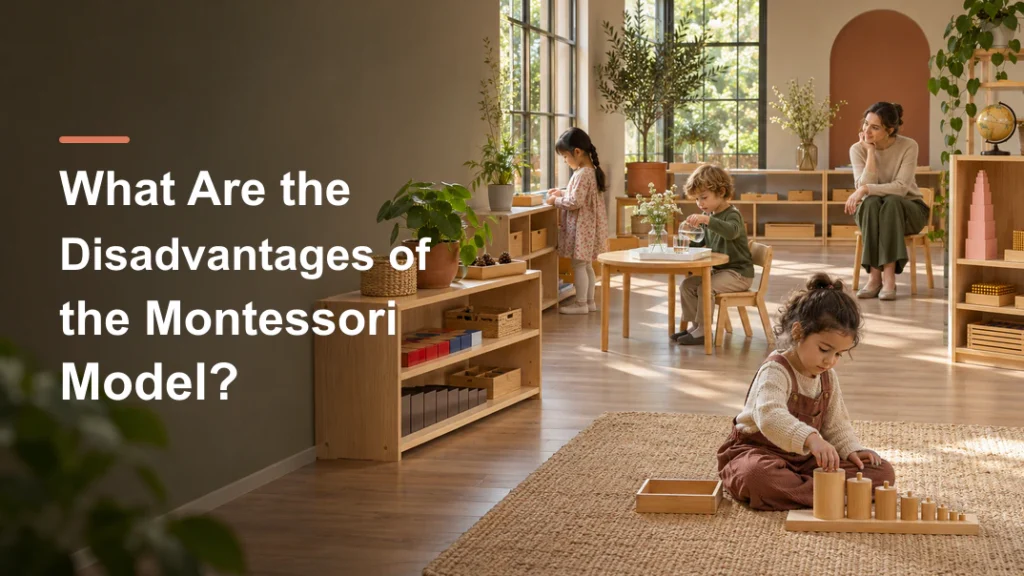
You cannot judge a Montessori program by low wooden shelves, neutral colors, or a set of familiar materials. A functioning program also needs trained adults, mixed-age grouping, child-directed work, uninterrupted work periods, and a prepared environment that supports the curriculum.
This matters because the Montessori name can be used by programs with very different levels of fidelity. A major review of the Montessori evidence base identified implementation variation as a central problem when comparing outcomes. If one school protects the work cycle and follows a coherent material sequence while another adds isolated Montessori activities to a conventional day, their results should not be treated as equivalent.
When you visit a school, ask to observe a normal work period. Look for purposeful choice rather than random activity. Children should know how to select, use, and return work. Teachers should make individual or small-group presentations, track what each child has been shown, and redirect activity when needed. The room should contain complete, orderly materials that match the age group.
The Model Requires Skilled Teachers
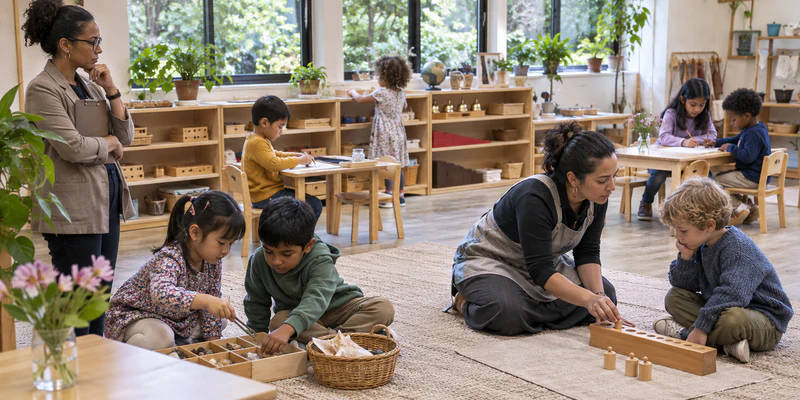
Montessori teachers do less whole-class lecturing, but their role is demanding. They have to observe individual progress, decide when to present the next material, protect concentration, maintain limits, support social problems, and keep the environment ready. The Montessori teacher’s role is active guidance based on observation, not passive supervision.
A weak program can turn choice into drift. A child may repeat familiar work, avoid a difficult area, or use materials without understanding their purpose. A trained guide notices the pattern and responds with a new presentation, an adjusted sequence, a clear limit, or a different level of challenge.
If you are hiring or evaluating staff, check whether the lead guide holds training for the age level being taught. Then ask how the school supports new teachers, protects observation time, maintains written records, and handles staff turnover. A credential matters, but consistent classroom practice matters too.
Self-Directed Learning Still Needs Structure
Montessori gives children freedom within limits. It does not give them unrestricted control of the day. The environment, available choices, material sequence, classroom rules, and teacher presentations create the structure.
The model can become a poor fit when a school interprets independence as “leave the child alone.” Some children need more frequent check-ins, shorter steps, clearer visual routines, or direct support before they can manage a long work period. The school should be able to explain how it responds when a child repeatedly avoids language, mathematics, group participation, or practical routines.
Avoid claims based on fixed “learning styles.” Instead, ask how the teacher identifies a specific barrier and changes the presentation, environment, pace, or support. If a child receives speech, occupational, behavioral, or learning support, confirm how classroom staff coordinate with specialists. Montessori can be adapted, but adaptation requires skill and resources.
Progress Can Be Harder to Compare
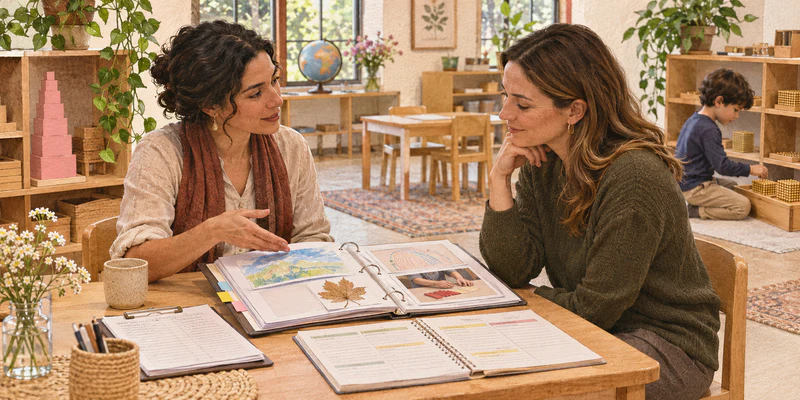
Many Montessori classrooms rely on observation records, lesson tracking, work samples, conferences, and portfolios instead of frequent grades. These methods can provide detailed information, but parents may find them harder to compare with grade-level scores. The issue is reporting compatibility, not an absence of assessment.
The American Montessori Society’s accreditation standards include ongoing systems for documenting learner outcomes. A strong school should be able to show what the child has mastered, what is developing, what comes next, and how the curriculum aligns with applicable local requirements.
Ask to see a sample progress report before enrollment. If you run a school, decide how observation data will become clear parent communication. Where state testing or receiving-school benchmarks matter, map Montessori lessons to those expectations instead of waiting until a transition is imminent.
Moving to a Traditional School May Require Preparation
A child moving from Montessori to a conventional classroom may meet fixed schedules, whole-class pacing, homework, grades, timed tests, and fewer choices. The change can be uncomfortable even when the child understands the academic content.
This is a transition issue, not proof that Montessori students are unprepared. You can reduce it by teaching the format of the next environment. Practice following a group timetable, completing work by a deadline, recording homework, and answering common test formats. Explain why the new teacher may require the whole class to work on the same subject at the same time.
If you are comparing traditional and Montessori education, look beyond broad labels. Ask the current school how it prepares graduating students and ask the receiving school what routines will be new.
A Complete Environment Takes More Planning
Montessori implementation can require a larger initial investment in teacher preparation, sequenced materials, accessible furniture, and room planning. The cost problem is often made worse by buying products individually before the curriculum and layout are settled.
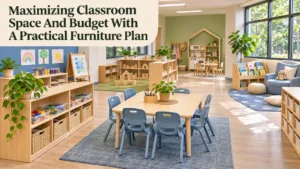
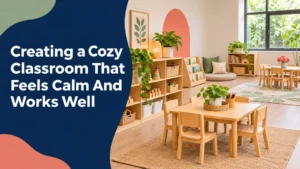
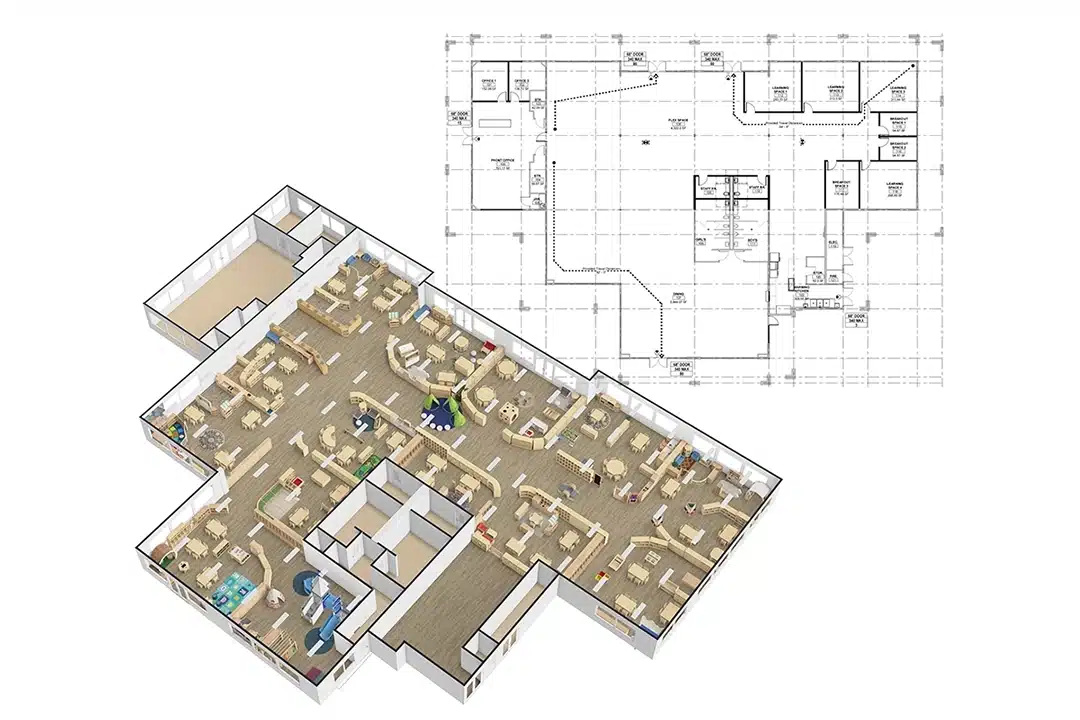
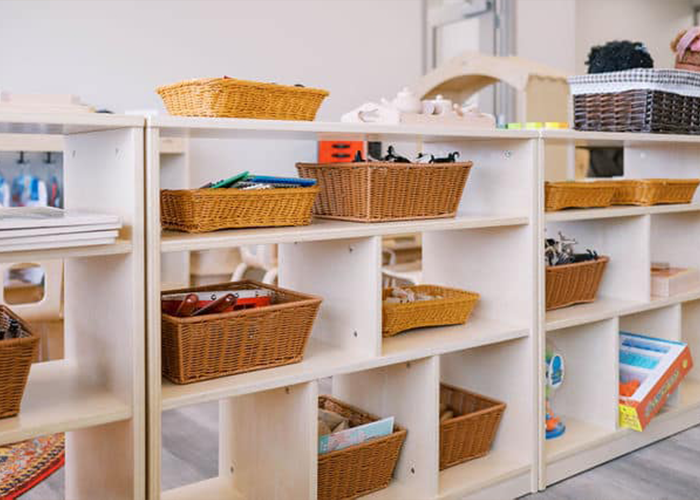
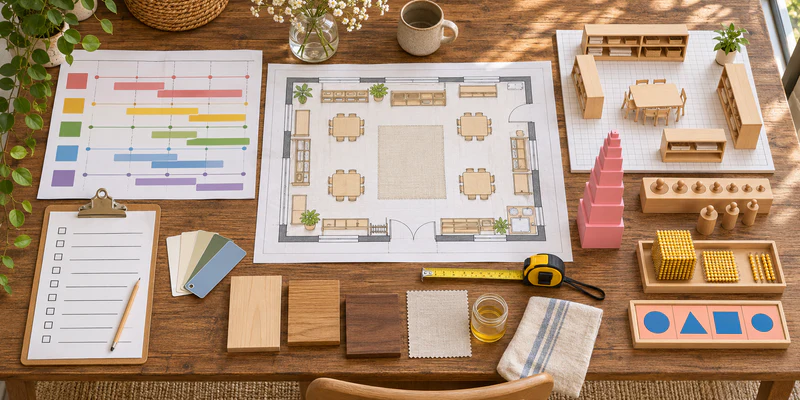
From a classroom-planning perspective, a low shelf is useful only when its height, capacity, and position suit the children, the material sequence, and the teacher’s observation needs. A room can contain attractive furniture and still fail because shelves are overcrowded, work mats block circulation, wet and dry activities conflict, or replacement materials have nowhere to go.
Build the room schedule by age group and curriculum area first. Then check:
- which materials are essential at opening and which can be phased in;
- whether each activity has a complete set and a defined shelf position;
- whether children can carry materials safely to a suitable work surface;
- whether movement routes remain clear during floor work;
- whether teachers can observe activity without placing tall storage in critical sightlines;
- how damaged or incomplete materials will be removed, repaired, and replaced.
You can use our guides to review what makes a material Montessori and plan a workable Montessori classroom layout. Product specifications should follow the teaching plan, not define it.
Some Expectations May Not Match the Program
Montessori may frustrate families who expect frequent grades, daily worksheets, regular homework, teacher-led group lessons, or visible competition. A school can communicate well and still follow a model that does not match those expectations.
The same applies to play, technology, fantasy, and whole-group activities. Practices vary by age level and school. Ask what the children actually do during a normal week instead of assuming that every Montessori program follows the same policy.
You should also ask how the school supports social development. Independent work does not automatically create isolation. Mixed-age interaction, small-group lessons, grace and courtesy, conflict resolution, and shared classroom responsibilities can all support social learning. The quality of those routines matters more than the amount of individual work. Our guide to social development in a Montessori school explains this in greater detail.
How to Decide Whether Montessori Is a Good Fit
Use a school visit to test what is happening, not what the brochure promises. These questions usually reveal the program’s strengths and gaps:
- What Montessori training does the lead guide hold for this age group?
- How long is the protected work period, and how often is it interrupted?
- How are lessons, observations, and curriculum coverage recorded?
- What happens when a child avoids one curriculum area for several weeks?
- How are learning, behavioral, language, or sensory support needs handled?
- How does the school communicate progress without relying only on grades?
- How are children prepared for a future traditional classroom if needed?
- How are incomplete materials, damaged furniture, and room-layout problems corrected?
Listen for specific processes. “We follow the child” is incomplete unless the school can explain how observation leads to a decision and how that decision is documented.
Common Questions
Does Montessori have no rules or discipline?
No. Montessori uses freedom within limits. Children choose work within a prepared environment, while adults protect safety, respect, order, and purposeful activity. A classroom without clear limits is poor implementation, not a defining feature of Montessori.
Is Montessori bad for social development?
There is no sound basis for treating social isolation as an automatic Montessori disadvantage. Children may work independently, with a partner, in small groups, and as part of a mixed-age community. You should evaluate how the specific school teaches cooperation, conflict resolution, and shared responsibility.
Do Montessori students struggle in traditional schools?
Some students need time to adjust to grades, fixed schedules, homework, and whole-class instruction. Most transition concerns can be addressed when the current and receiving schools identify the new routines and prepare the child in advance.
Is Montessori suitable for every child?
No educational model is automatically suitable for every child. A good decision depends on the child’s needs and the school’s ability to provide structure, intervention, specialist coordination, and clear communication. Evaluate the actual program rather than the Montessori label.
Final Decision
The main disadvantages of the Montessori model are inconsistent implementation, demanding teacher preparation, different reporting systems, transition needs, variable support capacity, and the resources required for a complete environment. These risks can be managed when a school has trained staff, a coherent curriculum, documented observation, a functional room, and clear communication. If those systems are missing, the Montessori name alone will not produce a strong program.