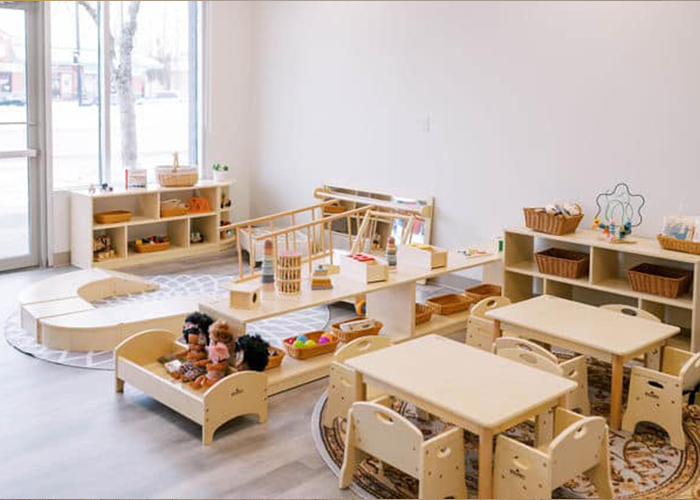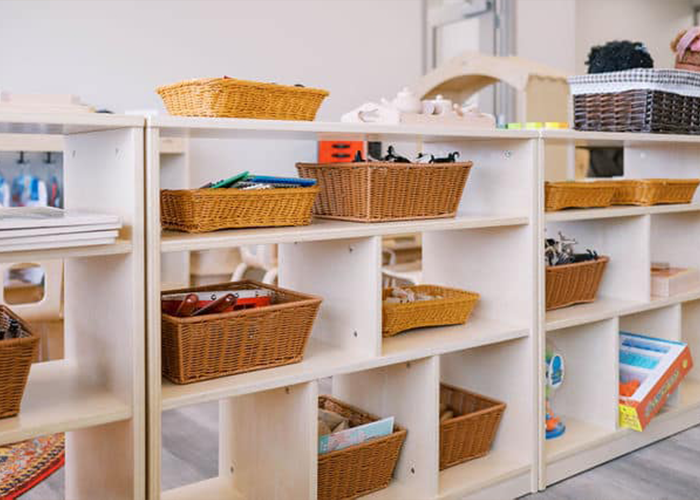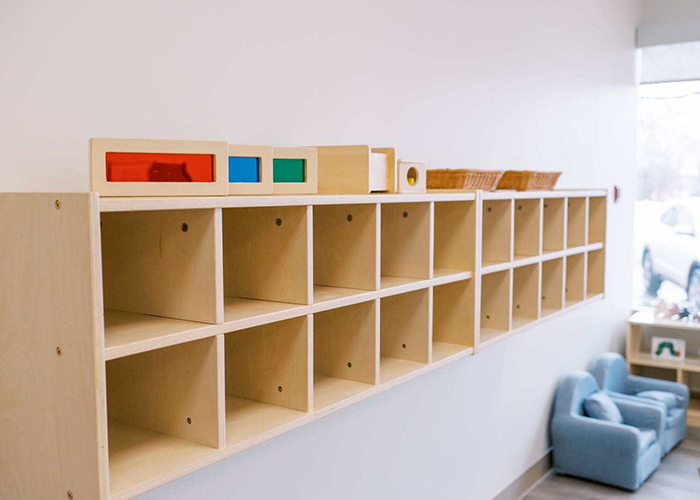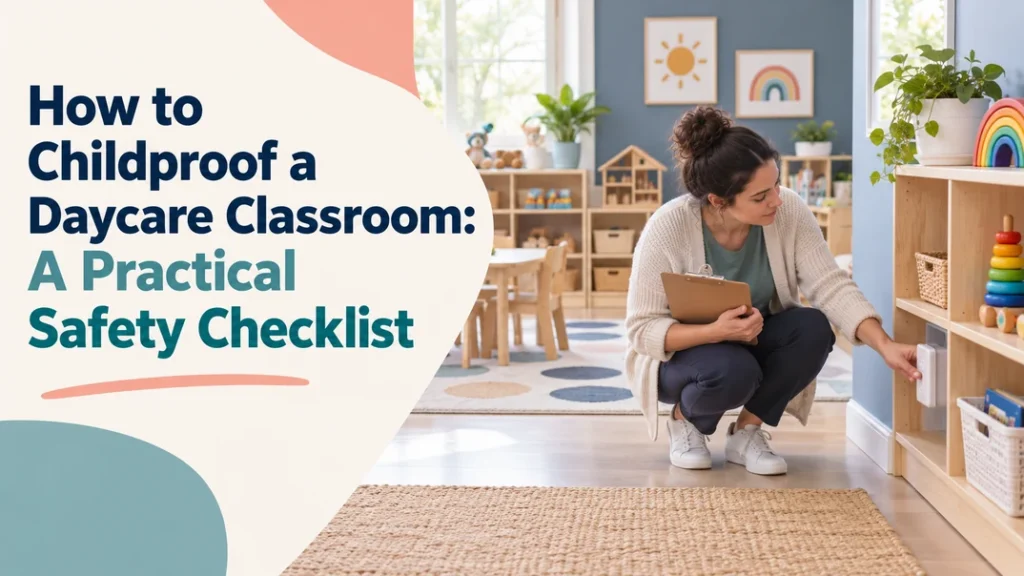
If you are preparing a daycare classroom, start childproofing with the room’s layout and daily routines. Walk through the space at a child’s height, secure furniture and hazardous supplies, protect cords and pinch points, and then test the room from the caregiver’s position. This guide shows you how to check each area, choose safer furniture, avoid common setup mistakes, and build a daily inspection routine.
What Does Childproofing a Daycare Classroom Involve?
When you childproof a classroom, you change the room, furniture, materials, and routines so foreseeable hazards are harder for children to reach or create. You still need active supervision, staff training, first aid, emergency planning, and compliance with your local licensing requirements.
For a daycare, the work has two parts:
- Remove or control hazards: secure furniture, lock hazardous supplies, protect cords and outlets, repair damaged items, and keep exits usable.
- Make the room work for supervision: preserve sightlines, create clear routes, place materials at an appropriate level, and keep caregivers close to the children’s activities.
Requirements vary by country, state, province, and program type. If you operate in the United States, compare your checklist with current child-care health and safety requirements, then confirm the rules with your local licensing or regulatory authority. Use this article to improve your room plan and daily inspection routine, not as a substitute for the requirements that apply to your facility.
Start With a Child-Height Walkthrough
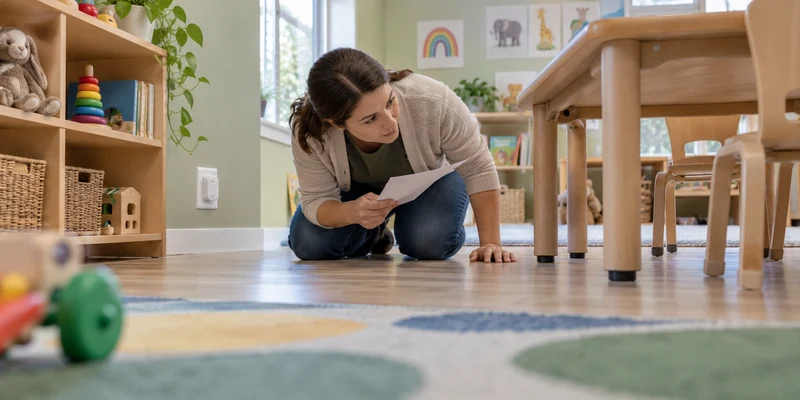
To find hazards you may miss from an adult’s eye level, lower your viewpoint. Walk through the room on your knees or sit on the floor where an infant or toddler will play. Look under your tables, behind shelves, beside doors, inside open storage, and along the edge of rugs.
During the walkthrough, ask:
- What can a crawling child pull, chew, swallow, climb, or wrap around a body part?
- What changes when a child stands on a chair, cot, toy box, or low shelf?
- Which items become reachable when children move a chair or push a lightweight table?
- Can a child disappear from the caregiver’s view behind furniture or a room divider?
- Could a door, drawer, lid, hinge, or folding part trap fingers?
Repeat the check for the youngest and most mobile children who will use your room. Your infant room, toddler room, and preschool classroom need different controls because children gain reach, strength, mobility, and problem-solving ability quickly.
Secure Furniture and Shelving
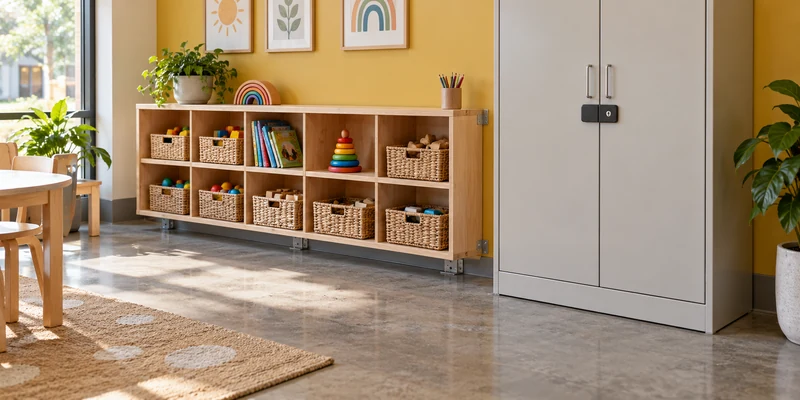
Your furniture should stay stable when a child pulls up, leans against it, or tries to climb. Anchor tall shelves, cabinets, cubbies, bookcases, and room dividers according to the manufacturer’s instructions and local requirements. You can also compare your inspection points with this child-care safety checklist, which covers equipment condition and sleep-product checks.
Keep heavier items on your lower shelves. Place lightweight baskets and frequently used materials where children can reach them without pulling down a full container. Do not place attractive objects on top of a shelf if they encourage climbing or require a child to stretch over the edge.
Check the whole furniture system, including the anchor:
- Is the base wide enough for the shelf height?
- Does the furniture rock when pushed from different sides?
- Are fasteners tight and protected from children?
- Can a child use a nearby chair, table, or storage box as a step?
- Does the arrangement create a climbable route to a window, heater, or cord?
- Can staff see the children around and behind the unit?
When you buy classroom furniture, ask for the assembly instructions, anchoring method, material details, finish-care instructions, and replacement hardware. A shelf can be strong but still be poorly placed. From our classroom planning and furniture procurement experience, stability, visibility, and circulation should be reviewed as one decision rather than as separate product features.
For a broader furniture checklist, review these daycare furniture safety guidelines before you approve a classroom specification.
Remove Fall, Edge, and Pinch Hazards
When you review the floor, start with the places where children run, turn, crawl, and transfer between activities. Secure loose rugs, remove raised thresholds that catch feet, and keep small objects off the floor when they are not suitable for the youngest child in your room.
You should choose tables, chairs, shelves, and play furniture with smooth surfaces, rounded edges where appropriate, and no exposed sharp points. Inspect corners and seams at child height. Corner guards can help when they stay firmly attached, but a loose guard can become a small part or an item a child pulls into the mouth. Treat the guard as a maintenance item and replace it when it loosens.
Look closely at moving parts:
- door hinges and the gap between a door and its frame;
- folding tables, chairs, and cots;
- drawers and cabinet doors;
- toy chests and lids;
- adjustable shelves and height mechanisms;
- gaps between a shelf and an adjacent wall or divider.
If you use a chest, box, or dramatic-play unit large enough for a child to enter, check it for entrapment risks. Do not use a lid that can slam shut or a latch that can lock a child in.
Protect Outlets, Cords, Doors, and Windows
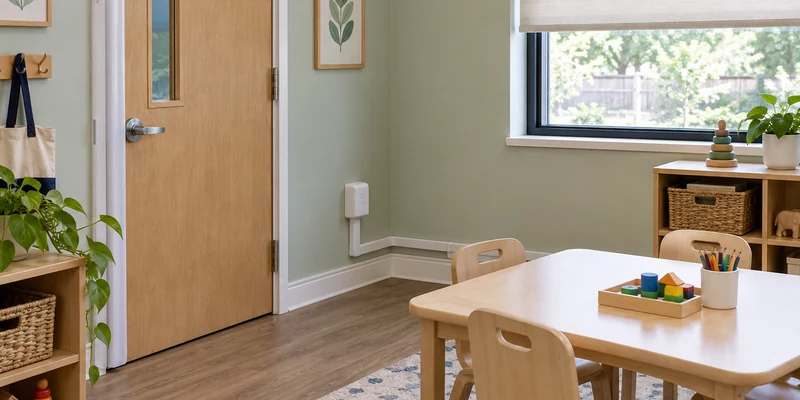
When you inspect the perimeter of your room, check every cord, outlet, switch, blind, window, and door. Plan outlet protection, furniture anchoring, window stops or guards, and cordless window coverings around the actual reach and movement of the children in your care.
Use outlet protection that children cannot easily remove, or use tamper-resistant receptacles where your electrical installation and local code allow. Keep power strips and chargers inaccessible. Route cords behind furniture or through approved cord-management systems, and remove damaged cords immediately. Do not run loose extension cords across your walkways.
When you evaluate doors, check both child access and emergency use. A child should not be able to wander into a kitchen, supply room, bathroom storage area, or exterior space without the control required by your program. At the same time, a lock or cover must not prevent adults from opening the door quickly during an emergency. Confirm the hardware with your licensing and fire-safety authorities before installation.
Keep your furniture away from windows if it could give a child a climbing step. Window screens do not prevent falls. Check window stops or guards, keep blind or curtain cords out of reach, and do not place cribs, cots, or soft seating beside a dangling cord.
Store Cleaning Products, Medicine, and Small Items Safely
Store cleaning products, disinfectants, hand sanitizer, medication, batteries, tools, and adult supplies in a locked location that children cannot access. Keep the original labels readable, and make sure your staff follow the product label and your written handling procedure.
Do not rely on an “out of reach” shelf in your busy classroom. A child may climb to it, or an adult may leave a chair underneath it. A locked staff-only cabinet or room is usually easier to control. Keep cleaning tools, refill bottles, and personal bags out of the classroom whenever children do not need them.
Before you place small parts, puzzles, loose pieces, art tools, or sensory materials on an open shelf, review them for the youngest child in your room. If infants and toddlers share a room, store materials for older children separately and give your staff a clear procedure for checking the floor after each activity. Check recall notices and remove damaged or incomplete items from use.
Set Up a Safe Infant and Nap Area
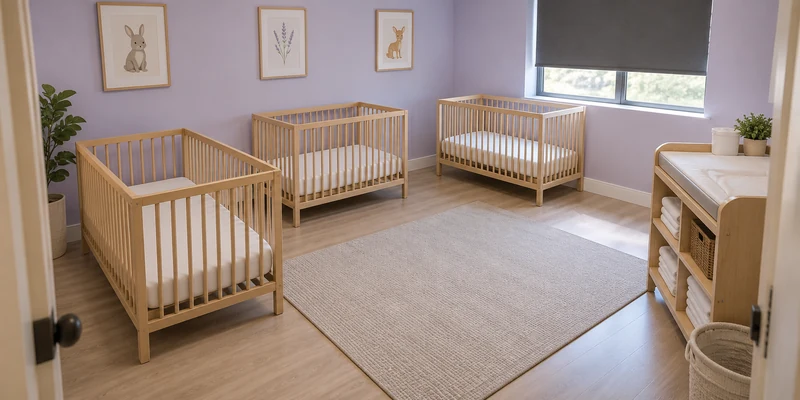
Give your sleep area a separate inspection because a sleeping child may be unattended for part of the routine. Use a crib or sleep product approved for the children, facility, and market in which you operate. Check the exact model, instructions, labels, mattress compatibility, and condition rather than relying on a general product description.
For infants, you should use a firm, flat sleep surface, a properly fitted mattress, and no loose soft items in the crib. Review this current safe-sleep guidance when you write your procedure, then apply the local rules and written center policy that control your sleep checks.
Arrange your cribs and cots so staff can reach every child, maintain a clear view, and remove bedding without climbing over another sleep space. Keep sleep furniture away from blind cords, heaters, windows that children can open, and unstable shelves. For older children using cots, review the daycare cot options together with your nap-room layout, cleaning method, and storage plan.
Keep Walkways, Supervision, and Exits Clear
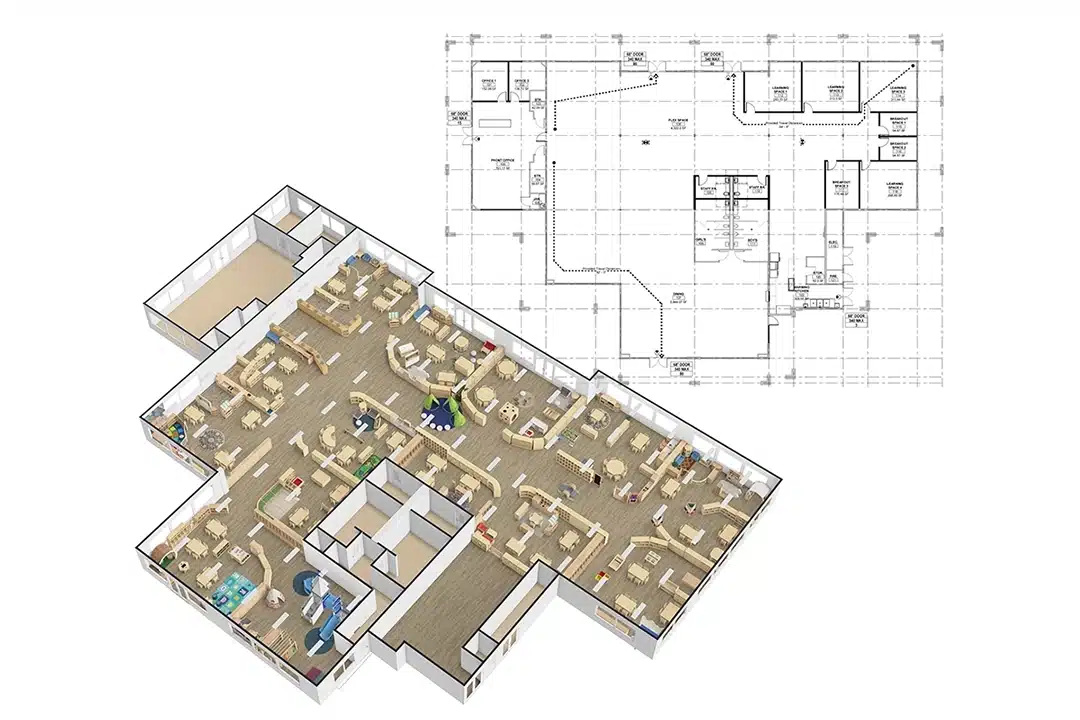
You can supervise and evacuate more easily when your room is uncluttered. Use your daycare floor plan to test the route from the entrance to the activity areas, bathroom, changing area, storage, and required exits before you finalize furniture placement.
Stand in the positions your staff actually use and ask yourself three questions: Can a caregiver see the main floor while helping with a diaper change, preparing a snack, or supporting a small group? Do low shelves divide areas without hiding a child? Can children move from one zone to another without crossing a sleep area or colliding with table corners?
Keep your exit doors and required paths clear at all times. Do not use nap mats, boxes, stacked chairs, spare furniture, or push toys as temporary storage in an exit route. Do not assume that a wheeled shelf is easy to move during an emergency; staff may be carrying a child or guiding a group. Your route should work without last-minute rearrangement.
You should also preserve enough clear width for the equipment your program uses and avoid placing safety barriers where they create a new trip or pinch hazard.
Choose Furniture That Supports Safety Routines
Childproofing becomes easier when your furniture supports the way your team works. When you compare products, review these questions before you decide on color or decoration:
| What to check | Why it matters | What to ask the supplier |
|---|---|---|
| Stability and anchoring | Children pull, lean, and climb | What is the recommended anchoring method for this wall or floor condition? |
| Height and visibility | Tall units can block sightlines and create climbing routes | Can staff see over, around, and behind the unit from normal positions? |
| Edges and hardware | Loose or sharp parts become daily hazards | How are edges, joints, screws, and adjustable parts finished and protected? |
| Cleanability | Surfaces are cleaned repeatedly in a daycare | Which cleaning products and methods are approved for the finish? |
| Repair and replacement | One damaged part should not remove a whole room from service | Are replacement panels, fasteners, feet, wheels, or covers available? |
| Room fit | A safe product can still create congestion | What are the exact dimensions, clearances, and installation requirements? |
When you compare surfaces and construction, use this guide to daycare furniture materials. From a procurement perspective, the useful question is whether your staff can inspect, clean, repair, and use the item consistently in the room you have.
In our classroom planning and procurement work, many avoidable problems come from a mismatch between the product and the daily routine: a shelf blocks the sightline, a cabinet is difficult to clean, or a sleep area leaves no staff access. You can reduce those problems by reviewing the furniture on your floor plan before you approve the final specification.
If you are ordering several classrooms, request drawings and a sample specification before production. Share your age groups, class size, daily activities, floor plan, utility locations, and storage needs. This gives the supplier enough information to review your furniture as part of the room rather than as isolated products.
Use a Daily Safety Check
Your childproofing plan changes as children grow, furniture moves, and materials wear. Use a short opening check every day and a deeper room audit on a regular schedule set by your program.
Before children arrive, check:
- exits, doors, and required walkways are clear;
- shelves, cabinets, dividers, and heavy items are stable;
- outlets are protected and cords are secured;
- cleaning products, medication, and adult tools are locked away;
- floors are free of small, broken, wet, or slippery items;
- toys, art materials, sleep furniture, and safety devices are in good repair;
- windows, blinds, heaters, fans, and furniture do not create an accessible hazard;
- the room still supports clear supervision after tables, chairs, and activity materials are placed.
When you find a problem, record the repair and remove the unsafe item from use until you resolve it. After a renovation, delivery, classroom change, or new enrollment age group, repeat the full child-height walkthrough instead of relying on your previous inspection.
When you clean, follow the product label and your center’s procedure. This early-care cleaning guidance supports the same practical rule: high-touch surfaces and items children put in their mouths need an appropriate cleaning and sanitizing routine. Cleanability belongs in your original furniture decision because a surface that is difficult to reach or wipe will be harder to maintain consistently.
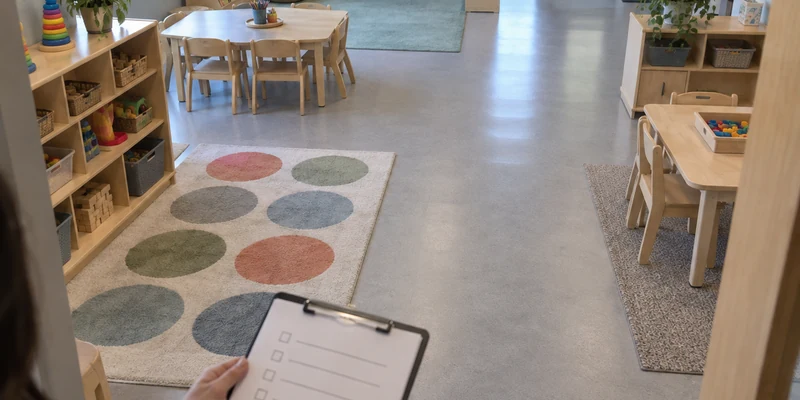
If you want a second review after completing your checklist, share your floor plan and equipment list for a practical layout discussion.
Common Childproofing Mistakes
Relying On Outlet Covers Alone
If you rely on outlet covers alone, you still leave cords, chargers, power strips, and nearby furniture uncontrolled. Protect the outlet and remove the access route.
Using a Child Lock That Blocks Emergency Access
Before you install a lock, confirm that it keeps a toddler away from a supply room without creating a fire or evacuation problem. Check the hardware and emergency-release requirements first.
Putting Heavy Items On High Shelves
If you put heavy items on a high shelf, the unit can become unstable when children pull at it. Move heavy items lower and anchor the furniture as instructed.
Choosing Low Shelves Without Checking Climbing Behavior
When you choose low storage, check whether the arrangement creates a staircase to a window, heater, or higher shelf. Observe what children can reach after they move a chair or basket.
Leaving Cleaning Supplies In an Unlocked Classroom Cabinet
You may reach a high cabinet quickly, but a determined toddler may climb to it. Use controlled, locked storage and return products immediately after use.
Treating Childproofing As a One-Time Setup Task
Your room changes every day. New materials, repairs, rearranged tables, and children’s new skills create new risks. Keep your daily check short enough that staff will complete it and use a deeper review whenever the room changes.
FAQs
Is Childproofing Enough To Keep a Daycare Classroom Safe?
No. You should treat childproofing as one layer of your safety system. You still need active supervision, staff training, safe sleep procedures, emergency planning, maintenance, and local licensing compliance. A well-arranged room still needs attentive adults.
How Often Should You Inspect a Daycare Classroom?
You should do a brief visual check before children enter and whenever your room changes. Schedule deeper inspections according to your licensing rules and center policy, and repeat the full review after repairs, new furniture, new equipment, or an age-group change.
Should All Daycare Furniture Be Anchored?
You should evaluate tall, narrow, heavy, or climbable furniture for anchoring according to the manufacturer’s instructions and local requirements. Anchoring is one part of your decision; placement, stability, visibility, and access also matter.
Where Should You Store Daycare Cleaning Supplies?
You should store them in a locked staff-only area that children cannot access. Keep labels readable, follow the product instructions, and return supplies after use. Do not rely on an unlocked high shelf or a chair-free corner.
How Do You Childproof a Mixed-Age Daycare Room?
If you run a mixed-age room, design for the youngest and most mobile child, then create controlled access for materials used by older children. Separate choking hazards and adult supplies, review your room at each child’s reach level, and repeat the inspection as the group develops.
Make the Room Safer Before Children Arrive
Before children arrive, you should walk the room at child height, secure what can tip or move, remove hazards that supervision cannot control, and test the layout from the caregiver’s position. Then turn your findings into a daily check that staff can complete before the classroom opens.
If you are setting up a new daycare or refitting several rooms, share your floor plan, age groups, class size, storage needs, and daily routines with Xiha Montessori. A practical furniture and layout review can help you resolve safety, circulation, cleaning, and procurement questions before the order is finalized.